
“Your Daily Dose” is a quick two minute read packed with bite-sized wisdom from all the great teachers. But you could also choose to turn it into something more… a powerful daily practice for personal growth. Give it a try!
A message from today’s meditation:
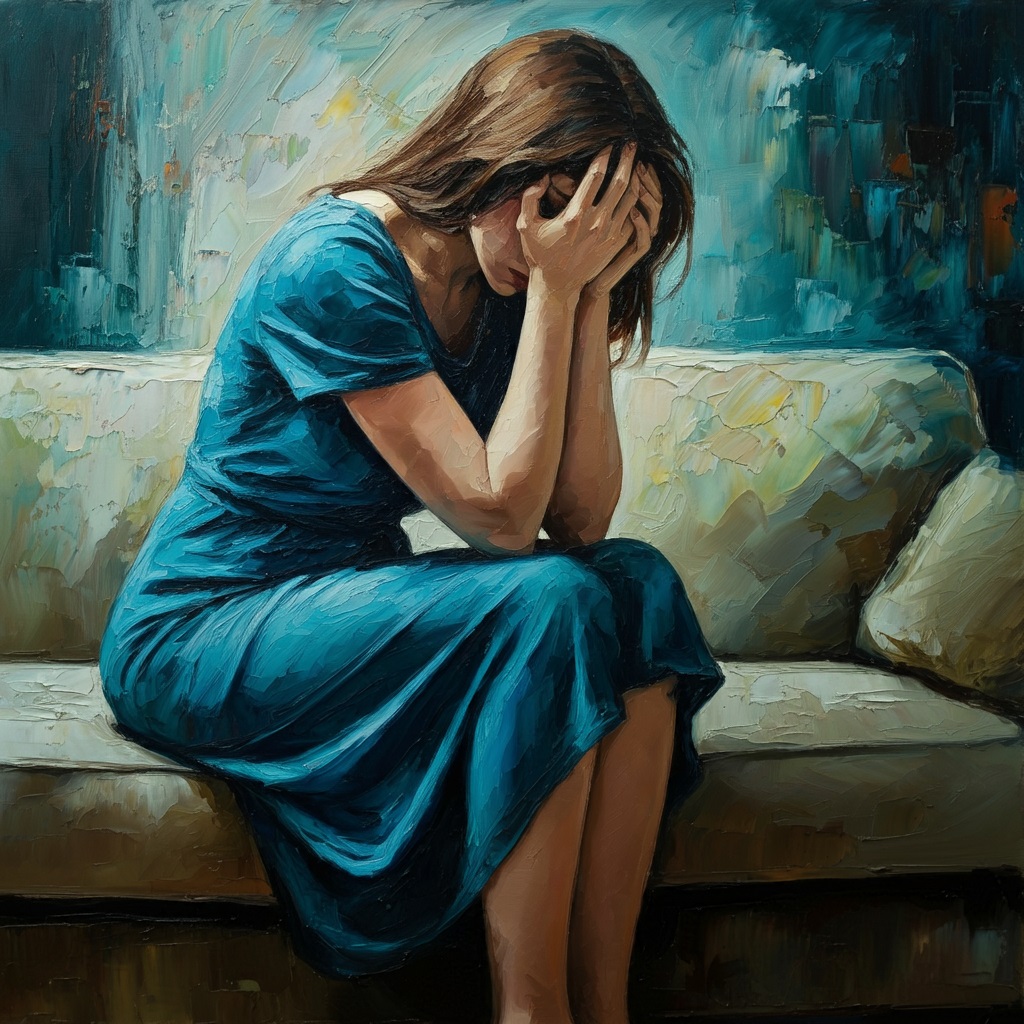
Have you ever felt like a passenger in your own life, tossed about by external forces and difficult circumstances?
When life feels like it’s happening to you – not for you – it’s easy to assume the problem lies with the world outside. Yet, that pervasive feeling of powerlessness is rarely caused by the events themselves. Instead, it’s a sure sign that we’ve handed control over to our inner autopilot. In this reactive state what truly controls us is not the challenge we face, but our old programming, a series of unconscious, knee-jerk reactions. Finding a sense of freedom only becomes possible once we start to become aware of how our own internal reaction is taking over.
The shift from feeling controlled by external forces to living from a place of conscious choice is the single most important act of self-mastery.
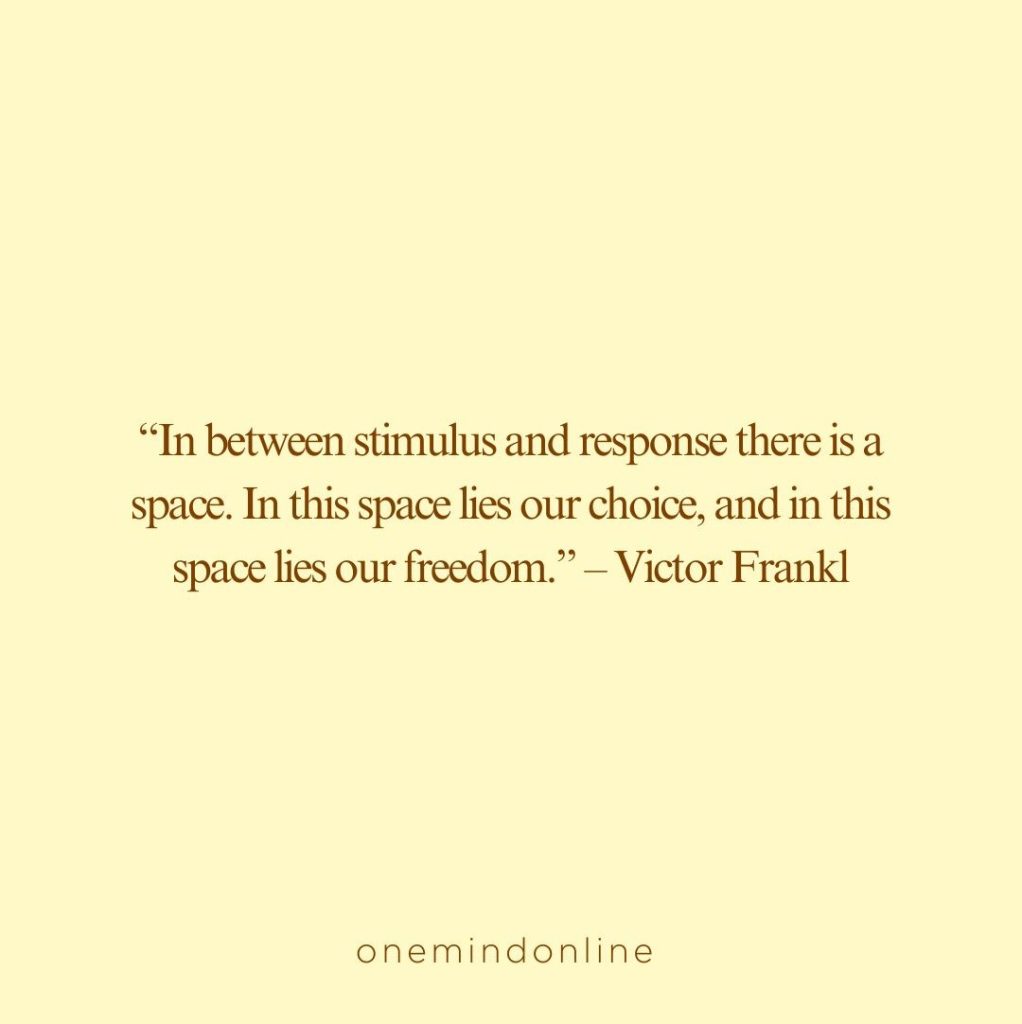
Victor Frankl, Holocaust survivor and psychiatrist who experienced the ultimate loss of external control in Nazi concentration camps, found the exact location of our final, inviolable freedom. He described the essential geography of choice and free will:
“In between stimulus and response there is a space. In this space lies our choice, and in this space lies our freedom.” – Victor Frankl
While this is true, quotes by themselves are always incomplete and these words make it sound like this space just exists automatically. The quote itself creates no understanding of how our fear response, by definition, will make this space evaporate, because the drive to survive doesn’t normally allow us to stop and think.
How, exactly, do we access this space then? How do we cultivate the ability to pause between impulse and action – this fleeting moment that holds the key to our freedom and the quality of our lives?
It’s important to understand that this space doesn’t magically appear, especially when we are under pressure. This space is cultivated, nurtured, and expanded through conscious practice.
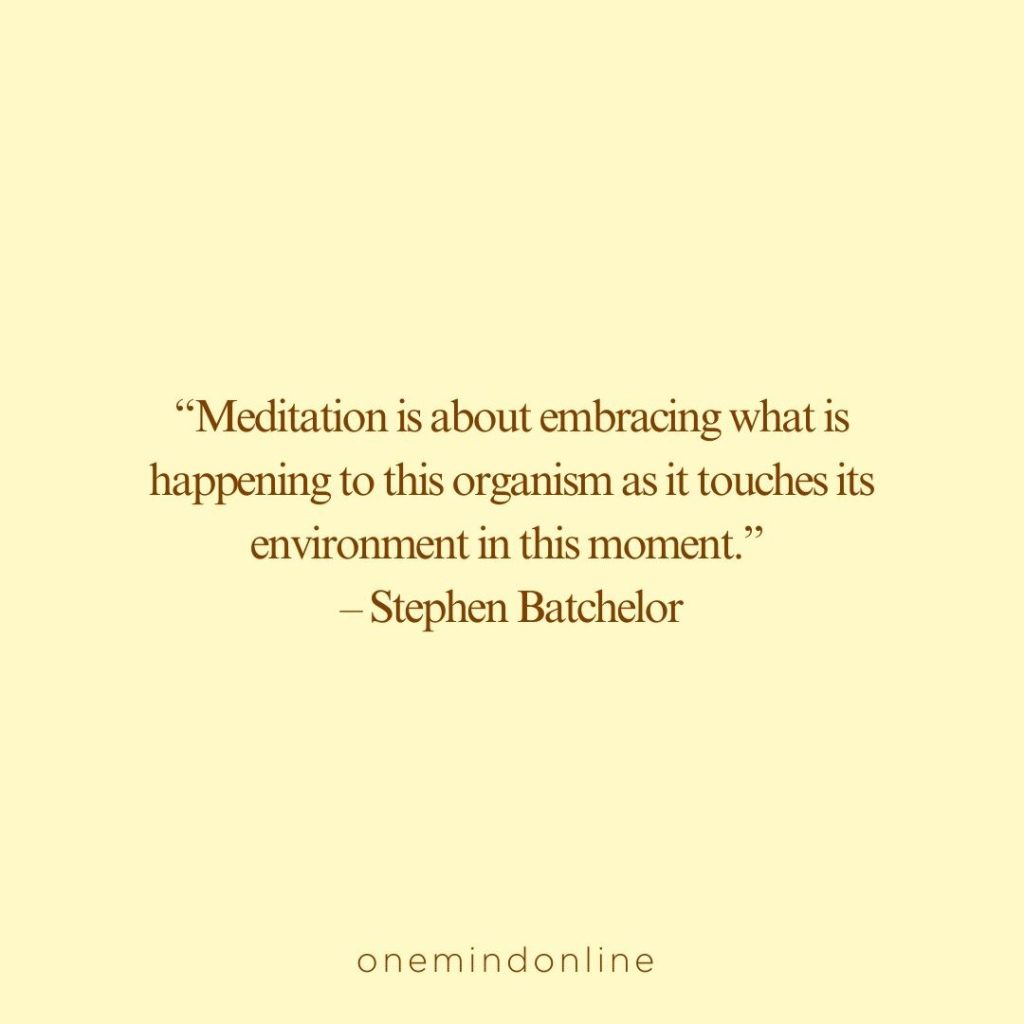
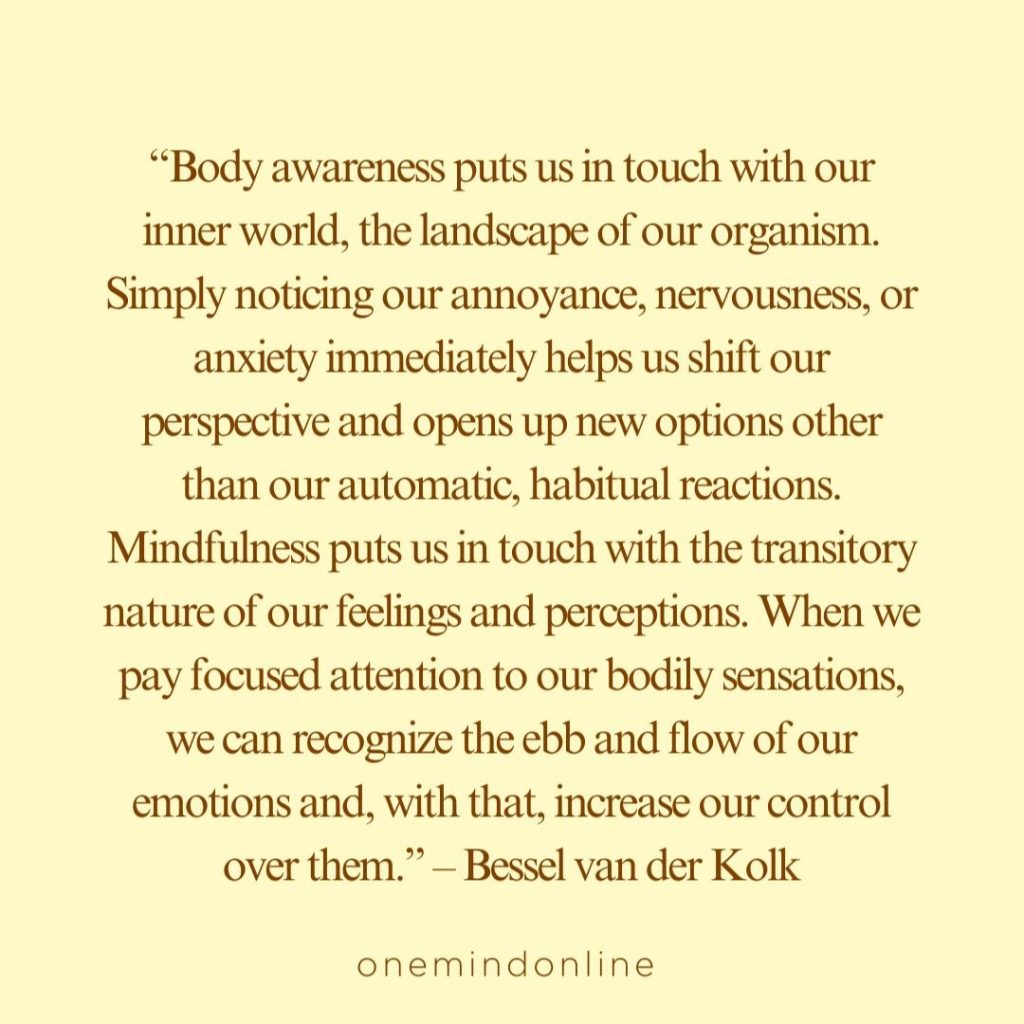
In the next two quotes Stephen Batchelor and Bessel van der Kolk touch on the practical tools responsible for creating this spaciousness.
“Meditation is about embracing what is happening to this organism as it touches its environment in this moment.” – Stephen Batchelor
“Body awareness puts us in touch with our inner world, the landscape of our organism. Simply noticing our annoyance, nervousness, or anxiety immediately helps us shift our perspective and opens up new options other than our automatic, habitual reactions. Mindfulness puts us in touch with the transitory nature of our feelings and perceptions. When we pay focused attention to our bodily sensations, we can recognize the ebb and flow of our emotions and, with that, increase our control over them.” – Bessel van der Kolk
We have the choice to either react instantly from old patterns, or to respond thoughtfully from a place of consciousness. But this becomes a choice only when we have full awareness and acceptance of what’s happening within us, in this moment.
When I am able to experience my body’s reaction to this trigger without being overwhelmed, this is when I finally do have a choice over how I want to respond. Before this moment of recognition there was no choice, only an old pattern taking control.
Today’s meditation journey is a practical rehearsal of creating this inner spaciousness, increasing the space between stimulus and response, and exercising your ability to choose. This is where true freedom lies, in no longer being controlled by an old programme.
As you expand your own inner spaciousness, carry these truths with you:
- “I pause before I react, giving myself space to breathe and observe what’s arising within me.”
- “I embrace my emotions fully, meeting them with compassion rather than judgment or resistance.”
- “I release my grip on controlling outcomes, instead I focus on the wisest action I can take here and now.”
- “I treat myself with kindness and gentleness, especially when navigating life’s difficult moments.”
- “I am not my reactions – I am the conscious awareness that can choose how to respond.”
In the end, the choice is ours. We can remain trapped in the cycle of reactive behaviour or embrace the power of the pause. By mastering this art, we can unlock our true potential and live a life of freedom, choice, and fulfillment.
– pierre –
Today’s LIVE meditation is: I am the mountain.
Today’s LIVE meditation
https://youtu.be/PI54H5rk1fc 2025
https://youtu.be/oAggNrfKgCI 2024
https://youtu.be/3wjI81SCiik 2023
https://youtu.be/TmeM-zSmZCk 2022
Practice the “Daily Dose”
Let’s put it into practice! Choose what works for you – daily, once a week or whenever inspiration strikes. Putting pen to paper wires the neural pathways that will create your new habits.
1 – Affirmation
Write down your favourite affirmation on a sticky note and place it somewhere that you’ll be able to see it the whole day.
- “I pause before I react, giving myself space to breathe and observe what’s arising within me.”
- “I embrace my emotions fully, meeting them with compassion rather than judgment or resistance.”
- “I release my grip on controlling outcomes, instead I focus on the wisest action I can take here and now.”
- “I treat myself with kindness and gentleness, especially when navigating life’s difficult moments.”
- “I am not my reactions – I am the conscious awareness that can choose how to respond.”
2 – A moment of reflection
Use today’s question as a journal prompt. If you don’t have the time to sit down and write, just take a moment to reflect on your response.
Mapping Your Inner Landscape: Van der Kolk speaks of “the landscape of our organism.” Take a moment to close your eyes and scan your body right now. Do you have anywhere in your body that you are holding tension, anxiety, discomfort or any other sensation? What emotions might be stored in these physical sensations? What message might this body sensation be trying to bring you? Ask it, “what do you want me to know?”
3 – Quotes to share
Send a quote to someone who needs it, or share them all on social media to spread the good vibes!

4 – Q&A for deeper learning
Read through the questions and answers and write down at least one “aha moment” that clicked for you.
Q1: What does it mean to live on “autopilot”?
Living on autopilot means going through life driven by unconscious, habitual reactions rather than conscious choices. It’s when old patterns and survival instincts take over, leaving you feeling powerless and as though life is happening to you rather than with you. These automatic responses often developed as protective mechanisms but may no longer serve your growth.
Q2: Why doesn’t the “space” between stimulus and response automatically exist when we need it?
The space doesn’t automatically exist because our nervous system’s fear response is designed for immediate survival, not reflection. When we perceive a threat—whether physical or emotional—our brain prioritizes rapid reaction over thoughtful response. This survival mechanism bypasses conscious thought, which is why the space must be intentionally cultivated through regular practice.
Q3: How do I actually start creating this space in my daily life?
Begin with body awareness practices like meditation, breathwork, or simply pausing to notice physical sensations when you feel triggered. The key is recognizing what’s happening in your body and mind without being overwhelmed by it. Start small—even taking three conscious breaths before responding to a stressful email can begin expanding this space.
Q4: What role does body awareness play in breaking automatic patterns?
Body awareness is fundamental because emotions and triggers manifest physically before we consciously recognize them. By tuning into bodily sensations—tension, rapid heartbeat, shallow breathing—you gain early warning signals of activation. This awareness creates a crucial moment of recognition where choice becomes possible, allowing you to respond consciously rather than react automatically.
Q5: How long does it take to develop the ability to pause before reacting?
This varies by individual and depends on consistency of practice. Some people notice shifts within weeks of daily mindfulness practice, while deeper pattern changes may take months or years. The important thing is viewing this as ongoing practice rather than a destination. Each moment you successfully pause strengthens your capacity to do so again.
Q6: What if I notice my trigger but still feel too overwhelmed to choose a different response?
This is completely normal and part of the journey. Simply noticing that you’re overwhelmed is itself progress—it’s awareness. Over time, with gentle practice, the intensity of overwhelm decreases and your capacity to stay present with difficult feelings grows. Be patient and compassionate with yourself. Even recognizing a pattern after the fact is valuable learning.
Q7: How is responding thoughtfully different from suppressing my emotions?
Responding thoughtfully means fully experiencing and accepting your emotions while choosing how to express them, whereas suppression means pushing feelings away or denying they exist. Conscious response involves feeling your anger, hurt, or fear completely—in your body and mind—and then deciding how to act in alignment with your values rather than being controlled by the emotion’s immediate impulse.