
“Your Daily Dose” is a quick two minute read packed with bite-sized wisdom from all the great teachers. But you could also choose to turn it into something more… a powerful daily practice for personal growth. Give it a try!
A message from today’s meditation:
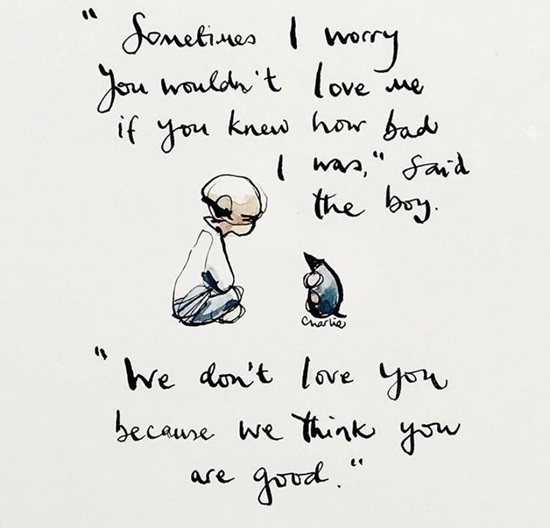
I don’t think that there’s much I can write about love in today’s message that’ll add anything to these quotes from the Boy the Mole the Fox and the Horse, except perhaps this: double down on being kind to YOU, especially in those moments when you feel that you deserve it the least.
When you are able to empower yourself through your own acceptance of YOU, you will stand taller than you ever have before, and love will follow you, and surround you and love will touch everything around you.
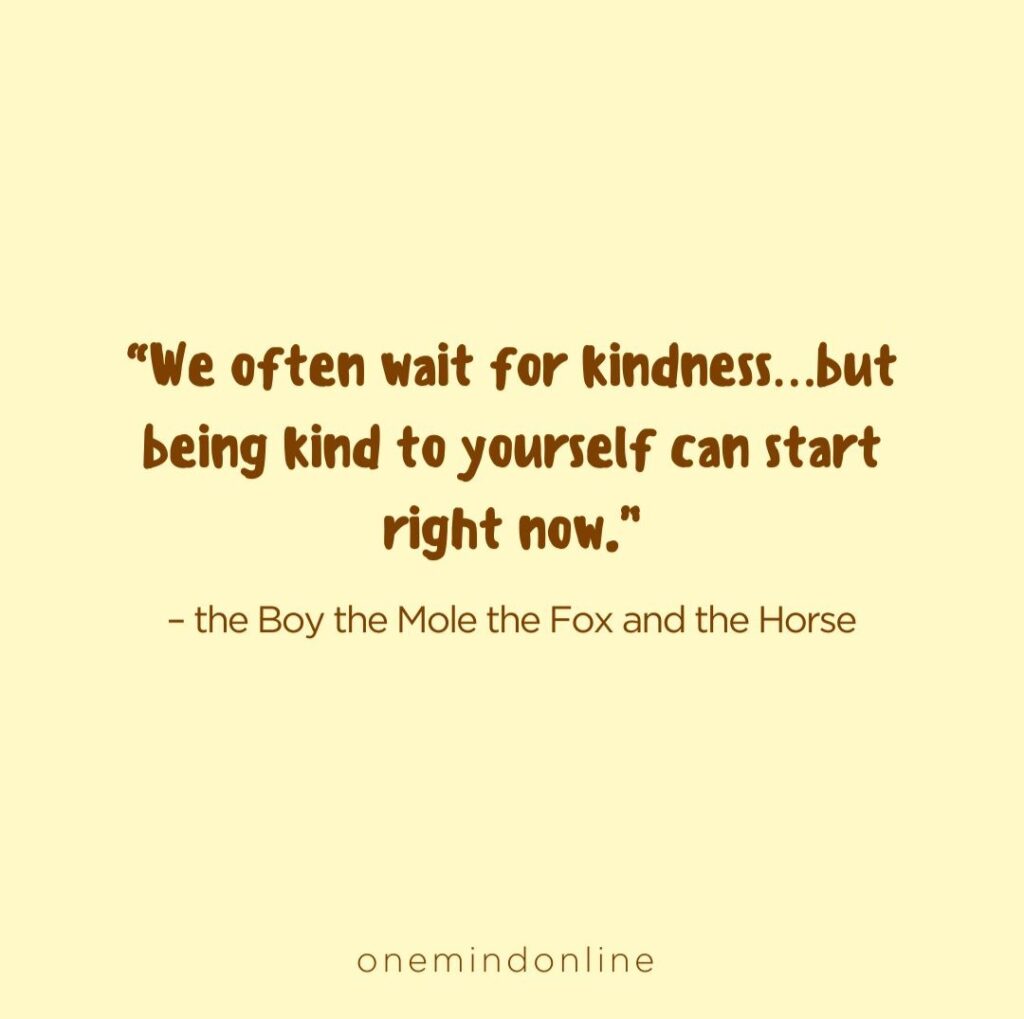
“We often wait for kindness…but being kind to yourself can start right now.” – the Boy the Mole the Fox and the Horse
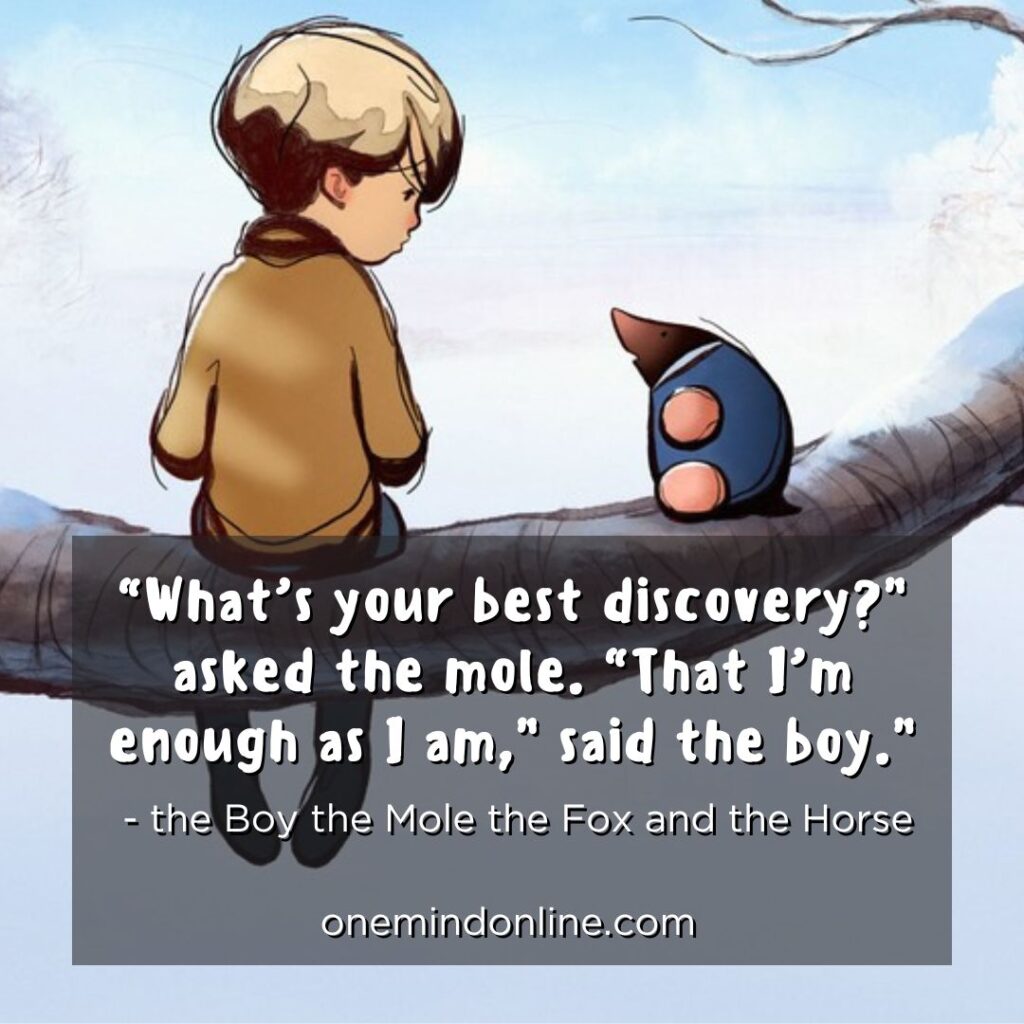
“What’s your best discovery?” asked the mole. “That I’m enough as I am,” said the boy.” – the Boy the Mole the Fox and the Horse
When we each do our own work to heal our own wounds and find our own sense of acceptance from ourselves, then the way we play together is completely changed.
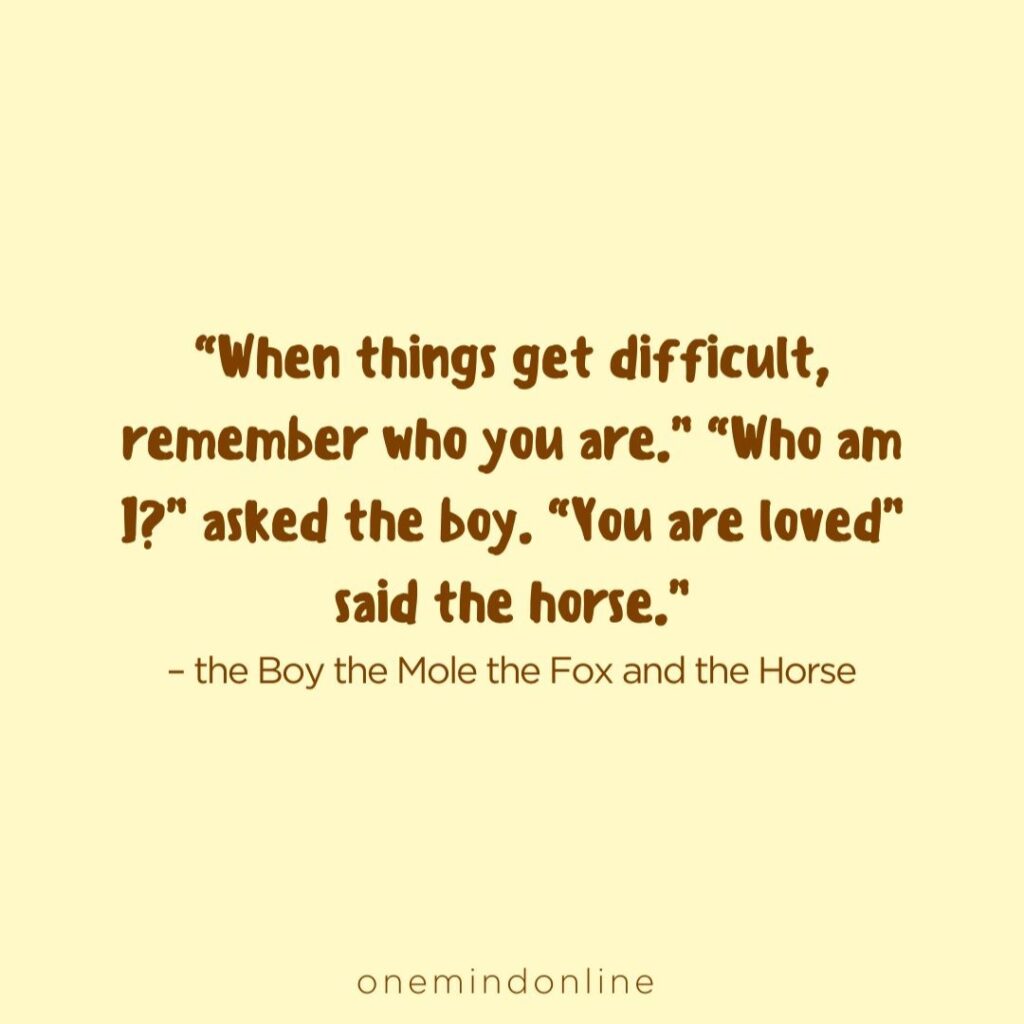
“When things get difficult, remember who you are.” “Who am I?” asked the boy. “You are loved” said the horse.” – the Boy the Mole the Fox and the Horse
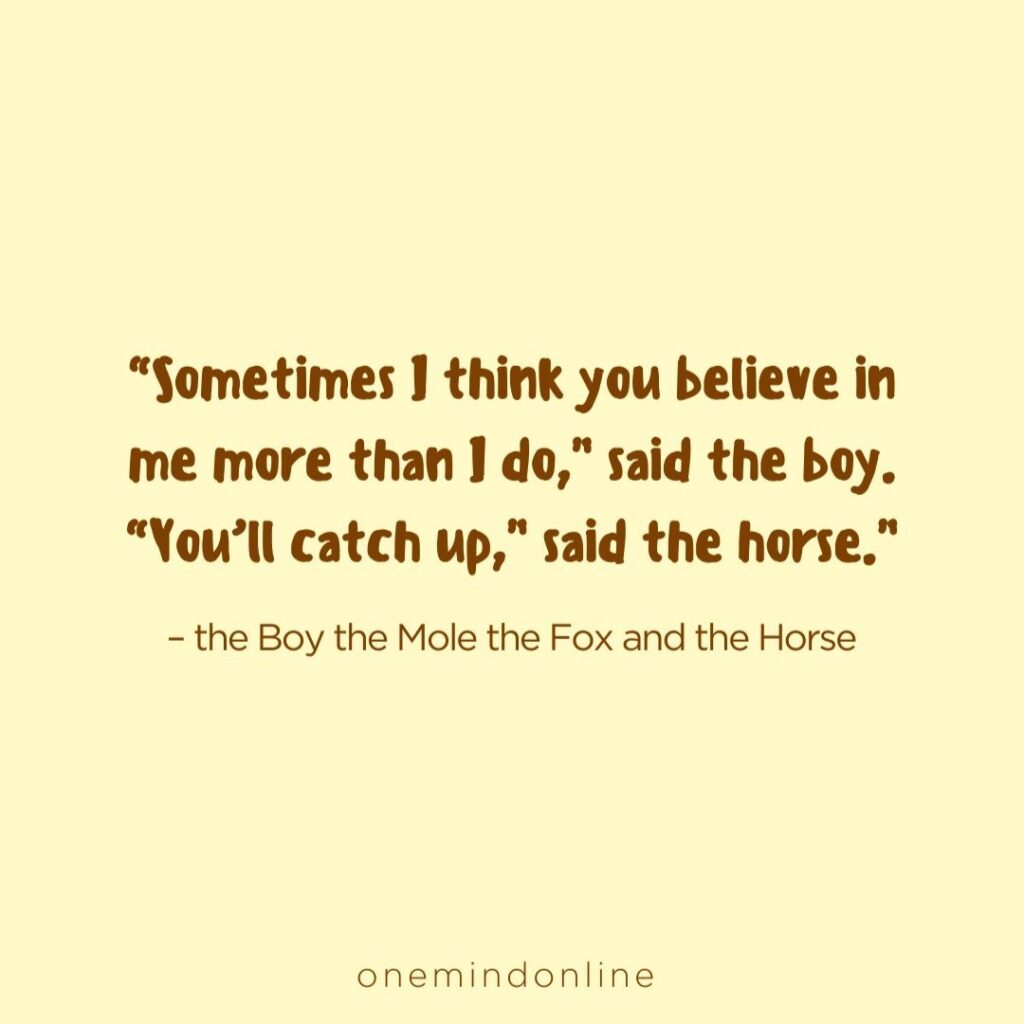
“Sometimes I think you believe in me more than I do,” said the boy. “You’ll catch up,” said the horse.” – the Boy the Mole the Fox and the Horse
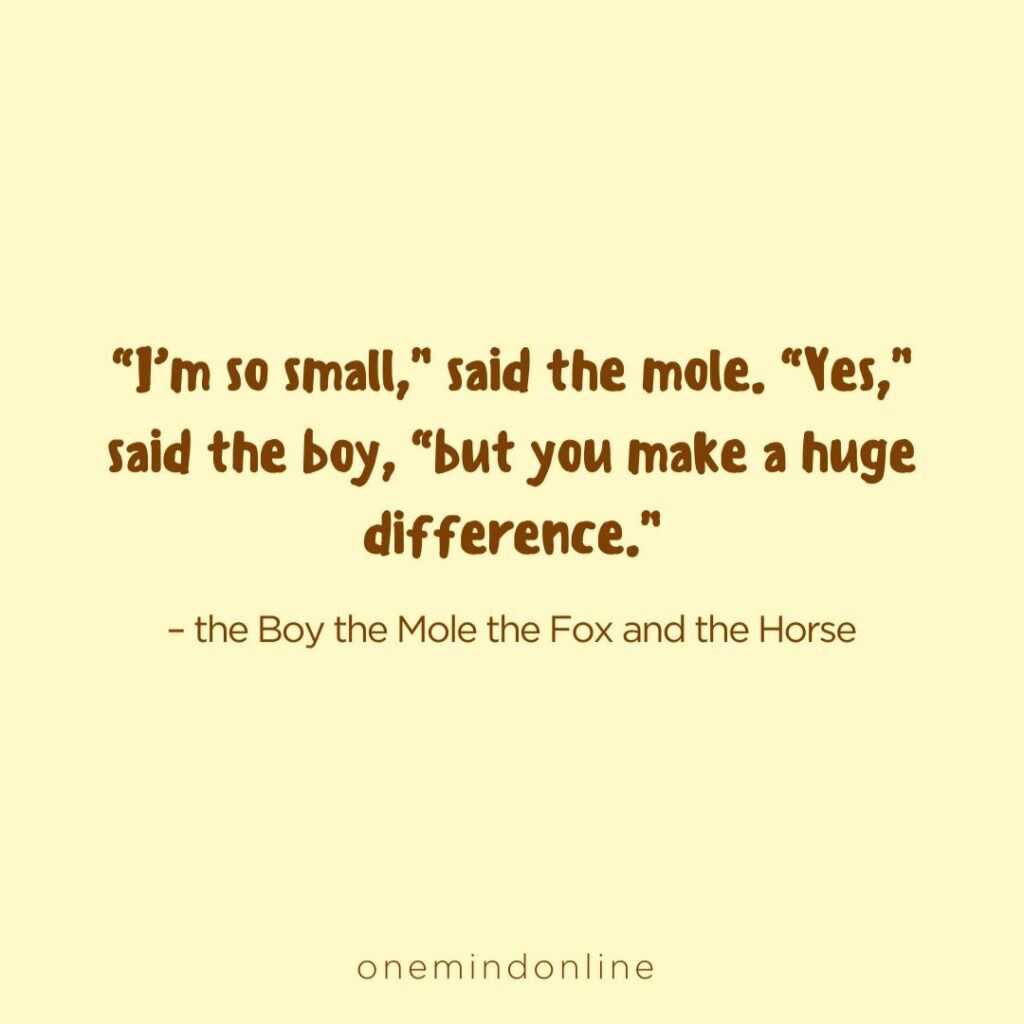
“I’m so small,” said the mole. “Yes,” said the boy, “but you make a huge difference.” – the Boy the Mole the Fox and the Horse
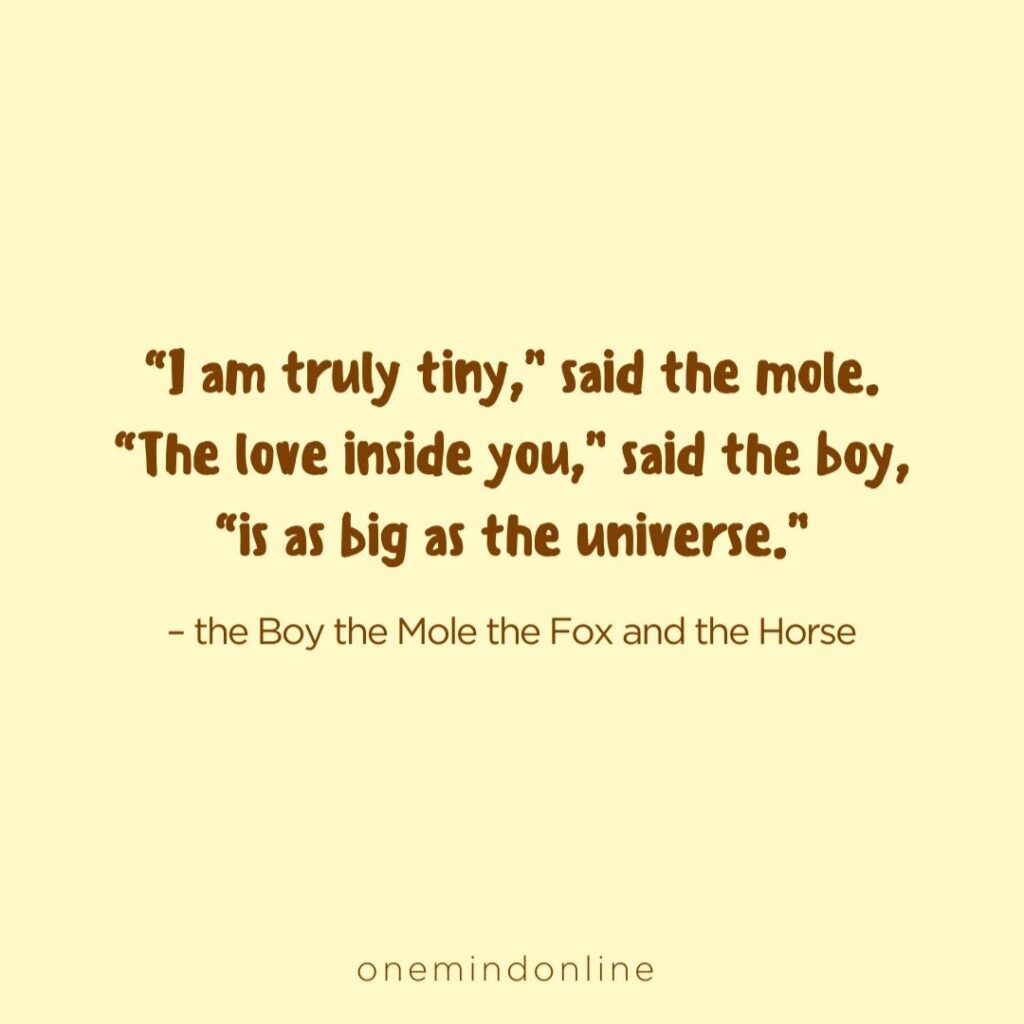
“I am truly tiny,” said the mole. “The love inside you,” said the boy, “is as big as the universe.” – the Boy the Mole the Fox and the Horse
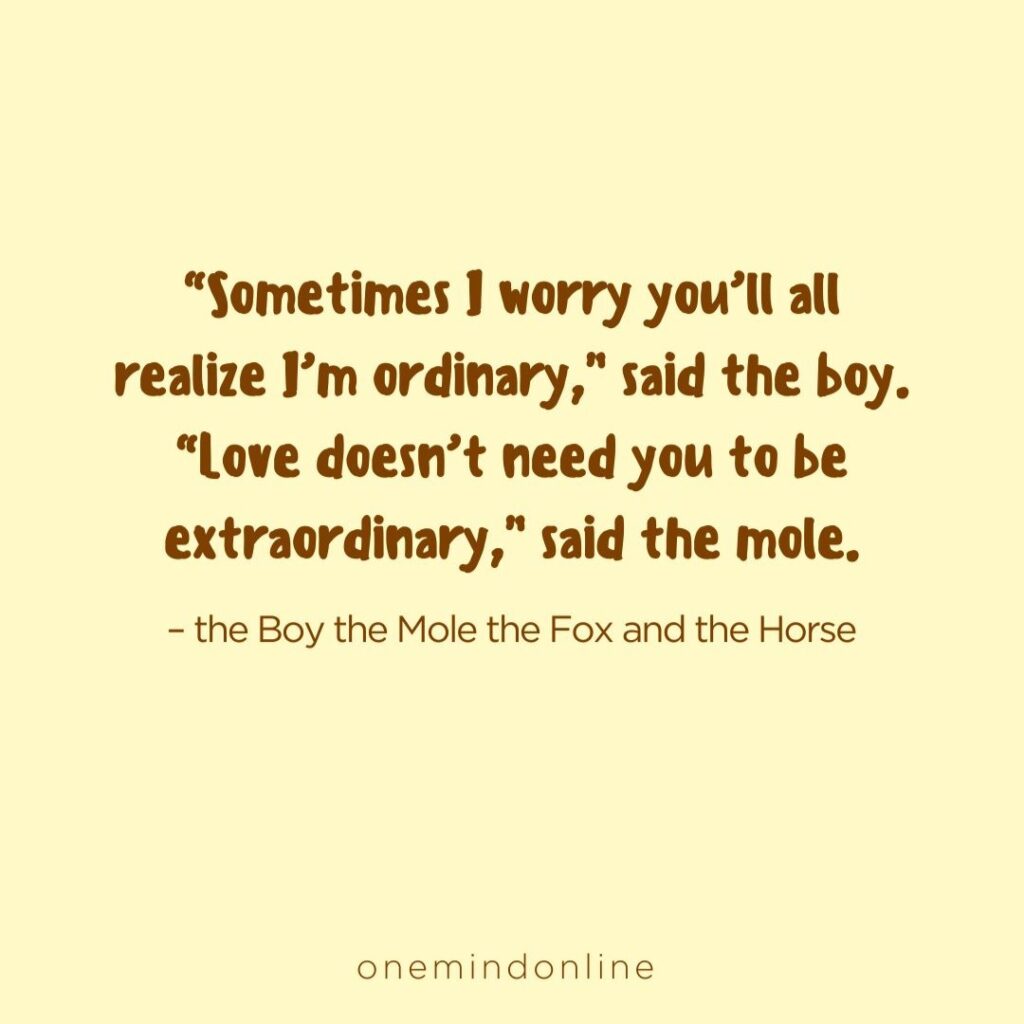
“Sometimes I worry you’ll all realize I’m ordinary,” said the boy. “Love doesn’t need you to be extra-ordinary,” said the mole. – the Boy the Mole the Fox and the Horse
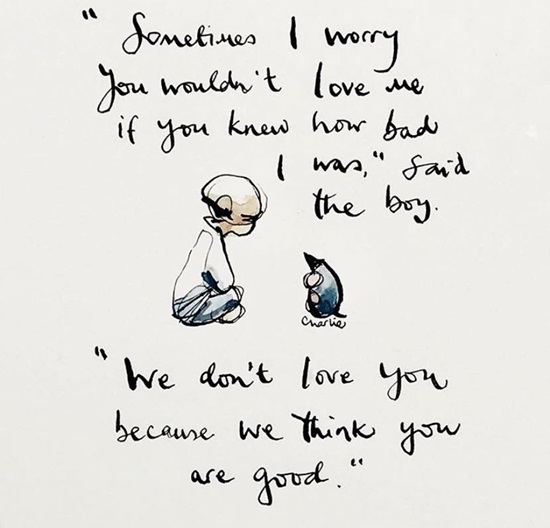
“Sometimes I worry you wouldn’t love me if you knew how bad I was,” said the boy. “We don’t love you because we think you’re good,” said the mole. – the Boy the Mole the Fox and the Horse
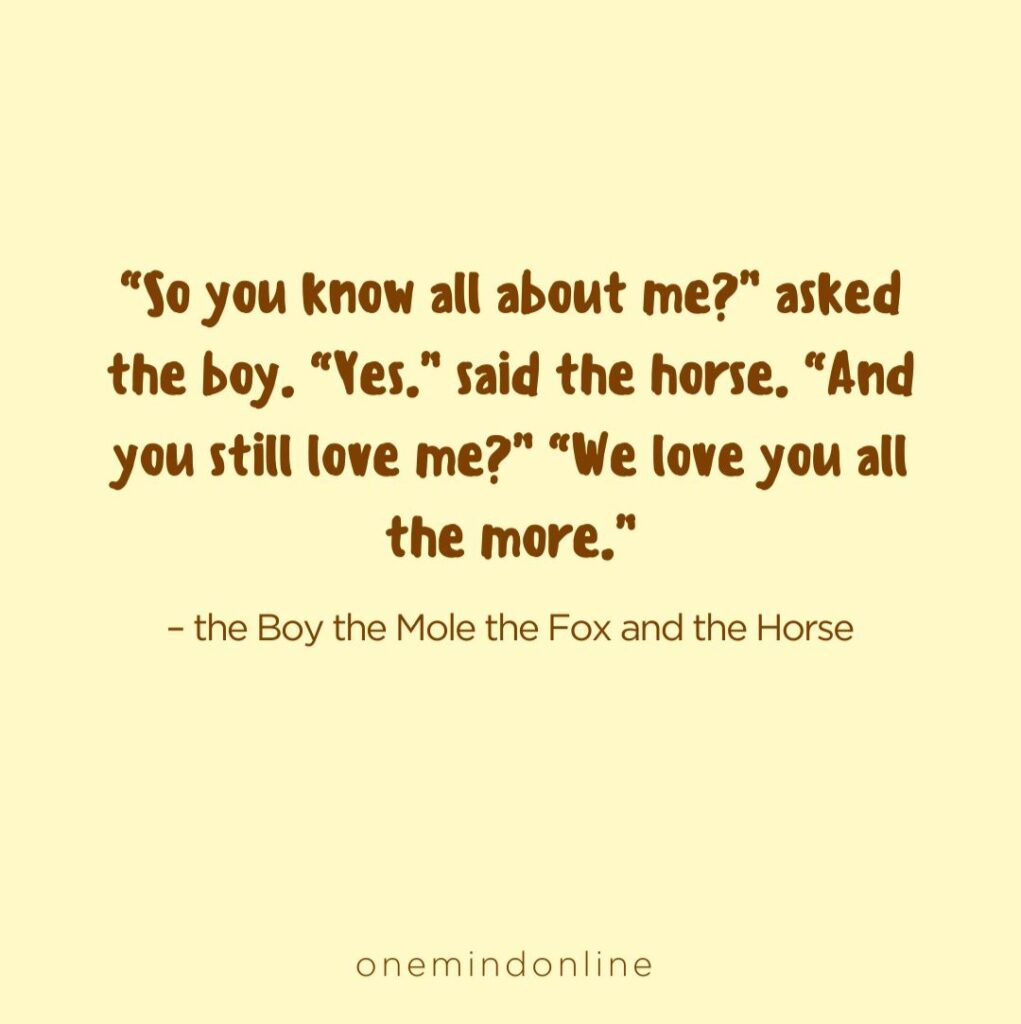
“So you know all about me?” asked the boy. “Yes.” said the horse. “And you still love me?” “We love you all the more.” – the Boy the Mole the Fox and the Horse
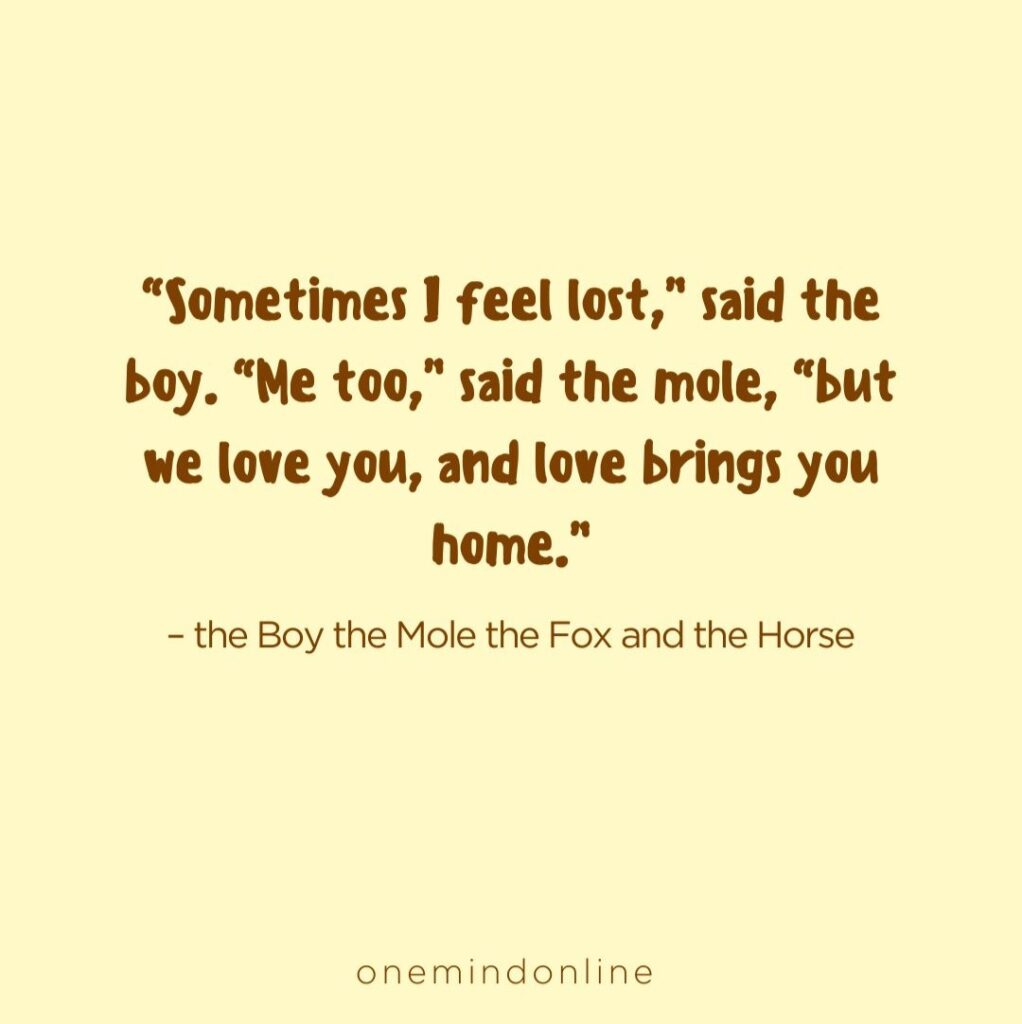
“Sometimes I feel lost,” said the boy. “Me too,” said the mole, “but we love you, and love brings you home.” – the Boy the Mole the Fox and the Horse
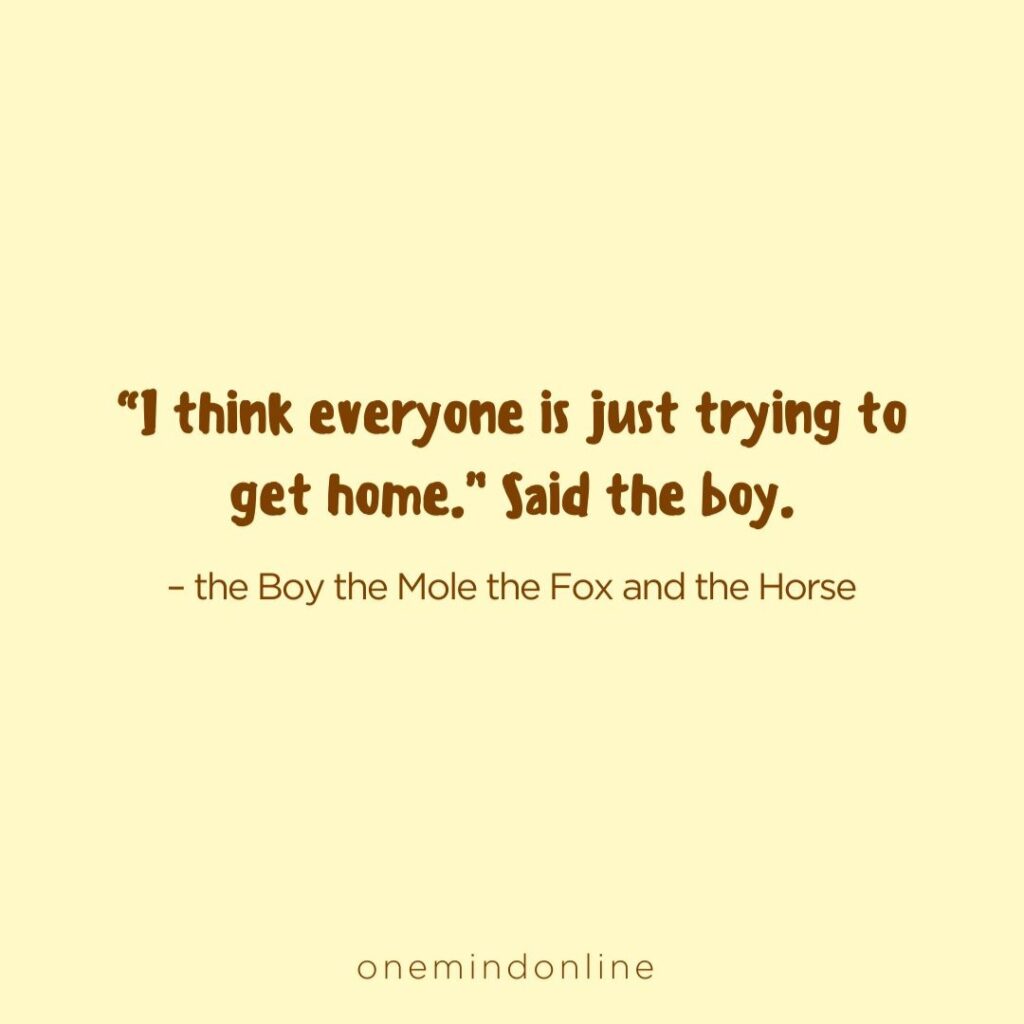
“I think everyone is just trying to get home.” Said the boy. – the Boy the Mole the Fox and the Horse
I can’t help but be reminded of Ram Dass talking about coming home inside of ourselves. He was talking about finding our wholeness – knowing who we are at the deepest and most profound levels of our being and building our lives upon that foundation… “we’re all just walking each other home…”
Guiding mantras for self-reflection:
- “I am enough.” Repeat this mantra daily, letting it sink into your core. You are worthy of love and happiness, simply because you exist.
- “Self-compassion is not self-indulgence.” Treat yourself with the same kindness and understanding you would offer a dear friend.
- “My worth is not defined by my mistakes.” Everyone makes mistakes. Forgive yourself, learn, and move forward.
- “Love is a journey, not a destination.” Embrace the imperfections, the growth, and the ever-evolving nature of love, both for yourself and others.
- “I am worthy of love, exactly as I am.” This is the ultimate truth. Let it be your guiding light.
By cultivating self-kindness, we create a foundation for a more fulfilling life, filled with love, acceptance, and connection. As the boy in the story says, “I think everyone is just trying to get home.” Let self-compassion be the guiding light on your journey back to your truest self.
Have a beautiful Friday!
– pierre –
Today’s LIVE meditation is: Sharing love.
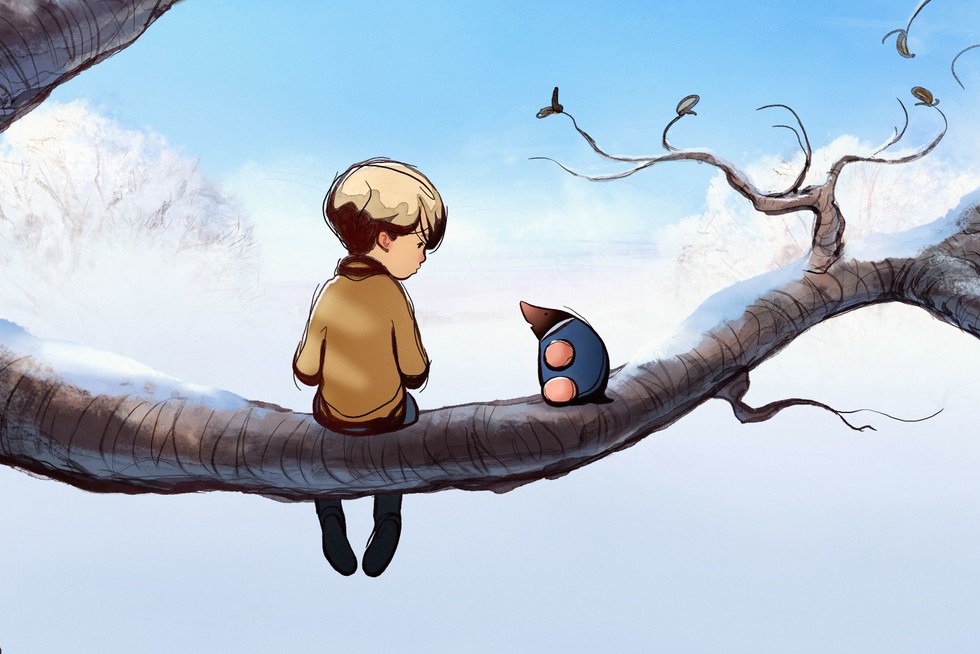
(Image credit: “The boy, the mole, the fox and the horse” by Charlie Mackesy)
Today’s LIVE meditation
https://youtu.be/ZPejYEDUSo0 2026
https://youtu.be/9u3KrYgS_1E 2025
https://youtu.be/EJ5IthISEgY 2024
https://youtu.be/J0IIdDdqwak 2023
https://youtu.be/-L_JNuMG004 2021
Practice the “Daily Dose”
Let’s put it into practice! Choose what works for you – daily, once a week or whenever inspiration strikes. Putting pen to paper wires the neural pathways that will create your new habits.
1 – Affirmation
Write down your favourite affirmation on a sticky note and place it somewhere that you’ll be able to see it the whole day.
- “I am enough.” Repeat this mantra daily, letting it sink into your core. You are worthy of love and happiness, simply because you exist.
- “Self-compassion is not self-indulgence.” Treat yourself with the same kindness and understanding you would offer a dear friend.
- “My worth is not defined by my mistakes.” Everyone makes mistakes. Forgive yourself, learn, and move forward.
- “Love is a journey, not a destination.” Embrace the imperfections, the growth, and the ever-evolving nature of love, both for yourself and others.
- “I am worthy of love, exactly as I am.” This is the ultimate truth. Let it be your guiding light.
2 – A moment of reflection
Use today’s question as a journal prompt. If you don’t have the time to sit down and write, just take a moment to reflect on your response.
The Self-Compassion Inventory: Reflect on the last time you made a mistake or felt disappointed in yourself. Write about how you spoke to yourself in that moment versus how you would have spoken to a dear friend facing the same situation. What would it look like to offer yourself the same kindness you give others? How might your inner dialogue change if you truly believed you deserved compassion, especially in your most difficult moments?
3 – Quotes to share
Send a quote to someone who needs it, or share them all on social media to spread the good vibes!

4 – Q&A for deeper learning
Read through the questions and answers and write down at least one “aha moment” that clicked for you.
Q1: How do I start being kinder to myself when self-criticism feels so automatic?
Begin by simply noticing your inner dialogue without trying to change it immediately. When you catch yourself being self-critical, pause and ask, “Would I speak to a friend this way?” Then consciously choose one kinder thought or phrase. Like any skill, self-compassion develops through practice, not perfection.
Q2: Isn’t self-acceptance just giving myself permission to be lazy or not grow?
True self-acceptance actually creates the safest foundation for growth. When you’re not constantly fighting against yourself, you have more energy for positive change. Self-acceptance means loving yourself enough to want what’s best for you, which often includes growth, but from a place of love rather than self-attack.
Q3: What if I’ve made really serious mistakes? How can I accept myself then?
Your worth as a human being is separate from your actions. You can take responsibility for your mistakes, make amends where possible, and commit to better choices while still recognizing your inherent value. Even your worst moments don’t define your entire existence or eliminate your capacity for love and growth.
Q4: How do I know if I’m being kind to myself versus just making excuses?
Self-kindness includes honest self-reflection and accountability, but with compassion rather than cruelty. Ask yourself: “Is this thought or action helping me grow and heal, or is it helping me avoid responsibility?” True self-compassion often requires difficult honesty delivered with love.
Q5: Why does self-acceptance feel so scary sometimes?
Accepting yourself fully means releasing the familiar patterns of people pleasing and seeking external validation that may have given your life structure. It can feel vulnerable to stop trying to earn your worth. Remember that self-acceptance doesn’t mean complacency – it means building your life on the solid foundation of knowing you’re already enough.
Q6: How can I maintain self-acceptance when others criticize or reject me?
Other people’s opinions, while they may hurt, don’t determine your worth. When you’re grounded in self-acceptance, criticism becomes information to consider rather than a verdict on your value. Remember that everyone is fighting their own battles, and their treatment of you often reflects their relationship with themselves more than anything about you.
Q7: What’s the difference between self-love and being selfish or narcissistic?
Healthy self-love creates more capacity for genuine love toward others, while narcissism comes from a deep wound and actually prevents real connection. When you truly accept yourself, you don’t need to put others down to feel good, nor do you need constant external validation. Self-acceptance creates abundance, not scarcity, in your ability to love.