

“Your Daily Dose” is a quick two minute read packed with bite-sized wisdom from all the great teachers. But you could also choose to turn it into something more… a powerful daily practice for personal growth. Give it a try!
A message from today’s meditation:
Life can feel a bit like a whirlwind. We chase deadlines, manage relationships, and navigate an ever-changing world. It’s easy to get caught up in the noise and forget to take a breath, let alone reflect on how far we’ve come. But amidst the chaos, silence offers a powerful tool for personal growth.
In the story of the Boy the Mole the Fox and the Horse, there isn’t much mention of silence, yet its pages whisper opportunities for quiet reflection. Today, we embark on a silent meditation, using the story’s wisdom to ponder our own journeys.
“We have such a long way to go,” sighed the boy. “Yes, but look how far we’ve come,” said the horse.” – the Boy the Mole the Fox and the Horse
“One day you’ll look back and see how hard it was, and how brave you were,” said the horse. – the Boy the Mole the Fox and the Horse
“Sometimes”, said the horse. “Sometimes what?” asked the boy. “Sometimes just getting up and carrying on is brave and magnificent.” – the Boy the Mole the Fox and the Horse
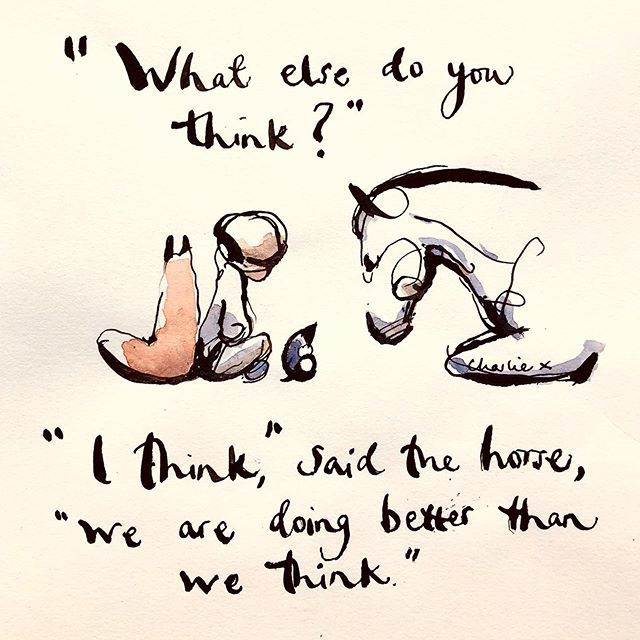
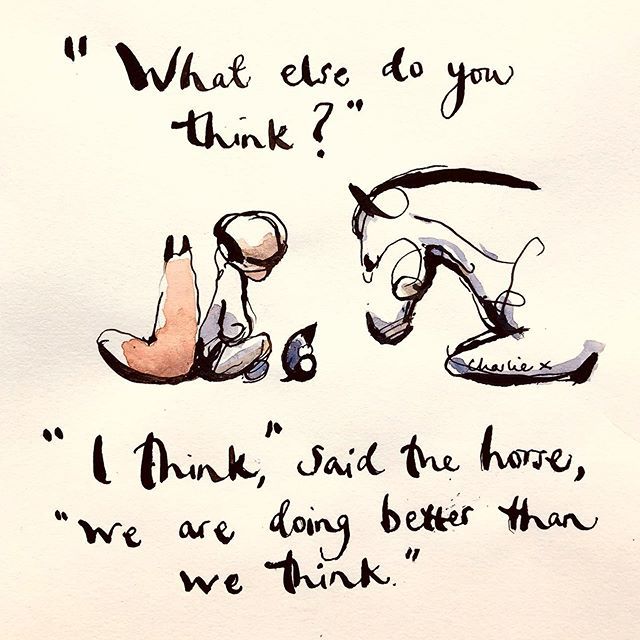
“What else do you think?” asked the boy. “I think,” said the horse, “we are doing better than we think.” – the Boy the Mole the Fox and the Horse
Take a moment out of your day for a bit of reflection. You can do it during this meditation or you can take pen and paper and make a few notes. Writing down your thoughts proves to your “self” that you are paying attention:
- Answer this question. “What are some of the things that you have had to overcome?” You have made it through so many tough times in the past. Without comparing your life to anyone else’s, remind yourself of how far you have come.
- There have been times when just getting up out of bed was an act of courage. “Find an example from your past experience when it took all the strength you had just to survive the day?” Remind yourself that you did it! You are brave and magnificent!
- You are doing better than you think. Sometimes it can be really hard to see progress, but you’ve been doing the work, and you have been taking baby steps, I promise. “Find specific examples of some of the small steps you’ve been taking.” It could be a new response to an old pattern. The tiniest improvement in nutrition or exercise. Kinder and gentler with yourself in the face of your own failings. Or just seeing things in a different way than before.
The baby steps are slow but they add up, and at some point you’ll be looking back and see with clarity how brave you were, and just how far you have come.
Mantras for self-reflection:
- Celebrate your progress: “I acknowledge my progress, celebrating victories big and small.”
- See your own strength: “I recognize the strength I’ve shown in difficult times.”
- Celebrate everyday bravery: “I honor my everyday acts of courage and resilience.”
- Be kind to yourself: “I treat myself with the same compassion I offer others.”
- Focus on small steps: “I trust that small steps create lasting transformation.”
By taking time for quiet reflection, we can appreciate our journey, celebrate our strength, and embrace the magnificent possibilities that lie ahead. So, find some peace and quiet, revisit these wise words, and embark on your own silent exploration of growth and self-discovery. You are braver and further along than you think.
Enjoy today’s silent journey with us. I wish you a beautiful Sunday.
– pierre –
Today’s LIVE meditation is: Finding silence.
(Image credit: “The boy, the mole, the fox and the horse” by Charlie Mackesy)
Today’s LIVE meditation
https://youtu.be/06SU4YvRwno 2026
https://youtu.be/__Slfi4fb0o 2025
https://youtu.be/KqJUQcgwywE 2024
https://youtu.be/Y9bTVfj3GpE 2021
https://youtu.be/S54uNuY-CAU 2020
Practice the “Daily Dose”
Let’s put it into practice! Choose what works for you – daily, once a week or whenever inspiration strikes. Putting pen to paper wires the neural pathways that will create your new habits.
1 – Affirmation
Write down your favourite affirmation on a sticky note and place it somewhere that you’ll be able to see it the whole day.
- Celebrate your progress: “I acknowledge my progress, celebrating victories big and small.”
- See your own strength: “I recognize the strength I’ve shown in difficult times.”
- Celebrate everyday bravery: “I honor my everyday acts of courage and resilience.”
- Be kind to yourself: “I treat myself with the same compassion I offer others.”
- Focus on small steps: “I trust that small steps create lasting transformation.”
2 – A moment of reflection
Use today’s question as a journal prompt. If you don’t have the time to sit down and write, just take a moment to reflect on your response.
The article asks three self reflective questions which I’m just repeating right here:
- You are doing better than you think. Sometimes it can be really hard to see progress, but you’ve been doing the work, and you have been taking baby steps, I promise. “Find specific examples of some of the small steps you’ve been taking.” It could be a new response to an old pattern. The tiniest improvement in nutrition or exercise. Kinder and gentler with yourself in the face of your own failings. Or just seeing things in a different way than before.
- Answer this question. “What are some of the things that you have had to overcome?” You have made it through so many tough times in the past. Without comparing your life to anyone else’s, remind yourself of how far you have come.
- There have been times when just getting up out of bed was an act of courage. “Find an example from your past experience when it took all the strength you had just to survive the day?” Remind yourself that you did it! You are brave and magnificent!
3 – Quotes to share
Send a quote to someone who needs it, or share them all on social media to spread the good vibes!


4 – Q&A for deeper learning
Read through the questions and answers and write down at least one “aha moment” that clicked for you.
Q1: Why is it so hard to recognize our own progress when it’s happening?
We’re naturally wired to focus on problems and future goals as a survival mechanism. Additionally, we experience our growth gradually, making it difficult to notice incremental changes. It’s like watching a plant grow – the daily changes are invisible, but over time the transformation is remarkable. Regular reflection and journaling help us step back and see the bigger picture.
Q2: How can “just getting up and carrying on” really be considered brave and magnificent?
Bravery isn’t reserved for dramatic, heroic moments. When you’re struggling with depression, anxiety, grief, or any significant challenge, the simple act of continuing requires tremendous courage. It means choosing hope over despair, action over paralysis, and life over withdrawal. These quiet acts of persistence often require more strength than grand gestures.
Q3: What if I genuinely feel like I haven’t made any progress at all?
This feeling is common and often indicates you’re being too harsh with yourself or looking for the wrong kind of progress. Growth isn’t always linear or visible. Sometimes progress looks like not falling as far back as you used to, responding to stress differently, or simply maintaining stability during turbulent times. Consider asking trusted friends or family members what positive changes they’ve noticed in you.
Q4: How do I practice self-compassion when I’m used to being self-critical?
Start by noticing your internal dialogue without trying to change it immediately. When you catch yourself being self-critical, pause and ask, “What would I say to a dear friend in this situation?” Gradually shift toward this kinder voice. Remember that self-compassion is a skill that develops over time, not a switch you can flip instantly.
Q5: Why are small steps so important if they don’t create dramatic change?
Small steps are sustainable and build neural pathways that support lasting change. They’re less likely to trigger resistance or overwhelm, making them more likely to stick. Think of it like compound interest – small, consistent investments in yourself create exponential returns over time. Most meaningful transformations are the result of many tiny shifts rather than sudden breakthroughs.
Q6: How can I maintain perspective when life feels overwhelming?
Develop a regular practice of reflection, whether through journaling, meditation, or quiet contemplation. Create what you might call a “resilience inventory” – specific examples of challenges you’ve overcome in the past. When overwhelm hits, return to these reminders of your proven strength. Also, try to zoom out and ask yourself how you’ll view this situation in five years.
Q7: What’s the difference between healthy self-reflection and rumination?
Healthy self-reflection is purposeful, compassionate, and forward-looking. It acknowledges both struggles and growth, seeks understanding, and leads to insights or action. Rumination, on the other hand, is repetitive, self-critical, and keeps you stuck in negative thought loops without resolution. If your reflection leaves you feeling hopeful or empowered, it’s healthy. If it leaves you feeling worse about yourself, it may have crossed into rumination.