
“Your Daily Dose” is a quick two minute read packed with bite-sized wisdom from all the great teachers. But you could also choose to turn it into something more… a powerful daily practice for personal growth. Give it a try!
A message from today’s meditation:
I LOVE this meditation so much!
It always leaves me with my heart feeling like it’s too big for my chest.
The connection is very real, even if we’re sitting in our own homes scattered around the world, I swear that I can feel you! Thank you for sharing this space with us.
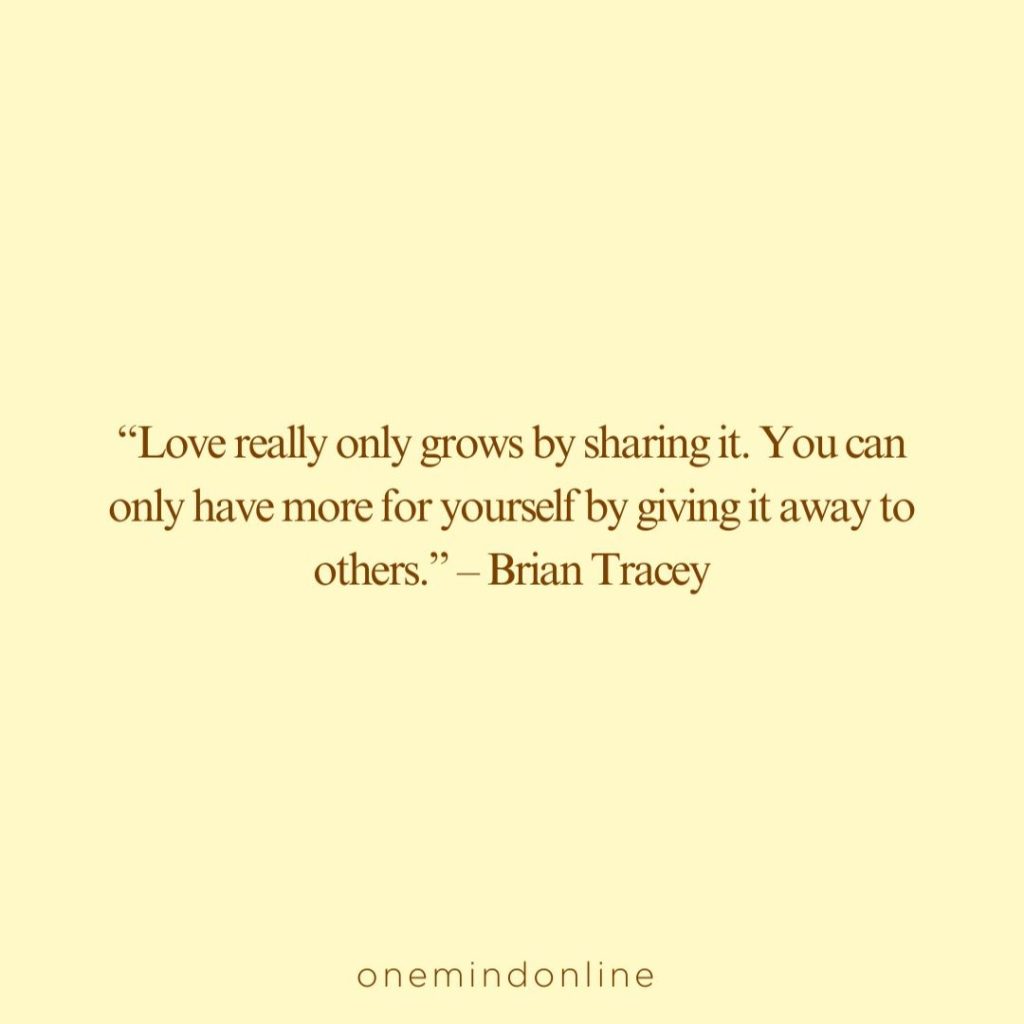
“Love really only grows by sharing it. You can only have more for yourself by giving it away to others.” – Brian Tracey
Sharing love, however, is dependent upon the availability of love in the first place and on this topic there is none better than Brene Brown’s work for getting to the root of our relationship with love.
“We cultivate love when we allow our most vulnerable and powerful selves to be deeply seen and known, and when we honor the spiritual connection that grows from that offering with trust, respect, kindness and affection.” – Brene Brown
“Love is not something we give or get; it is something that we nurture and grow, a connection that can only be cultivated between two people when it exists within each one of them – we can only love others as much as we love ourselves.” – Brene Brown
“Shame, blame, disrespect, betrayal, and the withholding of affection damage the roots from which love grows. Love can only survive these injuries if they are acknowledged and healed.” – Brene Brown
“Be vulnerable, let yourself be deeply seen, love with your whole heart, practice gratitude and joy. SAY: “I am thankful to be this vulnerable because it means I am alive” and then believe, “I am enough” You are worthy of love and belonging” – Brene Brown
Love can only be shared between us, to the extent that it is alive within us.
Our childhood experiences teach us HOW to love ourselves. And I have so much appreciation for how Brene depicts this formative period of our lives. If your childhood experiences were filled with being shamed, blamed, disrespected, betrayed or emotionally abandoned, that might have hurt the very roots of love itself, and then your relationship with YOU is likely to include a lot of shame and blame and self abandonment.
It is difficult to have a sustainable, shared experience of love with the humans around us if the roots of self-love were not nurtured within each of us. Brene assures us though that these wounded roots can be nurtured and nourished anew. That the road to an unstoppable wellspring of love lies in our ability to tolerate our own vulnerability.
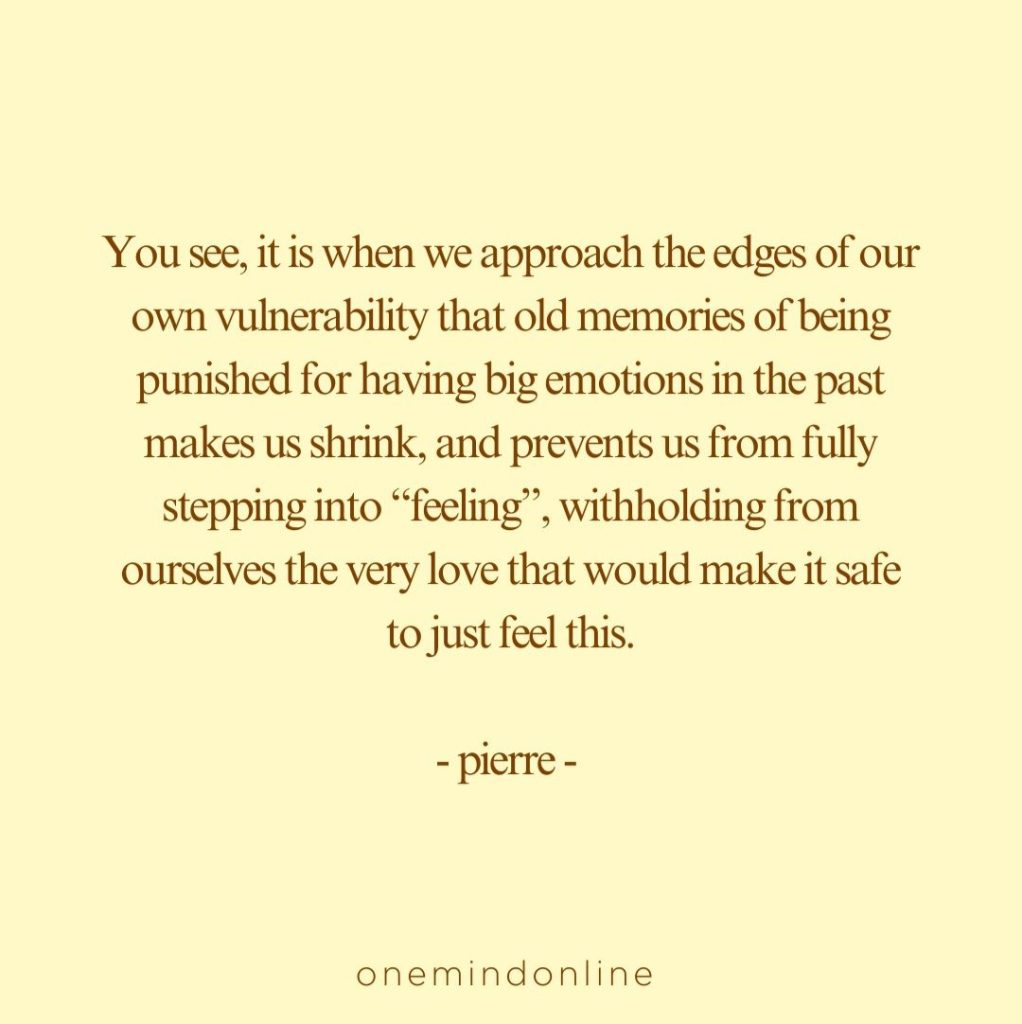
You see, it is when we approach the edges of our own vulnerability that old memories of being punished for having big emotions in the past makes us shrink, and prevents us from fully stepping into “feeling”, withholding from ourselves the very love that would make it safe to just feel this.
Let us change this! Let’s allow ourselves to feel! Allow ourselves to be seen in our vulnerability, first witnessed by ourselves and then by others too. You will be blown away by the strength in you when you are able to hold a space that allows for feeling, without shame, without blame, without guilt.
A few guiding mantras:
- “Breathe deeply, open your heart, and let love overflow.”
- “Vulnerability is not weakness, but the fertile ground where love blooms.”
- “I am thankful to be this vulnerable because it means I am alive.”
- Repeat with conviction: “I am enough. I am worthy of love.”
So, let’s be brave, friends. Let our hearts be transparent windows. Spread the ripple of connection, and let’s make today a symphony of hearts overflowing with love.
Have a beautiful Friday!
– pierre –
Today’s LIVE meditation is: Sharing love.
Today’s LIVE meditation
https://youtu.be/nrf8sH68H3k 2024
Practice the “Daily Dose”
Let’s put it into practice! Choose what works for you – daily, once a week or whenever inspiration strikes. Putting pen to paper wires the neural pathways that will create your new habits.
1 – Affirmation
Write down your favourite affirmation on a sticky note and place it somewhere that you’ll be able to see it the whole day.
- “Breathe deeply, open your heart, and let love overflow.”
- “Vulnerability is not weakness, but the fertile ground where love blooms.”
- “I am thankful to be this vulnerable because it means I am alive.”
- Repeat with conviction: “I am enough. I am worthy of love.”
2 – A moment of reflection
Use today’s question as a journal prompt. If you don’t have the time to sit down and write, just take a moment to reflect on your response.
The Roots of Your Self-Love: Reflect on your childhood experiences with emotions and vulnerability. When you expressed big feelings as a child, how were they received? How do those early experiences still influence the way you treat yourself today when you’re emotional or vulnerable? How could you change your response to yourself – how could you create an inner support that allows you to feel big emotions?
3 – Quotes to share
Send a quote to someone who needs it, or share them all on social media to spread the good vibes!


4 – Q&A for deeper learning
Read through the questions and answers and write down at least one “aha moment” that clicked for you.
Q1. What does it mean to “approach the edge of your own vulnerability”?
Approaching the edge of your vulnerability means encountering moments when you could choose to be emotionally open and authentic, but feel the impulse to protect yourself instead. It’s that threshold where you might share a difficult feeling, admit you’re struggling, or express a deep need—but old fears make you want to retreat. Recognizing these moments is the first step toward choosing courage over self-protection.
Q2. Why can’t I share love with others if I don’t love myself first?
As Brené Brown explains, love is something we nurture and grow—it must exist within us before we can cultivate it with others. If your relationship with yourself is filled with shame, harsh judgment, or self-abandonment, you’ll unconsciously replicate these patterns in your relationships. You can only offer others the same quality of love, acceptance, and compassion that you’ve developed for yourself.
Q3. How do childhood experiences affect my ability to love myself as an adult?
Your childhood experiences taught you how to relate to your own emotions and needs. If you were shamed, blamed, or emotionally abandoned when you expressed vulnerability as a child, you learned that certain feelings weren’t safe or acceptable. These early lessons become internalized patterns—you begin treating yourself the way you were treated, often without realizing it. This creates wounded roots that affect your capacity for self-love and connection.
Q4. Can damaged roots of self-love actually be healed, or is the damage permanent?
The damage is absolutely not permanent. While childhood wounds can run deep, Brené Brown assures us that these wounded roots can be nurtured and nourished anew. Through acknowledging past injuries, practicing self-compassion, allowing yourself to be vulnerable, and gradually building trust with yourself, you can heal and grow new, healthier patterns. It requires patience and courage, but transformation is possible.
Q5. What’s the connection between vulnerability and love?
Without vulnerability, we come up against a barrier that prevents us from fully experiencing love. As Brown states, “We cultivate love when we allow our most vulnerable and powerful selves to be deeply seen and known.” When you’re willing to be emotionally authentic—to feel deeply and let yourself be seen—you create the conditions for genuine connection. Vulnerability isn’t weakness; it’s the courage to show up as your whole, imperfect self, which is what makes real intimacy possible.
Q6. Why do I shrink back from my feelings instead of allowing myself to feel them?
You shrink back because past experiences taught you that vulnerability was dangerous. Perhaps you were punished, rejected, or shamed for having big emotions. Your nervous system remembers these experiences and tries to protect you by shutting down feelings before they become “too much.” This protective mechanism, while understandable, actually withholds from you the very love and acceptance that would make it safe to feel.
Q7. How can I start practicing vulnerability in a safe way?
The most important step is to become your own safe space for your vulnerable thoughts and feelings. Begin by being the witness to your own vulnerability with compassion before sharing it with others. Practice noticing your feelings without judgment, saying to yourself “I am thankful to be this vulnerable because it means I am alive.” Start small—perhaps share one authentic feeling with a trusted person, or write honestly in a journal. Create a mantra like “I am enough” to anchor yourself when vulnerability feels scary. Remember that building this capacity is a gradual process, and each small act of courage strengthens your foundation.
Also remember that bleeding over everyone around you doesn’t equal vulnerability. Some people just have too much of their own unhealed wounds and are unable to respond to your vulnerability in a healthy way. It’s important to learn how to recognize people who can respond with wisdom, otherwise an attempt at being vulnerable could easily lead to re-inflicting the same old injuries on both sides.