
“Your Daily Dose” is a quick two minute read packed with bite-sized wisdom from all the great teachers. But you could also choose to turn it into something more… a powerful daily practice for personal growth. Give it a try!
A message from today’s meditation:
Thich Nhat Hanh touched millions of lives in the time that he spent on Earth. His wisdom was profound but always expressed in very simple words, the practical application immediately clear.
His teachings on love were no different, every word speaks to that part of you that already knows this:
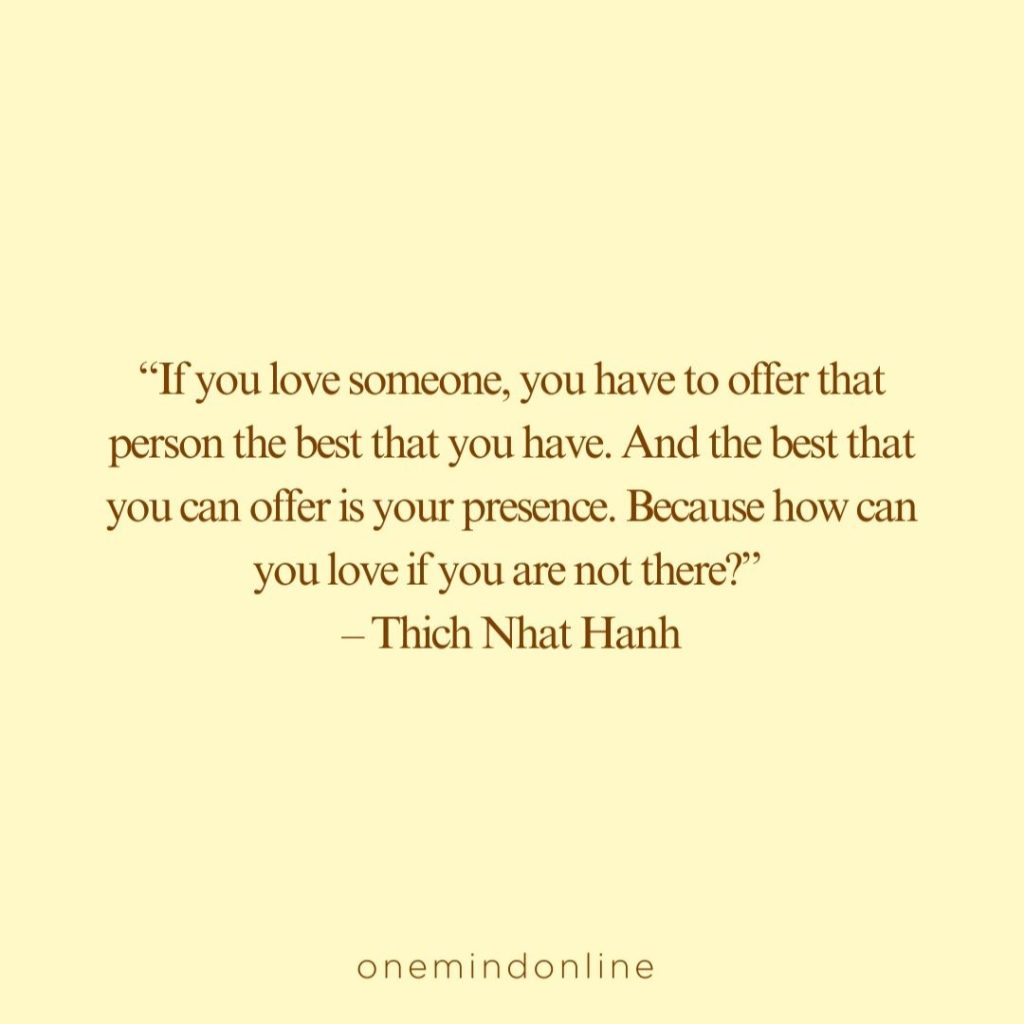
“If you love someone, you have to offer that person the best that you have. And the best that you can offer is your presence. Because how can you love if you are not there?” – Thich Nhat Hanh
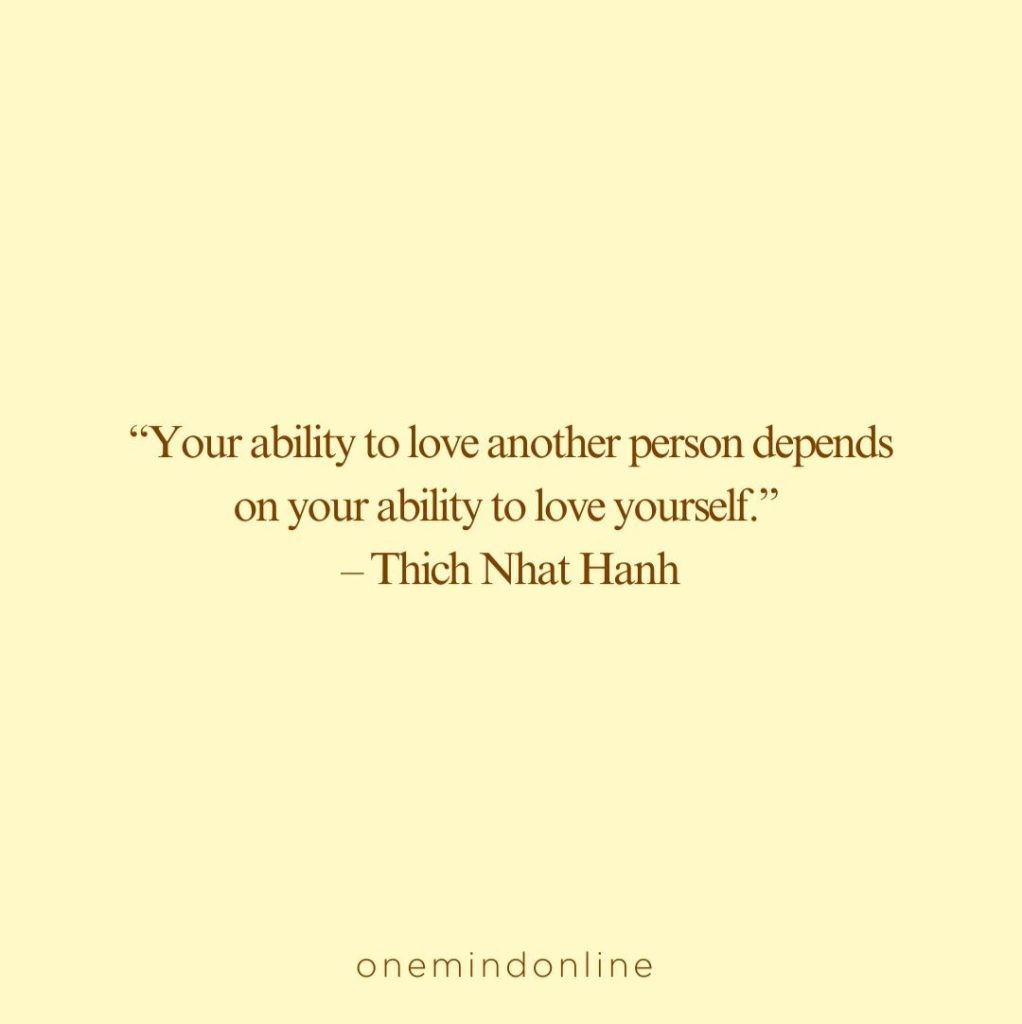
“Your ability to love another person depends on your ability to love yourself.” – Thich Nhat Hanh
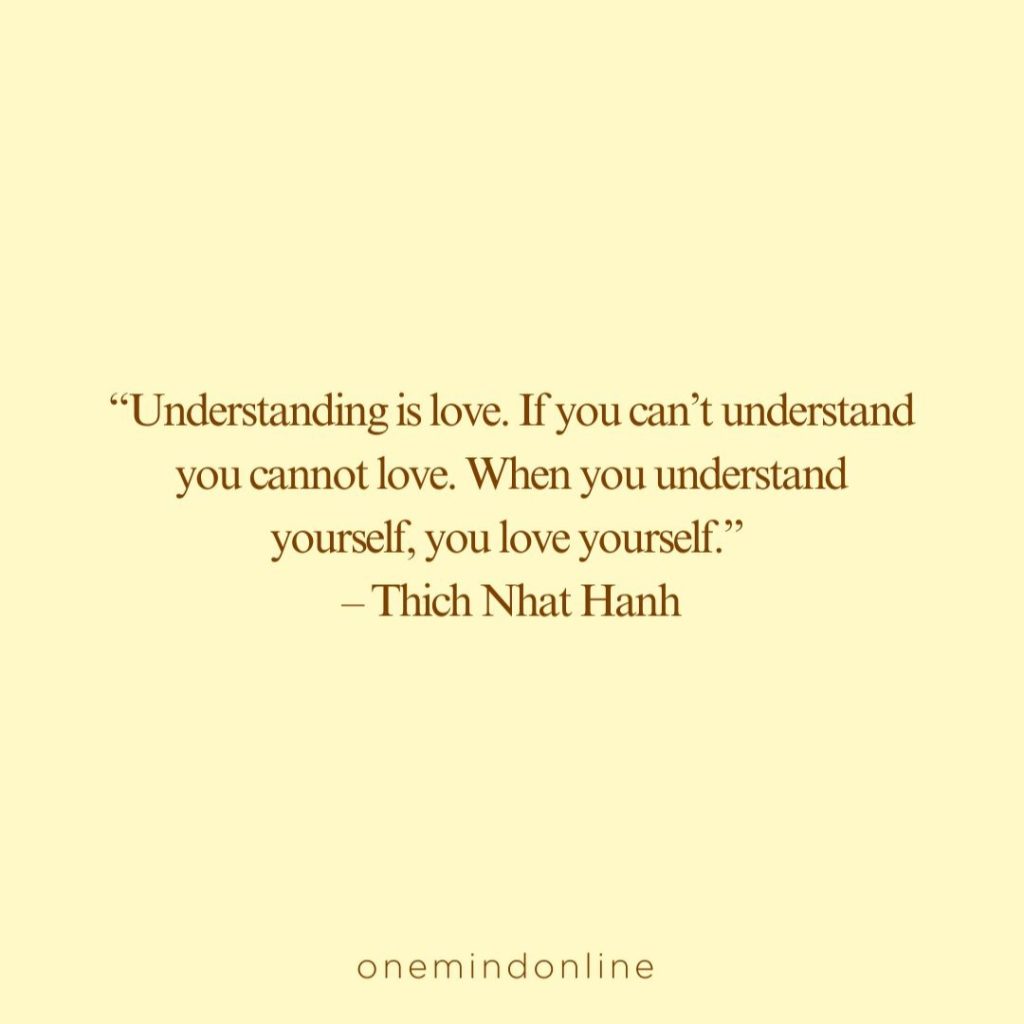
“Understanding is love. If you can’t understand you cannot love. When you understand yourself, you love yourself.” – Thich Nhat Hanh
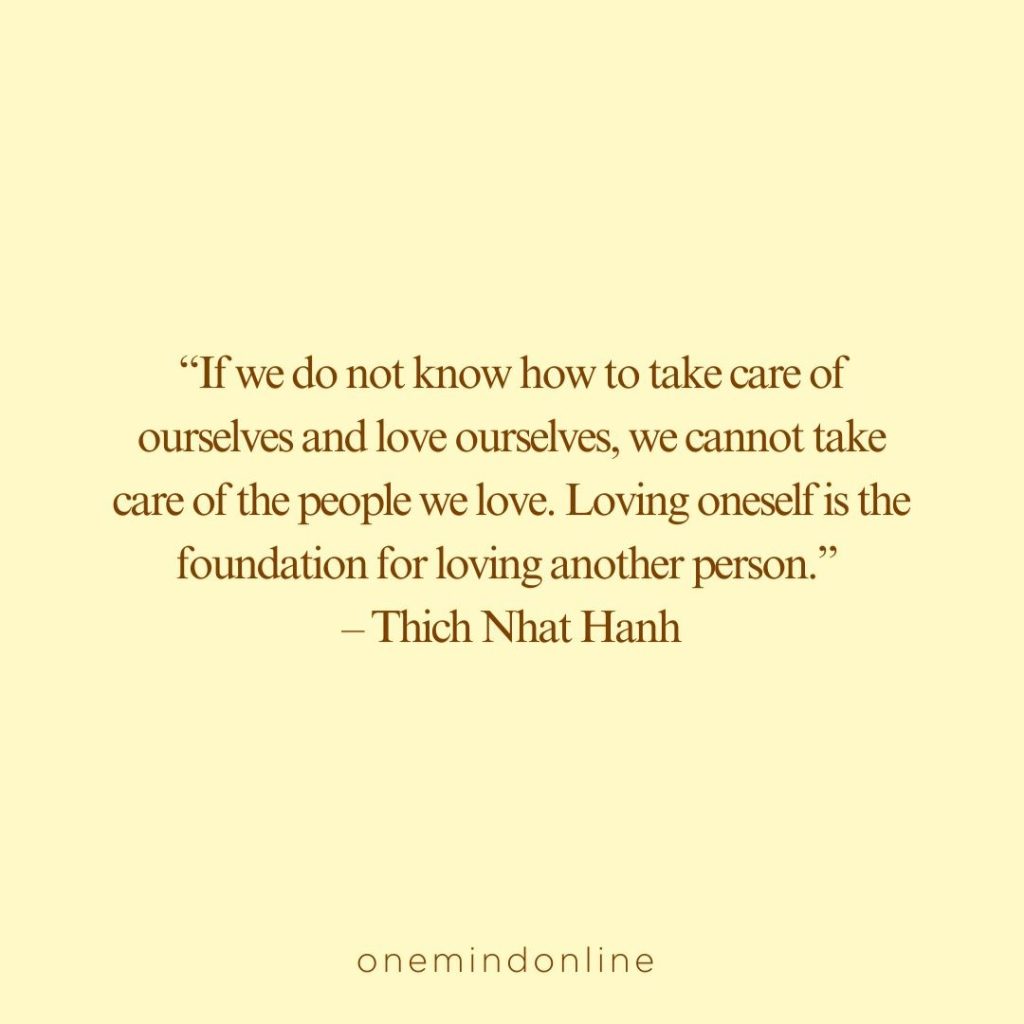
“If we do not know how to take care of ourselves and love ourselves, we cannot take care of the people we love. Loving oneself is the foundation for loving another person.” – Thich Nhat Hanh
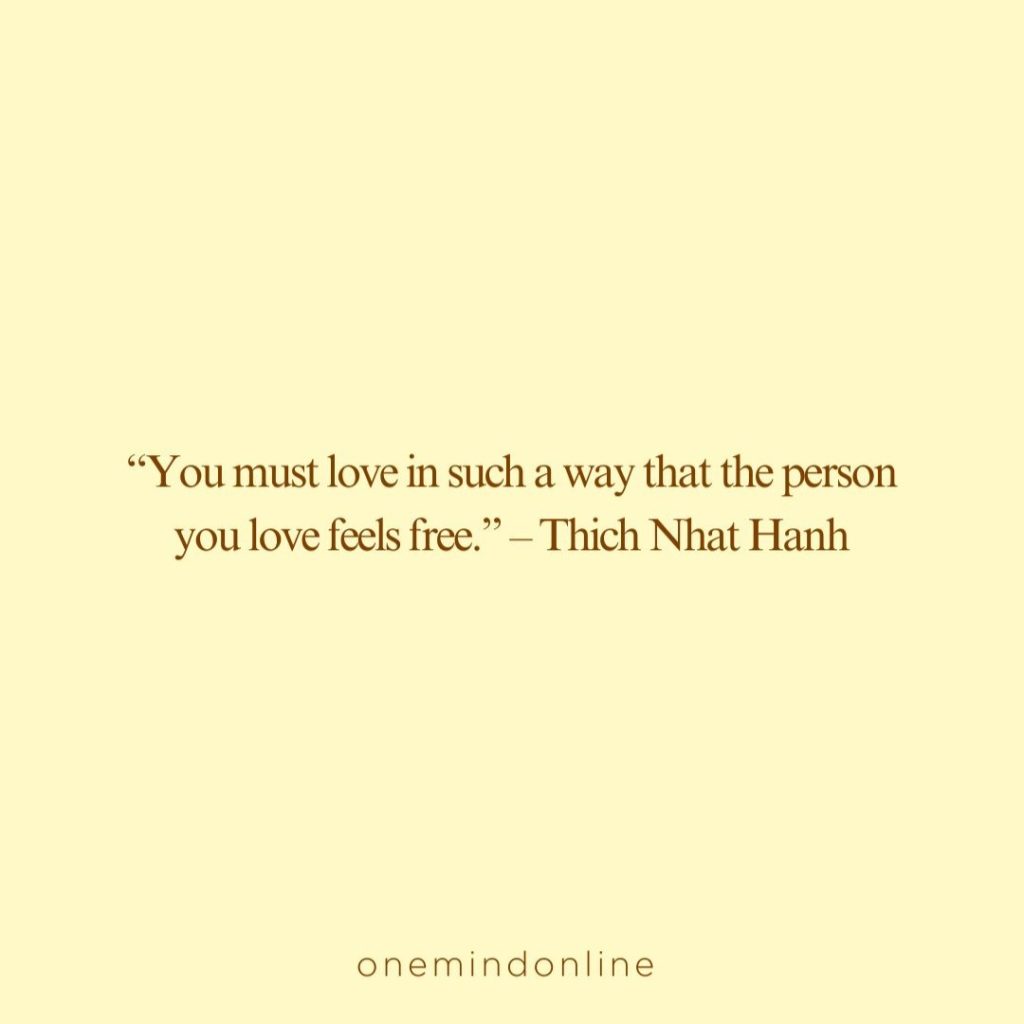
“You must love in such a way that the person you love feels free.” – Thich Nhat Hanh
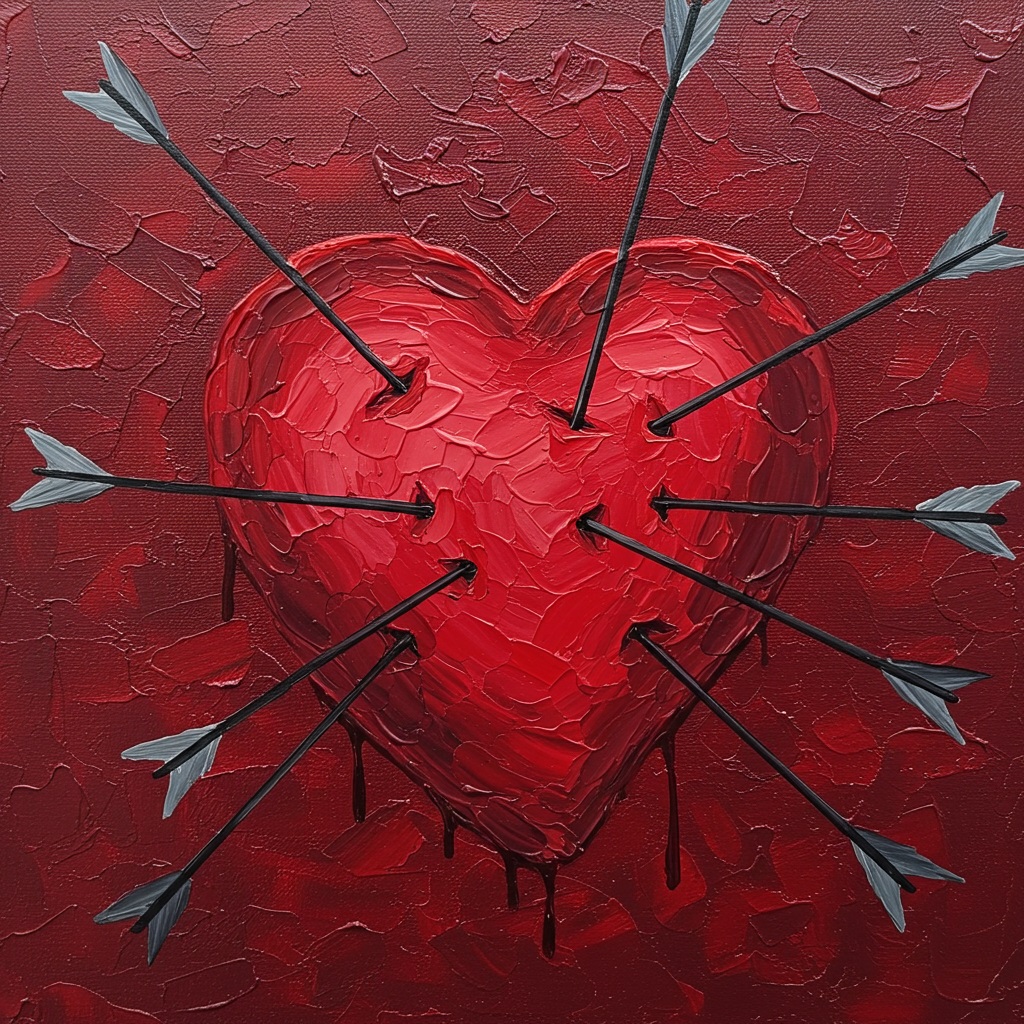
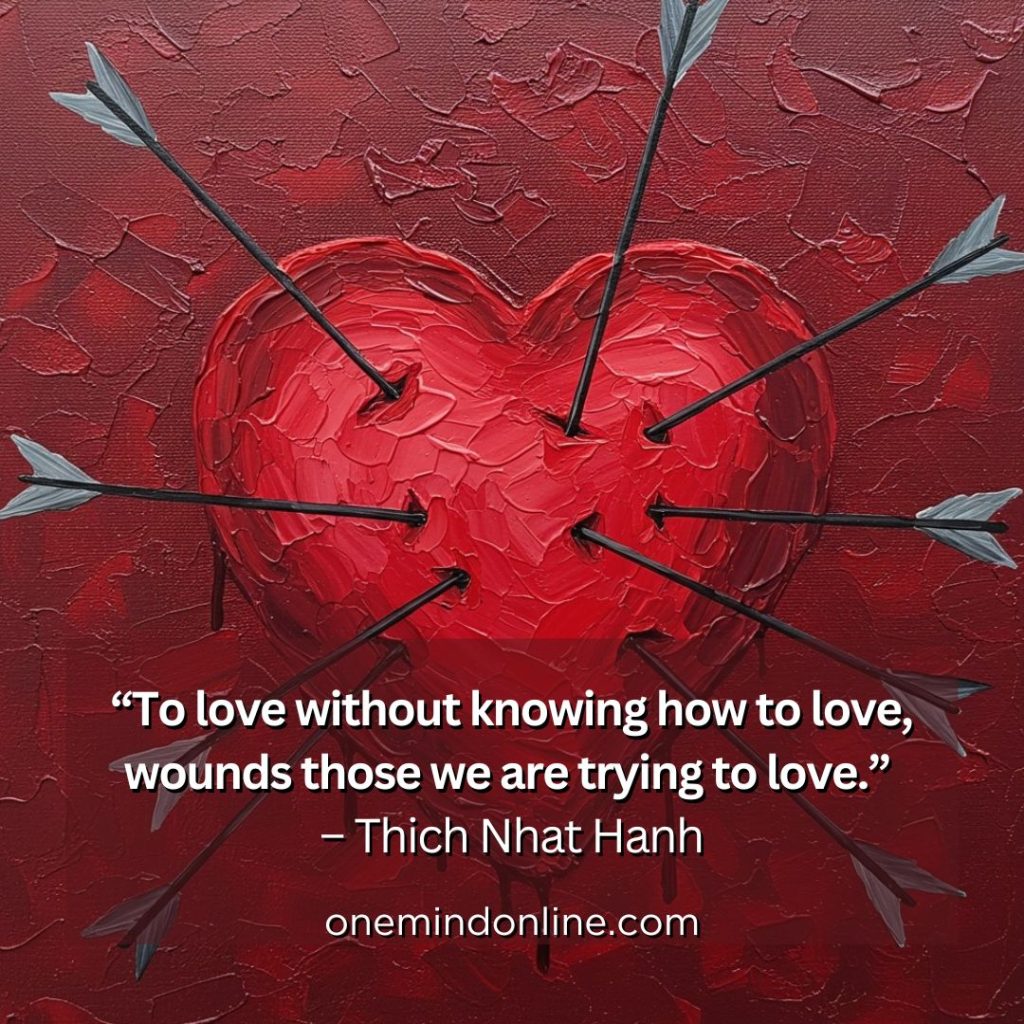
“To love without knowing how to love, wounds those we are trying to love.” – Thich Nhat Hanh
I want to take a moment to pause on this last thought, “wounding those we are trying to love…”
If I haven’t done the work to foster acceptance of myself through a deep understanding of my own human-ness – if I haven’t come to feel love for this human that is me – then I will “need” the humans around me to always show up in a way that makes me feel accepted, understood and loved. I am literally burdening the people I “love” with the responsibility of making me feel whole, and I am unable to “allow” them to be who they are.
In this case the people I love certainly don’t experience freedom, they become hostages to my sense of wellbeing.
Thank you for doing your work to grow into your own sense of wholeness. You are a source of light to the humans around you.
Mantras for your journey:
- “I am worthy of love, starting with my own.”
- “I choose presence, deepening love with every breath.”
- “Understanding myself unlocks my capacity to love fully.”
- “I release the need for those around me to complete me.”
Have a beautiful Friday filled with love!
– pierre –
Today’s LIVE meditation is: Sharing love
Today’s LIVE meditation
https://youtu.be/aGshly4DXkM 2026
https://youtu.be/LzCIGrI_SJM 2025
https://youtu.be/MPbsxyr1aO8 2024
https://youtu.be/1IPzPQBYKH0 2020
Practice the “Daily Dose”
Let’s put it into practice! Choose what works for you – daily, once a week or whenever inspiration strikes. Putting pen to paper wires the neural pathways that will create your new habits.
1 – Affirmation
Write down your favourite affirmation on a sticky note and place it somewhere that you’ll be able to see it the whole day.
- “I am worthy of love, starting with my own.”
- “I choose presence, deepening love with every breath.”
- “Understanding myself unlocks my capacity to love fully.”
- “I release the need for those around me to complete me.”
2 – A moment of reflection
Use today’s question as a journal prompt. If you don’t have the time to sit down and write, just take a moment to reflect on your response.
Reflect on a relationship where you felt you needed the other person to make you feel whole or validated: What were you asking them to provide you with, that you weren’t giving yourself? How might that relationship have been different if you had approached it from a place of inner completeness?
3 – Quotes to share
Send a quote to someone who needs it, or share them all on social media to spread the good vibes!

4 – Q&A for deeper learning
Read through the questions and answers and write down at least one “aha moment” that clicked for you.
Q1: What does it mean to “love without knowing how to love”?
It means attempting to connect with others before developing a foundation of self-understanding and self-acceptance. When we haven’t learned to love ourselves, our attempts at loving others often become expressions of our own unmet needs rather than genuine gifts of presence and understanding. This unintentional pattern can create emotional burden and dependency rather than freedom and connection.
Q2: Why is self-love considered the foundation for loving others?
Self-love creates emotional wholeness and independence. When you genuinely accept and care for yourself, you approach relationships from a place of completeness rather than need. This allows you to offer authentic presence and understanding without requiring others to fill your inner voids or validate your worth. You can then love others for who they are rather than for what they provide you.
Q3: How can I tell if I’m making someone I love responsible for my wellbeing?
Notice if you feel anxious or incomplete when they don’t respond in specific ways, if you frequently need reassurance from them, or if you struggle when they make choices independent of you. Other signs include feeling threatened by their autonomy, requiring constant validation, or experiencing your mood as dependent on their actions. These patterns suggest you may be burdening them with responsibility for your emotional state.
Q4: What does it mean to offer someone “presence” in a relationship?
Presence means being fully attentive and available in the current moment without distraction, judgment, or agenda. It’s listening without planning your response, engaging without trying to fix or change, and simply being there with openness and acceptance. Presence is about quality of attention rather than quantity of time—it’s the gift of your undivided awareness.
Q5: How do I begin the work of understanding and loving myself?
Start with honest self-observation without harsh judgment. Notice your patterns, triggers, and reactions with curiosity rather than criticism. Practice self-compassion by treating yourself with the same kindness you’d offer a good friend. Meditation, journaling, therapy, and mindfulness practices can all support this journey. Remember that self-understanding is an ongoing process, not a destination.
Q6: Can working on self-love be seen as selfish or narcissistic?
Not at all. True self-love is fundamentally different from narcissism. Narcissism involves an inflated sense of self-importance hand-in-hand with a fundamental lack of self-acceptance, so that validation will forever be demanded form others. Self-love, by contrast, is about accepting your humanity—flaws and all—with compassion. This acceptance actually increases your capacity for empathy and authentic connection because you’re no longer defending against your own vulnerability or projecting your needs onto others.
Q7: What does “loving in such a way that the person you love feels free” look like in practice?
It means supporting their growth even when it doesn’t serve your preferences, celebrating their autonomy rather than fearing it, and releasing expectations about who they should be. It involves respecting their boundaries, encouraging their individual pursuits, and not requiring them to change to meet your emotional needs. This kind of love trusts rather than controls, invites rather than demands, and celebrates rather than possesses.