
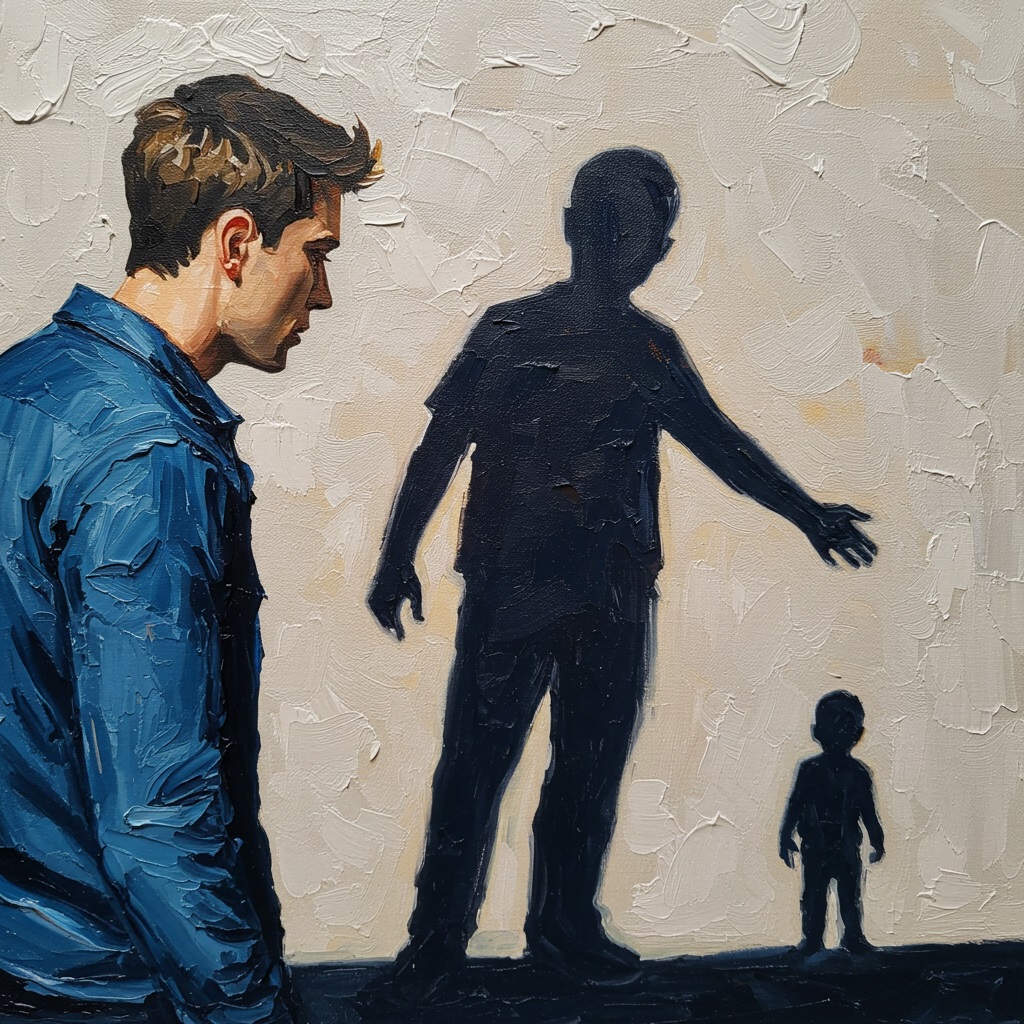
“Your Daily Dose” is a quick two minute read packed with bite-sized wisdom from all the great teachers. But you could also choose to turn it into something more… a powerful daily practice for personal growth. Give it a try!
A message from today’s meditation:
We’re starting today’s journey with two quotes from Thich Nhat Hanh that seem to look in two different directions. The first looks outward and the second looks inward.
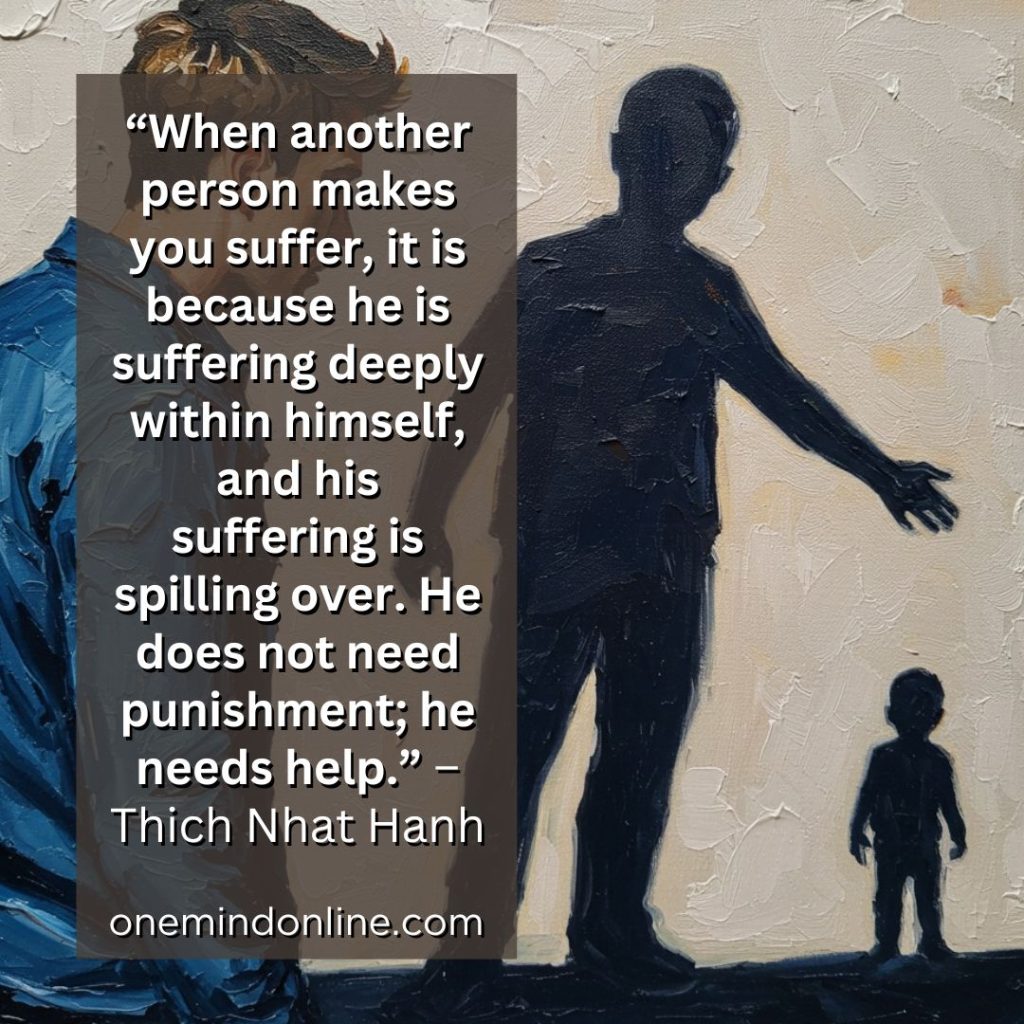
“When another person makes you suffer, it is because he is suffering deeply within himself, and his suffering is spilling over. He does not need punishment; he needs help.” – Thich Nhat Hanh
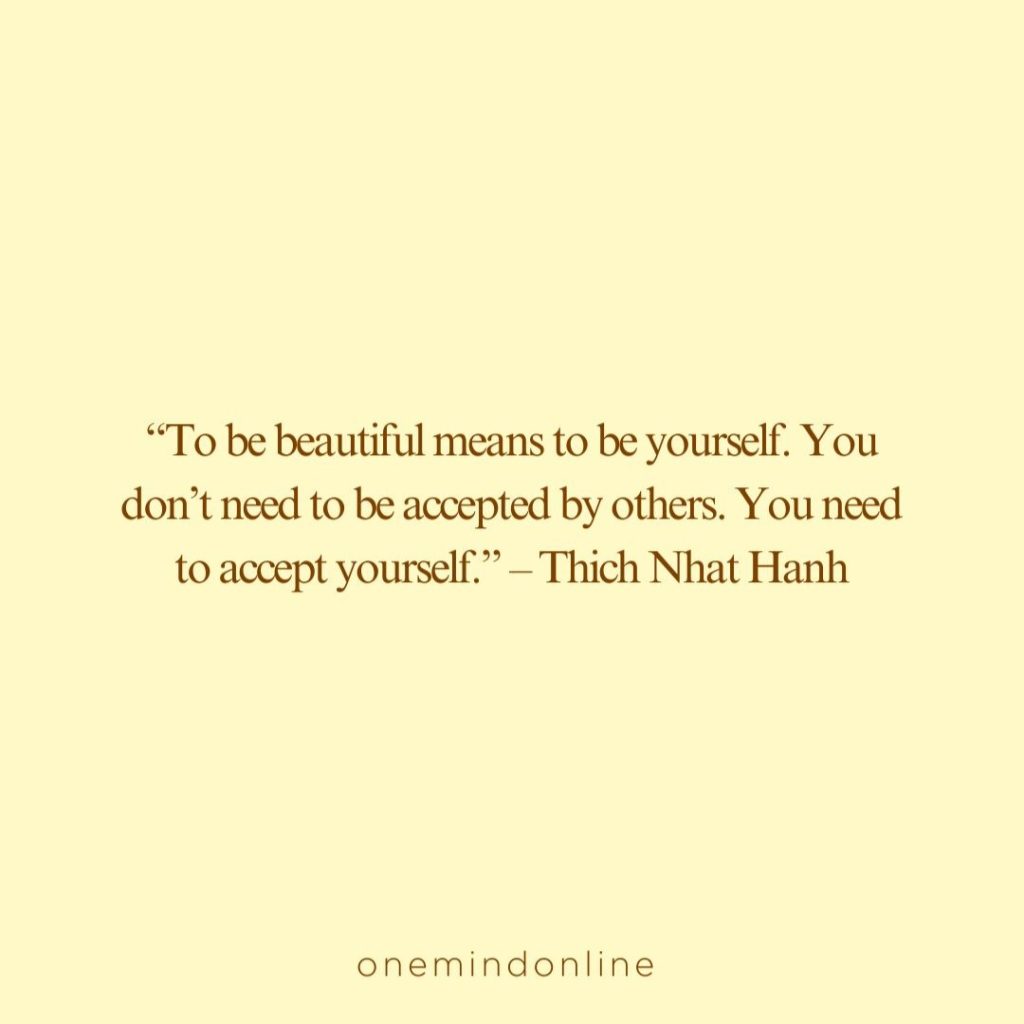
“To be beautiful means to be yourself. You don’t need to be accepted by others. You need to accept yourself.” – Thich Nhat Hanh
The first quote emphasizes external focus – understanding the suffering of others – “he doesn’t need punishment he needs help”. And the second quote emphasizes internal focus – self-acceptance – “You don’t need to be accepted by others, you need to accept yourself”. But there is a common thread here – the thing that causes what Thich Nhat Hanh calls the, “suffering deeply within himself” in the other, and also the “lack of acceptance” within myself, is likely very similar, a deep inner woundedness.
Thich Nhat Hanh speaks beautifully about attending to our wounded inner child, which is most often the root cause of all the things we struggle with.
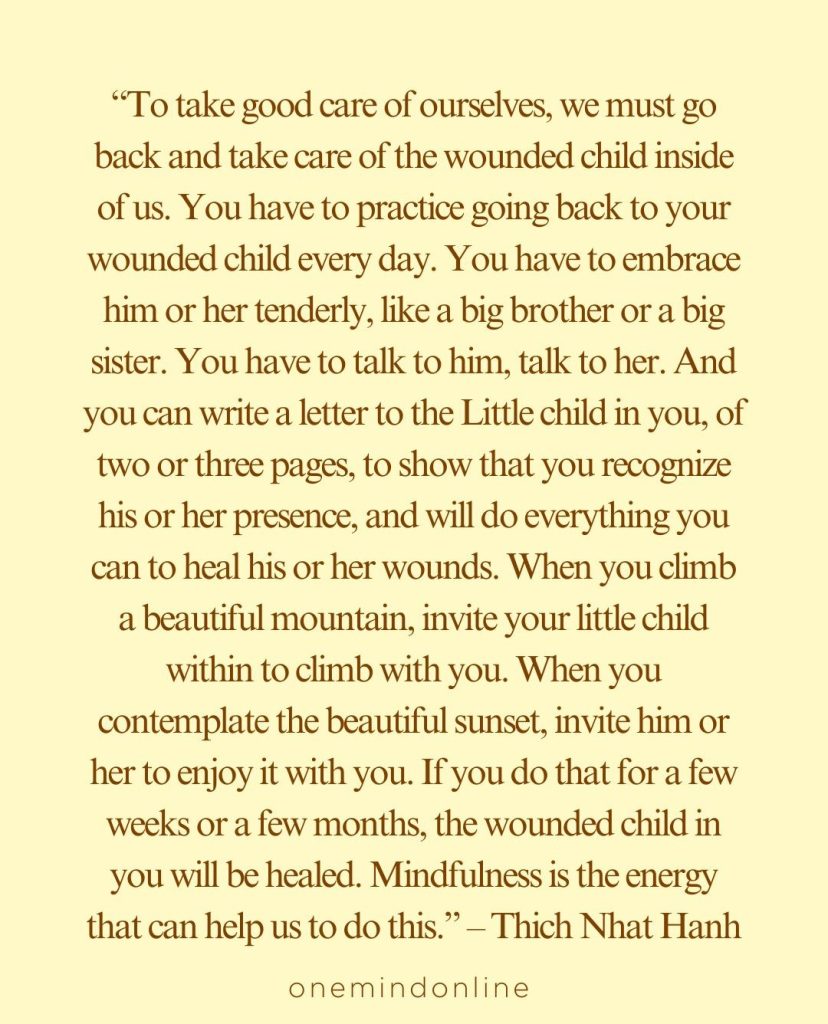
“To take good care of ourselves, we must go back and take care of the wounded child inside of us. You have to practice going back to your wounded child every day. You have to embrace him or her tenderly, like a big brother or a big sister. You have to talk to him, talk to her. And you can write a letter to the Little child in you, of two or three pages, to show that you recognize his or her presence, and will do everything you can to heal his or her wounds. When you climb a beautiful mountain, invite your little child within to climb with you. When you contemplate the beautiful sunset, invite him or her to enjoy it with you. If you do that for a few weeks or a few months, the wounded child in you will be healed. Mindfulness is the energy that can help us to do this.” – Thich Nhat Hanh
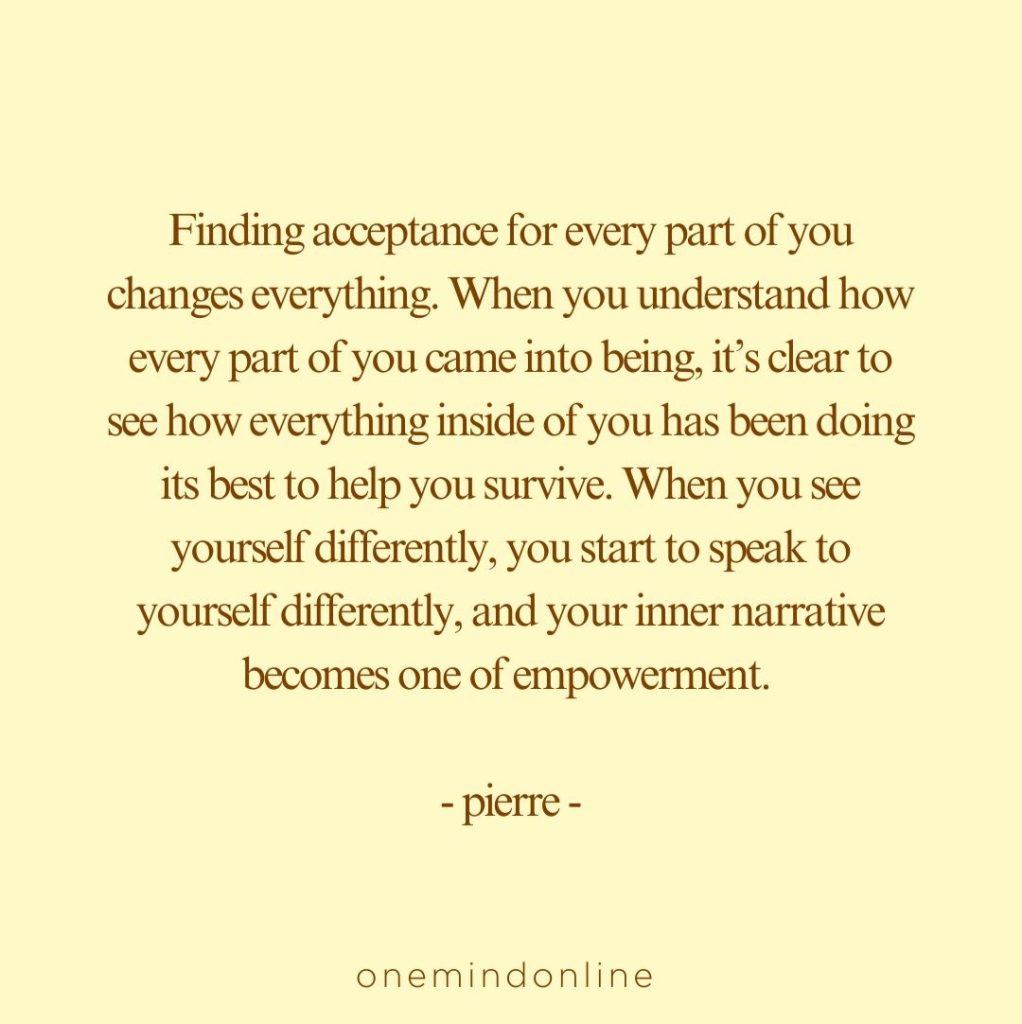
Finding acceptance for every part of you changes everything. When you understand how every part of you came into being, it’s clear to see how everything inside of you has been doing its best to help you survive. When you see yourself differently, you start to speak to yourself differently, and your inner narrative becomes one of empowerment.
When you have this level of self acceptance, then it brings you full circle back to the first quote again, being able to really see another. And recognize that so much of what drives the humans around us is the result of their struggling to deal with a wounded inner child.
Doing your work, healing your own wounded parts, makes you able to give the humans around you the space they need to take a look at their own selves without fear of judgement.
Mantras for your journey:
- “I tend to my inner garden with patience and love, nurturing my inner child with unconditional self-compassion.”
- “I am a safe harbor for my younger self, offering the care and understanding I have always needed.”
- “I am the author of my own story, and I choose to rewrite my inner script with words of encouragement”
- “I am the change I wish to see in the world; as I heal myself, I contribute to the healing of all.”
Thank you for showing up! Thank you for doing your own work.
– pierre –
Today’s LIVE meditation is: A sense of self
Today’s LIVE meditation
https://youtu.be/7IAr3WxrgS0 2026
https://youtu.be/KNp_2eJHxNE 2025
https://youtu.be/9k6Kh1EhuEY 2024
https://youtu.be/C9pR2WJjih8 2022
Practice the “Daily Dose”
Let’s put it into practice! Choose what works for you – daily, once a week or whenever inspiration strikes. Putting pen to paper wires the neural pathways that will create your new habits.
1 – Affirmation
Write down your favourite affirmation on a sticky note and place it somewhere that you’ll be able to see it the whole day.
- “I tend to my inner garden with patience and love, nurturing my inner child with unconditional self-compassion.”
- “I am a safe harbor for my younger self, offering the care and understanding I have always needed.”
- “I am the author of my own story, and I choose to rewrite my inner script with words of encouragement”
- “I am the change I wish to see in the world; as I heal myself, I contribute to the healing of all.”
2 – A moment of reflection
Use today’s question as a journal prompt. If you don’t have the time to sit down and write, just take a moment to reflect on your response.
Inviting Your Inner Child to Heal: Describe a recent moment of beauty, joy, or peace you experienced. Now, reimagine that moment as if your younger self were present. What would you want to show them? What would you want them to feel? What conversation would you want to have with that inner child during that moment of joy? How might regularly including your inner child in positive experiences begin to heal old wounds?
3 – Quotes to share
Send a quote to someone who needs it, or share them all on social media to spread the good vibes!
4 – Q&A for deeper learning
Read through the questions and answers and write down at least one “aha moment” that clicked for you.
Q1: What does it mean to have a “wounded inner child”?
The wounded inner child refers to the emotional wounds and unmet needs from your childhood that continue to influence your adult behavior, relationships, and self-perception. These wounds might stem from trauma, neglect, criticism, or simply not having your emotional needs fully met. This inner child carries pain that often manifests as self-doubt, fear of rejection, people-pleasing, or difficulty with boundaries.
Q2: Why should I have compassion for someone who has hurt me?
Compassion doesn’t mean excusing harmful behavior or allowing yourself to be mistreated. Rather, it’s about understanding that people who cause pain are often acting from their own unhealed wounds. This perspective helps free you from the burden of resentment and allows you to respond more skillfully. You can have compassion for their suffering while still maintaining healthy boundaries and protecting yourself.
Q3: How do I start “talking to” my inner child if I’ve never done this before?
Begin simply by acknowledging that younger version of yourself exists within you. You might start by looking at childhood photos and noticing what you feel. Write a short letter saying, “I see you, and I’m here for you now.” Share what you wish someone had told you then. It may feel awkward initially, but with practice, this dialogue becomes a powerful healing tool. You can also invite your inner child into present-moment experiences, asking “what would bring you joy right now?”
Q4: How is self-acceptance different from self-improvement?
Self-acceptance means recognizing and embracing who you are right now, including your perceived flaws and past mistakes, understanding they all developed as survival mechanisms. Self-improvement involves growing and changing. The key is that genuine, sustainable growth can only happen from a foundation of self-acceptance. When you accept yourself first, improvement comes from self-love rather than self-rejection, making it far more effective and compassionate.
Q5: Can healing my own wounds really help others heal theirs?
Yes, in several ways. When you heal your own wounds, you become less reactive and more present, which creates safe space for others to be vulnerable. You model what self-compassion looks like, giving others permission to treat themselves with kindness. Additionally, healed people don’t unconsciously project their pain onto others, breaking cycles of hurt. While you can’t heal others directly—that’s their work—your healing creates conditions that support their journey.
Q6: How long does it take to heal the wounded inner child?
Healing is a journey rather than a destination, and the timeline varies for everyone depending on the depth of wounds and your commitment to the practice. Thich Nhat Hanh mentions that with consistent daily practice, you may notice healing within weeks or months. However, deeper wounds may require years of gentle, patient work. The goal isn’t to achieve perfect healing but to develop an ongoing, compassionate relationship with yourself that continues to deepen over time.
Q7: What if I find it difficult to feel compassion for myself or accept my wounded parts?
This difficulty is actually very common—many of us learned early that self-criticism was safer than self-compassion. Start small. You don’t have to feel deep love immediately; simply begin with curiosity or willingness. Ask yourself, “What if this part of me was doing its best to protect me?” Consider working with a therapist who specializes in inner child work or trauma-informed approaches. Remember that the resistance itself often comes from a wounded part that’s afraid of being hurt again. Even acknowledging that resistance with gentleness is a step forward.