

“Your Daily Dose” is a quick two minute read packed with bite-sized wisdom from all the great teachers. But you could also choose to turn it into something more… a powerful daily practice for personal growth. Give it a try!
A message from today’s meditation:
In a social media driven world, we are constantly advised on how to curate our image and carefully craft our words, while the most basic ingredient of true connection is ignored… the courage to simply be honest with everyone we encounter.
Matt Kahn invites us to re-understand honesty as the superpower that helps us master the art of relationship, while grounding us in our own authenticity.
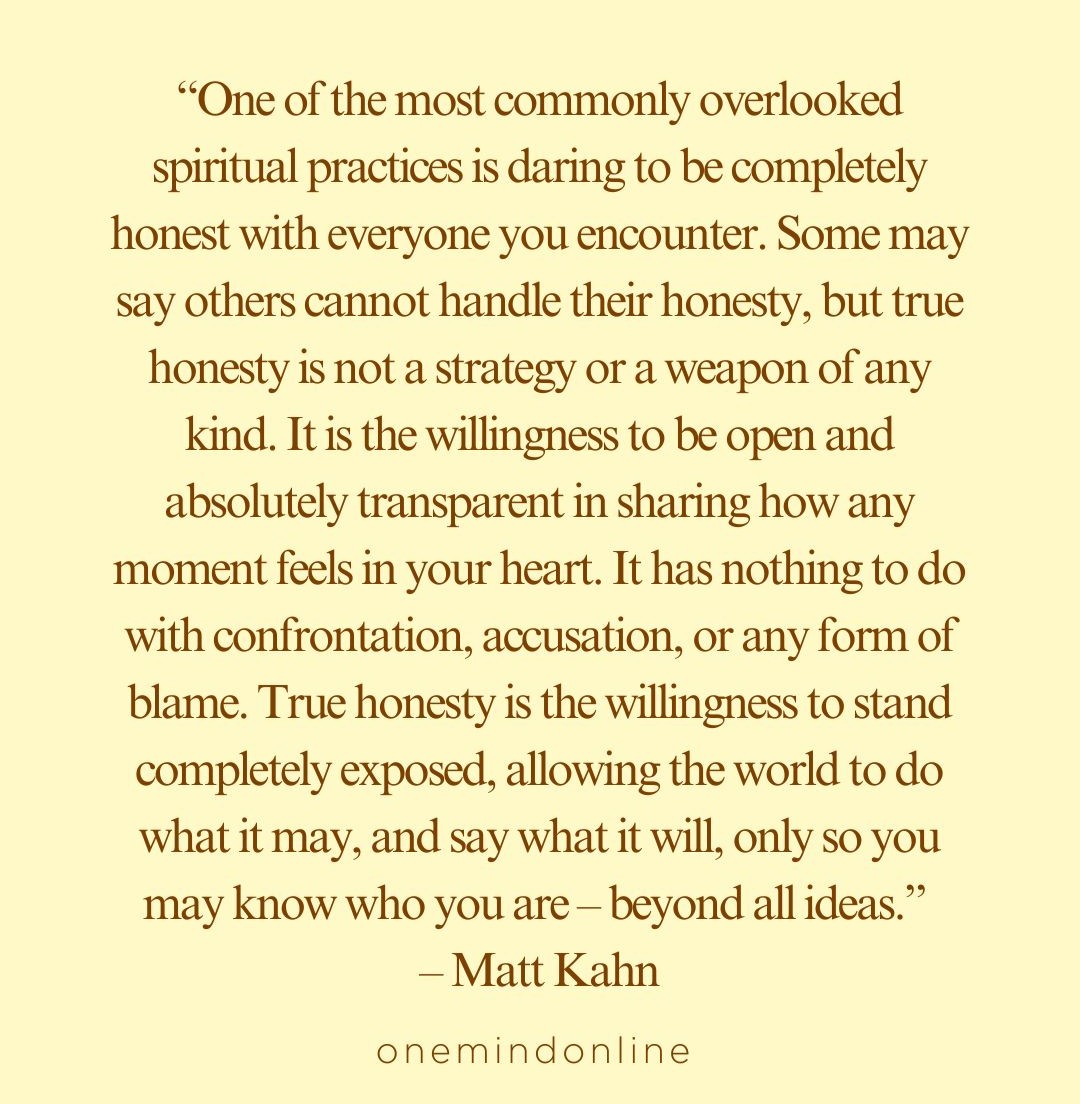
“One of the most commonly overlooked spiritual practices is daring to be completely honest with everyone you encounter. Some may say others cannot handle their honesty, but true honesty is not a strategy or a weapon of any kind. It is the willingness to be open and absolutely transparent in sharing how any moment feels in your heart. It has nothing to do with confrontation, accusation, or any form of blame. True honesty is the willingness to stand completely exposed, allowing the world to do what it may, and say what it will, only so you may know who you are – beyond all ideas.” – Matt Kahn
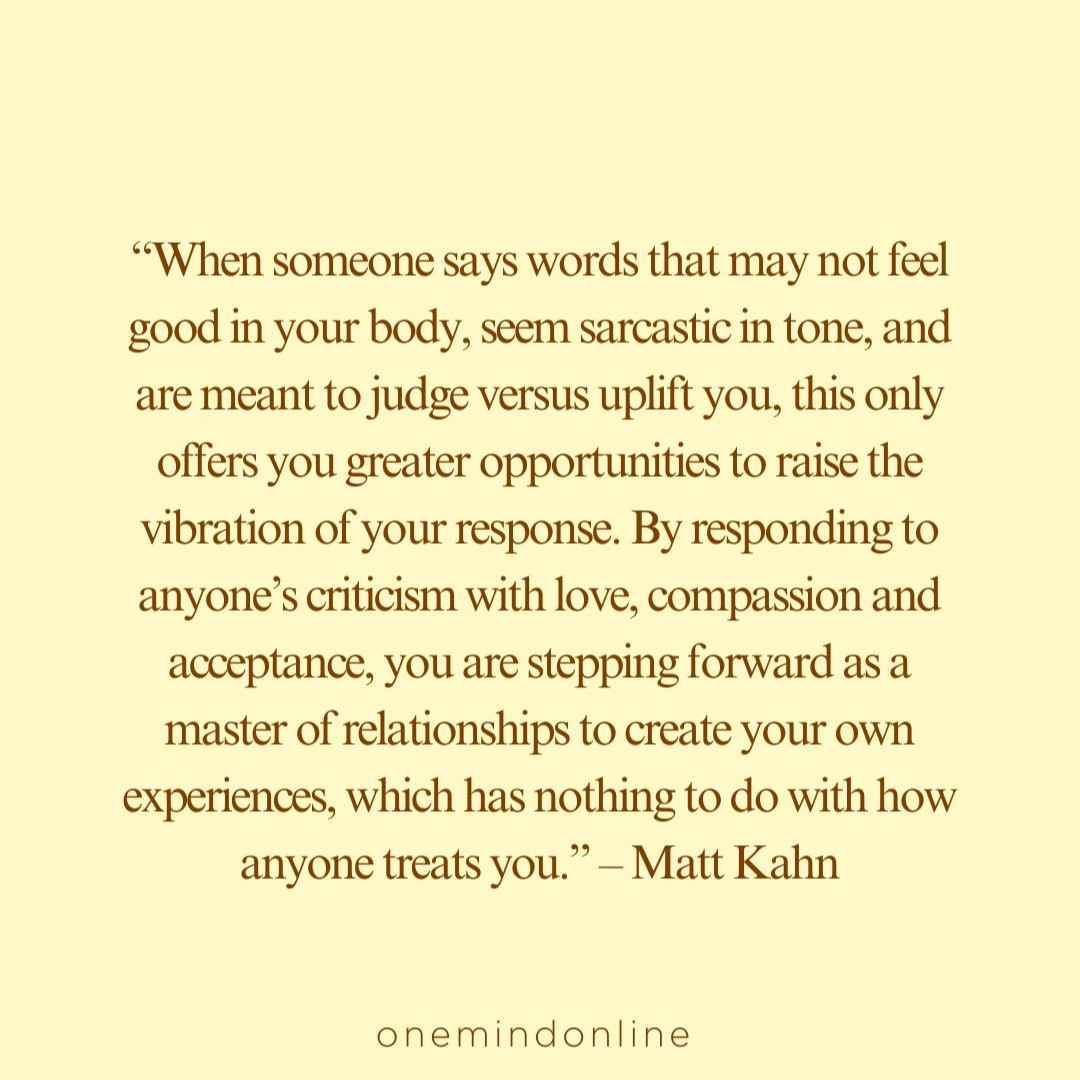
“When someone says words that may not feel good in your body, seem sarcastic in tone, and are meant to judge versus uplift you, this only offers you greater opportunities to raise the vibration of your response. By responding to anyone’s criticism with love, compassion and acceptance, you are stepping forward as a master of relationships to create your own experiences, which has nothing to do with how anyone treats you.” – Matt Kahn
Responding to the world with open and sincere honesty is rare, even having truly honest conversations between friends is not that common when we feel that we always need to wear a mask so that we are perceived in a certain way.
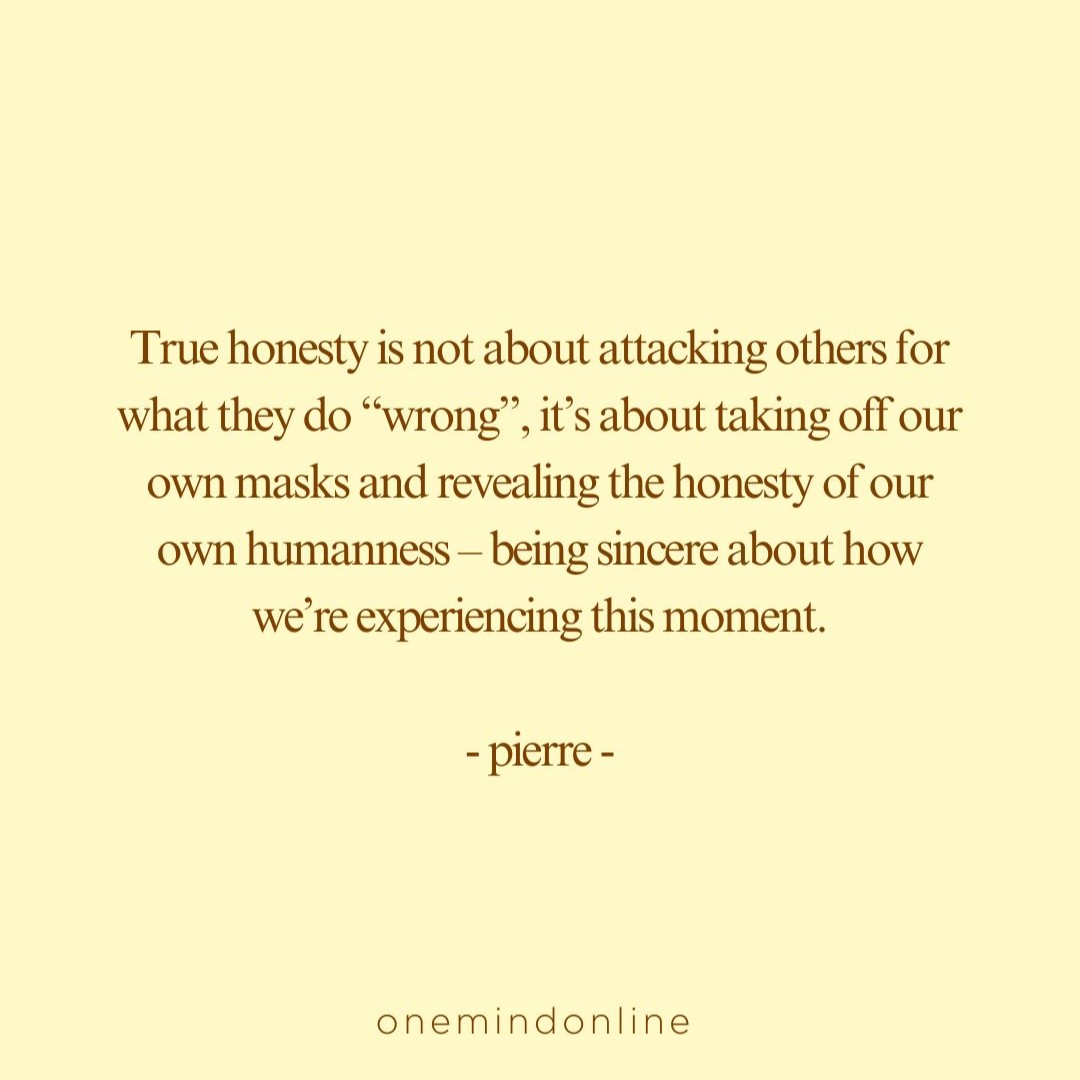
True honesty is not about attacking others for what they do “wrong”, it’s about taking off our own masks and revealing the honesty of our own humanness – being sincere about how we’re experiencing this moment.
Here is an example of how simple honest conversations can be when we put down the masks that hide how we feel. Just imagine being able to approach difficult conversations with something like this:
“I believe that it wasn’t your intention to hurt me by what you said, although I still can’t help but feel attacked. I’m trying not to feel this way but for the moment I am struggling to put it down. Can you give me a bit of time to gather myself and then we can talk about it?”
I’ll remind you of how Matt Kahn describes honesty: “true honesty is not a strategy or a weapon of any kind. It is the willingness to be open and absolutely transparent in sharing how any moment feels in your heart. It has nothing to do with confrontation, accusation, or any form of blame. True honesty is the willingness to stand completely exposed, allowing the world to do what it may, and say what it will, only so you may know who you are.”
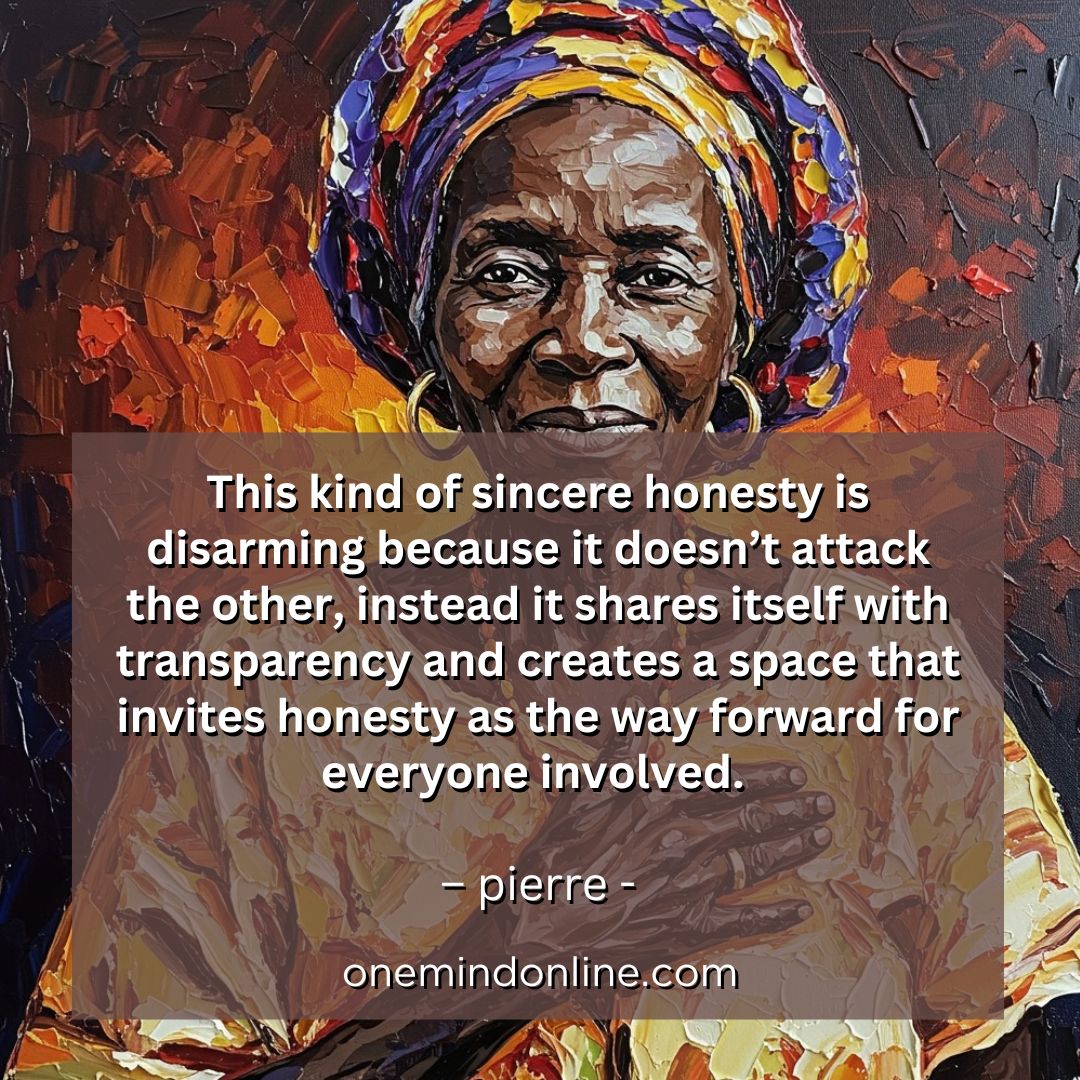
This kind of sincere honesty is disarming because it doesn’t attack the other, instead it shares itself with transparency and creates a space that invites honesty as the way forward for everyone involved.
This level of honesty requires recognizing those moments where my habit has been to reach for an old mask to hide what I really feel, and to slowly, slowly lean into the courage it takes to learn how to express my experience without turning into an attacker myself.
To cultivate a more honest approach to communication, consider these guiding thoughts:
- Be present: Focus on the moment and your genuine feelings, rather than dwelling on past experiences or future anxieties.
- Listen with empathy: Seek to understand the other person’s perspective, without judgment or defensiveness.
- Express yourself authentically: Share your thoughts and feelings honestly, without fear of rejection or criticism.
- Practice self-compassion: Be kind to yourself as you navigate the challenges of honest communication.
Today’s meditation journey explores some of the masks that we might have picked up as part of our baggage, and provides an opportunity to practice how you might have an honest conversation without hiding how you feel.
You are so welcome to join us.
– pierre –
Today’s LIVE meditation is: The masks we wear.
Today’s LIVE meditation
https://youtu.be/yvkVNUJi2aI 2026
https://youtu.be/TkJXkXciIeE 2025
https://youtu.be/M1hUhKlnd2g 2023
Practice the “Daily Dose”
Let’s put it into practice! Choose what works for you – daily, once a week or whenever inspiration strikes. Putting pen to paper wires the neural pathways that will create your new habits.
1 – Affirmation
Not really affirmations today, but a few principles that help ground us in authentic honesty Write down your favourite one on a sticky note and place it somewhere that you’ll be able to see it the whole day.
- Be present: Focus on the moment and your genuine feelings, rather than dwelling on past experiences or future anxieties.
- Listen with empathy: Seek to understand the other person’s perspective, without judgment or defensiveness.
- Express yourself authentically: Share your thoughts and feelings honestly, without fear of rejection or criticism.
- Practice self-compassion: Be kind to yourself as you navigate the challenges of honest communication.
2 – A moment of reflection
Use today’s question as a journal prompt. If you don’t have the time to sit down and write, just take a moment to reflect on your response.
Identifying Your Masks: Think about a recent conversation where you felt you couldn’t be completely honest about your feelings or experience. What “mask” did you wear instead? What were you afraid would happen if you shared your authentic truth in that moment? Write down the script of a possible conversation you could have had that would have shared the emotions that were stirred up in you, without blaming the other person. (Take a look again at the example in bold above.)
3 – Quotes to share
Send a quote to someone who needs it, or share them all on social media to spread the good vibes!
4 – Q&A for deeper learning
Read through the questions and answers and write down at least one “aha moment” that clicked for you.
Q1. What’s the difference between “transparent honesty” and “just being brutally honest”?
True honesty, as described by Matt Kahn, is not a weapon or strategy to hurt others. It’s about transparently sharing how a moment feels in your heart without confrontation, accusation, or blame. Brutal honesty is the ego’s way “being right” and often comes from a place of judgment and attack, while authentic honesty comes from vulnerability and self-revelation. The goal isn’t to “tell people off” but to share your genuine experience in a way that invites connection rather than defensiveness.
Q2. Won’t being this honest make people uncomfortable or push them away?
While some people may initially feel uncomfortable with such transparency, authentic honesty is actually disarming and tends to invite honesty in return. When you share vulnerably without attacking or blaming, you create a safe space for others to drop their own masks. Those who consistently reject authentic connection may naturally distance themselves, but this makes room for deeper, more meaningful relationships with those who value genuine intimacy.
Q3. How do I practice honest communication without becoming emotional or reactive?
Start by focusing on being present in the moment rather than dwelling on past hurts or future fears. Before speaking, pause and connect with what you’re genuinely feeling in your heart right now. Practice expressing your experience using “I” statements that describe your internal state rather than making accusations about others’ behaviour. Remember that honesty is about sharing your truth, not trying to change or control others.
Q4. What if someone responds negatively to my authentic honesty?
Here is the invitation: we get to decide who we are. Whatever someone else says or does doesn’t decide that for us. When someone responds with criticism, sarcasm, or judgment, their reaction tells you about their own masks and fears, not about your worth or the value of what you shared. This is how you choose who you are – you choose how to respond to the negativity. Matt Kahn suggests that when someone responds with criticism or negativity, it’s an opportunity to “raise the vibration of your response”. If someone acts immaturely, you can choose to meet them on their level with a big dose of your own immaturity. Understand though that you are choosing who you are, you’re the person who reacts immaturely. Or… you can choose to be the wisest version of yourself. This might mean slowing down, taking a little longer, even saying “I don’t know how to feel about this right now, I’m not sure what the best response is right now, I’m going to take a little time to get back to you” – notice the transparent honesty in that interaction. It doesn’t mean becoming a doormat or pretending the words didn’t sting. You can say honestly that they hurt and still respond from your center. Life will hand you opportunities every day to practice being who you say you are, and a negative response to your honesty is one of the most powerful invitations gifted to you. Each time you choose openness over defensiveness, you stop being the person who reacts to the world and become the person who creates their own experience within it.
Q5. How can I tell the difference between my authentic feelings and old emotional patterns?
This is why moving a little bit slower is going to be your new best friend. Whenever you react quickly, it’s almost certain you’re repeating an old, well-worn pattern of survival, the kind your system learned long before this moment arrived. Giving yourself a little time to explore both sides of the story, whether that’s a few breaths or even a whole day, creates the space to ask: “Is what I’m feeling right now genuinely about this current situation, or am I reacting from old wounds and patterns?” Reactive patterns tend to feel familiar, intense, and disproportionate to what is actually happening in front of you, like an old echo you’ve heard many times before. Slowing down also makes room for wisdom, which has the ability to not just see your perspective, but to deeply understand the point of view of the other person. When you can hold both at once, your own feelings and their experience, you move out of defending an old story and into a position to suggest productive steps forward that serve both of your needs in this moment. That is the real gift of pausing: it turns a potential clash into a shared way forward.
Q6. Is it always appropriate to be completely honest in every situation?
Honesty doesn’t mean blurting out every thought as it arises. The mind produces a constant stream of impressions, judgments, and stories, and not everything that populates it is true, especially when we’re hurt, triggered, or afraid. Honesty also asks us to be honest with ourselves first, to interrogate our own reactive thoughts before we speak them. Is this thought a fact, or is it an old pattern dressed up as the truth? Am I describing what happened, or the story my mind has built around it? Wisdom understands that a thought that feels convincing isn’t the same as it being accurate. This is why true honesty, as Matt Kahn describes it, is about being transparent with how a moment feels in your heart, not broadcasting every opinion that crosses your mind. Sometimes that means pausing, breathing, and letting the first wave of reactivity settle so you can find the more sincere voice underneath it. What you share after that pause is more likely to be both honest and kind, and it leaves room for the other person to be honest in return.
Q7. How do I build the courage to drop my masks when I’ve been wearing them for so long?
In the name of transparent honesty, here’s the naked truth: if you can’t look at yourself without masks and like the person you see, you will never be comfortable without the protection of masks in your relationships. Having people in your life who see you at your most vulnerable and accept you just as you are can be a very helpful addition, and it’s worth seeking out those safe connections. But their acceptance can’t do the whole job. Your authenticity only consolidates once you approve of who you are without masks. So the courage you’re looking for begins in private. Start by being honest with yourself about what you feel, what you fear, and which masks you reach for most often. Then meet what you find with the kindness you’d offer a good friend rather than the judgment you’d use on a stranger. Each time you can sit with your unmasked self and say, “I’m okay with who I am,” the masks lose their job. They were never meant to be permanent. They were protection you needed once, and you can thank them and set them down gradually, at a pace that feels sustainable. When you no longer need anyone’s approval to feel safe being yourself, showing up honestly in your relationships stops feeling like a risk and starts feeling like home.