
“Your Daily Dose” is a quick two minute read packed with bite-sized wisdom from all the great teachers. But you could also choose to turn it into something more… a powerful daily practice for personal growth. Give it a try!
A message from today’s meditation:
In the natural world organisms don’t exist in any kind of isolation, but live within a dynamically changing environment. Biology describes environment as the space that encompasses everything surrounding a living being, and survival depends on the ability to respond to ever-changing conditions in this environment. As humans, we face the same fundamental challenge: we live in an unpredictable environment beyond our control. The question isn’t whether change will come – it’s how we’ll respond when it does.
Today’s meditation is a recognition of the fact that we all have to deal with constantly changing weather that we have no control over. And that we can either be unhappy when our environment doesn’t show up in a way which we think supports us, or we can cultivate our own ability to show up at peace however our environment changes.
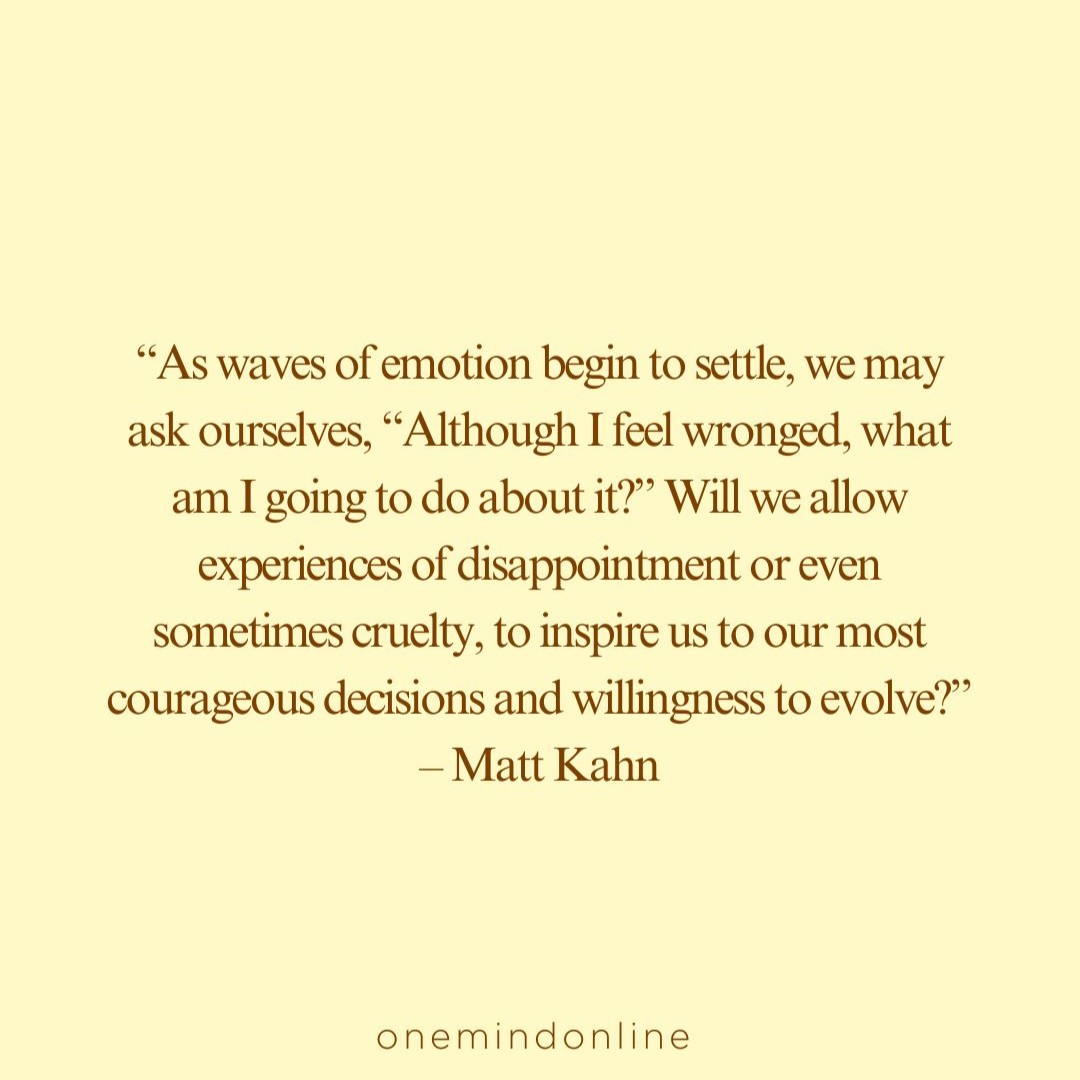
“As waves of emotion begin to settle, we may ask ourselves, “Although I feel wronged, what am I going to do about it?” Will we allow experiences of disappointment or even sometimes cruelty, to inspire us to our most courageous decisions and willingness to evolve?” – Matt Kahn
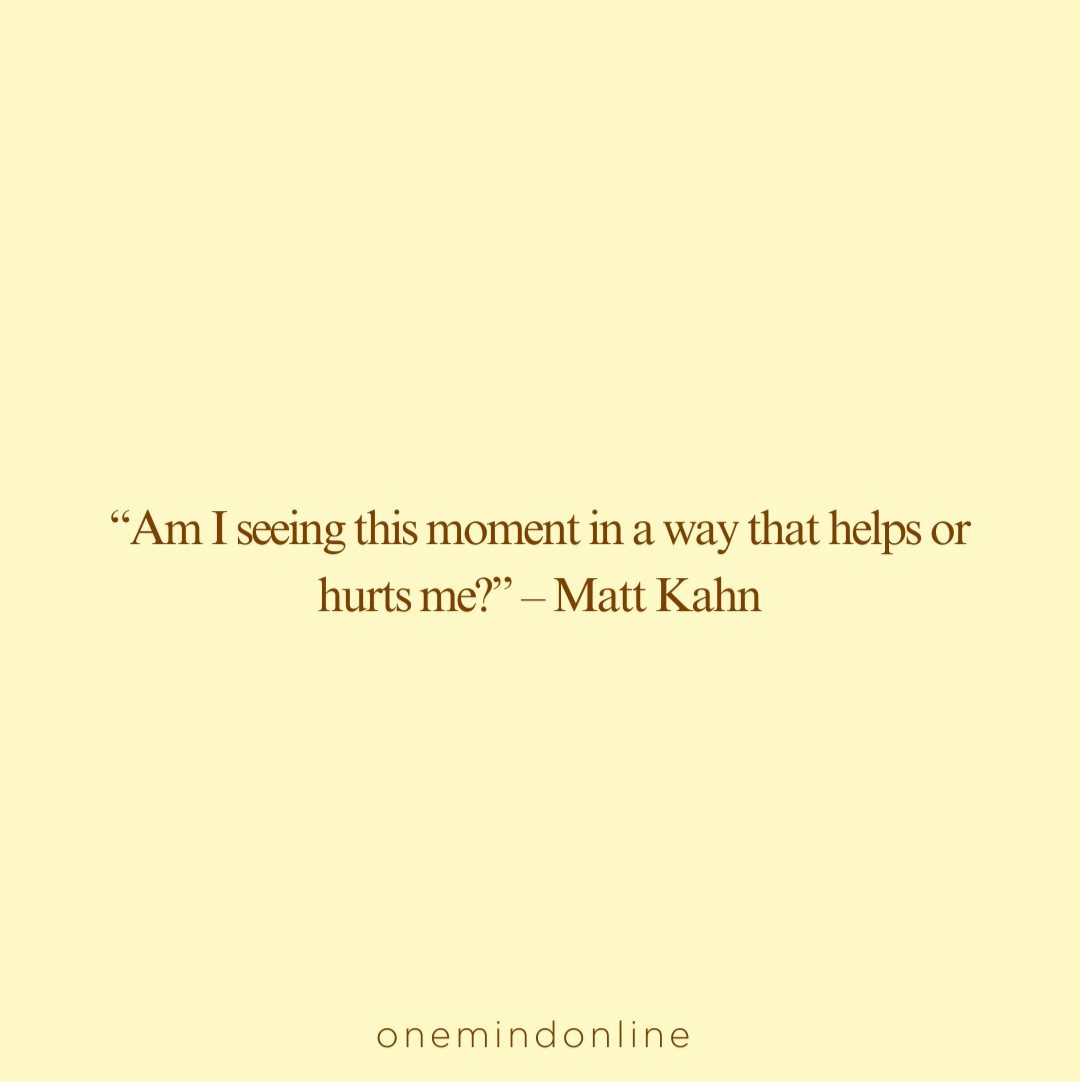
“Am I seeing this moment in a way that helps or hurts me?” – Matt Kahn
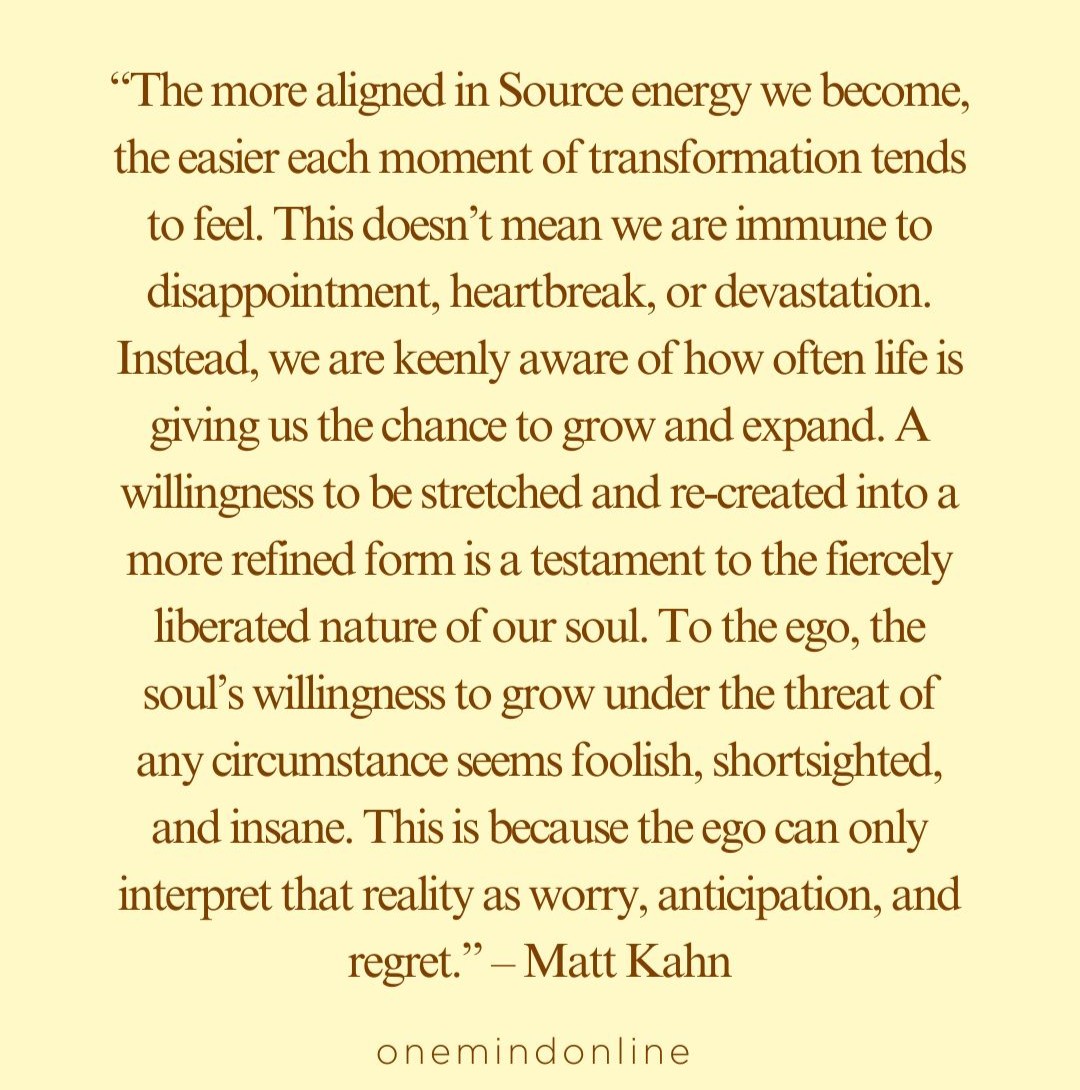
“The more aligned in Source energy we become, the easier each moment of transformation tends to feel. This doesn’t mean we are immune to disappointment, heartbreak, or devastation. Instead, we are keenly aware of how often life is giving us the chance to grow and expand. A willingness to be stretched and re-created into a more refined form is a testament to the fiercely liberated nature of our soul. To the ego, the soul’s willingness to grow under the threat of any circumstance seems foolish, shortsighted, and insane. This is because the ego can only interpret that reality as worry, anticipation, and regret.” – Matt Kahn
“Once you no longer rely on outside circumstances in order to feel good, or even require feeling good in order to be relaxed and open, something far greater than the tracking of ups and downs, or of gains and losses awakens within you. This is the heart of awakening.” – Matt Kahn
“Whatever happens, love that.” – Matt Kahn
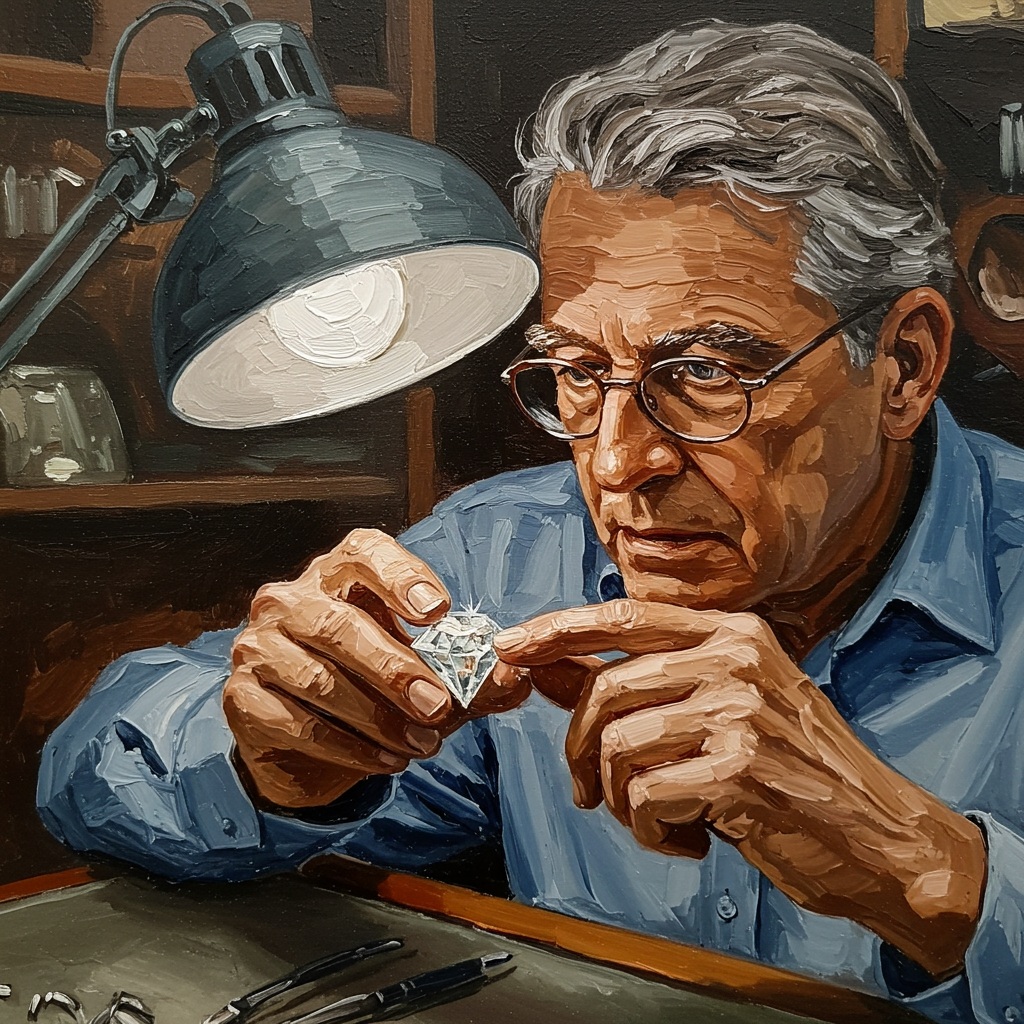
There is an analogy about working with gemstones that walks us through the process of picking up something in its unpolished form while recognizing that – to the eye that knows how to see – there is potential in this stone, a diamond in the rough.
When we think about a polished gem, our mind creates the picture of a shiny end result while skipping over the steps of what polishing entails, and if you stop and think about it for a moment, you’ll immediately remember that polishing is an abrasive action. The shine is only brought forth by the process of removing (grinding down) whatever material doesn’t match the surface of the end product. Which reminds me of this gem of wisdom:
“A gem cannot be polished without friction, nor a human perfected without trials.” – Seneca
Our willingness to accept the process of being stretched and re-created into a more refined form has a direct impact on the quality of our lives, and on our ability to grow through what we go through.
Are you willing to accept the constant change of weather in your environment as an invitation to grow and evolve?
Ego almost always stands in judgement of the willingness to be open to the change in weather, and even sees this acceptance as weakness. But when I’m aligned with source which is to be found in my connection to my soul, then the change in weather is just an obvious law of nature, and it tends to feel easier to deal with.
So, how can we cultivate this mindset of openness and alignment? Here are a few guiding mantras for self-reflection:
- “Embrace the process”: Remember that life’s challenges are a natural part of the journey toward self-improvement. Embrace them as opportunities for growth and transformation.
- “Shift your perspective”: Instead of viewing challenges as obstacles, see them as stepping stones. Ask yourself, “How can I learn and grow from this experience?”
- “Connect with your inner source of strength”: Spend time meditating, practicing mindfulness, or engaging in other activities that help you connect with your soul.
- “Trust the process”: Have faith that the universe has a plan for you, and that even the most challenging experiences are ultimately for your benefit.
Today’s meditation journey is an embodied experience of being right in the middle of changing weather while asking the question: “Am I seeing this moment in a way that helps me or hurts me?” Please come and join our circle.
– pierre –
Today’s LIVE meditation is: I am the mountain.
Today’s LIVE meditation
https://youtu.be/qU6gHNJILnE 2026
https://youtu.be/hG8vCWzY4-Y 2025
https://youtu.be/dX0TcdHCRPo 2023
Practice the “Daily Dose”
Let’s put it into practice! Choose what works for you – daily, once a week or whenever inspiration strikes. Putting pen to paper wires the neural pathways that will create your new habits.
1 – Affirmation
Not really affirmations today, but a few principles that helps us make the most of whatever life brings. Write down your favourite one on a sticky note and place it somewhere that you’ll be able to see it the whole day.
- “Embrace the process”: Remember that life’s challenges are a natural part of the journey toward self-improvement. Embrace them as opportunities for growth and transformation.
- “Shift your perspective”: Instead of viewing challenges as obstacles, see them as stepping stones. Ask yourself, “How can I learn and grow from this experience?”
- “Connect with your inner source of strength”: Spend time meditating, practicing mindfulness, or engaging in other activities that help you connect with your soul.
- “Trust the process”: Have faith that the universe has a plan for you, and that even the most challenging experiences are ultimately for your benefit.
2 – A moment of reflection
Use today’s question as a journal prompt. If you don’t have the time to sit down and write, just take a moment to reflect on your response.
Practice perspective shifting: Choose a current challenge you’re facing and write about it from two angles: first as a victim (“this is happening TO me”), then as a student (“this is happening FOR me” – how does this stretch me and grow me?). How does this shift in perspective change your relationship to the situation?
3 – Quotes to share
Send a quote to someone who needs it, or share them all on social media to spread the good vibes!

4 – Q&A for deeper learning
Read through the questions and answers and write down at least one “aha moment” that clicked for you.
Q1: What does it mean to be “aligned with Source energy”?
To be “aligned with Source energy” is to live in harmony with whatever you understand to be the deeper wellspring of life itself, and “Source” is a word wide enough to hold several interpretations. For some, it is a spiritual or religious idea: God, the Divine, or a universal consciousness from which all things arise. In the meditation this article draws from, it is described as something found through your connection to your own soul, your inner presence that remains steady beneath the shifting weather of circumstance. Others may prefer a more psychological reading, understanding Source as your authentic self, the part of you that holds your core values and calm awareness, independent of the ego’s worries, anticipations, and regrets. A more secular view might see it as the natural life force that moves through all living things, the same intelligence that drives organisms to adapt and grow. However you define it, being aligned with source is when your thoughts, choices, and reactions come from that deeper place rather than from fear or the need for circumstances to go your way. The practical effect is the same across interpretations: you become less thrown by disappointment and more open to seeing change as an invitation to grow. You don’t need to settle on one definition for this to work. What matters is that you have a sense of something steady within you to return to.
Q2: How can I tell if I’m seeing a moment in a way that helps or hurts me?
A helpful way to tell is to listen to the story you’re telling yourself and see where it leaves you. If your perspective casts you as a helpless victim, with life simply happening to you and nothing you can do, then it is hurting you, because it drains your energy and keeps you circling the same pain. A perspective that helps you may still acknowledge that the moment is hard, but it carries a different quality: it points towards what you can learn from this and shows you a possible next step, however small. Ask yourself, “What might this be teaching me?” and “What is one thing I can do from here?” If those questions produce even a flicker of clarity or direction, you’re likely seeing the moment in a way that serves you. If they only bring more heaviness, blame, or a sense of being stuck, that’s a sign to pause and look again. This isn’t about forcing positivity or pretending you aren’t hurt. It’s about noticing whether your view of the situation closes you in or opens a path forward, and gently choosing the one that lets you grow.
Q3: Why does the ego resist growth and change?
The ego’s primary function is to keep you safe and maintain your current identity. It interprets change as a potential threat to survival and views uncertainty through the lens of worry and anticipation. The ego prefers the familiar, even if it’s limiting, because it feels more predictable and controllable than the unknown.
Q4: Is it realistic to expect to love everything that happens?
Our resistance to “love everything that happens” really speaks to our – perhaps modern – misunderstanding of what love is. If you think that love is defined by experiences like “ease” and “bliss” and “passion” and “happiness” and the absence of adversity, then you’re probably struggling with everything about life. Matt words connect well with a Latin phrase that originated with the Stoics that goes: “Amor fati.” The word amor of course translates as “love”, and fati means “fate”. The direct translation is a “love of fate”, or slightly expanded, having a “love of one’s fate”, while the most practical translation is, “being a lover of what life brings,” whatever life brings. Of course no-one is going to be ecstatic about facing really difficult experiences, but there is a way in which we can live our lives where we have full acceptance for the fact that what life brings is sometimes exactly what we wanted, and more often than not, not what we asked for at all. So here is how to apply “whatever happens, love that” and also “amor fati” – fully accept everything that happens, and then really love your ability to grow through whatever arises, even if you’re not loving the experience itself.
Q5: How do I practically cultivate inner peace during challenging times?
If you’re hoping to find the safety of the mountain in the middle of a storm, how easily you reach it will depend on how many times you’ve walked that path on sunny days, when it was simple to find. Trying to locate the trail for the first time when the big storm hits, with the wind howling and visibility gone, is going to be very hard. So the most practical thing you can do is walk it now, while the sky is clear. Connect regularly with activities that help you feel centered, whether that’s time in nature, journaling, meditation, or another spiritual practice that speaks to you. It doesn’t need to be elaborate; a few quiet minutes each day, repeated over weeks and months, wear the path into something familiar that your feet can follow almost on their own. Think of it as a skill that develops through consistent practice, not a switch you flip in a crisis. Each ordinary, peaceful day you spend returning to your center adds another step to the trail, and when the weather does change, you’ll already know the way to the mountain.
Q6: What’s the difference between accepting change and being passive?
Acceptance doesn’t mean becoming passive or not taking action. It means releasing resistance to what’s already happening and responding from a place of clarity rather than reactivity. You can fully accept a situation while still taking thoughtful, purposeful action to improve it or adapt to it.
Q7: How long does it take to develop this mindset of seeing challenges as growth opportunities?
A: This is a lifelong practice that deepens over time. You might start noticing shifts in perspective within weeks or months of consistent practice, but developing true mastery is an ongoing journey. Be patient with yourself, even small shifts in how you view challenges can create significant positive changes in your life experience.