
“Your Daily Dose” is a quick two minute read packed with bite-sized wisdom from all the great teachers. But you could also choose to turn it into something more… a powerful daily practice for personal growth. Give it a try!
A message from today’s meditation:
What does the road look like towards finding peace from internal conflict?
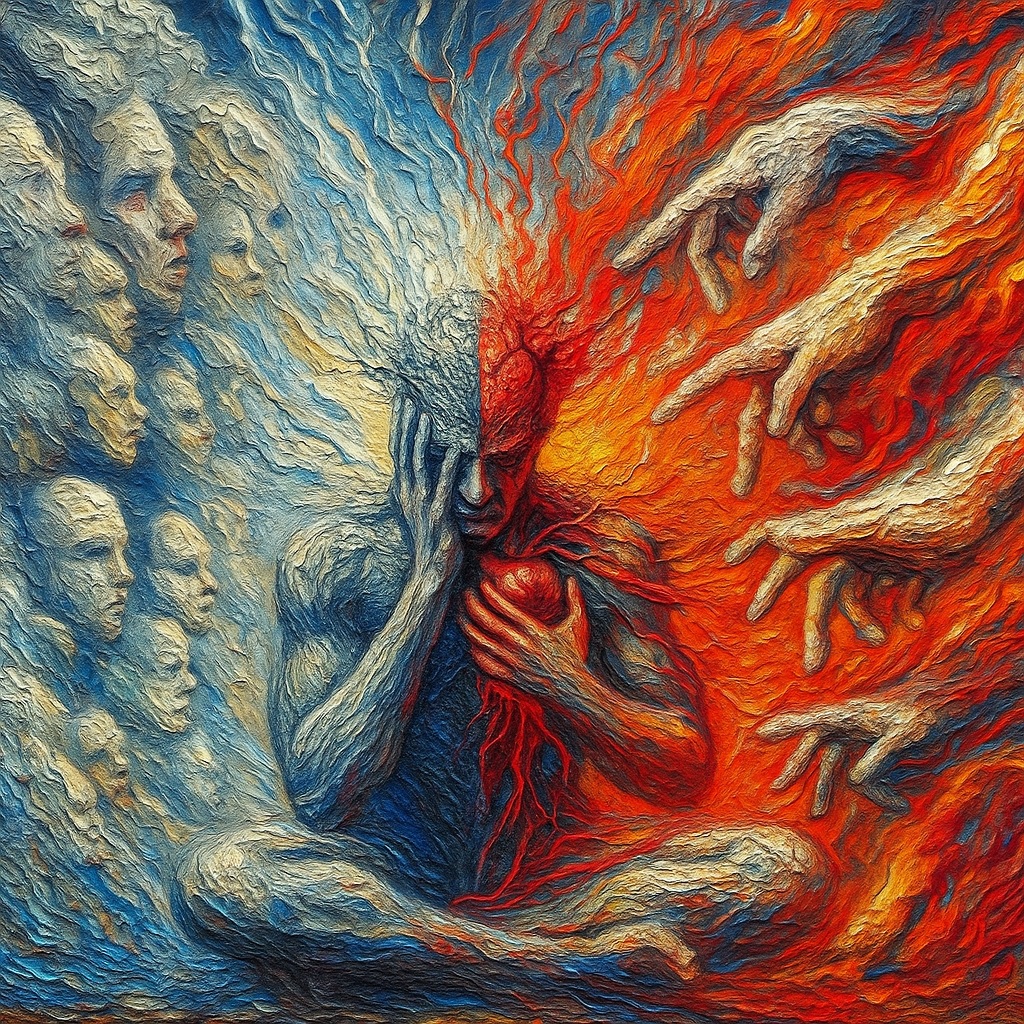
We might have been conditioned to believe that inner peace means the absence of difficult emotions. That freedom comes when anxiety disappears, when sadness evaporates, when fear becomes extinct. But this pursuit of emotional sterility isn’t leading us toward liberation – it’s trapping us in an exhausting cycle of resistance.
Jeff Foster suggests no more wrestling with negative thoughts or desperately trying to outrun uncomfortable feelings. A life where every thought, every feeling, is welcomed with open arms.
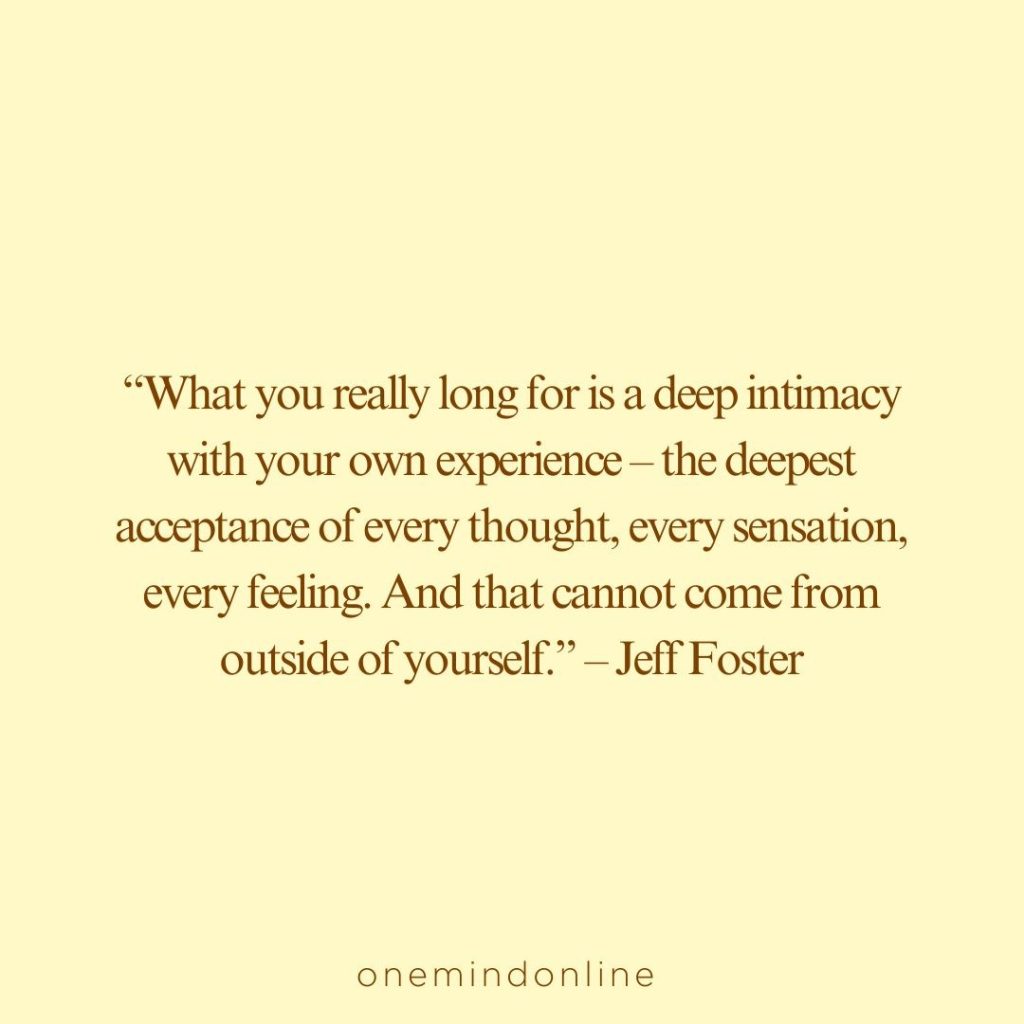
“What you really long for is a deep intimacy with your own experience – the deepest acceptance of every thought, every sensation, every feeling. And that cannot come from outside of yourself.” – Jeff Foster
… a deep intimacy with your own experience… having acceptance for every thought and every feeling… in different words it can also be translated to: ‘not rejecting any part of yourself’.
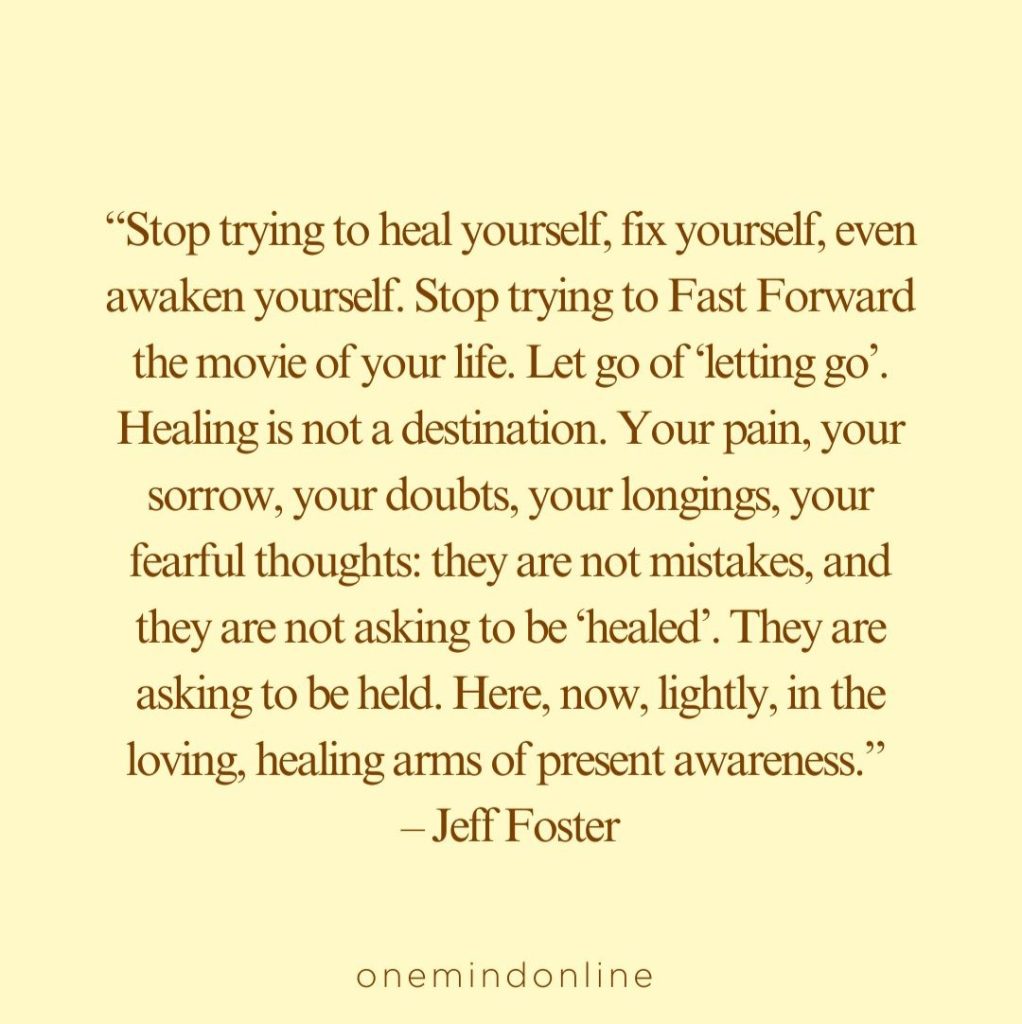
“Stop trying to heal yourself, fix yourself, even awaken yourself. Stop trying to Fast Forward the movie of your life. Let go of ‘letting go’. Healing is not a destination. Your pain, your sorrow, your doubts, your longings, your fearful thoughts: they are not mistakes, and they are not asking to be ‘healed’. They are asking to be held. Here, now, lightly, in the loving, healing arms of present awareness.” – Jeff Foster
Your dark and fearful thoughts are not a mistake but a natural part of the human experience, so there’s no need to doubt yourself for having them. They’re not asking to be healed, they are asking to be held in healing arms.
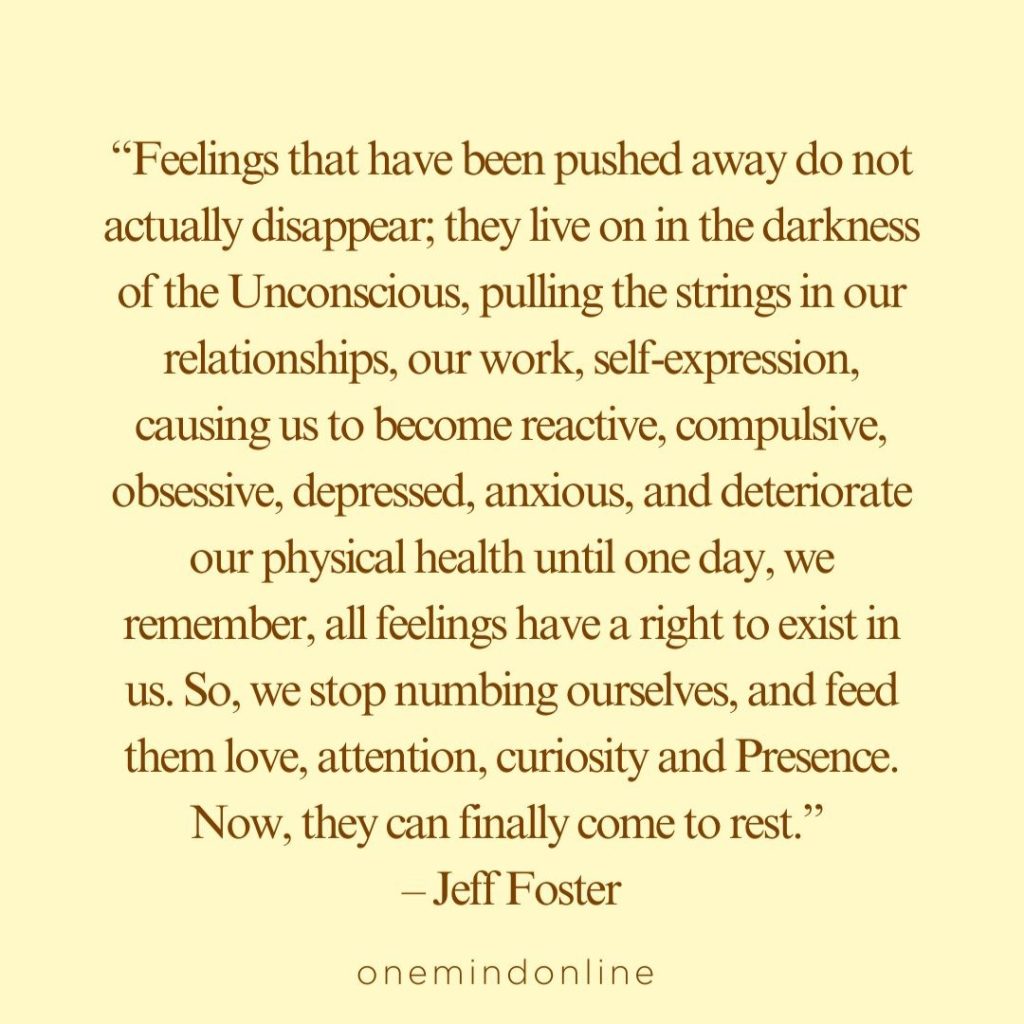
“Feelings that have been pushed away do not actually disappear; they live on in the darkness of the Unconscious, pulling the strings in our relationships, our work, self-expression, causing us to become reactive, compulsive, obsessive, depressed, anxious, and deteriorate our physical health until one day, we remember, all feelings have a right to exist in us. So, we stop numbing ourselves, and feed them love, attention, curiosity and Presence. Now, they can finally come to rest.” – Jeff Foster
It’s understandable that we could have thoughts and feelings that scare us, that make us feel uncomfortable. And it’s understandable too that our instinctive reaction might be to try and avoid these scary feelings, to push them away in an attempt to feel less scared or uncomfortable.
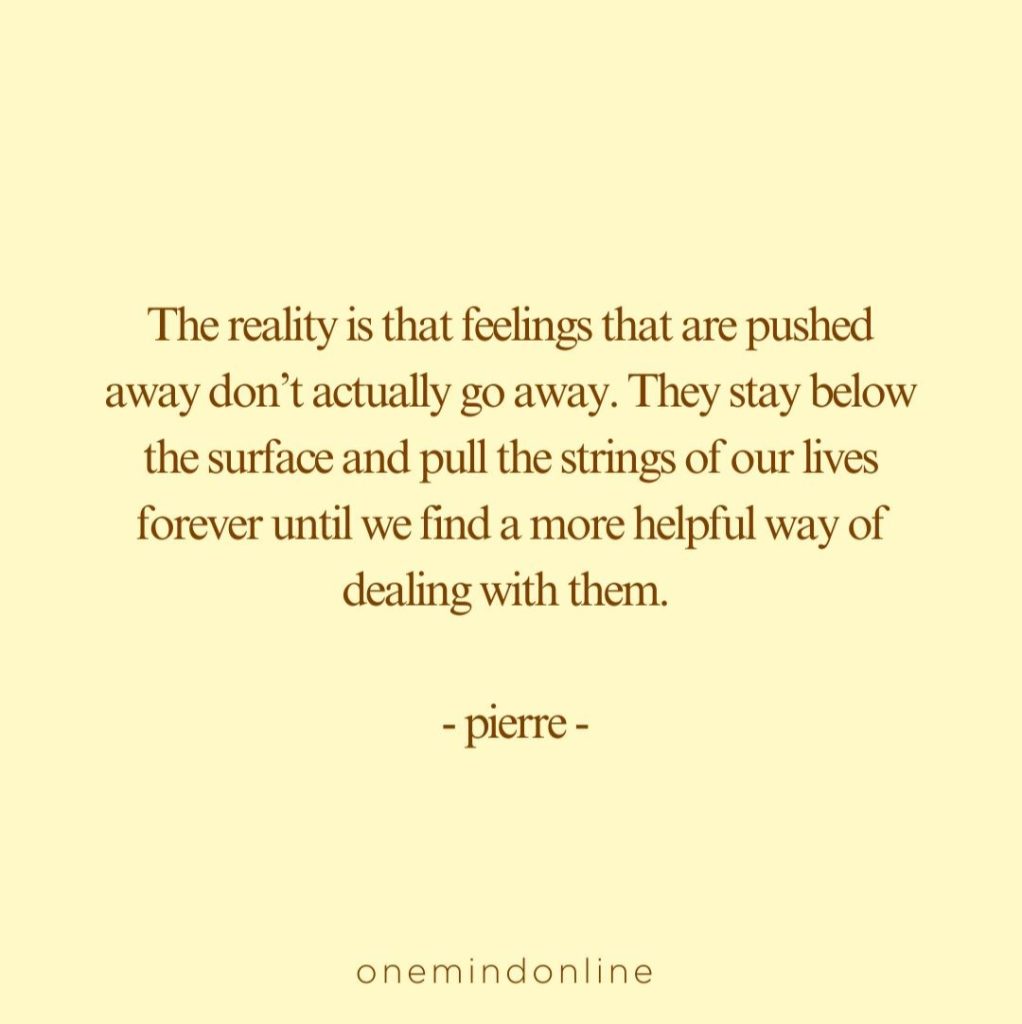
The reality is that feelings that are pushed away don’t actually go away. They stay below the surface and pull the strings of our lives forever until we find a more helpful way of dealing with them.
Jeff Foster’s advice in this last quote is to really look at those feelings and allow them to speak, listen to them with curiosity and give them your attention and your love. You can come to a better understanding of why those feelings exist, and then you can build a new relationship with these emotions, and give them a space where they’re not trapped in your subconscious, unconsciously pulling the strings of your life.
This deep intimacy with your own experience is wholeness, because no part of you is being rejected any longer. This brings an end to the inner war. This creates true inner freedom.
Affirmations to strengthen your healing arms:
- “I welcome all parts of myself with loving awareness. I no longer reject any aspect of my human experience. Every thought, every feeling, every part of me deserves compassionate acceptance.”
- “My difficult emotions are not mistakes, they are messengers asking to be heard. I approach my fears, sadness, and anxiety with curiosity rather than resistance. They bring messages and deserve my gentle attention.”
- “My inner war has ended. I no longer fight against myself. In welcoming all aspects of my being, I have found the deep intimacy and freedom I was seeking.”
This meditation is really practical and will help you hold and integrate difficult emotions. Please come and join us.
By cultivating this deep intimacy with your own experience, you move towards wholeness and inner freedom. The war within ceases, and in its place emerges a profound sense of peace and self-acceptance. Remember, your “demons” aren’t there to destroy you; they’re simply waiting to be understood and welcomed home.
– pierre –
Today’s LIVE meditation is: A sense of self.
Today’s LIVE meditation
https://youtu.be/zvQSLx1l5Z4 2026
https://youtu.be/EhBodaAX2eo 2025
https://youtu.be/LGJjctiGxsQ 2024
https://youtu.be/KDfdBOzGTag 2023
https://youtu.be/3pGyDfWi2VI 2022
https://youtu.be/c4DNwy2V7Zk 2020
Practice the “Daily Dose”
Let’s put it into practice! Choose what works for you – daily, once a week or whenever inspiration strikes. Putting pen to paper wires the neural pathways that will create your new habits.
1 – Affirmation
Write down your favourite affirmation on a sticky note and place it somewhere that you’ll be able to see it the whole day.
- “I welcome all parts of myself with loving awareness. I no longer reject any aspect of my human experience. Every thought, every feeling, every part of me deserves compassionate acceptance.”
- “My difficult emotions are not mistakes, they are messengers asking to be heard. I approach my fears, sadness, and anxiety with curiosity rather than resistance. They bring messages and deserve my gentle attention.”
- “My inner war has ended. I no longer fight against myself. In welcoming all aspects of my being, I have found the deep intimacy and freedom I was seeking.”
2 – A moment of reflection
Use today’s question as a journal prompt. If you don’t have the time to sit down and write, just take a moment to reflect on your response.
Welcoming the Exiled Parts: Jeff Foster speaks of developing “deep intimacy with your own experience” and not rejecting any part of yourself. Identify an aspect of your personality, thoughts, or emotions that you’ve labeled as “bad,” “wrong,” or unacceptable. Write a letter to this exiled part of yourself, acknowledging its presence and exploring what gifts or wisdom it might carry. How would your life change if you stopped trying to eliminate this part of yourself and instead learned to hold it with loving awareness?
3 – Quotes to share
Send a quote to someone who needs it, or share them all on social media to spread the good vibes!


4 – Q&A for deeper learning
Read through the questions and answers and write down at least one “aha moment” that clicked for you.
Q1: Does accepting difficult emotions mean I should just give up on personal growth?
Not at all. Acceptance doesn’t mean resignation or stagnation. It means changing your relationship with your emotions from one of warfare to one of understanding. When you stop exhausting yourself fighting your inner experience, you actually free up energy for genuine growth. The difference is that you’re growing from a place of wholeness rather than from a belief that you’re fundamentally broken and need fixing.
Q2: If I stop trying to heal myself, won’t my problems get worse?
Foster’s message isn’t to abandon all self-care or personal development – it’s to shift from a paradigm of “fixing” to one of “holding.” When you approach your difficulties with loving presence rather than desperate attempts to eliminate them, you often find they naturally transform. Paradoxically, when we stop trying so hard to heal, genuine healing often occurs more easily.
Q3: How can I practically “hold space” for difficult emotions without being overwhelmed by them?
Holding space means creating internal room for your emotions to exist without immediately trying to change, judge, or escape them. Start small – when you notice a difficult feeling, pause and acknowledge it: “I see you, fear” or “I notice you, sadness.” Breathe with it for a few moments before taking any action. You’re not drowning in the emotion; you’re observing it with compassionate awareness.
Q4: What’s the difference between suppressing emotions and having healthy boundaries with them?
Suppression involves pushing emotions away, denying their existence, or numbing them because they’re deemed “wrong” or threatening. Healthy boundaries involve acknowledging emotions fully while choosing conscious responses rather than reactive ones. You can feel anger completely while choosing not to lash out, or experience sadness deeply while still functioning in your daily life.
Q5: How do I know if my emotions are living “in the unconscious” and pulling my strings?
Look for patterns of behavior that feel automatic or compulsive – relationships where you repeat the same conflicts, work situations where you consistently react in ways you later regret, or habits that persist despite your conscious desire to change them. These repetitive patterns often indicate that unprocessed emotions are operating below the surface of your awareness.
Q6: Can this approach work for serious mental health conditions like depression or anxiety disorders?
While this perspective can be profoundly helpful as part of a holistic approach to mental health, it’s not a substitute for professional treatment when needed. The principle of accepting rather than fighting your inner experience can complement therapy, medication, and other treatments. If you’re dealing with severe depression, anxiety, or other mental health challenges, it’s important to work with qualified professionals alongside any personal development practices.
Q7: What does “deep intimacy with your own experience” actually look like in daily life?
It means developing a curious, compassionate relationship with whatever arises in your inner world. Instead of thinking “I shouldn’t feel this way,” you might think “This is what’s here right now – what is this feeling trying to communicate?” It’s checking in with yourself throughout the day, noticing your emotional landscape without judgment, and responding to your inner experience with the same kindness you’d offer a good friend. It’s the practice of being genuinely interested in your own humanity.