

“Your Daily Dose” is a quick two minute read packed with bite-sized wisdom from all the great teachers. But you could also choose to turn it into something more… a powerful daily practice for personal growth. Give it a try!
A message from today’s meditation:
Welcome to the practice of silence…
Take a moment out of your day and come and sit with us in a circle of silence. You don’t have to complete the whole meditation, just come and sit with us for as long as it feels useful to you…
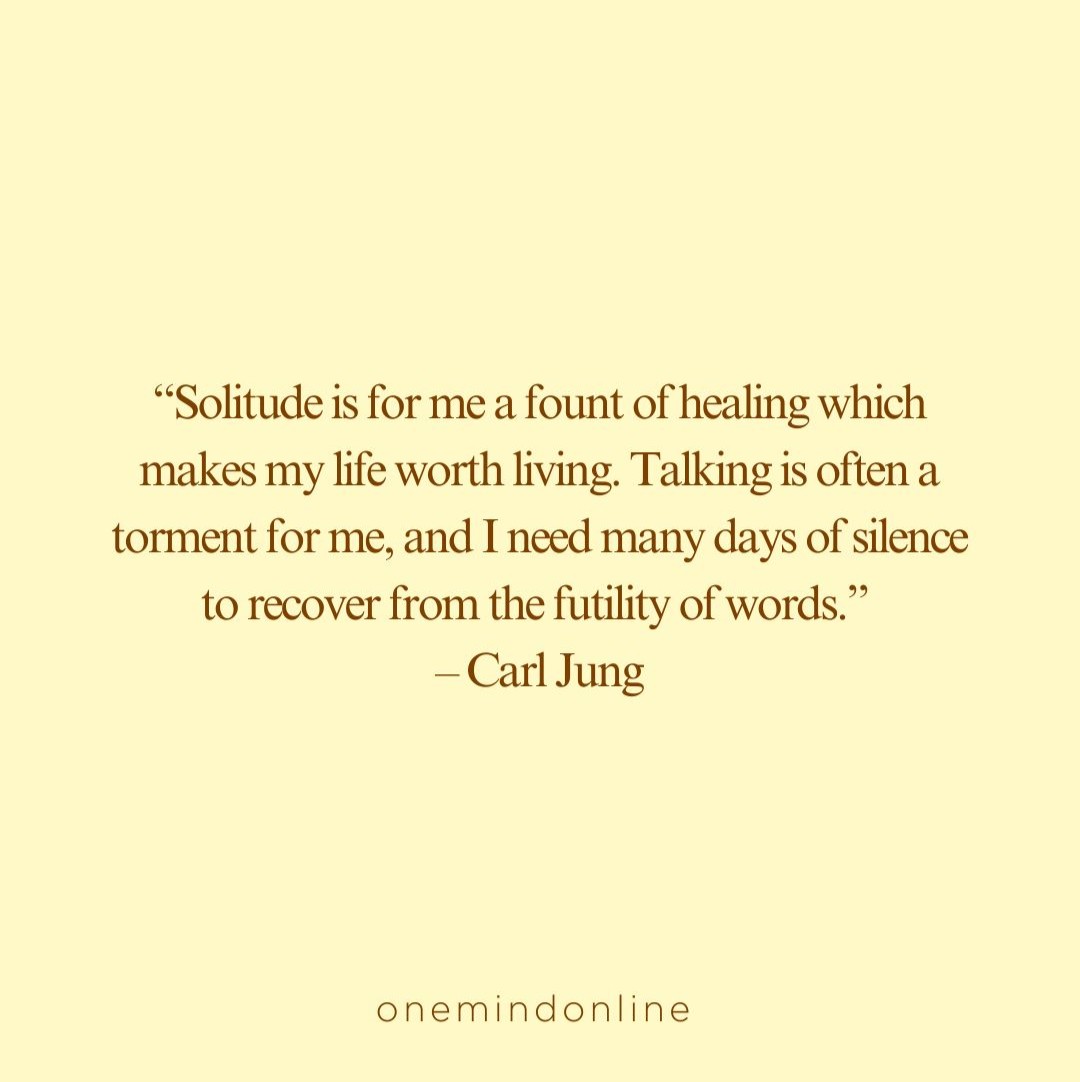
“Solitude is for me a fount of healing which makes my life worth living. Talking is often a torment for me, and I need many days of silence to recover from the futility of words.” – Carl Jung
“Your vision will become clear only when you can look into your own heart. Who looks outside, dreams; who looks inside, awakes.” – Carl Jung
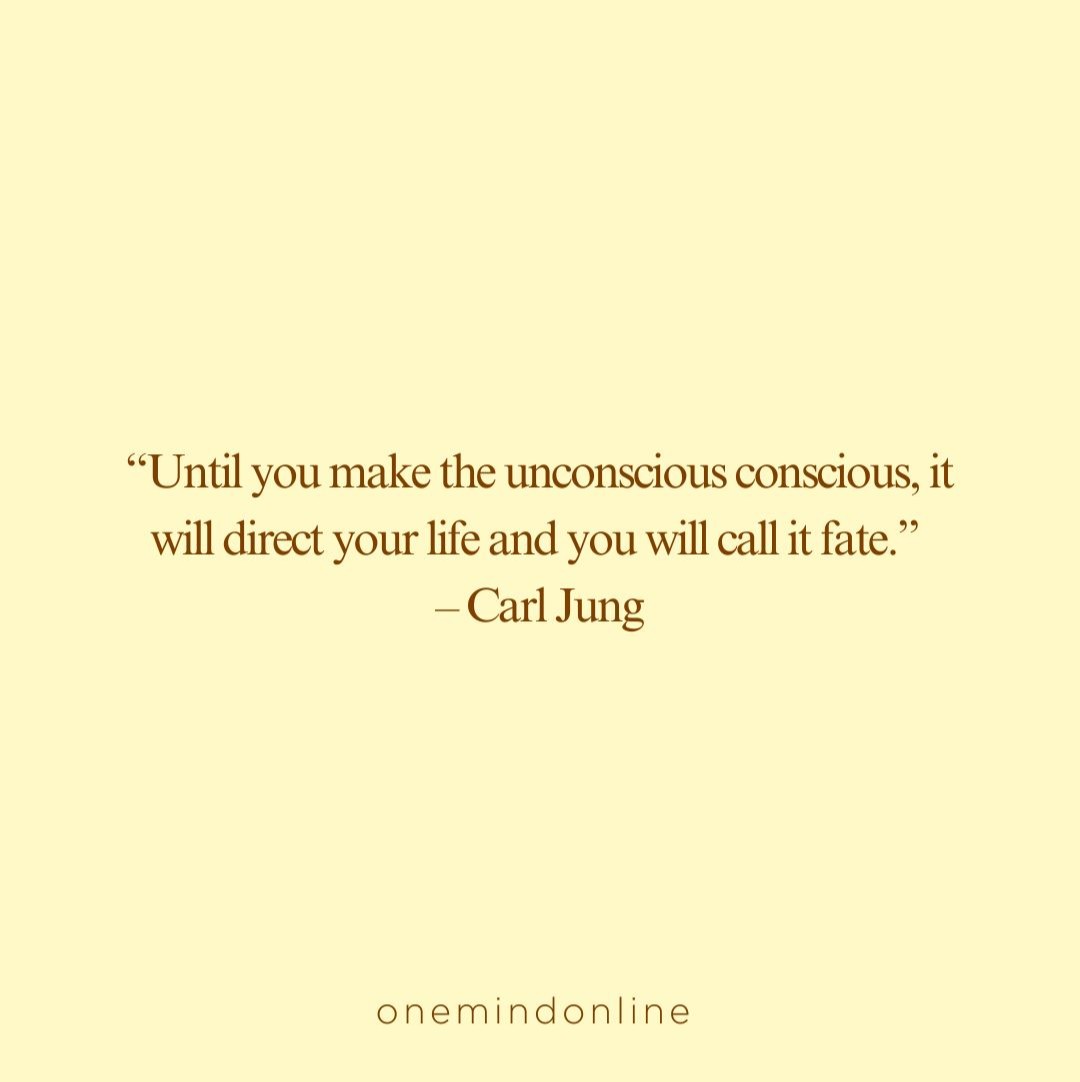
“Until you make the unconscious conscious, it will direct your life and you will call it fate.” – Carl Jung
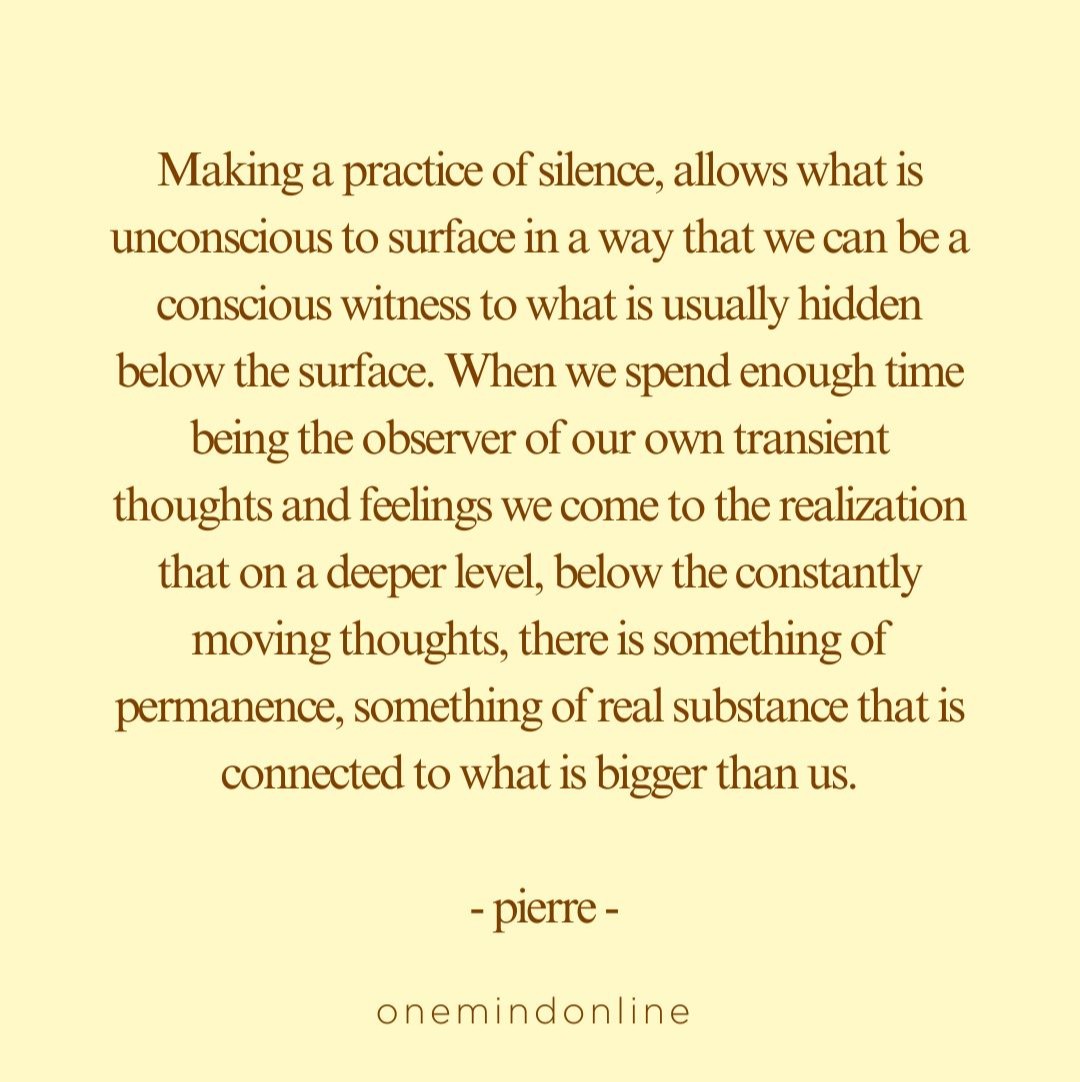
Making a practice of silence, allows what is unconscious to surface in a way that we can be a conscious witness to what is usually hidden below the surface. When we spend enough time being the observer of our own transient thoughts and feelings we come to the realization that on a deeper level, below the constantly moving thoughts, there is something of permanence, something of real substance that is connected to what is bigger than us.
When we get better at recognizing how our inner-narratives surface, we find ourselves spending more time embodying the truth of our being, because we realize that these fleeting mental states do not define our true essence. Beneath the surface of our thoughts and emotions, there is a deeper, more enduring aspect of ourselves that remains constant and unchanging. By connecting with this deeper level of being, we can experience a profound sense of peace, joy, and fulfillment.
As we cultivate a deeper connection with our inner selves, we begin to embody our true nature. We become more authentic, more compassionate, and more aligned with our purpose. As we become the essence of what our soul has always been, we start to live our lives with greater intention and meaning.
Carl Jung beautifully captured this teaching with these words –
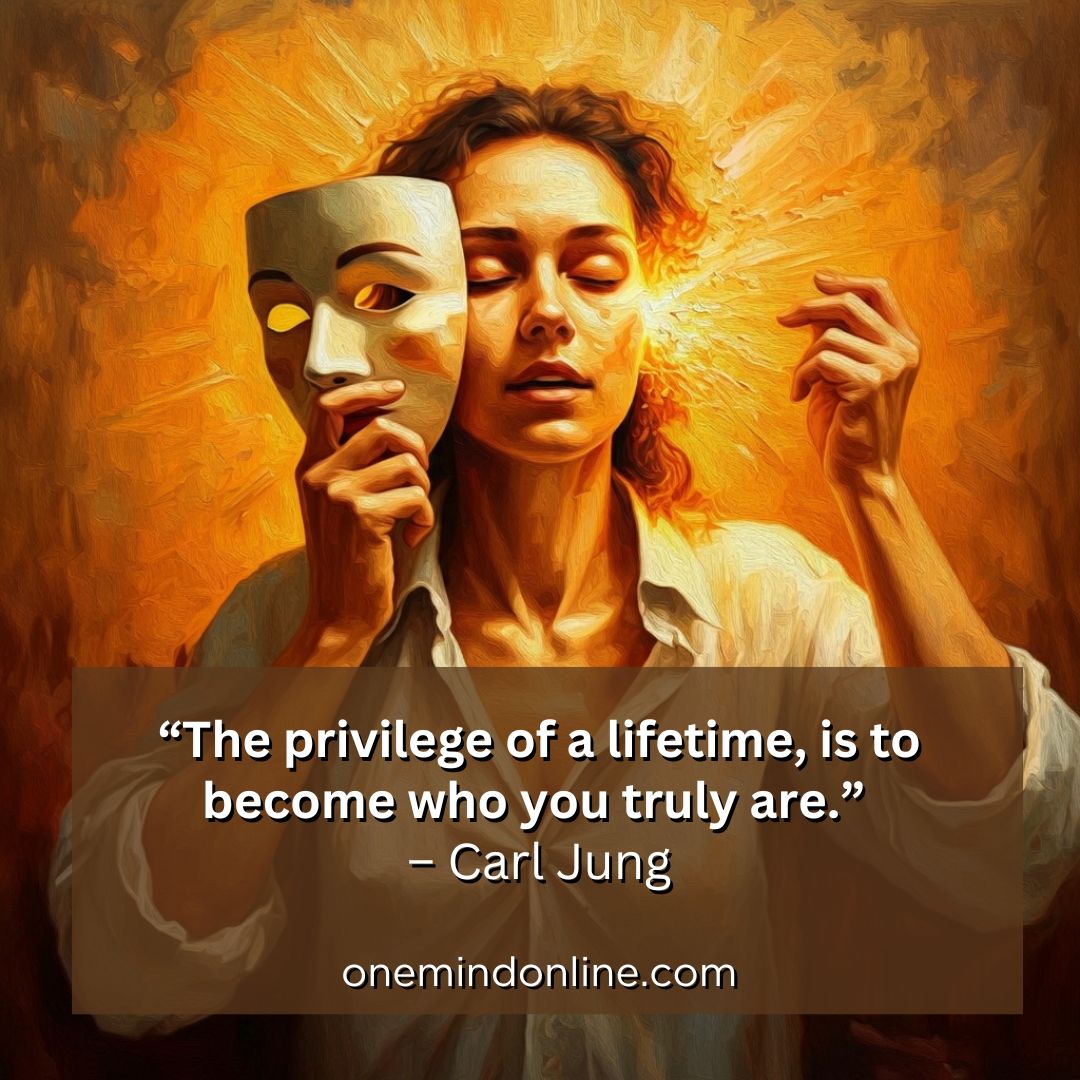
“The privilege of a lifetime, is to become who you truly are.” – Carl Jung
Ultimately, the deliberate practice of silence isn’t just about finding fleeting moments of calm, but the journey towards embodying your true nature – living as the expression of your deepest being.
What becomes available to us when we surrender to the essence of our being… is access to our full potential.
Here are a few thoughts to accompany you on your journey to your truest self:
- “I love and accept myself unconditionally.”
- “I embrace the transformative power of solitude.”
- “As the observer I am ready to face my unconscious patterns.”
- “I am learning to be the calm observer of my unconscious thoughts.”
- “I am patient with my inner growth. I am grateful for the opportunity to become who I truly am.”
This path requires patience and commitment. It asks us to sit with discomfort, to face what we’ve been avoiding, and to trust in a process that unfolds in its own time. But the reward – becoming who you truly are – is nothing less than the privilege of a lifetime.
Wishing you a peaceful Sunday.
– pierre –
Today’s LIVE meditation is: Finding silence.
Today’s LIVE meditation
https://youtu.be/PxUObVe1j8E 2025
https://youtu.be/sNOxGMyG8Eo 2024
https://youtu.be/hnO4fEWRQCI 2023
https://youtu.be/9S6IQTA1rOE 2022
Practice the “Daily Dose”
Let’s put it into practice! Choose what works for you – daily, once a week or whenever inspiration strikes. Putting pen to paper wires the neural pathways that will create your new habits.
1 – Affirmation
Write down your favourite affirmation on a sticky note and place it somewhere that you’ll be able to see it the whole day.
- “I love and accept myself unconditionally.”
- “I embrace the transformative power of solitude.”
- “As the observer I am ready to face my unconscious patterns.”
- “I am learning to be the calm observer of my unconscious thoughts.”
- “I am patient with my inner growth. I am grateful for the opportunity to become who I truly am.”
2 – A moment of reflection
Use today’s question as a journal prompt. If you don’t have the time to sit down and write, just take a moment to reflect on your response.
Your Authentic Self: Carl Jung wrote “The privilege of a lifetime, is to become who you truly are.” Describe who you believe your truest self is beneath all the roles you play and expectations you meet. If you could shed every role, title, and identity that others have given you or that you’ve adopted over the years, who would remain? Describe this person without referencing your job, relationships, or achievements. What qualities, values, and desires define this core self? What parts of this authentic self are you already expressing, and what parts remain hidden?
3 – Quotes to share
Send a quote to someone who needs it, or share them all on social media to spread the good vibes!
4 – Q&A for deeper learning
Read through the questions and answers and write down at least one “aha moment” that clicked for you.
Q1: Why is silence described as “healing” rather than just relaxing?
While some people experience silence as relaxing, many others find it deeply uncomfortable, especially if they haven’t yet truly met themselves. When the external noise falls away, there is nothing left to distract us from what has been waiting beneath the surface: unprocessed emotions, unanswered questions, and the restless inner narratives we usually drown out with busyness, screens, and conversation. That discomfort isn’t a sign that silence is failing you. It’s often the first sign that it’s working. Healing begins when we stop avoiding what is hidden and learn to sit with it as a calm, compassionate witness. Relaxation soothes the surface, but silence invites us beneath it, where, as Jung suggested, what remains unconscious will keep directing our lives until we bring it into awareness. By staying present through the initial unease, we gradually move through the discomfort and into a deeper sense of peace, one that comes from knowing ourselves rather than escaping ourselves.
Q2: What does it mean to “make the unconscious conscious”?
We all know what it feels like to think a conscious thought, such as deciding what to eat, weighing a choice, or planning the week ahead. What we often underestimate is how much of our mental life runs on autopilot beneath that awareness. Below the surface, old emotional experiences quietly shape our reactions, assumptions, and behaviours, and because they operate out of sight, we rarely recognize them as the source. We may feel an inexplicable surge of anger, a reflexive need to please, or a familiar sense of not being good enough, and assume these responses are simply who we are or how life works. In reality, we are often responding to a past wound as if it were happening again now, controlled by feelings that were laid down long ago. To make the unconscious conscious is to bring these hidden patterns into the light of awareness, so that we can notice them as they arise, trace them back to their origins, and see them for what they are: old programming, not present truth. Once we can observe a pattern, we are no longer completely inside it, and in that gap between stimulus and reaction, we gain the freedom to choose a new response. This is what Jung meant when he warned that until we do this work, the unconscious will direct our lives and we will call it fate.
Q3: How can I be an “observer” of my thoughts when I am my thoughts?
It’s a natural question, because from the inside it feels as though we are the voice in our heads. The best way to test it is through direct experience rather than theory. Sit quietly for a few moments and simply watch a thought pop into your mind, as if you were watching a bird land on a branch. Then keep watching, and notice how the next thought appears, and the one after that, each arriving on its own without any instruction from you. You didn’t decide to think any of them. They surface, drift, and give way to the next, much like an autopilot running in the background. This is where the shift happens: if you can remain watching one thought after another appear, then you cannot be the thoughts themselves, because something must be present to notice them. That “something” is the watcher, the steady awareness in which thoughts come and go. At first the realization may last only a few seconds before you’re pulled back into a story, and that’s perfectly normal. With practice, the gap between you and your thoughts widens, and you begin to treat them as passing mental events rather than commands or facts. You still have thoughts, but you are no longer completely identified with them, and in that space you find a calm, stable presence that was there all along.
Q4: How much silence do I need to practice to see benefits?
There’s no universal prescription. Start with whatever feels manageable – even five minutes daily. The key is consistency and genuine presence rather than duration. Some people find profound insights in brief daily practices, while others need longer periods. Trust your own process and gradually extend your practice as it feels natural.
Q5: What’s the difference between looking “outside” and looking “inside”?
Looking outside means seeking answers, validation, and identity from external sources – other people’s opinions, societal standards, or material achievements. Looking inside means turning your attention to your own inner wisdom, values, and authentic desires. The former keeps you in a dream-like state of chasing external approval; the latter awakens you to your true nature.
Q6: How do I know if I’m connecting with my “true essence” or just having nice thoughts?
Nice thoughts are like the weather: they shift with our mood, our circumstances, and even the time of day. A comforting idea can feel true on a peaceful morning and vanish the moment we’re stressed, criticized, or tired. Your true essence doesn’t work that way. It doesn’t rise and fall with your experiences, so one of the clearest tests is to ask whether who you are feels the same on a great day as on a really tough one. On a great day, you may feel joyful, confident, and energized. On a hard day, you may feel anxious, sad, or overwhelmed. But beneath both, if you pause and look closely, there is something quietly constant that has witnessed every mood and remained untouched by them. It isn’t an emotion or a belief you have to keep convincing yourself of. It’s a steady sense of presence that was there before the good day began and remains after the difficult one ends. Nice thoughts are something you have to think your way into, while your essence is something you recognize, often when you stop trying and simply rest in stillness. If what you’re touching feels stable, spacious, and unchanged by circumstances, you are likely connecting with your essence. If it depends on everything going well, it’s probably a pleasant thought passing through, and that’s perfectly fine, because noticing the difference is part of the practice.
Q7: What does it practically mean to “access your full potential”?
There are two ways to live. In the first, our past experiences quietly draw the boundaries of who we believe we can be. Old failures, criticisms, and disappointments become the evidence we use to decide what is realistic, so we shrink our dreams to fit the story we have inherited and call it “just the way I am.” In the second, our potential is not a fixed line drawn by what has already happened but an open invitation to expand into everything that is available to us. Practically, accessing your full potential means noticing when you are making a decision from an old limitation rather than from present possibility. It might be the voice that says “people like me don’t do that,” the reflex to stay small to stay safe, or the habit of turning down opportunities before you’ve even considered them. As silence and self-observation loosen the grip of these unconscious patterns, you begin to see that your past explains where you have been but doesn’t have to determine where you can go. You start to make choices from authenticity rather than fear, to try what once felt out of reach, and to let your energy flow toward what matters to you rather than toward defending a limited identity. Your potential isn’t something you have to create or earn. It’s already there, and it opens up as you stop letting yesterday’s experiences decide who you are allowed to become.