

“Your Daily Dose” is a quick two minute read packed with bite-sized wisdom from all the great teachers. But you could also choose to turn it into something more… a powerful daily practice for personal growth. Give it a try!
A message from today’s meditation:
Love can be such an elusive subject to wrap our heads around. There are so many different things we mean when we use the word love that the whole topic becomes a bit fuzzy.
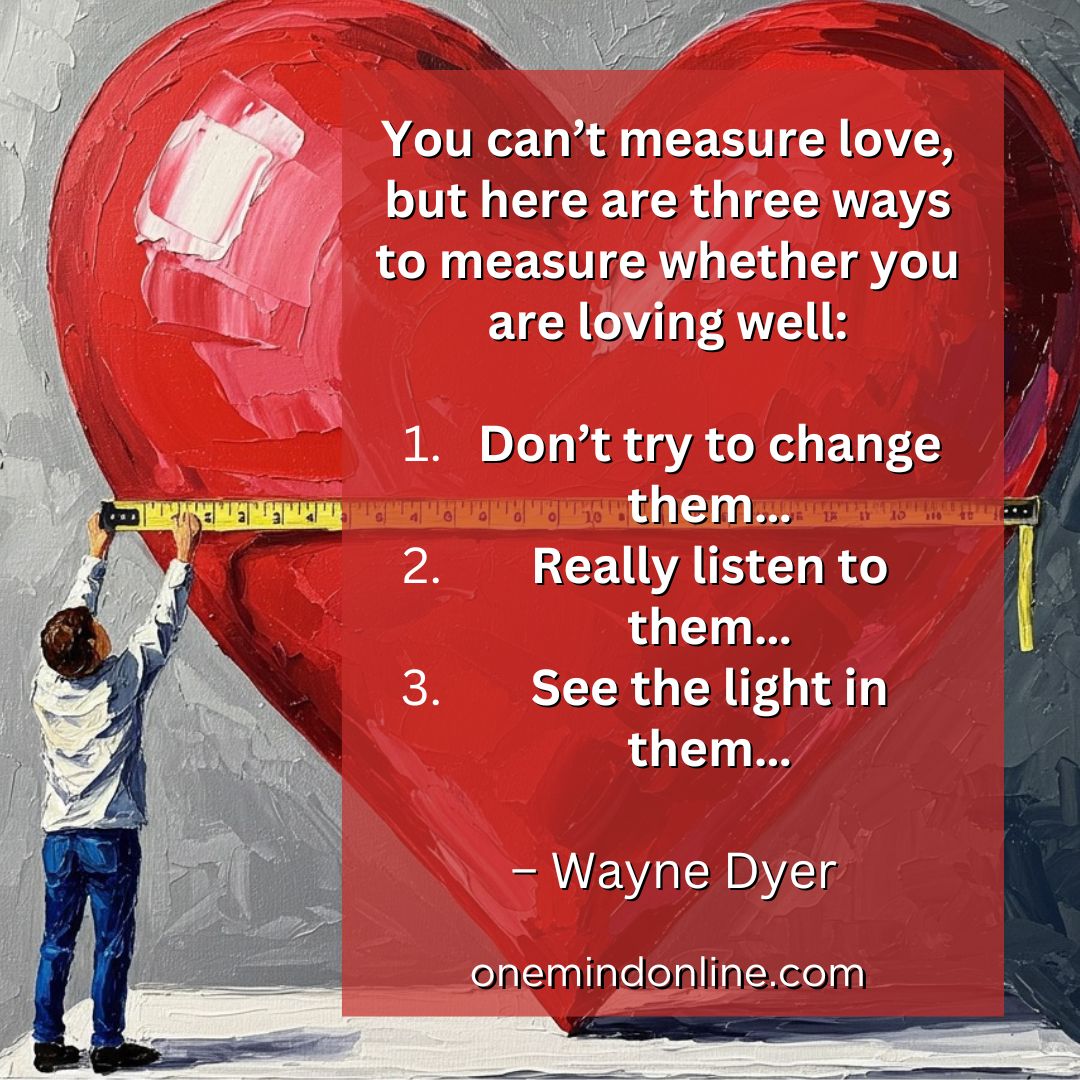
I have often wondered whether there would be a way to measure love. A way in which to quantify what love means so as to see whether I’m doing a good job of loving the people around me.
Wayne Dyer mentions at least three ways in which we can be more conscious about the way we love:
- Don’t try to change them…
- Really listen to them…
- See the light in them…
While these are not exactly quantifiable in centimeters or inches, I do believe that these can be really good principles to use in measuring whether we are loving well.
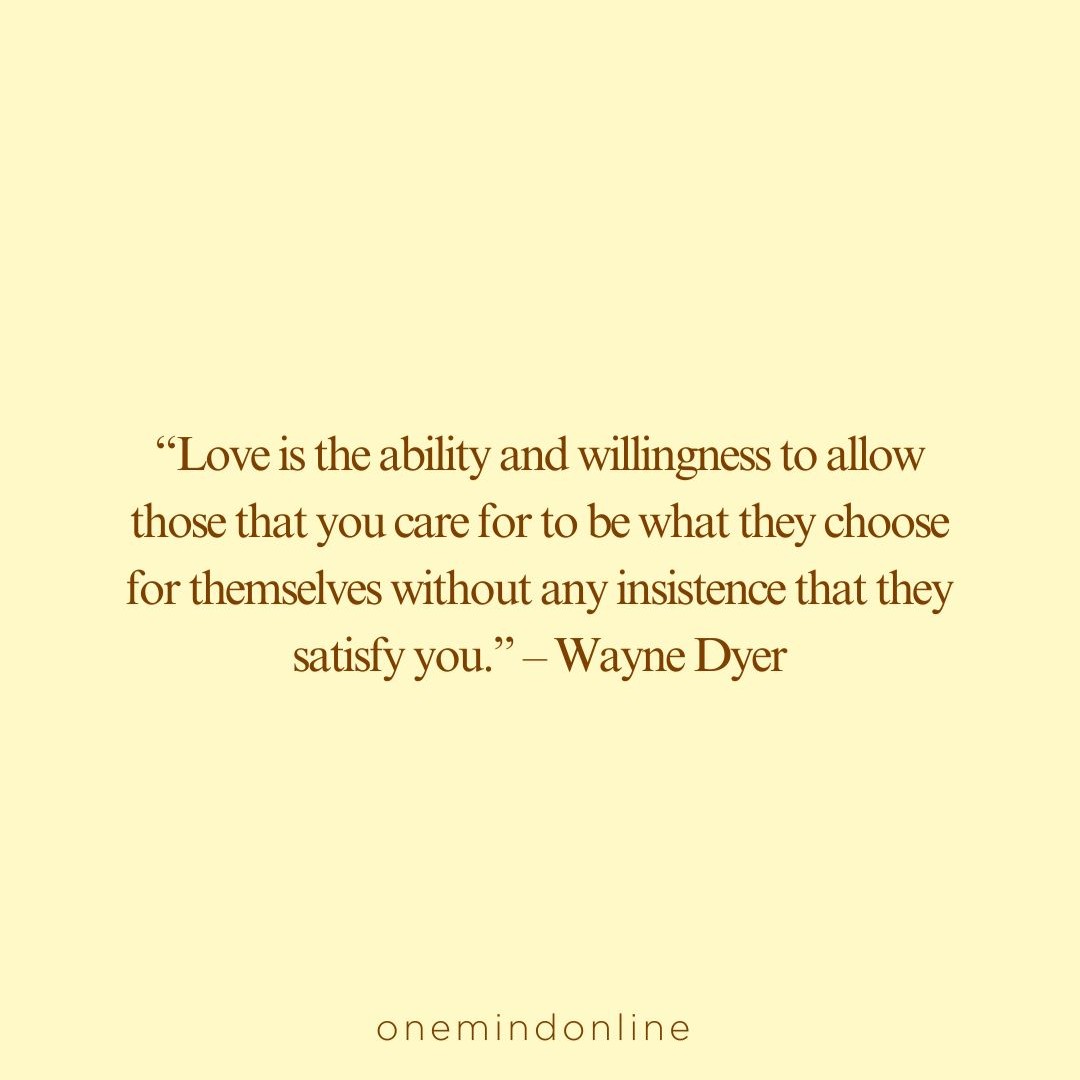
“Love is the ability and willingness to allow those that you care for to be what they choose for themselves without any insistence that they satisfy you.” – Wayne Dyer
“Be a good listener… It makes the person who’s speaking to you feel loved, cared for and worthy of being heard.” – Wayne Dyer
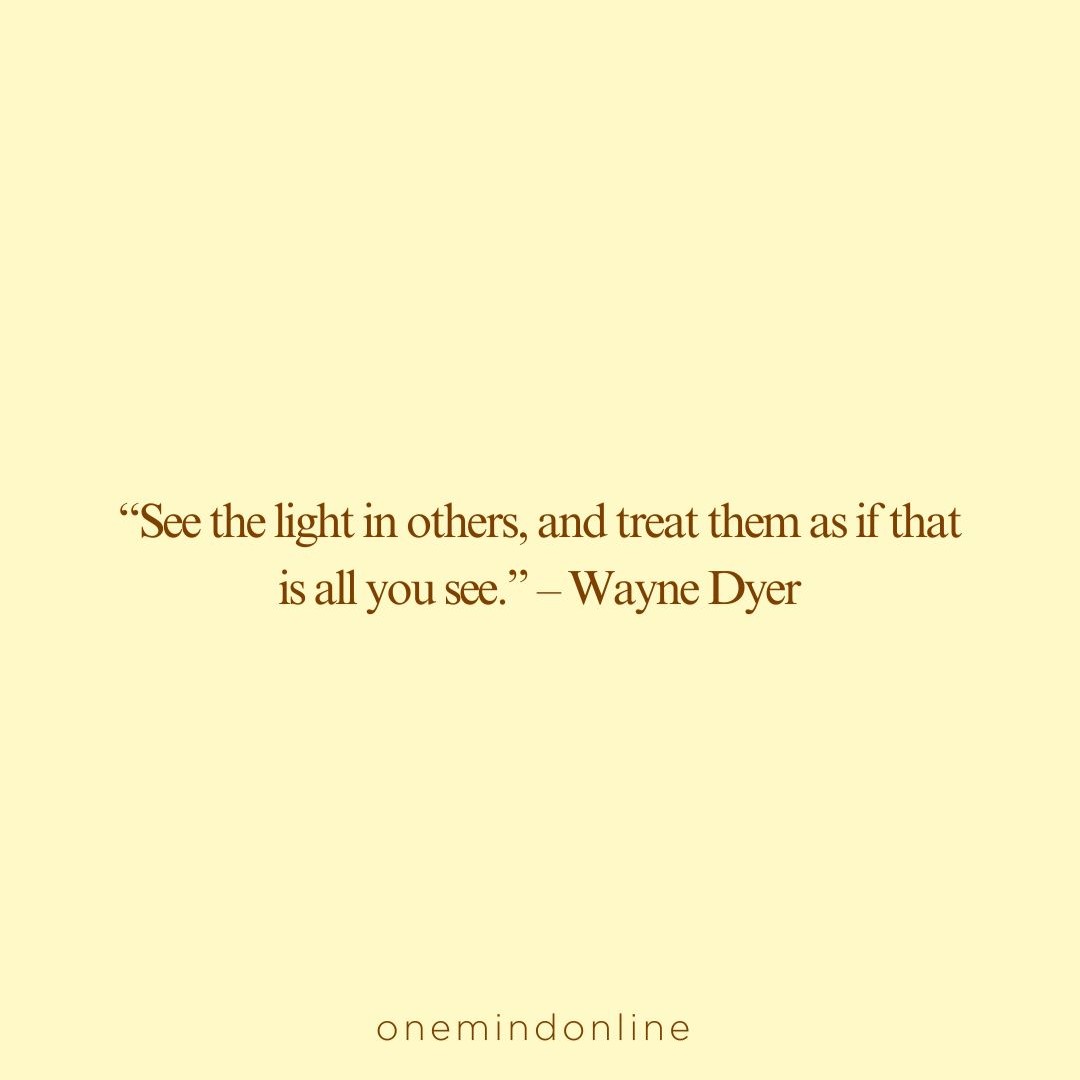
“See the light in others, and treat them as if that is all you see.” – Wayne Dyer
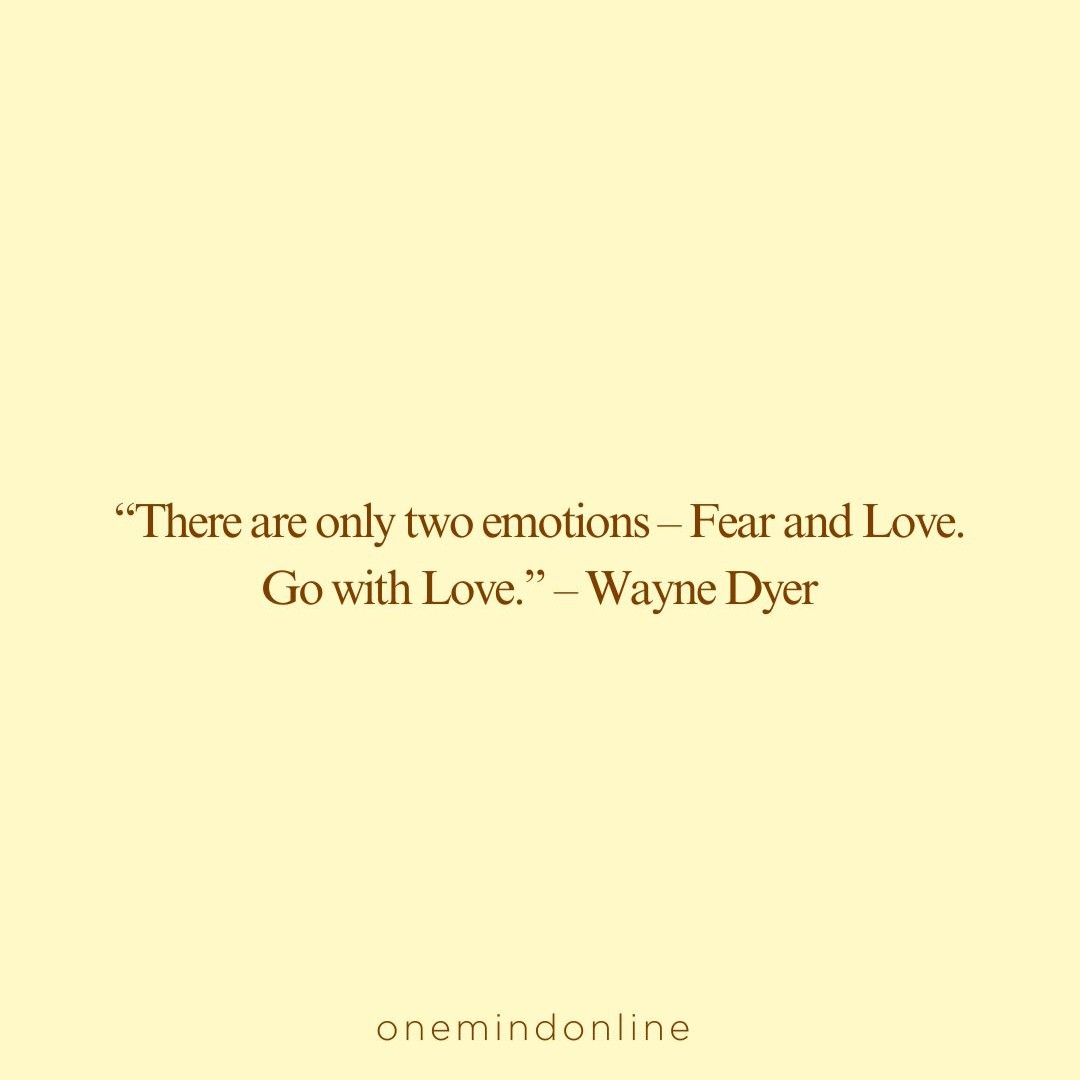
“There are only two emotions – Fear and Love. Go with Love.” – Wayne Dyer
Am I allowing the people around me to be exactly who they are? Or am I trying to get them to show up in a way that satisfies MY fears? Whenever I have the impulse to direct someone towards a different way of being I have to ask myself the question, “what is it that I am afraid will happen?”, because it is MY fear that wants them to change.
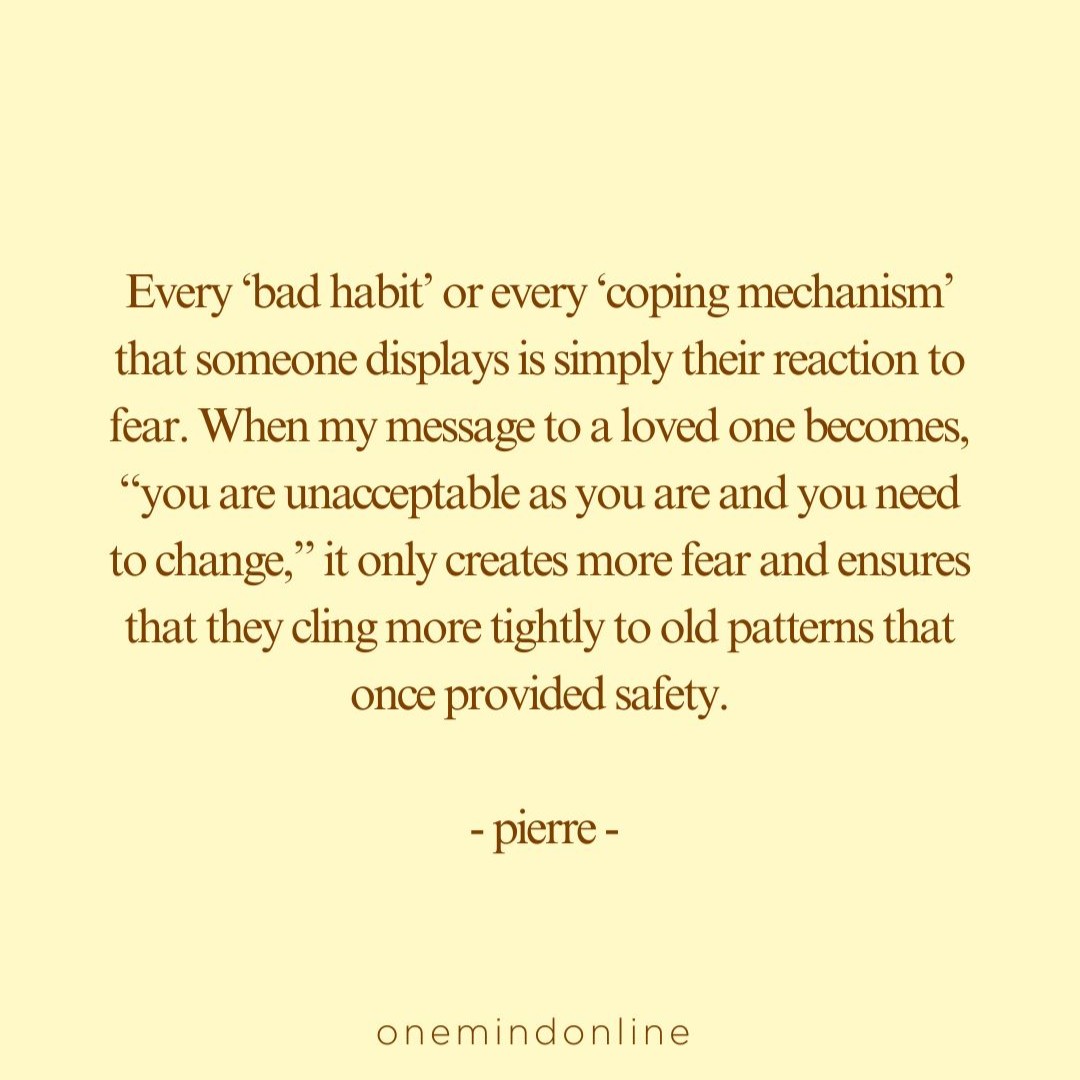
Every ‘bad habit’ or every ‘coping mechanism’ that someone displays is simply their reaction to fear. When my message to a loved one becomes, “you are unacceptable as you are and you need to change,” it only creates more fear and ensures that they cling more tightly to old patterns that once provided safety.
The biggest gift I can give anyone is to trust in their divinity, and that in the absence of a fear response they will ultimately outgrow the coping mechanisms that used to provide a sense of safety.
Acting from fear always brings along only more fear. If you want to experience what freedom really is, choose love, every time. This is the most courageous thing you will ever do.
———-
BTW, choosing love is not equal to accepting abuse, but it does mean that you can actually love deeply even when you choose to distance yourself:
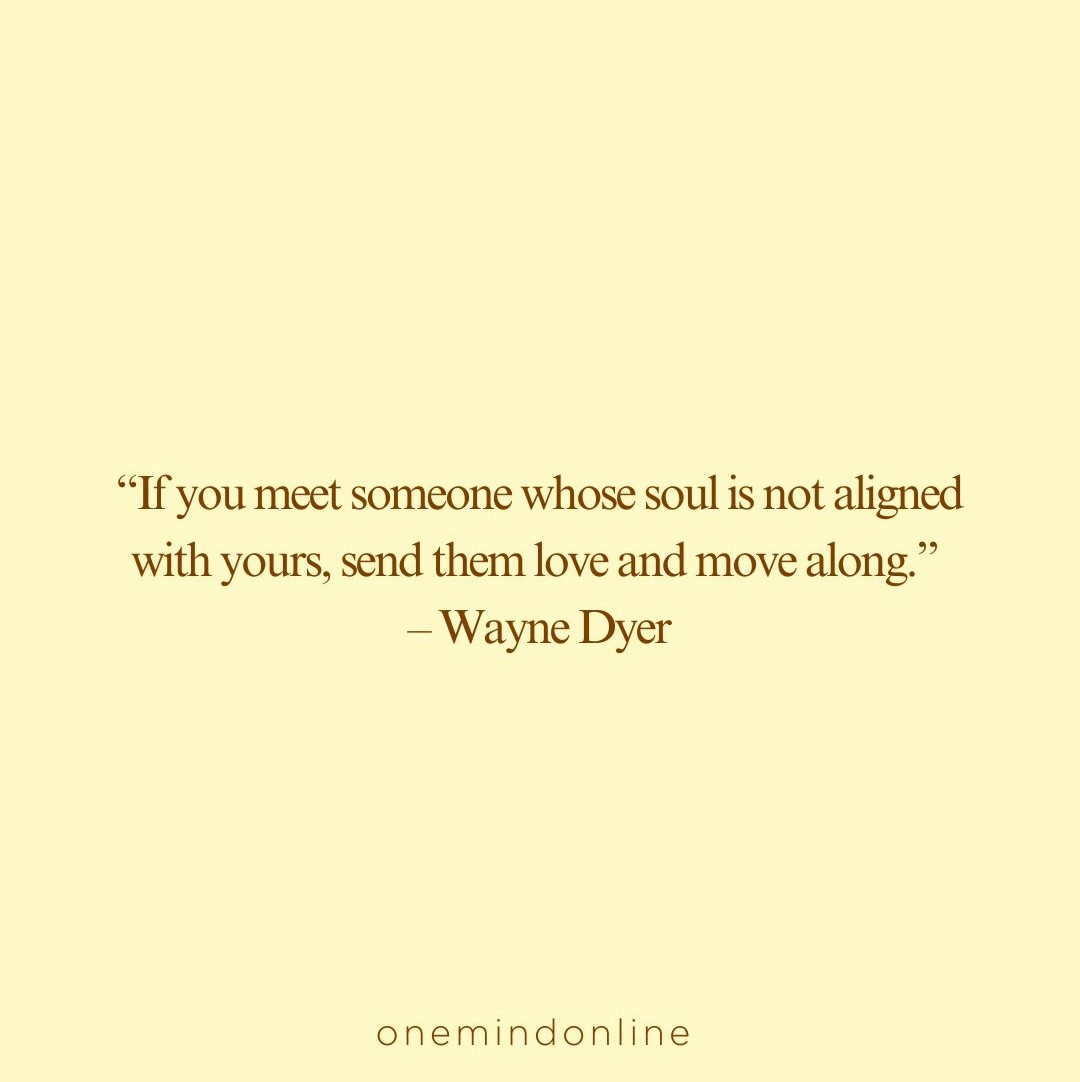
“If you meet someone whose soul is not aligned with yours, send them love and move along.” – Wayne Dyer
Are you conscious about the way you love? These three principles are a very helpful measure with which to test your ability to love:
- Don’t try to change them: Love embraces individuals for who they are, without imposing our own expectations or desires. Trying to mold others into our ideal image is a form of control, not love.
- Really listen to them: Active listening involves paying full attention to another person’s words and emotions, without interrupting or judging. It conveys respect, care, and understanding.
- See the light in them, and treat them as if it’s the only thing you see: Every individual possesses inherent goodness and potential. By focusing on their positive qualities, we create a space for growth and connection.
The truth is, love is not a quantifiable measurement, but a choice that reflects our values and intentions. By practicing the principles outlined by Wayne Dyer, we can cultivate deeper, more meaningful relationships and experience the transformative power of love in our lives. Remember, choosing love is the most courageous act we can take.
Have a beautiful Friday peeps!
– pierre –
Today’s LIVE meditation is: Sharing love.
Today’s LIVE meditation
https://youtu.be/RL3jsQ90b0g 2025
https://youtu.be/MASpEjEN6cM 2024
https://youtu.be/_Tcwi15Wzt4 2023
https://youtu.be/o5TgL_V2pMo 2022
Practice the “Daily Dose”
Let’s put it into practice! Choose what works for you – daily, once a week or whenever inspiration strikes. Putting pen to paper wires the neural pathways that will create your new habits.
1 – Affirmation
Write down your favourite affirmation on a sticky note and place it somewhere that you’ll be able to see it the whole day.
- Don’t try to change them: Love embraces individuals for who they are, without imposing our own expectations or desires. Trying to mold others into our ideal image is a form of control, not love.
- Really listen to them: Active listening involves paying full attention to another person’s words and emotions, without interrupting or judging. It conveys respect, care, and understanding.
- See the light in them, and treat them as if it’s the only thing you see: Every individual possesses inherent goodness and potential. By focusing on their positive qualities, we create a space for growth and connection.
2 – A moment of reflection
Use today’s question as a journal prompt. If you don’t have the time to sit down and write, just take a moment to reflect on your response.
The Mirror of Change: Think of someone in your life whom you’ve wanted to change or “fix.” Write about what specific behaviours or qualities you wish were different. Now, dig deeper: What fears of yours might be driving this desire? What would you be afraid might happen if they remained exactly as they are? How might your need for them to change be more about your own comfort than their well-being?
3 – Quotes to share
Send a quote to someone who needs it, or share them all on social media to spread the good vibes!

4 – Q&A for deeper learning
Read through the questions and answers and write down at least one “aha moment” that clicked for you.
Q1. How can I tell if I’m trying to change someone out of love or out of fear?
Trying to change someone is never actually an act of love – it’s always, at its root, an attempt to soothe our own fears. We don’t get to change other people; we only get to learn who they truly are, and then decide whether that’s someone we want to keep close to us or not. Parenting can feel like an exception to this, since we do carry real responsibility to guide our children through their learning and development. But even here, if you catch yourself strategizing about how to change your child into someone else, you’re probably barking up the wrong tree. Our job with kids isn’t to reshape them into a version we’d prefer – it’s to learn who they already are at their core, and then help guide them toward becoming more fully the person that they already are.
Q2. What’s the difference between “seeing the light” in someone and being naive about their flaws?
Seeing the light doesn’t mean ignoring harmful behaviours or being blind to someone’s actions. It means recognizing that underneath destructive patterns, there’s inherent goodness and potential. You can acknowledge someone’s struggles while still treating them with dignity and seeing their capacity for growth. This approach often creates the safety needed for genuine transformation.
Q3. How do I practice “really listening” when someone is saying things I disagree with?
Really listening means asking genuine questions and focusing your attention on understanding the other person’s perspective and emotions, rather than mentally drafting your rebuttal while they’re still talking. This becomes especially difficult if you’re in the habit of taking things personally – when someone’s words feel like an attack on you, your energy naturally shifts toward defending yourself instead of understanding them. The moment you notice that pull to protect or explain yourself, that’s your cue to pause and get curious instead: ask what’s behind what they’re saying, what they’re feeling, what matters to them about it. You can disagree with someone’s views while still honoring their right to express them and their need to feel heard – listening, after all, doesn’t require agreement.
Q4. Does choosing love mean I have to accept abuse or harmful behaviour?
Absolutely not. Choosing love includes loving yourself enough to establish healthy boundaries. You can send someone love while removing yourself from harmful situations. As Wayne Dyer said, “If you meet someone whose soul is not aligned with yours, send them love and move along.” Love is not synonymous with tolerance of destructive behaviour.
Q5. What if someone doesn’t want to change their harmful coping mechanisms?
Remember that everyone’s timeline for growth is different, and if this is an adult you’re dealing with, it’s not your job to take responsibility for their journey – every adult has to take ownership of their own growth. Not as a form of “tough love”, but because it just doesn’t work any other way. When someone does ask for help though, that changes things, but only within the capacity you actually have to give; you have to put your own oxygen mask on first, or fill your own cup before you can pour into someone else’s. And even when help is requested, it’s worth asking: “are they actually willing to change?” Because we can help someone shift how they respond to their environment, but we can’t change the environment itself to make their life easier – that part is always theirs to navigate. Your role isn’t to force change but to create a safe, non-judgmental space where change becomes possible, trusting that the more you release control over someone’s journey, the more room there is for their natural evolution. Sometimes the most loving thing you can do is step back and allow them their process.
Q6. How can I stop my fear from driving my reactions in relationships?
Start by developing awareness of your fear responses, because acting from fear always creates more fear – and in fact, when you’re controlled by your relationship fears, you’re virtually guaranteed to manifest those exact fears into reality every time. If you’re afraid someone will leave, that fear tends to drive behaviours – clinging, controlling, testing – that end up pushing them away. If you’re afraid of not being enough, that fear can make you defensive or overly accommodating in ways that erode the very connection you’re trying to protect. When you feel the urge to control, change, or fix someone, pause and ask: “What is it that I’m afraid will happen, and is my reaction about to feed that fear into existence?” Practice breathing through the discomfort of uncertainty instead of acting on it. Choosing love – even when it feels vulnerable – breaks that cycle and creates space for the outcome you actually want, rather than the one your fear keeps recreating. The more complicated answer is you might need to acquire new skills in your ability to communicate, so that you can learn how to voice your fears without turning it into an attack. Surprise, surprise… we all do.
Q7. Is it possible to love someone who has hurt me deeply?
Yes, of course – and this is exactly what makes every bad breakup so difficult. If love simply switched off the moment someone hurt us, heartbreak wouldn’t hurt nearly as much as it does; the pain itself is proof that the love is still there, tangled up with hurt, disappointment, or betrayal. This is often the hardest part to accept: you can still love someone and know, with total clarity, that you need to walk away from them. Love doesn’t require proximity or reconciliation – you can release the relationship while still holding love for the person, or at least for who they once were to you. This is where sending them love and moving along becomes so important, not for their sake, but for your own freedom. Holding onto resentment doesn’t punish them; it just means you keep carrying the weight of it. Forgiveness and love can coexist with firm boundaries and self-protection – you’re allowed to love someone from a distance for very good reasons.