

“Your Daily Dose” is a quick two minute read packed with bite-sized wisdom from all the great teachers. But you could also choose to turn it into something more… a powerful daily practice for personal growth. Give it a try!
A message from today’s meditation:
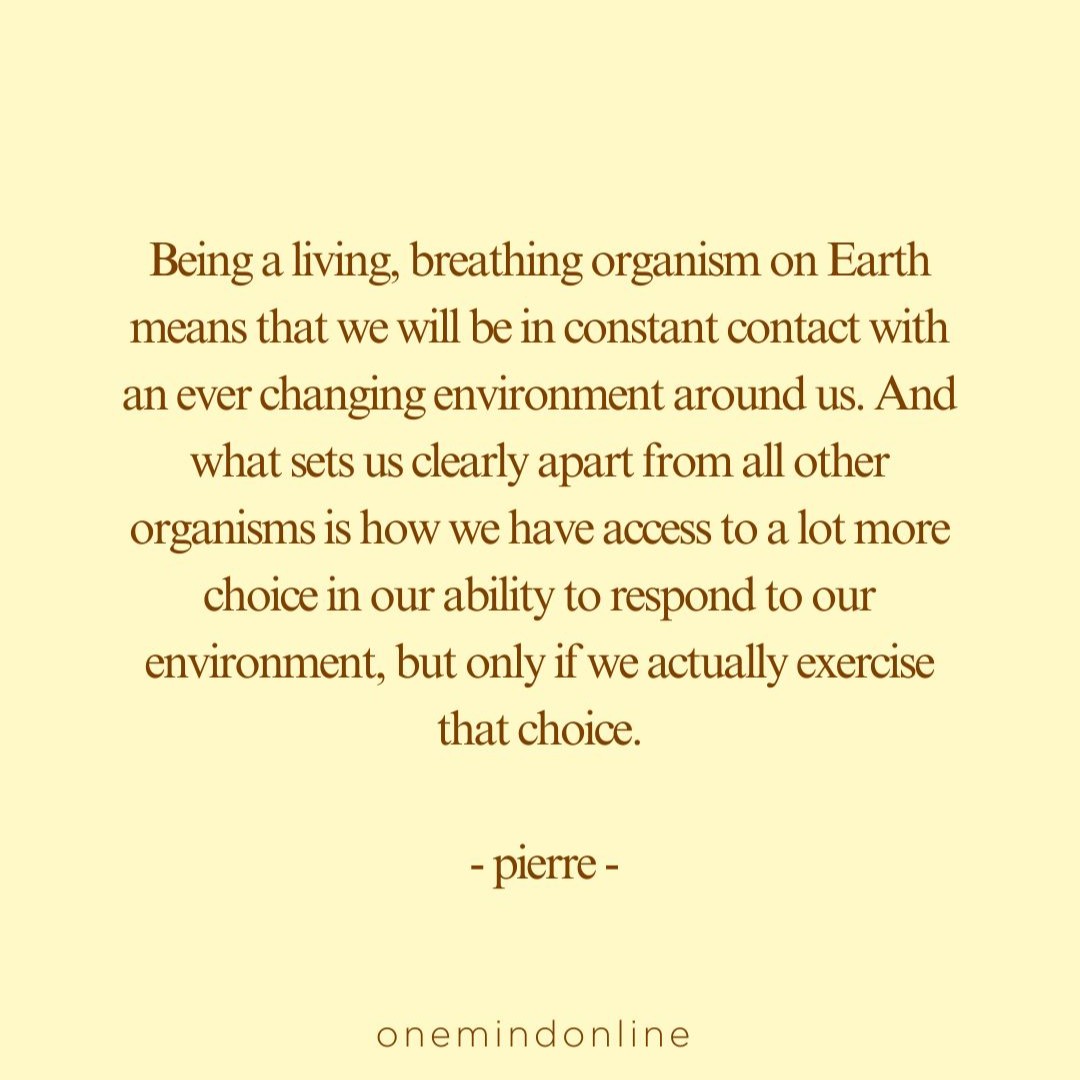
Being a living, breathing organism on Earth means that we will be in constant contact with an ever changing environment around us. And what sets us clearly apart from all other organisms is how we have access to a lot more choice in our ability to respond to our environment, but only if we actually exercise that choice.
We have two modes in our interaction with the world around us: Unconscious or Conscious.
Unconscious mode: Living on autopilot
This doesn’t mean physically asleep but maybe something like emotionally asleep, spiritually asleep, or unaware. In this mode it’s like we’re on autopilot, reacting to our environment from a collection of old patterns formed by our past experience in a sequence of IF-THIS-THEN-THAT events.
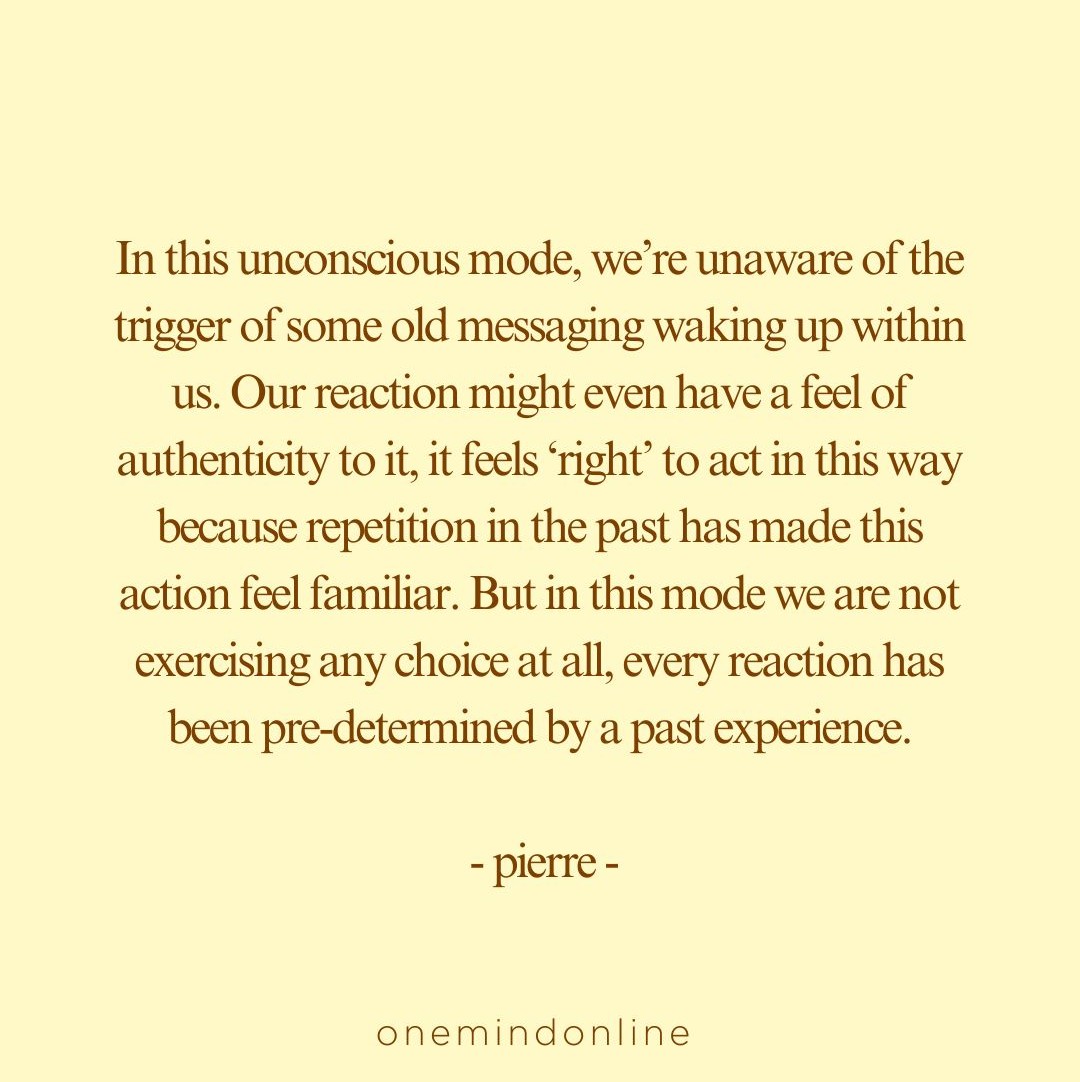
In this unconscious mode, we’re unaware of the trigger of some old messaging waking up within us. Our reaction might even have a feel of authenticity to it, it feels ‘right’ to act in this way because repetition in the past has made this action feel familiar. But in this mode we are not exercising any choice at all, every reaction has been pre-determined by a past experience.
Conscious mode: Awakening to choice
Becoming aware of the repetitive nature of our thoughts and reactions, wakes us up to a wider set of possibilities. Taking a step back and seeing how the same old thought triggers the same old emotion, which triggers the same old compulsion to… run? fight? hide? numb out?
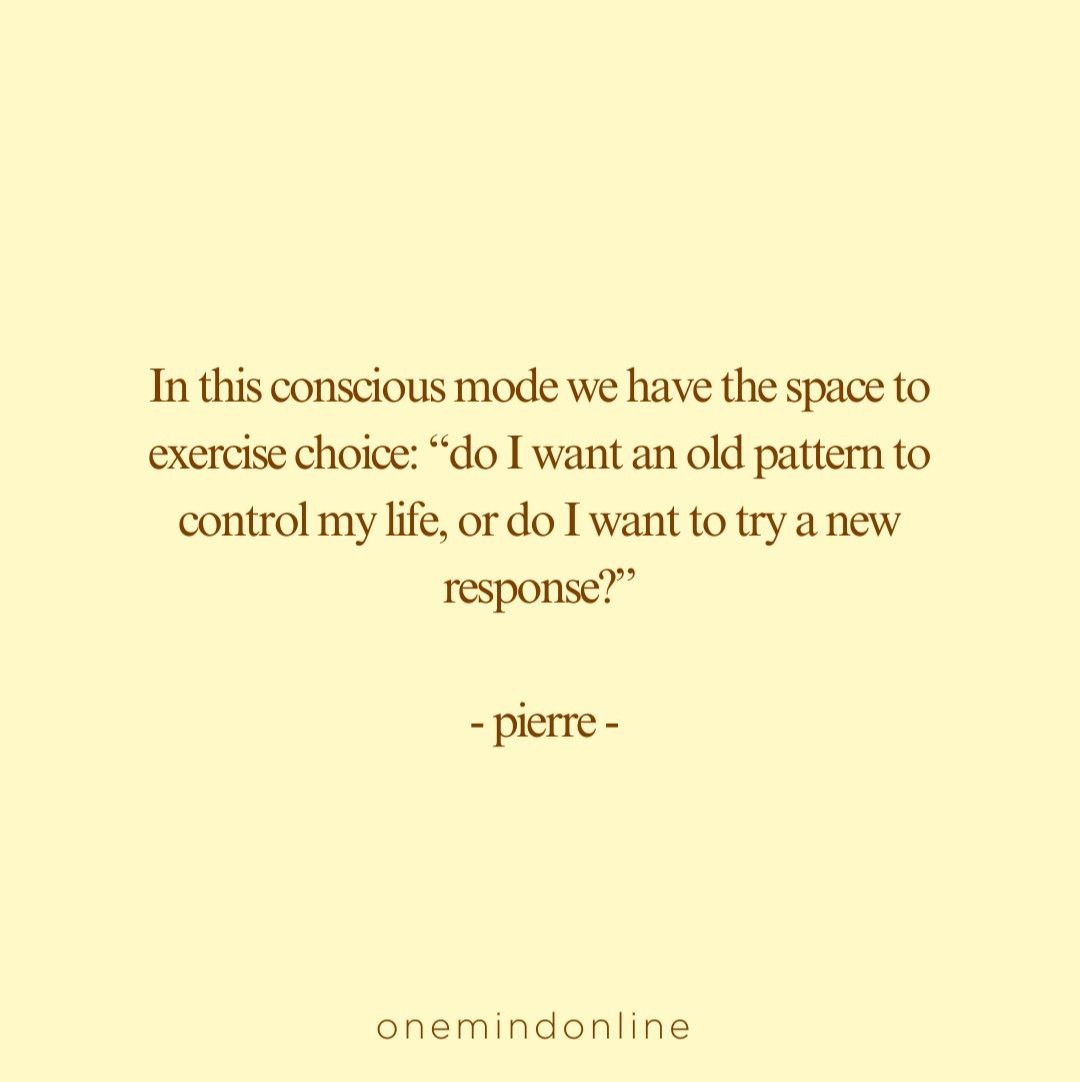
In this conscious mode we have the space to exercise choice: “do I want an old pattern to control my life, or do I want to try a new response?”
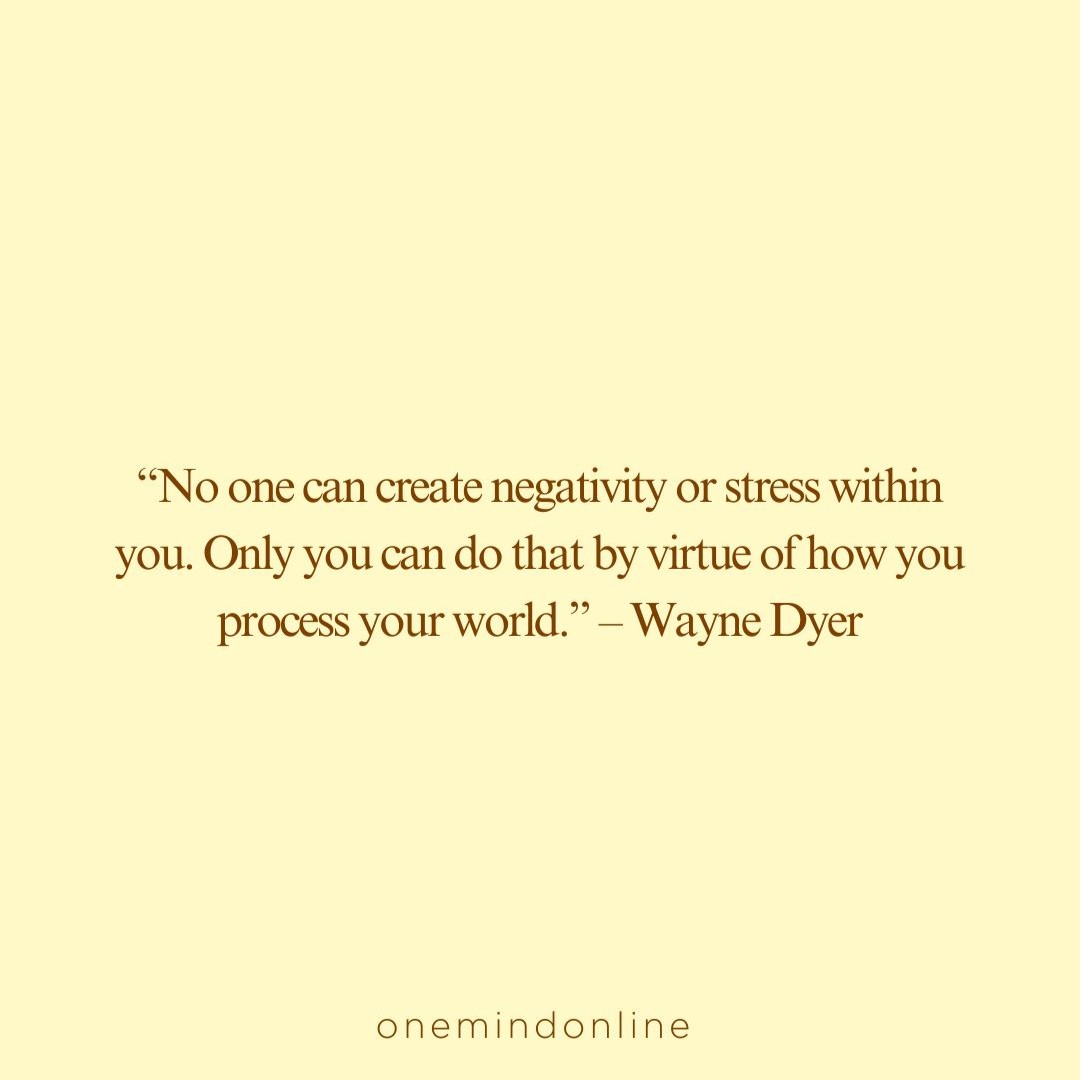
“No one can create negativity or stress within you. Only you can do that by virtue of how you process your world.” – Wayne Dyer
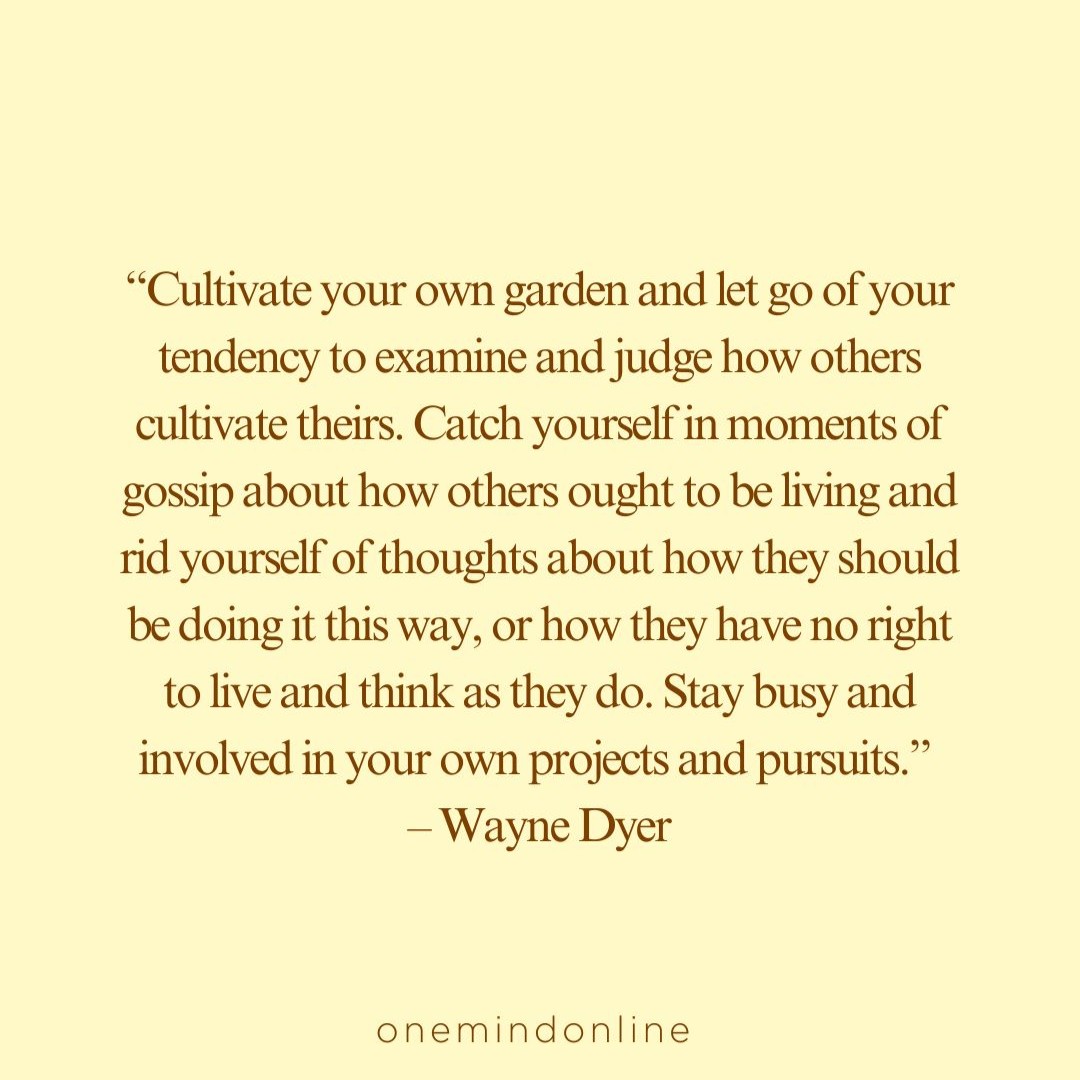
“Cultivate your own garden and let go of your tendency to examine and judge how others cultivate theirs. Catch yourself in moments of gossip about how others ought to be living and rid yourself of thoughts about how they should be doing it this way, or how they have no right to live and think as they do. Stay busy and involved in your own projects and pursuits.” – Wayne Dyer
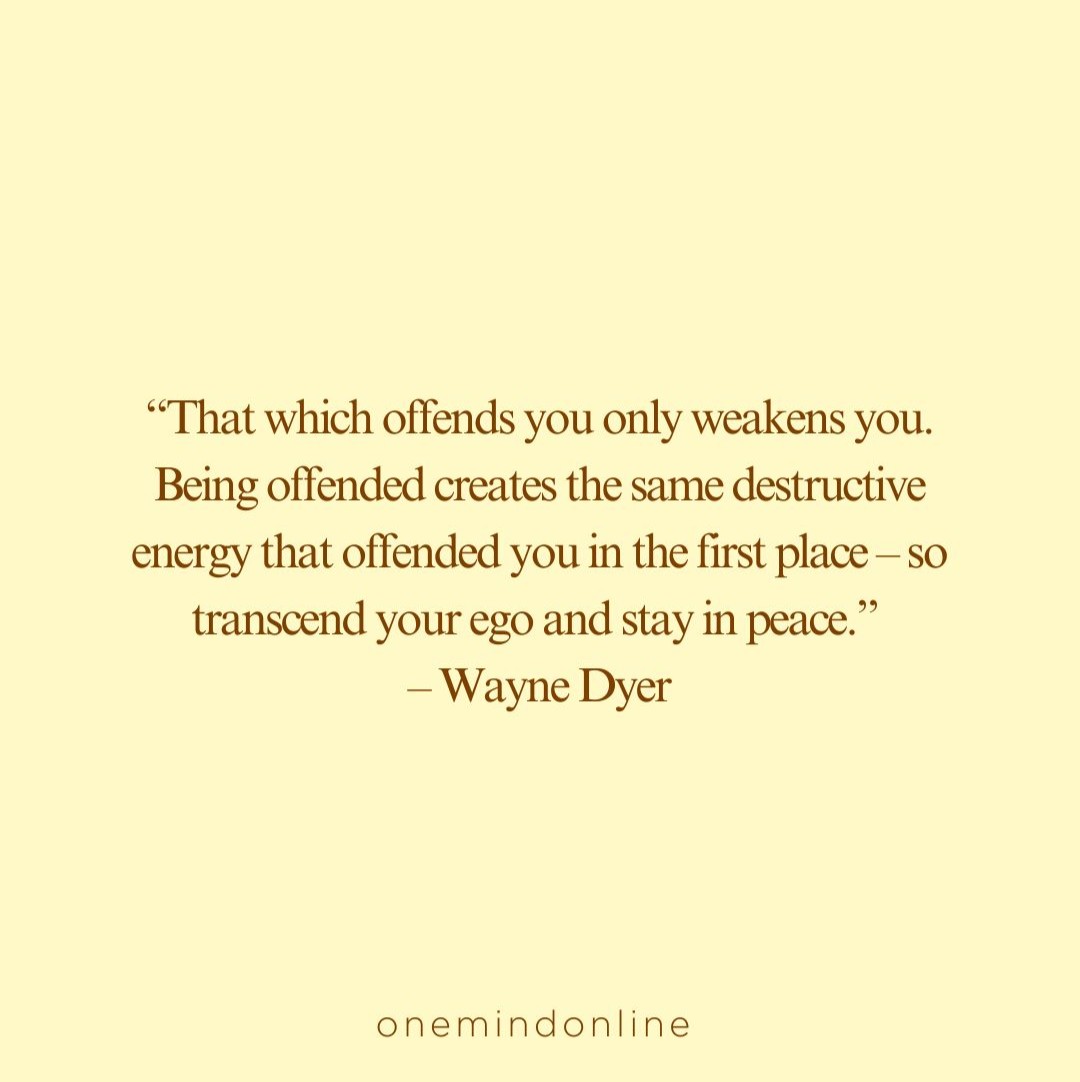
“That which offends you only weakens you. Being offended creates the same destructive energy that offended you in the first place – so transcend your ego and stay in peace.” – Wayne Dyer
“Heaven on Earth is a choice you must make, not a place you must find.” – Wayne Dyer
We’ve all experienced those moments when a seemingly insignificant event triggers a disproportionate emotional response. It’s as if an invisible force has taken over, driving us to react in ways that we later regret. These impulsive reactions are driven by our past experiences, and can significantly impact our relationships, careers, and overall well-being.
It might take no more than a few breaths for you to step out of an unconscious old programme and find that being conscious gives you access to more possibilities than you first believed to be true.
Today’s meditation journey is the practice of first finding the calm, clarity within you, before choosing how you will respond.
Take a pause and reflect on these few thoughts:
- Pause and breathe. Before reacting, take a moment to calm your mind and body.
- Practice self-compassion. Be kind to yourself, even when you make mistakes.
- Choose consciously. Instead of reacting impulsively, consider alternative responses.
- Observe your thoughts and emotions. Notice any recurring patterns or triggers, and notice how they always elicit the same reactions from you.
In conclusion, the power to choose our responses lies within us. By cultivating inner calm, becoming aware of our patterns, and consciously choosing our reactions, we can break free from the limitations of our past and create a more fulfilling and peaceful life.
– pierre –
Today’s LIVE meditation is: I am the mountain.
Today’s LIVE meditation
https://youtu.be/i5tCoMn3zbo 2026
https://youtu.be/-pxJjk6Z8rE 2025
https://youtu.be/Kz844dDWOZY 2024
https://youtu.be/HwVSNVtlrFY 2023
https://youtu.be/OmDj_hVKUgA 2022
Practice the “Daily Dose”
Let’s put it into practice! Choose what works for you – daily, once a week or whenever inspiration strikes. Putting pen to paper wires the neural pathways that will create your new habits.
1 – Affirmation
Write down your favourite affirmation on a sticky note and place it somewhere that you’ll be able to see it the whole day.
- Pause and breathe. Before reacting, take a moment to calm your mind and body.
- Practice self-compassion. Be kind to yourself, even when you make mistakes.
- Choose consciously. Instead of reacting impulsively, consider alternative responses.
- Observe your thoughts and emotions. Notice any recurring patterns or triggers, and notice how they always elicit the same reactions from you.
2 – A moment of reflection
Use today’s question as a journal prompt. If you don’t have the time to sit down and write, just take a moment to reflect on your response.
The Space Between Stimulus and Response: Describe a moment when you were able to pause between feeling triggered and responding. What did that pause feel like in your body? What thoughts or emotions arose in that space? How did having that moment of conscious choice change the outcome of the situation? If you haven’t experienced this yet, imagine what it might feel like to have that space to delay the reaction until you can act from wisdom – how would you want to apply it?
3 – Quotes to share
Send a quote to someone who needs it, or share them all on social media to spread the good vibes!

4 – Q&A for deeper learning
Read through the questions and answers and write down at least one “aha moment” that clicked for you.
Q1. What exactly is the difference between unconscious reacting and conscious responding?
Unconscious reaction is like being on autopilot – you react automatically based on past patterns without awareness of your choices. It’s driven by old programming that follows an IF-THIS-THEN-THAT sequence. Conscious responding involves taking a pause, observing your thoughts and emotions, and deliberately choosing how to respond – or perhaps walk away – rather than simply reacting. The key difference is awareness and intentional choice versus automatic reaction.
Q2. How can I tell when I’m operating in unconscious mode?
You’re likely in unconscious mode when your reactions feel immediate and intense, disproportionate to the situation, or when you later think “I don’t know why I reacted that way.” Other signs include feeling like you’re repeating the same patterns, experiencing familiar emotional triggers, or having responses that feel automatic and unchangeable. The reaction might even feel “right” because it’s familiar, but it lacks conscious choice.
Q3. Is it realistic to expect to pause and breathe in every triggering situation?
It’s not about perfection – it’s about practice and gradual improvement. Start with smaller triggers and less intense situations to build your “pause muscle.” Even catching yourself mid-reaction or after the fact is valuable awareness. The goal isn’t to never be triggered, but to gradually expand the space between stimulus and response. But even more important – because this in an integral part of rewiring old patterns – remember to practice being kind to yourself when you don’t catch yourself in time.
Q4. What if my past experiences have created patterns that feel impossible to change?
While past experiences do create strong neural pathways, they’re not permanent or unchangeable. The brain has neuroplasticity – the ability to form new connections throughout life. Each time you consciously choose a different response, you’re literally rewiring your brain. Start small, be patient with yourself, and remember that awareness is the first step. Even just recognizing a pattern is the beginning of softening its power over you.
Q5. How do I know if I’m observing my thoughts and emotions effectively?
Effective observation feels like stepping back and watching your inner experience without immediately judging it as good or bad. You’re not trying to change or fix anything in the moment of observation – just noticing. You might think “I can see that the feeling I have is anger” rather than “I am angry,” creating some space between you and the emotion. This observer perspective allows you to see patterns and make conscious choices about how to respond.
Q6. What does “cultivating your own garden” practically mean in daily life?
Cultivating your own garden means focusing your energy on your own growth, projects, and well-being rather than judging or trying to control others. Practically, this involves catching yourself when you’re criticizing or judging others and redirecting that energy toward your own goals and development. It means asking “What can I learn from this?” instead of “How should they change?” and staying busy with your own meaningful pursuits.
Q7. How can I practice self-compassion when I make mistakes or react unconsciously?
Self-compassion involves treating yourself with the same kindness you’d show a good friend. When you react unconsciously, acknowledge it without harsh self-judgment: “I notice I reacted from an old pattern, that’s such a human thing to do, and I’m getting better at catching my old behaviour faster and faster.” Remember that everyone has unconscious reactions; it’s part of being human. Use mistakes as learning opportunities rather than reasons for self-criticism. The goal is progress, not perfection, and self-compassion actually helps you learn and grow faster than self-criticism.