

“Your Daily Dose” is a quick two minute read packed with bite-sized wisdom from all the great teachers. But you could also choose to turn it into something more… a powerful daily practice for personal growth. Give it a try!
A message from today’s meditation:
Beauty begins the moment you decide to be yourself. I don’t remember who said this, but I wholeheartedly agree. People who are not afraid to unashamedly be themselves have a peace about them that is tangible, it feels calming to be in their presence.
If you’re trying to flex your “self” muscles, to lean into who you really are, you’ll find that not everyone thinks it’s beautiful though. While some thrive in supporting the real you, others might resent the fact that you’re not being who they want you to be. But here’s the thing about being yourself – when you do get to the place where you truly own yourself, you won’t need anyone’s permission to be happy in your own skin.
“Self-esteem comes from the self, not from acquisitions and approval.” – Wayne Dyer
And that’s why it’s called SELF esteem… it is the ability to hold your “self” in high regard irrespective of the messaging you receive from around you.
How do we build this muscle of self-esteem? The process is really simple, even if it’s not so easy to do. We don’t get there by looking away from the mirror. We don’t get there by pretending. Self-esteem is when I can clearly see all of my flaws and still hold a high regard of myself. And this is how you can build that muscle, purposely coming face to face with your inadequacies, and simultaneously expressing love for yourself.
“Beginning today, make the decision to love and accept yourself just the way you are. Say your name followed by the words “I love you” and make this your daily mantra, repeating it often, especially during times of stress. Let it be your first thought upon arising and the last thing you think before falling asleep at night. This simple act of self-courtship can profoundly change your world. Try it for yourself and see. Make a personal decision to be in love with the most beautiful, exciting, worthy person ever – you.” – Wayne Dyer
“As you awaken to your divine nature, you’ll begin to appreciate beauty in everything you see, touch and experience.” – Wayne Dyer
It’s beautiful to have the kind of relationships where people acknowledge you. But if your self-worth is dependent on this outside validation, then your “need” tends to sour even those beautiful relationships. It’s impossible for another human to take on the job of filling your cup while they have so many of their own distractions. It has to be YOU. You are the only one who can ALWAYS be there for you.
As you walk this journey of self-discovery and empowerment, here are a few guiding mantras to help you along the way:
- “I embrace my imperfections.” Perfection is impossible, and I choose to put that burden down. Anyone who ever accomplished anything meaningful was an imperfect human—my imperfections don’t disqualify me.
- “I nurture a kind inner voice.” I choose to speak to myself with kindness, even when addressing my harsh inner critic.
- “I celebrate my achievements.” No matter how small, I acknowledge and honor my accomplishments.
- (add your name) “_______________, I love you.” This simple act of self-courtship has the power to transform my world.
In conclusion, building self-esteem is a journey of self-discovery and self-acceptance. By embracing our imperfections, practicing self-love, and appreciating the beauty within and around us, we can forge an unbreakable bond with ourselves.
Remember, you are the only one who can ALWAYS be there for you, so your own love and acceptance should always be unconditional.
– pierre –
Today’s LIVE meditation is: The observer.
Today’s LIVE meditation
https://youtu.be/OxcV9Xxuwqs 2026
https://youtu.be/mE3wo452gl0 2025
https://youtu.be/QIKMYN-eROA 2023
https://youtu.be/tKuNZhRVvSQ 2022
Practice the “Daily Dose”
Let’s put it into practice! Choose what works for you – daily, once a week or whenever inspiration strikes. Putting pen to paper wires the neural pathways that will create your new habits.
1 – Affirmation
Write down your favourite affirmation on a sticky note and place it somewhere that you’ll be able to see it the whole day.
- “I embrace my imperfections.” Perfection is impossible, and I choose to put that burden down. Anyone who ever accomplished anything meaningful was an imperfect human—my imperfections don’t disqualify me.
- “I nurture a kind inner voice.” I choose to speak to myself with kindness, even when addressing my harsh inner critic.
- “I celebrate my achievements.” No matter how small, I acknowledge and honor my accomplishments.
- (add your name) “_______________, I love you.” This simple act of self-courtship has the power to transform my world.
2 – A moment of reflection
Use today’s question as a journal prompt. If you don’t have the time to sit down and write, just take a moment to reflect on your response.
Practicing Self-Courtship: Wayne Dyer suggests saying your name followed by “I love you” as a daily practice. How does this idea make you feel? What resistance comes up when you think about speaking to yourself this way? Write about what unconditional self-love would look like in your life. How would you treat yourself differently if you truly believed you were worthy of your own love and care?
3 – Quotes to share
Send a quote to someone who needs it, or share them all on social media to spread the good vibes!
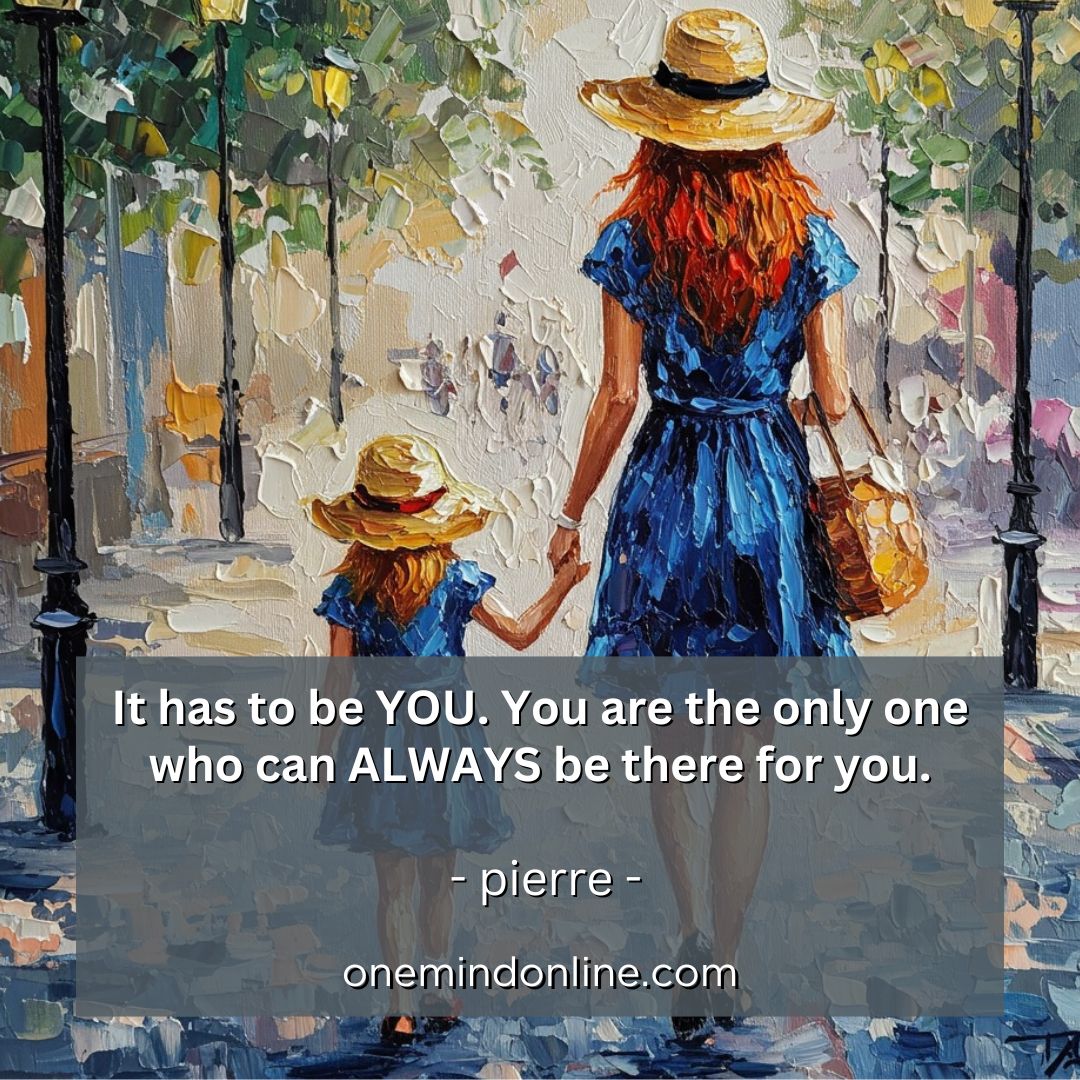
4 – Q&A for deeper learning
Read through the questions and answers and write down at least one “aha moment” that clicked for you.
Q1: What’s the difference between self-esteem and self-confidence?
Self-esteem and self-confidence work together, but they answer different questions. As the article explores, self-esteem is the ability to clearly see all of your flaws and still hold yourself in high regard – it’s rooted in your sense of worth as a person, independent of any particular outcome. Self-confidence, by contrast, is your trust in your ability to deal with life itself. It’s often mistaken for certainty of success, but genuine confidence isn’t the absence of fear or nervousness – it’s trusting that you can handle whatever arises, including the fear or the nerves themselves. Confidence isn’t “I know I’ll nail it,” it’s “I know I’ll be okay even if I don’t nail it.” The two concepts are deeply connected: strong self-esteem is often what makes real confidence possible, because when your sense of worth doesn’t hinge on the outcome, you’re free to trust yourself through uncertainty rather than needing a guaranteed win to feel secure.
Q2: Why do some people seem to resent it when I become more authentic?
When you start being more authentically yourself, it can trigger discomfort in others who may have been benefiting from your people-pleasing behaviour or who are uncomfortable with their own lack of authenticity. Your growth can serve as a mirror that highlights their own areas of struggle. Additionally, some people may have formed relationships with the “version” of you that aimed to please them, and they may resist the change. This is natural, but it’s important to remember that their discomfort is not your responsibility to fix.
Q3: How can I tell if I’m seeking too much external validation?
Signs of over-dependence on external validation include constantly checking social media for likes and comments, feeling anxious when people don’t respond to your messages immediately, changing your opinions based on who you’re with, feeling devastated by criticism, or finding it difficult to make decisions without input from others. If your mood significantly depends on how others treat you or respond to you, it’s likely that you’re relying too heavily on external validation for your self-worth.
Q4: Is it selfish to focus so much on loving myself?
Self-love isn’t selfish at all, because self-love isn’t actually different from love itself – if you truly understand what love is, you’ll see that self-love and love are one and the same; there’s no separating them. Love, at its core, is patient, kind, wise, and unconditional, and those qualities don’t change depending on who’s receiving them. When you direct that same quality of love inward, you’re not doing something different or special – you’re simply applying love consistently, including to yourself. The reason “self-love” became such an overused, almost suspicious term is because self-loathing is so pervasive; we needed a phrase to counteract a widespread habit of treating ourselves as the one exception to love’s rules. But love was never meant to exclude you. Calling it selfish to love yourself is like calling it selfish to be honest with yourself – it’s simply love, applied evenly, without the arbitrary exception we’d grown used to making.
Q5: How do I practice self-compassion when I’ve made a mistake?
Self-compassion involves treating yourself with the same kindness you’d show a good friend. When you make a mistake, acknowledge it without harsh self-judgment. Ask yourself: “What would I say to a friend in this situation?” Then say those same supportive words to yourself. Remember that making mistakes is part of being human – it doesn’t define your worth. You can take responsibility and learn from the experience, without punishing yourself for it.
Q6: What if saying “I love you” to myself feels fake or uncomfortable?
If this feels uncomfortable, first, know that this is completely normal – and second, understand that this discomfort demonstrates exactly how much you need the exercise. The reason so many of us feel awkward or fake expressing love for ourselves traces back to childhood, where it became normal to feel that love was only expressed when we behaved perfectly, with zero mistakes. That early programming embedded a quiet rule: love is conditional, and it’s earned through flawlessness. Now, as an adult, you know very well just how flawed you are, and that same programming insists that deeply flawed people don’t get to receive love – so when you try to say “I love you” to yourself, it clashes with a belief system that’s been running in the background for decades. The discomfort isn’t a sign you’re doing it wrong; it’s a sign you’ve found exactly the wound that needs attention. Start small if you need to, but keep going – every repetition is you slowly rewriting a rule that was never true to begin with.
Q7: How long does it take to build genuine self-esteem?
There’s no fixed timeline for building genuine self-esteem, and chasing one can actually get in the way of the process itself. What matters far more than speed is consistency: whether you think it’s working or not, just keep showing up for the same practice over and over again. Keep taking an honest look at your flaws and shortcomings, and then insist on telling this imperfect person that you love them – over and over again, especially on the days it feels like nothing is changing. Self-esteem isn’t built in a single breakthrough moment; it’s built in the repetition, in choosing to extend that love again after the mind’s default programming pushes back for the thousandth time. Some days the practice will feel hollow, and other days you’ll catch a flicker of something real – both are part of the same process. Trust in the repetition, because the muscle is being built even in the moments you can’t feel it working.