
“Your Daily Dose” is a quick two minute read packed with bite-sized wisdom from all the great teachers. But you could also choose to turn it into something more… a powerful daily practice for personal growth. Give it a try!
A message from today’s meditation:
Our teacher for this week is Hermann Hesse, a Swiss/German author who won the Nobel prize for literature in 1947. I really love his work and looking into whatever the week ahead might bring, here are some thoughts that help me set up my week.
Life is a tapestry into which threads will be woven that we don’t always have control over. There WILL be diversity in these threads. Some will be vibrant and joyful, capturing our successes. And other threads will be muted and dull, reflecting the sorrows and challenges of our lives. How we interpret these threads determines the beauty of our final masterpiece, and there WILL be beauty, if you would be willing to see it.
Hesse believes in the transformative power of perspective. His philosophy invites us to see life as an alchemist’s laboratory, where even the most ordinary experiences can be transmuted into gold. It’s about shifting our focus from the external circumstances to our internal response, recognizing that our perception is the true architect of our reality.
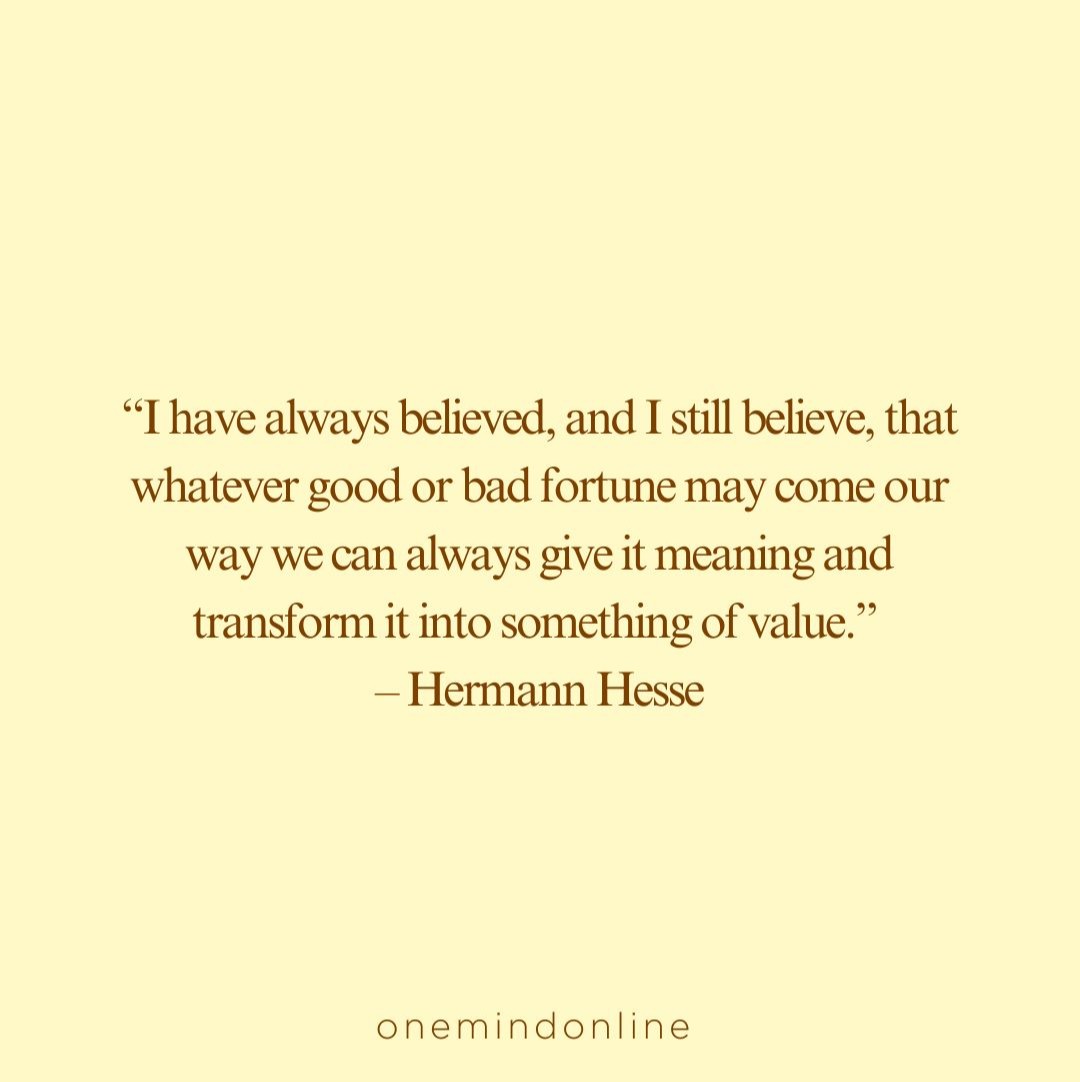
“I have always believed, and I still believe, that whatever good or bad fortune may come our way we can always give it meaning and transform it into something of value.” – Hermann Hesse
We are not passive victims of circumstance. We have the power to shape our narratives, to find meaning in the most challenging situations. This doesn’t mean denying pain or difficulty, but rather recognizing that even in the darkest hours, there are seeds of growth and resilience waiting to be cultivated.
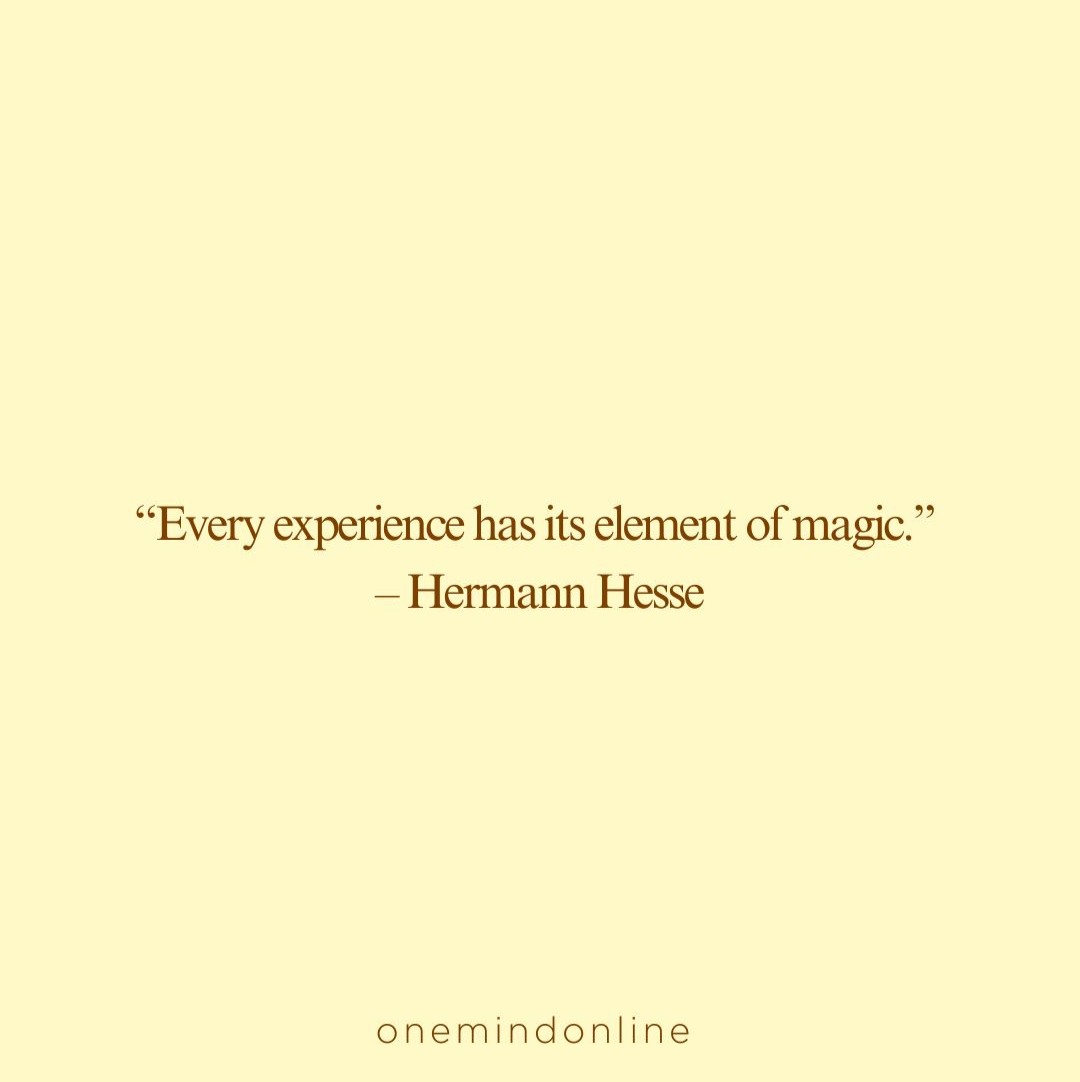
“Every experience has its element of magic.” – Hermann Hesse
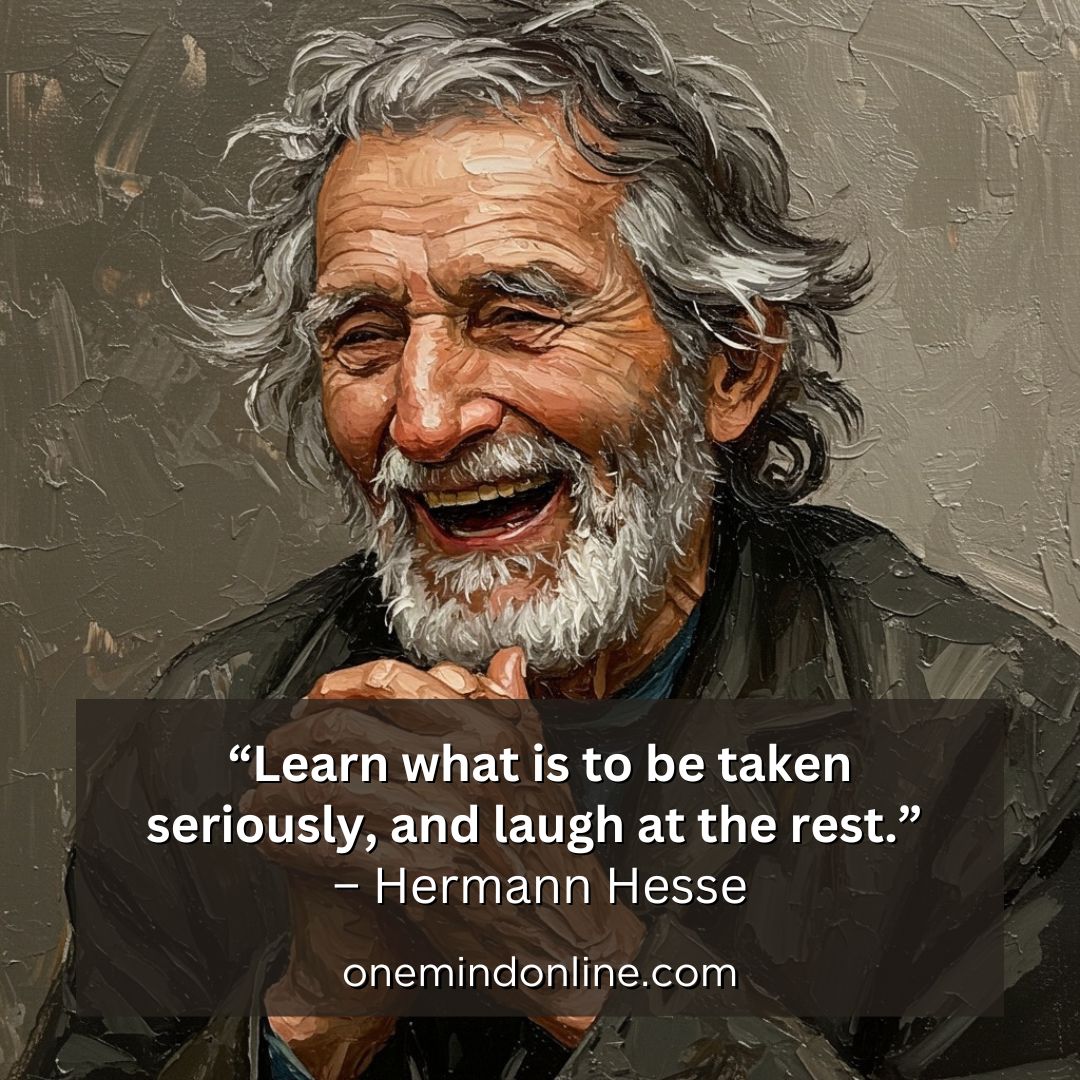
“Learn what is to be taken seriously, and laugh at the rest.” – Hermann Hesse
Hesse invites us to find magic in the mundane. Every experience, no matter how ordinary or extraordinary, carries within it a spark of enchantment. It’s about rediscovering the wonder of a sunrise, the joy of a child’s laughter, or the beauty of a simple conversation. By cultivating a sense of awe and curiosity, we can unlock the hidden magic that resides within every experience.
However, amidst the search for meaning and magic, it’s equally important to cultivate a sense of humor and perspective. Hesse reminds us that not everything demands our full attention. Some things are simply not worth our energy. While there are things that we have to attend to diligently, many others can be met with a lighthearted shrug.
Here are a few affirmations to kick your week off with:
- “Whatever comes my way, I choose to give it meaning and transform it into something of value.”
- “Whatever comes my way, I choose to find the magic in the moment.”
- “Whatever comes my way, I choose what to take seriously and I laugh at the rest.”
Let’s cultivate a mindset that sees life as an adventure rather than a burden. Let’s find magic in the mundane, and resilience in the face of adversity. Let’s become bloody good at choosing what to take seriously and laugh at the rest!
Looking into the week ahead this is my mantra today: “Whatever comes my way, I choose to find meaning and magic in every experience. I CHOOSE what to take seriously, and I will laugh at the rest.”
Have a beautiful week EVERYBODY!
– pierre –
Today’s LIVE meditation is: Jumpstart the week!
Today’s LIVE meditation
https://youtu.be/DeXXiMMBwTo 2026
https://youtu.be/v9rWhE8J3bE 2024
https://youtu.be/pSdBK1-_MY4 2023
https://youtu.be/5zZjla6Za9M 2022
Practice the “Daily Dose”
Let’s put it into practice! Choose what works for you – daily, once a week or whenever inspiration strikes. Putting pen to paper wires the neural pathways that will create your new habits.
1 – Affirmation
Write down your favourite affirmation on a sticky note and place it somewhere that you’ll be able to see it the whole day.
- “Whatever comes my way, I choose to give it meaning and transform it into something of value.”
- “Whatever comes my way, I choose to find the magic in the moment.”
- “Whatever comes my way, I choose what to take seriously and I laugh at the rest.”
2 – A moment of reflection
Use today’s question as a journal prompt. If you don’t have the time to sit down and write, just take a moment to reflect on your response.
The Art of Laughter: Reflect on Hesse’s wisdom: “Learn what is to be taken seriously, and laugh at the rest.” Write about a current situation in your life that’s causing you stress or anxiety. Ask yourself: Does this deserve my serious attention and emotional energy, or is this something I can approach with more lightness? What would happen if you chose to laugh at this situation instead of taking it so seriously? How might this shift in approach change your experience and response?
3 – Quotes to share
Send a quote to someone who needs it, or share them all on social media to spread the good vibes!
4 – Q&A for deeper learning
Read through the questions and answers and write down at least one “aha moment” that clicked for you.
Q1: Isn’t this just toxic positivity? How is this different from pretending everything is fine?
This approach is fundamentally different from toxic positivity. It doesn’t ask you to deny pain, dismiss valid emotions, or pretend everything is fine – difficult experiences remain real and deserve to be acknowledged as they are. But there’s a crucial distinction between responding to reality and being consumed by it. When we get bent out of shape over circumstances we cannot control, we don’t become more effective at handling them – we become less effective. Our energy gets drained by resistance rather than channeled into action. The real shift happens when we redirect that same energy toward what’s actually within our power: our choices, our responses, our next steps. This isn’t about pretending hardship doesn’t exist; it’s about recognizing that emotional exhaustion over the uncontrollable leaves us with less capacity for the things we can genuinely influence. And there’s nothing that builds our capacity like a bit of good humour.
Q2: How do I practically “transform” a bad experience into something of value?
Transforming a bad experience into something of value isn’t just any old skill – it’s a discipline, and disciplines only work if you keep showing up for them, the same way you’d show up for piano lessons even on the days you’d rather not practice. You don’t master piano by playing once when inspiration strikes; you master it by returning to the bench again and again because you’ve decided that’s who you want to become. The same is true for this particular alchemy. Transmuting a bad experience into something meaningful isn’t a gift that arrives on its own – it isn’t available to you unless you choose to practice it. It requires becoming deliberate, day after day, about searching for the silver lining around every dark cloud, even on the days when no lining is obvious yet. Some days the practice will feel natural; other days it will feel like forcing scales through stiff fingers. But that’s the nature of a discipline – it isn’t contingent on motivation, it’s built through repetition, and each time you choose to show up for it, you get a little better at turning hardship into something you can actually use. The reality is that we train our brains to either focus on problems or focus on possibilities.
Q3: How can I tell what deserves my serious attention versus what I should laugh off?
This requires developing emotional intelligence and perspective. Ask yourself: Will this matter in five years? Does this situation require my immediate action or problem-solving? Is this within my control? Does taking this seriously serve my well-being or goals? Generally, things that affect your health, relationships, values, or long-term goals deserve serious attention. Minor inconveniences, other people’s opinions about you, or situations completely outside your control often don’t need your emotional investment.
Q4: What if I’m going through something genuinely traumatic? How does this philosophy apply?
During genuine trauma or crisis, the immediate focus should be on safety, healing, and seeking appropriate support. This philosophy isn’t about denying the reality of what’s happening. Instead, it’s about maintaining the belief that every experience contains the seeds of your growth. That you will learn something from this, you will learn something about yourself, that you have the strength to survive, and that your response to trauma (when you’re ready) can become part of your resilience story.
Q5: How do I start seeing “magic” in ordinary experiences when life feels mundane?
Start small and practice mindful attention. Notice textures, sounds, colors, or emotions you usually overlook. Ask yourself: What’s surprising about this moment? What am I grateful for right now? What would this look like to someone experiencing it for the first time? The “magic” often lies in presence and perspective – seeing the extraordinary within the ordinary through curious, appreciative eyes.
Q6: What if I try this approach and still feel stuck or overwhelmed?
This philosophy is a practice, not a quick fix. It takes time to develop new patterns of thinking and responding. If you’re feeling stuck, start with one small area of your life rather than trying to transform everything at once. Also, remember that seeking support from friends, family, or professionals is part of creating meaning from difficult experiences. Sometimes the most valuable thing you can do is ask for help, and that becomes part of your growth story too.