

Welcome to the wisdom of Carl Gustav Jung (1875–1961), a Swiss psychiatrist and one of the most influential thinkers of the 20th century. While he was initially a protégé of Sigmund Freud, Jung eventually broke away to found his own school of thought, which he called Analytical Psychology. His work provides a profound roadmap for personal growth, making him a cornerstone for anyone on a journey of self-discovery and meditation.
Jung’s insights focus heavily on the unconscious mind—not just the personal unconscious developed from our own life experiences, but also the collective unconscious, a deeper, universal layer of the psyche that we all share.
Jung introduced several concepts that are central to understanding the self:
- Archetypes: These are universal, inherited mental images or patterns that are present in the collective unconscious. They manifest in our dreams, myths, and religions across all cultures (e.g., The Hero, The Shadow, The Great Mother).
- The Shadow: This is the repressed, dark, or unknown side of our personality—the parts we deny or dislike about ourselves. Integrating the Shadow, rather than suppressing it, is a critical step toward wholeness.
- The Persona: This is the social mask we wear in public; the role we play in society. While necessary, over-identifying with the Persona can lead to a sense of inauthenticity and emptiness.
- Introversion and Extraversion: Jung popularized these terms to describe different fundamental attitudes or orientations of energy—inward (introverted) or outward (extraverted).
- Synchronicity: Jung’s term for meaningful coincidences that defy random chance. It suggests a deeper, underlying connectedness in the universe, an idea that deeply resonates with meditative practices.
The Goal: Individuation
For Jung, the ultimate purpose of life and personal development is a process called Individuation. This is the lifelong, continuous process of becoming a unified, whole self—of integrating the conscious with the unconscious, the Persona with the Shadow, and the personal with the collective.
Meditation and mindfulness are powerful tools in the Jungian process, as they help you turn inward, encounter the contents of your own unconscious, and actively engage in the heroic task of becoming who you truly are.
Click on the image for more context.
“Your vision will become clear only when you can look into your own heart. Who looks outside, dreams; who looks inside, awakens.” – Carl Jung
Click on the image for more context.

“The decisive question for man is: Is he related to something infinite or not? That is the telling question of his life. Only if we know that the thing which truly matters is the infinite, can we avoid fixing our interests upon futilities. The more a man lays stress on false possessions, and the less sensitivity he has for what is essential, the less satisfying is his life. He feels limited because he has limited aims, and the result is envy and jealousy. If we understand and feel that here in this life we already have a link with the infinite, then our desires and attitudes change.” – Carl Jung
Click on the image for more context.

“The least of things with a meaning is worth more in life than the greatest of things without meaning.” – Carl Jung
Click on the image for more context.

“As far as we can discern, the sole purpose of human existence is to kindle a light of meaning in the darkness of mere being.” – Carl Jung
Click on the image for more context.
“I have always tried to make room for anything that wanted to come to me from within.” – Carl Jung
Click on the image for more context.
“In each of us is another whom we do not know. He speaks to us in dreams and tells us how differently he sees us from the way we see ourselves.” – Carl Jung
Click on the image for more context.
“The dream is the small hidden door in the deepest and most intimate sanctum of the soul, which opens to that primeval cosmic night that was soul long before there was conscious ego and will be soul far beyond what a conscious ego could ever reach.” – Carl Jung
Click on the image for more context.

“We discover ourselves through others.” – Carl Jung
Click on the image for more context.

“We meet ourselves time and again in a thousand disguises on the path of life.” – Carl Jung
Click on the image for more context.

“Everyone you meet knows something you don’t know but need to know. Learn from them.” – Carl Jung
Click on the image for more context.

“Everything that irritates us about others can lead us to an understanding of ourselves.” – Carl Jung
Click on the image for more context.

“Knowing your own darkness is the best method for dealing with the darkness’s of other people… One does not become enlightened by imagining figures of light, but by making the darkness conscious… The most terrifying thing is to accept oneself completely… Your visions will become clear only when you can look into your own heart. Who looks outside, dreams; who looks inside, awakes.” – Carl Jung
Click on the image for more context.

“Real liberation comes not from glossing over or repressing painful states of feeling, but only from experiencing them to the full.” – Carl Jung
Click on the image for more context.

“Wholeness is not achieved by cutting off a portion of one’s being, but by integration of the contraries.” – Carl Jung
Click on the image for more context.

“In every adult there lurks a child – an eternal child, something that is always becoming, is never completed, and calls for unceasing care, attention, and education. That is the part of the personality which wants to develop and become whole.” – Carl Jung
Click on the image for more context.

“Love is like God: both give themselves only to their bravest knights.” – Carl Jung
Click on the image for more context.

“I cannot love anyone if I hate myself.” – Carl Jung
Click on the image for more context.

“I have again and again been faced with the mystery of love and have never been able to explain what it is.” – Carl Jung
Click on the image for more context.

“Man can try to name love, showering upon it all the names at his command, and still he will involve himself in endless self deceptions. If he possesses a grain of wisdom, he will lay down his arms and name the unknown … by the name of God.” – Carl Jung
Click on the image for more context.

“We don’t so much solve our problems as we outgrow them. We add capacities and experiences that eventually make us bigger than the problems.” – Carl Jung
Click on the image for more context.

“People will do anything, no matter how absurd, in order to avoid facing their own souls. They will travel to India to practice yoga and all of its exercises, or observe a strict regimen of diet, even learn the literature of the whole world – all because they cannot get along with themselves.” – Carl Jung
Click on the image for more context.

“Somewhere, right at the bottom of one’s own being, one generally does know where one should go and what one should do. But there are times when the clown we call “I” behaves in such a distracting fashion that the inner voice of wisdom cannot make its presence felt.” – Carl Jung
Click on the image for more context.

“A man likes to believe that he is the master of his soul. But as long as he is unable to control his moods and emotions, or to be conscious of the myriad secret ways in which unconscious factors insinuate themselves into his arrangements and decisions, he is certainly not his own master.” – Carl Jung
Click on the image for more context.

“Solitude is for me a fount of healing which makes my life worth living. Talking is often a torment for me, and I need many days of silence to recover from the futility of words.” – Carl Jung
Click on the image for more context.
“Your vision will become clear only when you can look into your own heart. Who looks outside, dreams; who looks inside, awakes.” – Carl Jung
Click on the image for more context.
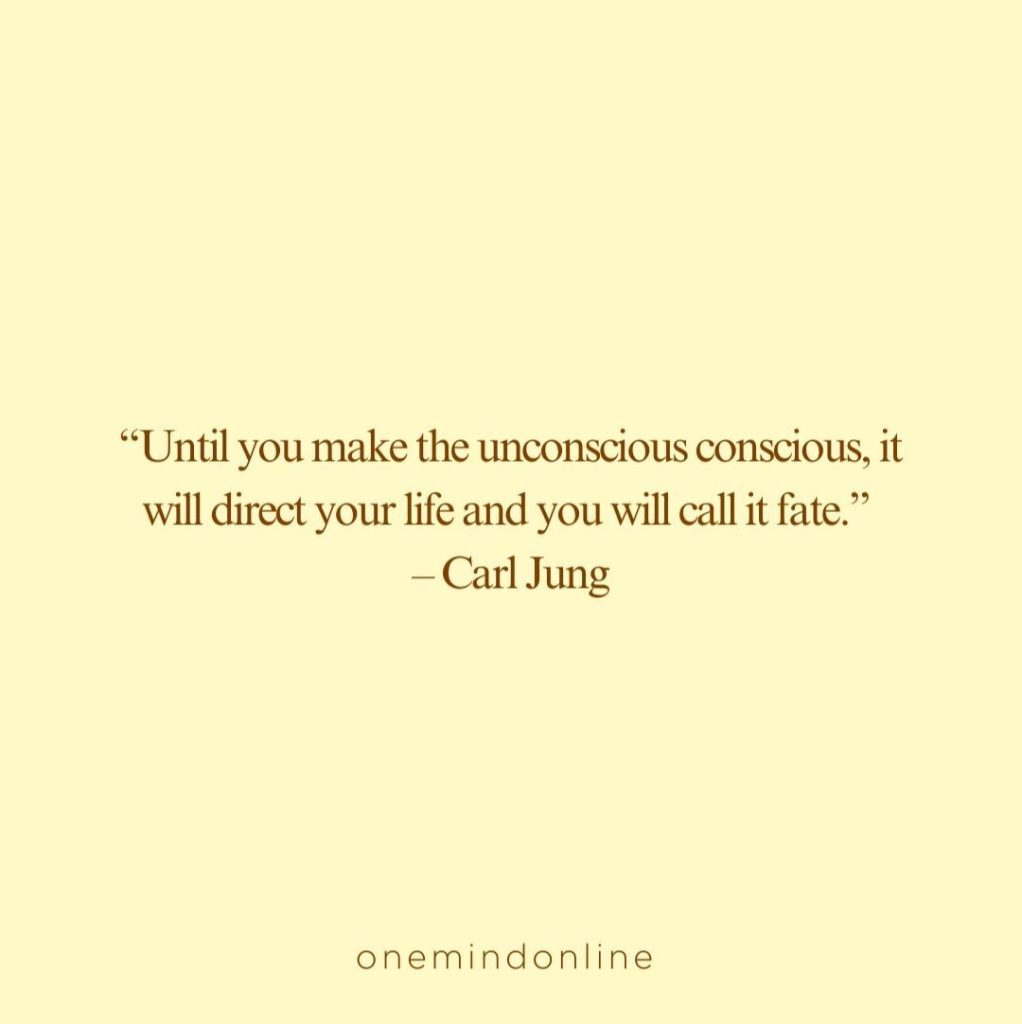
“Until you make the unconscious conscious, it will direct your life and you will call it fate.” – Carl Jung
Click on the image for more context.

“The privilege of a lifetime, is to become who you truly are.” – Carl Jung
Click on the image for more context.