
“Your Daily Dose” is a quick two minute read packed with bite-sized wisdom from all the great teachers. But you could also choose to turn it into something more… a powerful daily practice for personal growth. Give it a try!
A message from today’s meditation:
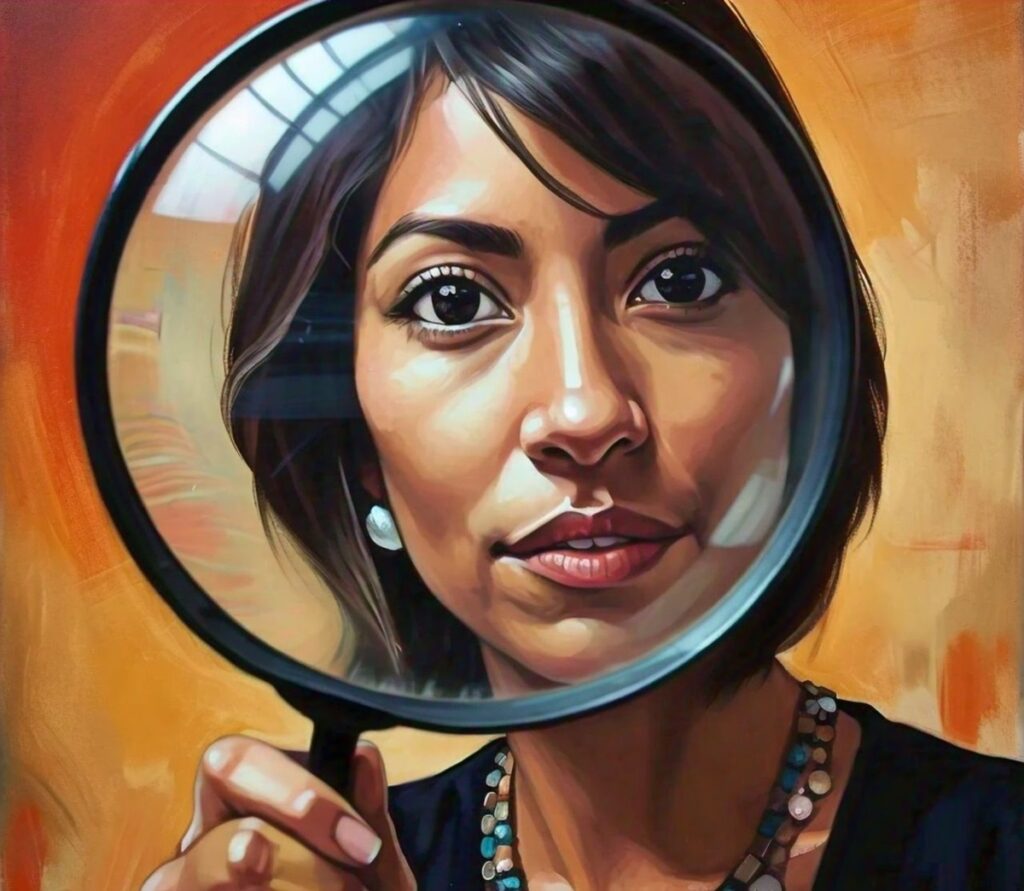
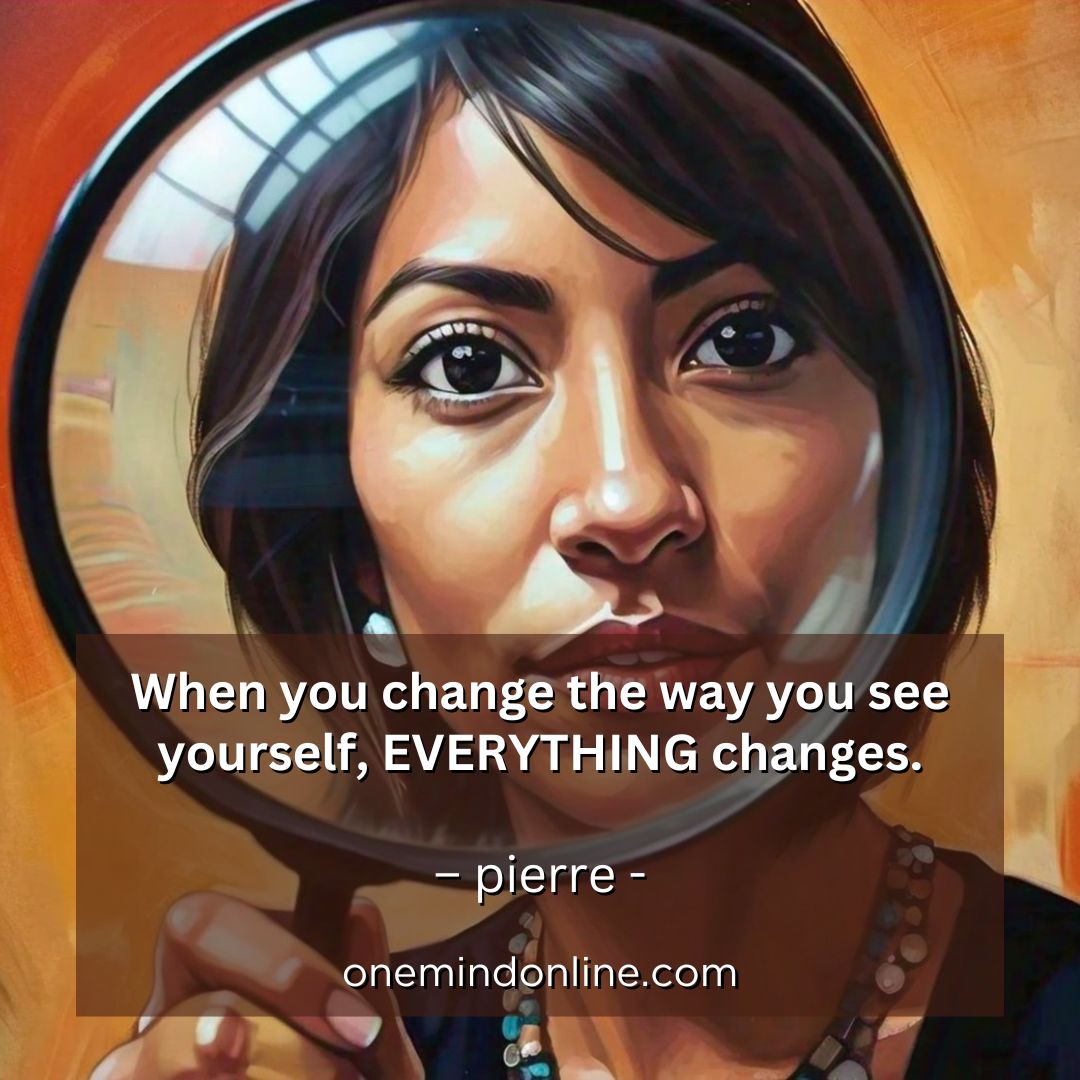
We see the world through the lens of how we view ourselves, in fact you can test this by becoming aware of how often your sub-conscious asks the question, “what does this say about me?”
When you’re trying to park and you accidentally bump the curb, when a cashier disrespects you, when your child throws a tantrum in public, when you lose a business deal – a scared part of our subconscious can’t help but look around and wonder if anyone else saw this fail and asks, “what does this say about me?”
This view of ourselves is the lens through which we evaluate the reactions from the people around us. But when we upgrade the way we see ourselves, then we upgrade the way we see the people around us as well.
When Anita Moorjani had her near death experience and was looking down at her own body on that hospital bed, for a moment she lost the old lens through which she’s always viewed herself. Immersed in the love of her inner being, she was able to see herself in a way that she never had access to before:
“As I looked at the great tapestry that was the accumulation of my life up to that point, I was able to identify exactly what had brought me to where I was today. Just look at my life path! Why, oh why, have I always been so harsh with myself? Why was I always beating myself up? Why was I always forsaking myself? Why did I never stand up for myself and show the world the beauty of my own soul? Why was I always suppressing my own intelligence and creativity to please others? I betrayed myself every time I said yes when I meant no! Why have I violated myself by always needing to seek approval from others just to be myself? Why haven’t I followed my own beautiful heart and spoken my own truth? Why don’t we realize this when we’re in our physical bodies? How come I never knew that we’re not supposed to be so tough on ourselves? I still felt myself completely enveloped in a sea of unconditional love and acceptance. I was able to look at myself with fresh eyes, and I saw that I was a beautiful being of the Universe. I understood that just the fact that I existed made me worthy of this tender regard. I can’t say this strongly enough, but our feelings about ourselves are actually the most important barometer for determining the condition of our lives!”
I have a few more thoughts from Anita that I want to share with you.
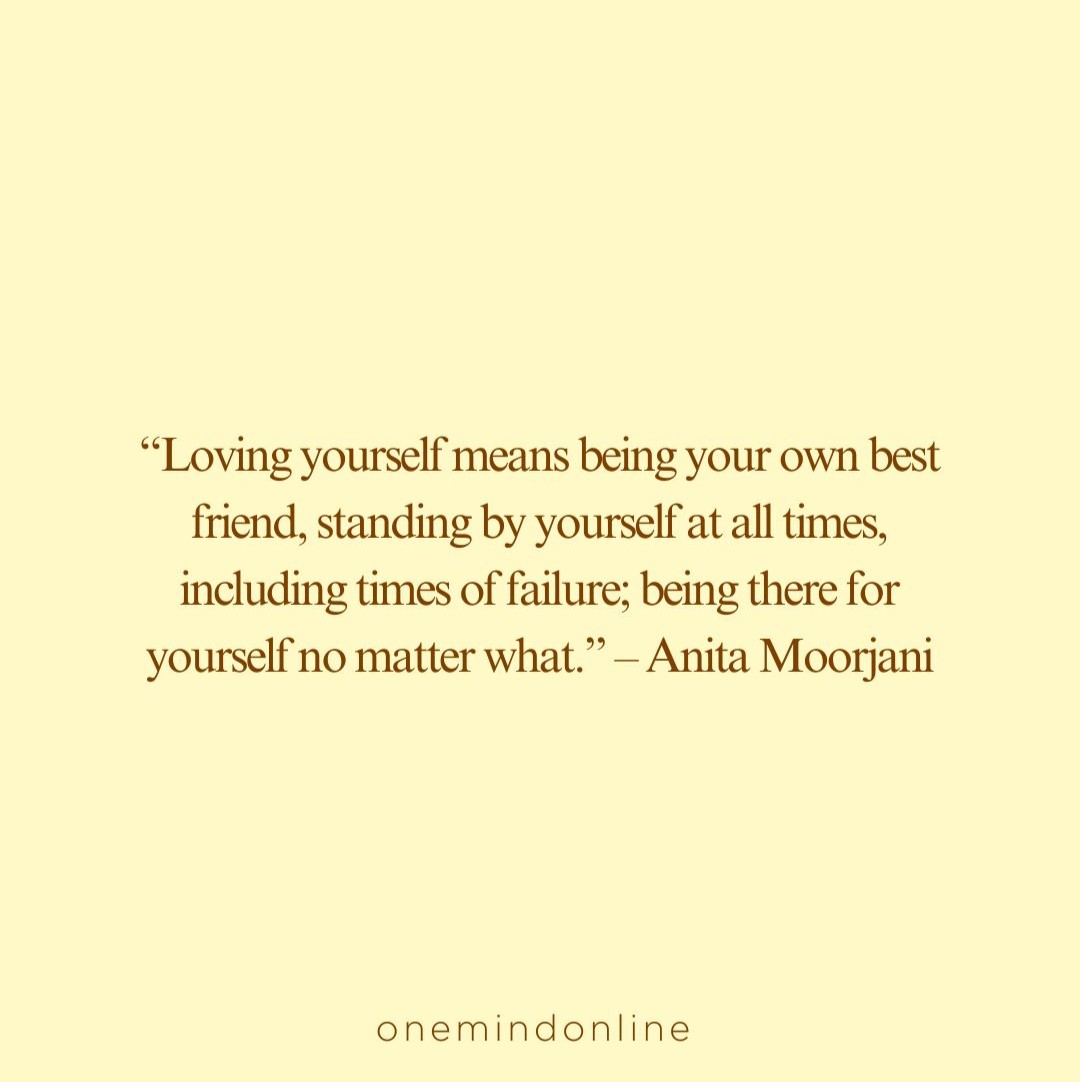
“Loving yourself means being your own best friend, standing by yourself at all times, including times of failure; being there for yourself no matter what.” – Anita Moorjani
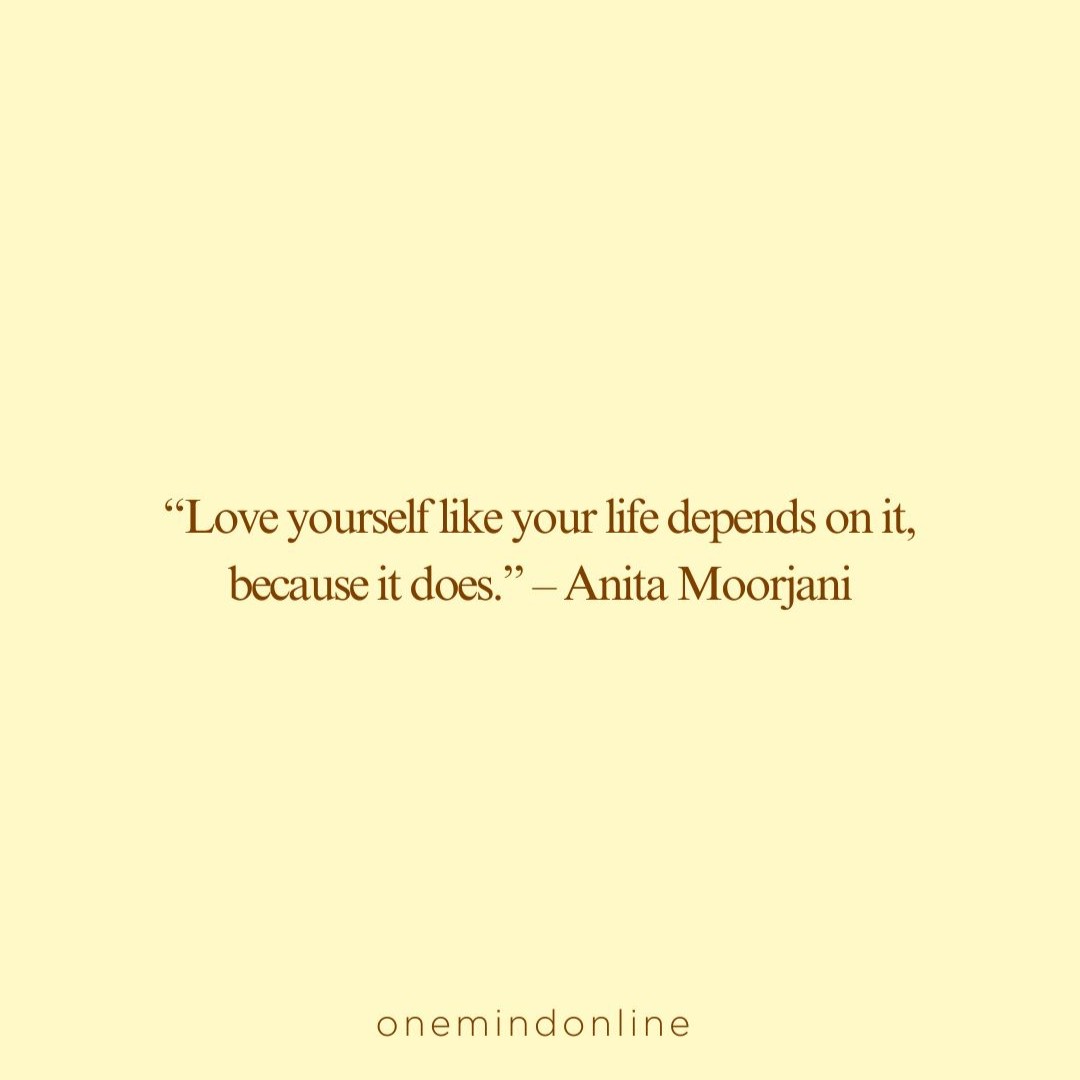
“Love yourself like your life depends on it, because it does.” – Anita Moorjani
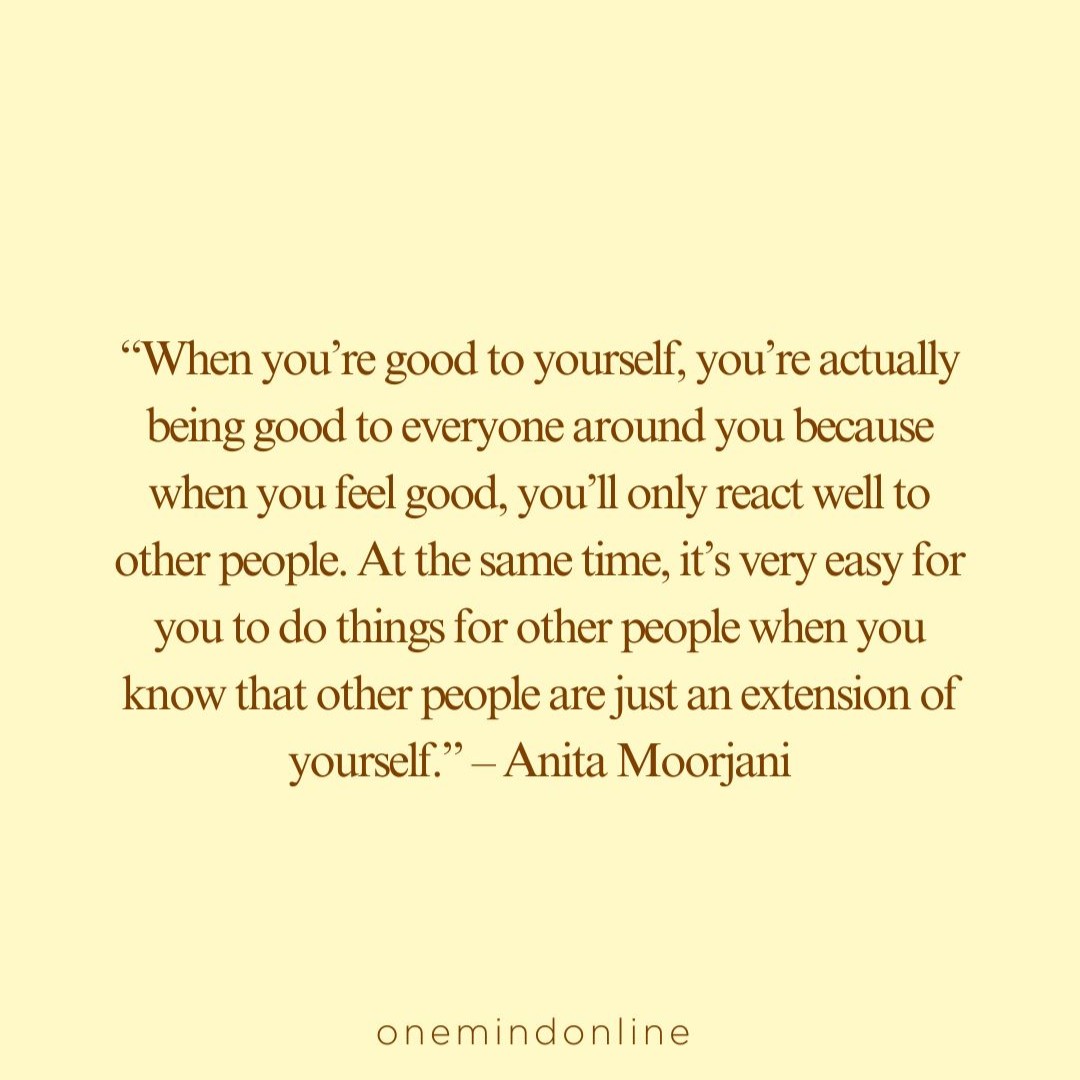
“When you’re good to yourself, you’re actually being good to everyone around you because when you feel good, you’ll only react well to other people. At the same time, it’s very easy for you to do things for other people when you know that other people are just an extension of yourself.” – Anita Moorjani
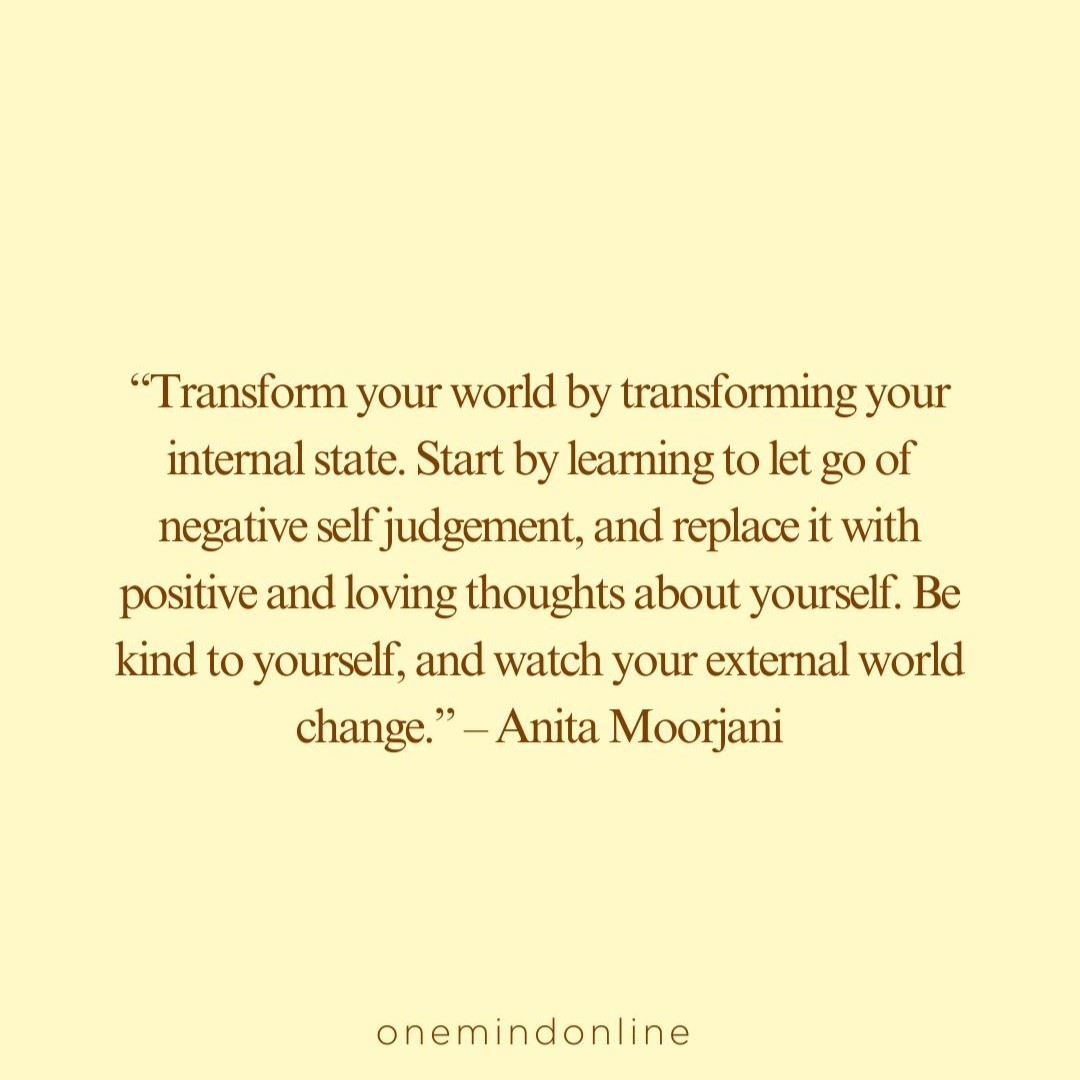
“Transform your world by transforming your internal state. Start by learning to let go of negative self judgement, and replace it with positive and loving thoughts about yourself. Be kind to yourself, and watch your external world change.” – Anita Moorjani
If we want to change the way we see ourselves and live in the energy of love, we need to be able to open our arms to every part of our SELF. Yes, even the “worst” parts need a soft place to rest.
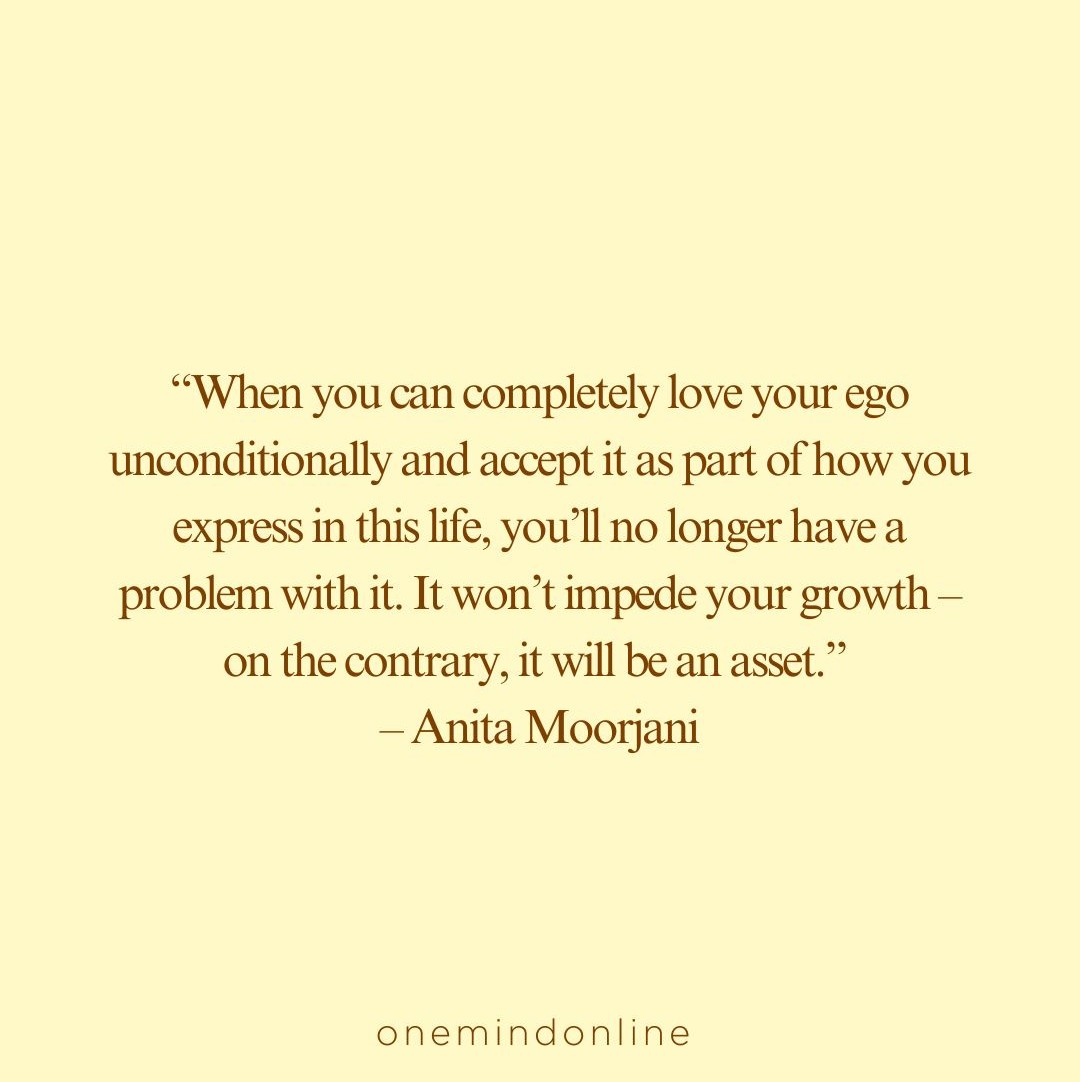
“When you can completely love your ego unconditionally and accept it as part of how you express in this life, you’ll no longer have a problem with it. It won’t impede your growth – on the contrary, it will be an asset.” – Anita Moorjani
There lives inside of you both a fearless creator and also a scared human. You can choose to be the fearless creator but if you reject the scared human, its fear will constantly reach for your ankles and yank you back down.
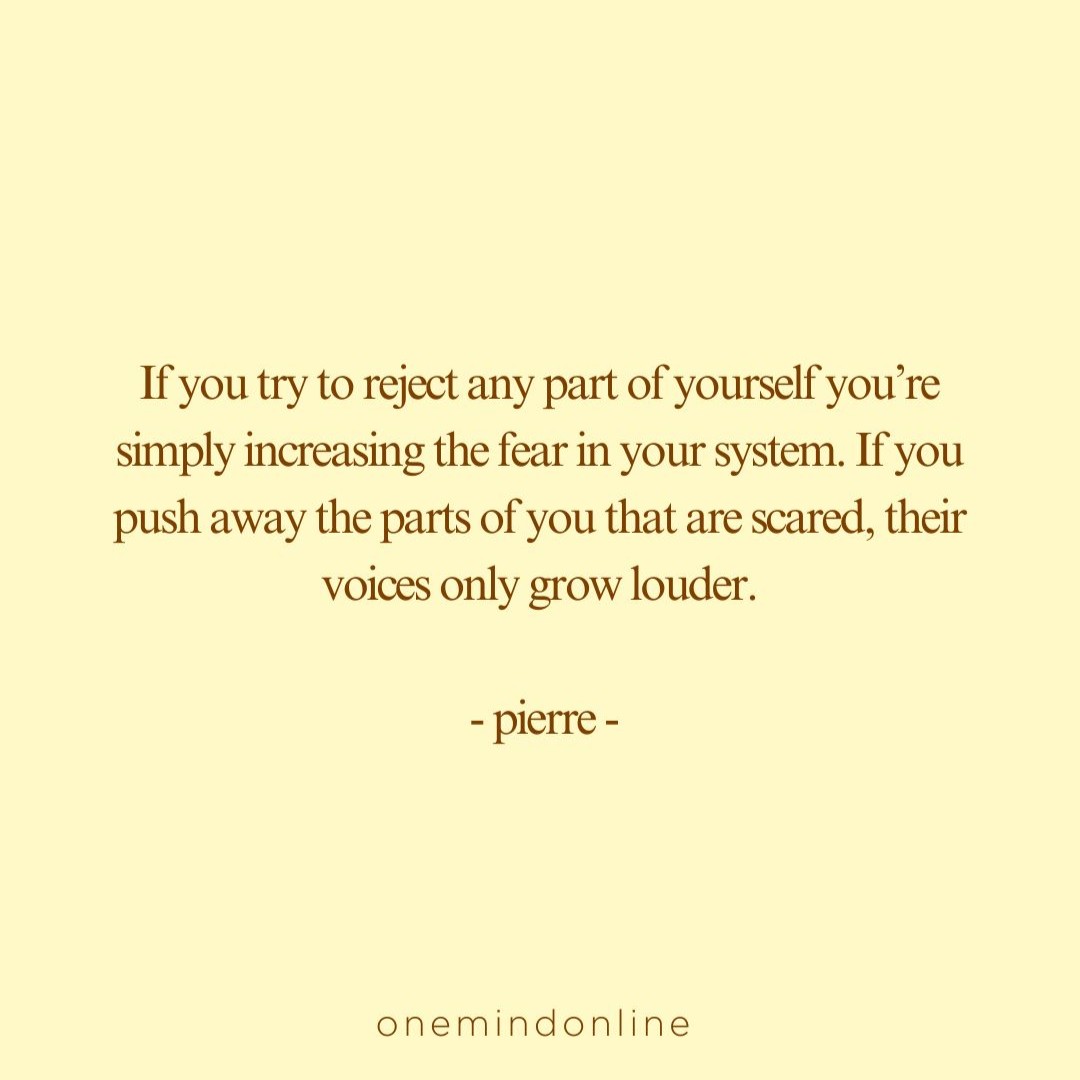
If you try to reject any part of yourself you’re simply increasing the fear in your system. If you push away the parts of you that are scared, their voices only grow louder.
It is when you accept, allow and even love all parts of you, that the fear in your system settles down. And every time that the scared human becomes calm, you will naturally embody the fearless creator that you are!
A few thoughts to guide you to the strongest part of you:
- Have acceptance for every part of yourself. Embrace all parts of yourself, including your strengths, weaknesses, and imperfections.
- Practice self-compassion. Treat yourself with kindness and understanding, just as you would treat a friend.
- Challenge negative self-talk. While your arms are open to all parts of you, understand that your old programming is full of old recordings from the past – don’t accept negative inner narratives as truth.
- Step into your power. When you open your arms to every part of your human experience, understand that these arms that can hold every part of you, belong to your soul. When you are kind even to the “worst” part of you, then you embody the strongest part of who you are, you have become the expression of your soul.
Today’s meditation is a practical application of dealing with what is calling inside of us. Your pain, your sorrow, your fearful thoughts are not mistakes… they are asking to be held.
Wishing you the BEST day!
– pierre –
Today’s LIVE meditation is: A sense of self.
Today’s LIVE meditation
https://youtu.be/Ksrq9HLBqNw 2026
https://youtu.be/kcQqLvbLWic 2025
https://youtu.be/2V1dnMYEsTM 2024
https://youtu.be/5okH08FZ5K0 2023
Practice the “Daily Dose”
Let’s put it into practice! Choose what works for you – daily, once a week or whenever inspiration strikes. Putting pen to paper wires the neural pathways that will create your new habits.
1 – Affirmation
Not really affirmations today, but a few thoughts to guide you to the strongest parts of you. Write down your favourite one.
- Have acceptance for every part of yourself. Embrace all parts of yourself, including your strengths, weaknesses, and imperfections.
- Practice self-compassion. Treat yourself with kindness and understanding, just as you would treat a friend.
- Challenge negative self-talk. While your arms are open to all parts of you, understand that your old programming is full of old recordings from the past – don’t accept negative inner narratives as truth.
- Step into your power. When you open your arms to every part of your human experience, understand that these arms that can hold every part of you, belong to your soul. When you are kind even to the “worst” part of you, then you embody the strongest part of who you are, you have become the expression of your soul.
2 – A moment of reflection
Use today’s question as a journal prompt. If you don’t have the time to sit down and write, just take a moment to reflect on your response.
The Fearless Creator vs. The Scared Human: Describe the “fearless creator” that lives within you – what does this part of you dream of, create, or aspire to be? Then describe the “scared human” part of yourself – what does this part worry about, avoid, or fear? Write a compassionate letter from your fearless creator to your scared human, acknowledging their concerns while offering love and reassurance. How might your life change if both parts felt heard and accepted?
3 – Quotes to share
Send a quote to someone who needs it, or share them all on social media to spread the good vibes!
4 – Q&A for deeper learning
Read through the questions and answers and write down at least one “aha moment” that clicked for you.
Q1: Isn’t focusing on self-love selfish? Won’t it make me narcissistic?
Genuine self-love is actually the opposite of narcissism. As Anita Moorjani explains, “When you’re good to yourself, you’re actually being good to everyone around you because when you feel good, you’ll only react well to other people.” True self-love creates a foundation of security and compassion that naturally extends to others. Narcissism, on the other hand, stems from a wounded ego seeking external validation. Self-love reduces the need for external validation and allows you to show up authentically for others.
Q2: How do I stop the constant “what does this say about me?” inner dialogue?
This inner dialogue often has roots in childhood, when a part of you learned – through a scolding, a disappointed look, or the sting of punishment – that making a mistake wasn’t safe, and that the opinions of the adults around you mattered more than your own. As children, we depend on external authority for our very survival, so we quickly learn to override our instincts and outsource our sense of “okay-ness” to whoever holds power over us. That pattern doesn’t just disappear with age; it lives on as the reflexive scan for judgment before you’ve even had a chance to trust yourself. The way through isn’t to silence this part of you, but to speak to it directly: gently remind that younger part that it’s safe now to make mistakes, and that your own perspective is valid and worth trusting. With practice, you can rebuild an inner sense of safety and self-trust that no longer depends on anyone else’s approval.
Q3: What if I have parts of myself that I genuinely believe are “bad” or harmful?
Every part of you developed for a reason, and that reason is almost always survival. Some parts became skilled at numbing out – through substances or other distractions – as a way to create distance from pain that once felt too overwhelming to face directly. Other parts developed sharp, aggressive edges because at some point, fierceness felt like the only way to protect you from real or perceived danger. Some parts learned to speak loudly, hoping that if they were seen clearly enough, they’d finally find the connection they were craving. And other parts learned the opposite: that staying quiet, small, and hidden was the safest way to avoid rejection or harm. None of these parts are bad, each one did exactly what it was designed to do, protecting you as best it could in a world that, at some point, felt scary or unsafe. The real challenge is that many of these parts are still operating from old blueprints, carrying meaning and strategies that made sense in the past but no longer serve who you are today. Healing isn’t about eliminating these parts, but about thanking them for their service and gently helping them understand that it’s safe now to let a new way of being take the lead.
Q4: How do I practice self-compassion when I’m used to being my own worst critic?
Start by treating yourself as you would treat your best friend. When you notice self-criticism, pause and ask: “What would I say to a friend in this situation?” Practice speaking to yourself with the same kindness, understanding, and encouragement you’d offer someone you care about. This takes time and patience, be gentle with yourself as you learn this new way of being.
Q5: If I accept all parts of myself, won’t I stop growing or improving?
Acceptance is not the opposite of growth – it simply means you stop fighting. So often we assume that if we accept a part of ourselves, we’re somehow endorsing it, or resigning ourselves to staying exactly as we are. But acceptance is really about making peace with the past version of you that needed those coping mechanisms to survive, even the ones that no longer serve you now. You can hold deep compassion for the person you were when you developed those patterns, while also being fully committed to the future you want to create. In fact, this is where real growth becomes possible: when you’re no longer spending your energy at war with yourself, resisting or shaming the parts you wish were different, that energy becomes available for actual change. Fighting yourself keeps you stuck in the very patterns you’re trying to escape, because what you resist tends to persist. Acceptance, on the other hand, frees up the energy you need to spend on taking new steps towards your beautiful future.
Q6: How does changing how I see myself really change how I see others?
We project our internal relationship with ourselves onto our external relationships. If you’re constantly criticizing yourself, you’re more likely to be critical of others. If you’re afraid of being judged, you might assume others are judging you. When you develop a loving, accepting relationship with yourself, you naturally become more compassionate and less reactive with others. You stop taking things personally because you’re not constantly seeking validation or protection.
Q7: What’s the difference between the “fearless creator” and “scared human” parts of myself?
The fearless creator is the part of you connected to your soul’s purpose – it dreams, creates, loves freely, and acts from inspiration rather than fear. The scared human is the part that has learned to protect you through worry, control, and limitation based on past experiences. Both serve important functions. The goal isn’t to eliminate the scared human but to let the fearless creator hold space for both parts with love and wisdom, making conscious choices about which voice to follow in each moment.