
“Your Daily Dose” is a quick two minute read packed with bite-sized wisdom from all the great teachers. But you could also choose to turn it into something more… a powerful daily practice for personal growth. Give it a try!
A message from today’s meditation:
Deep within the human experience lies a universal fear that quietly shapes our choices, relationships, and dreams. It’s the fear of being fundamentally flawed – a gnawing suspicion that at our core, we are somehow broken or inadequate. This fear whispers that our authentic self doesn’t quite fit the mold society expects, leading many of us to spend years masking our true essence, afraid to reveal our unique quirks and imperfections.
But what if this fear is based on a profound misunderstanding of who we really are?
Spiritual teacher Anita Moorjani offers a transformative perspective that challenges this limiting belief. Through her profound near-death experience and subsequent healing journey, she discovered a fundamental truth about human nature: that we are made of pure love.
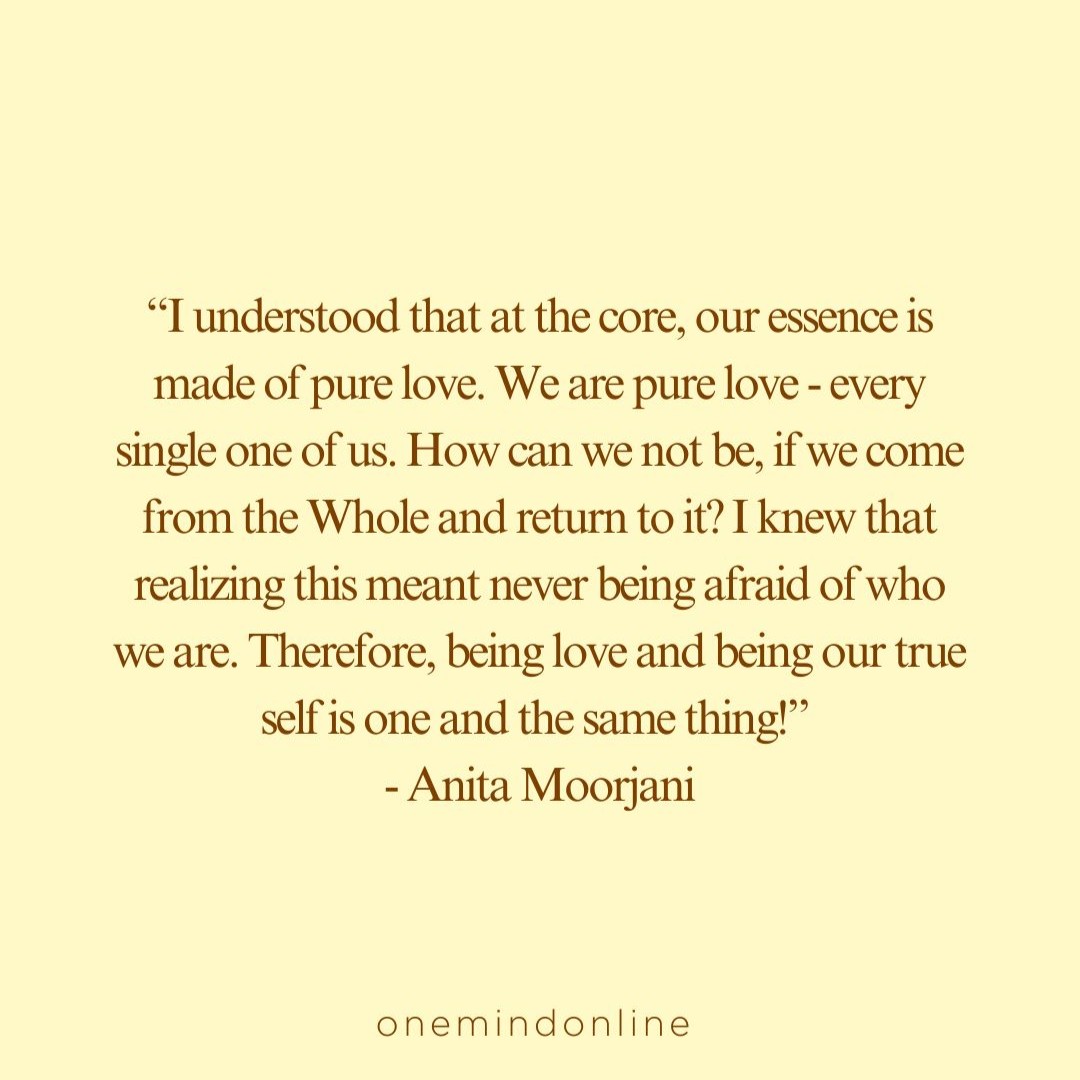
“I understood that at the core, our essence is made of pure love. We are pure love – every single one of us. How can we not be, if we come from the Whole and return to it? I knew that realizing this meant never being afraid of who we are. Therefore, being love and being our true self is one and the same thing!” – Anita Moorjani
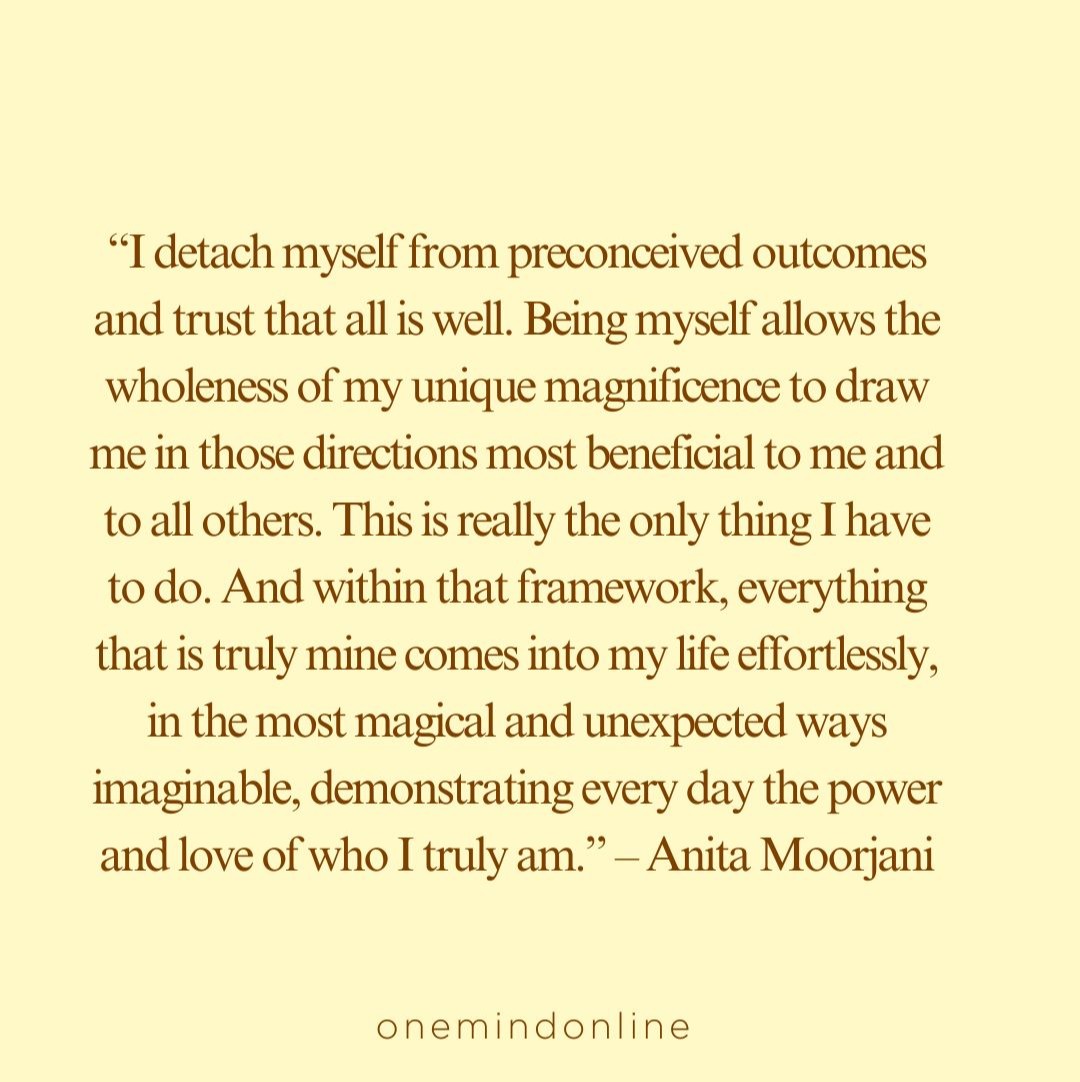
“I detach myself from preconceived outcomes and trust that all is well. Being myself allows the wholeness of my unique magnificence to draw me in those directions most beneficial to me and to all others. This is really the only thing I have to do. And within that framework, everything that is truly mine comes into my life effortlessly, in the most magical and unexpected ways imaginable, demonstrating every day the power and love of who I truly am.” – Anita Moorjani
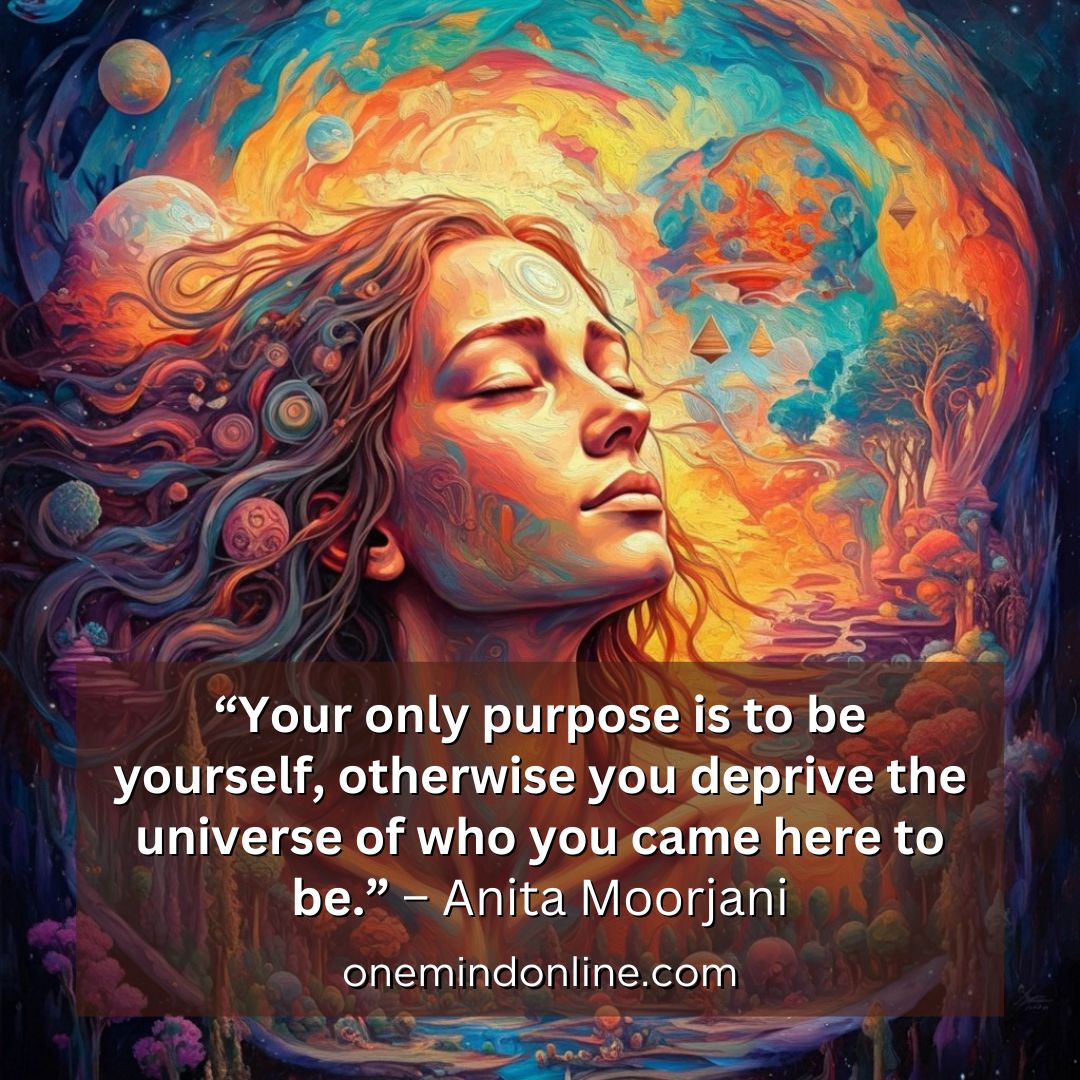
“Your only purpose is to be yourself, otherwise you deprive the universe of who you came here to be.” – Anita Moorjani
Anita’s message for us today is to come to a deep realisation of what it is that we really are. And that when we completely surrender to the essence of our being and start acting from the expression of our soul, we claim our natural wholeness and then everything that is truly ours flows into our lives with more ease.
For today’s meditation theme I love using a flower as an example of the magic that happens when the actions we take are aligned with the expression of our being. This flower, by being exactly what it is, plays an incredibly important role in the lives of every living organism in its neighbourhood. And the same is true for you.
By truly being you, and doubling down on the you that you really are, without perhaps realizing it you will serve and shape and support the life all around you just like this flower. But unlike the flower who has only this one expression, you have the limitless freedom to experiment and play with endless ways of creating, until you have found the expressions that make you the MOST you. So try them all!
So how can we begin to unleash our inner magic?
- Practice self-acceptance: Acknowledge your strengths and weaknesses without judgment.
- Express your creativity: Engage in activities that allow you to express your unique gifts and talents.
- Surrender to the flow: Trust that the universe has a plan for you, and let go of your need to control everything.
- Connect with your inner self: Through meditation, journaling, or spending time in nature, explore your thoughts, feelings, and desires.
The beauty of being human is that we have the freedom to explore and experiment. We can try different paths, learn from our experiences, and ultimately discover what truly makes us shine. So don’t be afraid to step outside your comfort zone and embrace the unknown.
Remember, you are not a mistake. You are a masterpiece, a unique expression of love and potential. By honoring your true self, you not only enrich your own life but also contribute to the collective good.
Have an amazing day, magnificent being!
– pierre –
Today’s LIVE meditation is: You are limitless!
Today’s LIVE meditation
https://youtu.be/Yk6rBBkTkok 2025
https://youtu.be/HR6H5tT8FFY 2024
https://youtu.be/uvNxX10r29I 2023
https://youtu.be/GVyFmcwhSPg 2022
Practice the “Daily Dose”
Let’s put it into practice! Choose what works for you – daily, once a week or whenever inspiration strikes. Putting pen to paper wires the neural pathways that will create your new habits.
1 – Affirmation
Not quite “affirmations” today, but important point to ponder. Write down your favourite one.
- Practice self-acceptance: Acknowledge your strengths and weaknesses without judgment.
- Express your creativity: Engage in activities that allow you to express your unique gifts and talents.
- Surrender to the flow: Trust that the universe has a plan for you, and let go of your need to control everything.
- Connect with your inner self: Through meditation, journaling, or spending time in nature, explore your thoughts, feelings, and desires.
2 – A moment of reflection
Use today’s question as a journal prompt. If you don’t have the time to sit down and write, just take a moment to reflect on your response.
Identifying Your Authentic Expression: Think about moments when you felt most alive and authentic – when you were being completely yourself without apology. What were you doing? Who were you with? What qualities were you expressing? Now imagine yourself as that flower mentioned in the article: What unique gifts, perspectives, or qualities do you naturally offer to the world around you? How might you be “serving and shaping” others’ lives just by being authentically you?
3 – Quotes to share
Send a quote to someone who needs it, or share them all on social media to spread the good vibes!
4 – Q&A for deeper learning
Read through the questions and answers and write down at least one “aha moment” that clicked for you.
Q1. What if my authentic self doesn’t fit into society’s expectations?
When people project expectations onto you, it’s rarely actually about you – it’s about them managing their own fears. Expectations often function as a kind of emotional insurance policy: if everyone around us stays predictable and familiar, we don’t have to confront the discomfort of the unknown, question our own choices, or sit with the vulnerability that comes from someone doing things differently than we do. So when your authentic self doesn’t fit the mold, the discomfort others feel usually says more about their own unresolved fears – of change, of judgment, of not measuring up themselves – than it does about any flaw in you. Anita Moorjani’s words remind us that “your only purpose is to be yourself, otherwise you deprive the universe of who you came here to be,” and understanding this shifts the responsibility back to where it belongs: their comfort was never yours to manage in the first place. Once you see expectations for what they really are – other people’s attempts to soothe their own uncertainty – you can hold them with compassion instead of obligation, honouring your true self without needing everyone around you to understand or approve of it first.
Q2. How can I tell the difference between my authentic self and my ego or conditioned responses?
Not everything that arises within you is your authentic self – many of the thoughts, reactions, and impulses that pop into your mind are actually echoes of old conditioning, fear, or ego trying to protect you from perceived threats like rejection or embarrassment. A sharp comment when you feel criticized, the urge to one-up someone, or a defensive reaction to feedback often isn’t your true self speaking; it’s a conditioned pattern trying to keep you safe. This is why authenticity isn’t the same as impulsivity, and it doesn’t mean expressing every thought or feeling the moment it arises. True authenticity requires discernment: pausing long enough to ask whether what you’re about to say or do comes from a place of love and alignment, or from fear and self-protection. Anita Moorjani’s insight that “at the core, our essence is made of pure love” offers a useful compass here – your authentic self will generally feel expansive, calm, and connected, even when it’s speaking a difficult truth, while ego-driven reactions tend to feel urgent, reactive, or aimed at controlling how others see you. Learning this distinction takes practice, but the more you notice the difference between reacting and responding, the more naturally your authentic self rises to the surface.
Q3. How do I practice self-acceptance when I see so many flaws in myself?
Consider what happens when we decide that a person who makes a mistake no longer deserves love – do we really believe punishment and withdrawal are what reform someone, or do we just tell ourselves that because it feels justified? When love is removed permanently as the penalty for imperfection, the person doesn’t quietly become better; they become desperate, and desperation rarely produces our best selves. Cut off from acceptance, people often spiral into exactly the behaviour we feared most, because now they’re not just fighting the original flaw, they’re fighting the deeper wound of feeling unworthy of love at all. The same dynamic plays out internally when you withhold love from yourself over your own flaws: harsh self-judgment doesn’t create lasting change, it creates shame, and shame breeds more of the very behaviour you’re trying to eliminate. Sustainable transformation only happens when you give yourself the love and grace you need despite your mistakes, because knowing you have your own back is precisely what gives you the safety and strength to grow. This is the deeper truth in Moorjani’s message that we are “made of pure love” at our core – not love that must be earned through flawlessness, but love that already exists and, when accessed, becomes the very foundation from which real change becomes possible.
Q4. What does it mean to “surrender to the flow” practically?
Surrendering to the flow means releasing your tight grip on how you think things should unfold and trusting that by being authentically yourself, you’ll naturally be guided toward what serves your highest good. Practically, this might mean applying for jobs that excite you rather than just those that seem “safe,” expressing your creative ideas even if they seem unconventional, or speaking your truth in relationships even when it feels vulnerable. It’s about taking inspired action from your authentic self rather than forcing outcomes from fear or external pressure.
Q5. How can I express my creativity if I don’t consider myself an “artistic” person?
Creativity isn’t limited to traditional arts, it’s any authentic expression of your unique perspective and gifts. This could be how you problem-solve at work, the way you connect with others, how you organize your living space, the approach you take to parenting, or even how you prepare meals. Creativity is about bringing your authentic self into whatever you do. As the article suggests, you have “limitless freedom to experiment and play with endless ways of creating” until you find expressions that make you feel most authentically you.
Q6. What if I’m afraid that being my true self will lead to loneliness or isolation?
Fear has a way of convincing us that our authentic self is somehow unlovable – that if people saw the real us, they’d walk away. But this belief doesn’t hold up against what Anita Moorjani teaches us: “being yourself and being love, is the same thing”, which means authenticity isn’t a path toward rejection, it’s a path toward deeper connection. Yes, you may notice some people pulling away when you stop performing for them, but look closely at what’s actually happening: those relationships were often built on you meeting their selfish needs, expectations, or comfort rather than on any real connection to who you are. Losing that isn’t loneliness, it’s clarity – it’s the universe clearing space for relationships rooted in truth rather than obligation. The sooner you release people who only wanted your compliance, the sooner you make room for connections that can actually hold the full weight of who you are. What feels like the risk of isolation is usually just the discomfort of a necessary sorting process, and on the other side of it waits a kind of belonging that performing never could have given you.