
“Your Daily Dose” is a quick two minute read packed with bite-sized wisdom from all the great teachers. But you could also choose to turn it into something more… a powerful daily practice for personal growth. Give it a try!
A message from today’s meditation:
The most profound revolution you’ll ever experience begins with a simple act: truly loving yourself. This seemingly small shift carries the power to transform not just your inner landscape, but the entire world around you. The topic of today’s meditation is love and I’m sharing with you Adyashanti’s view.
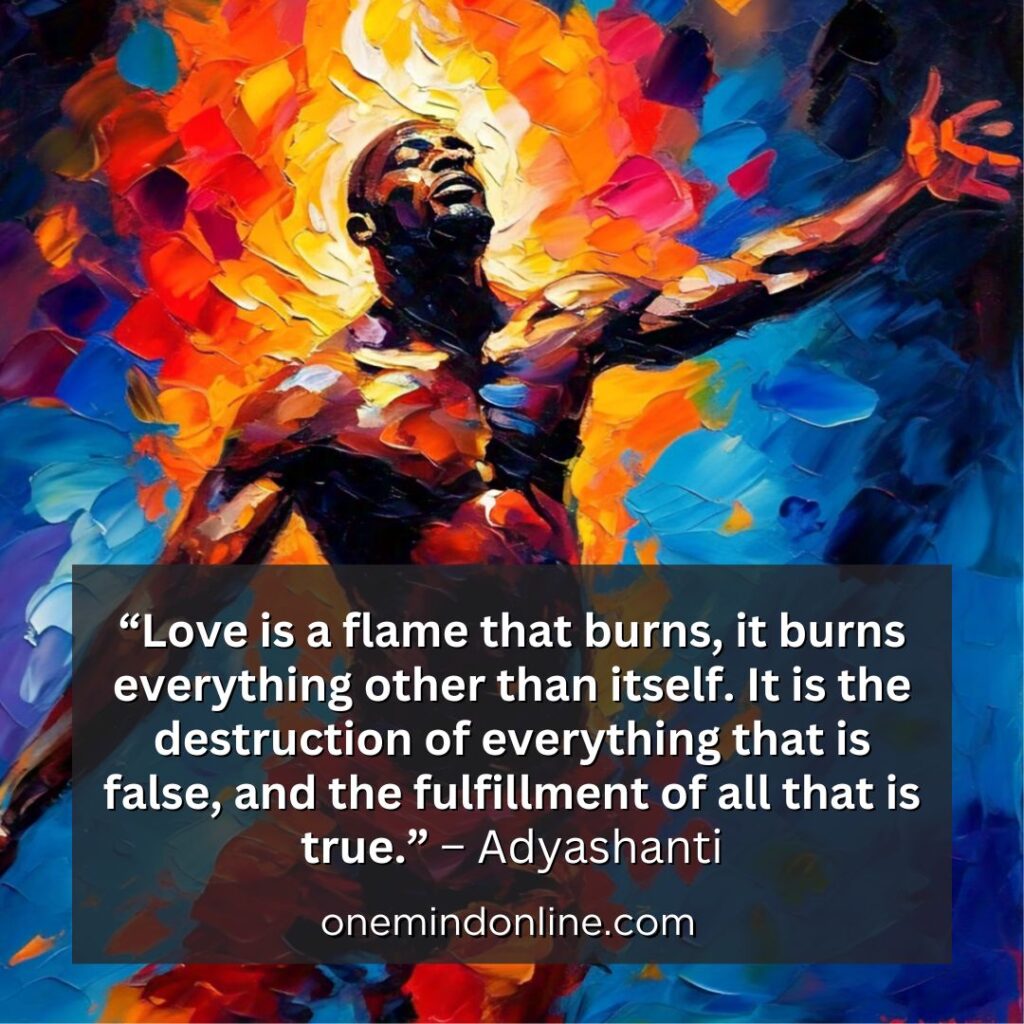
“Love is a flame that burns, it burns everything other than itself. It is the destruction of everything that is false, and the fulfillment of all that is true.” – Adyashanti
Surrendering to love, will dissolve in your life everything that does not come from love.
Fear is what gets in the way and prevents us from living in the abundance that love brings, so become aware of when and where you experience fear. Every fear that you heal and dissolve will return you to the flow of love through your life, because healing your fears is the flame that burns away what is untrue.
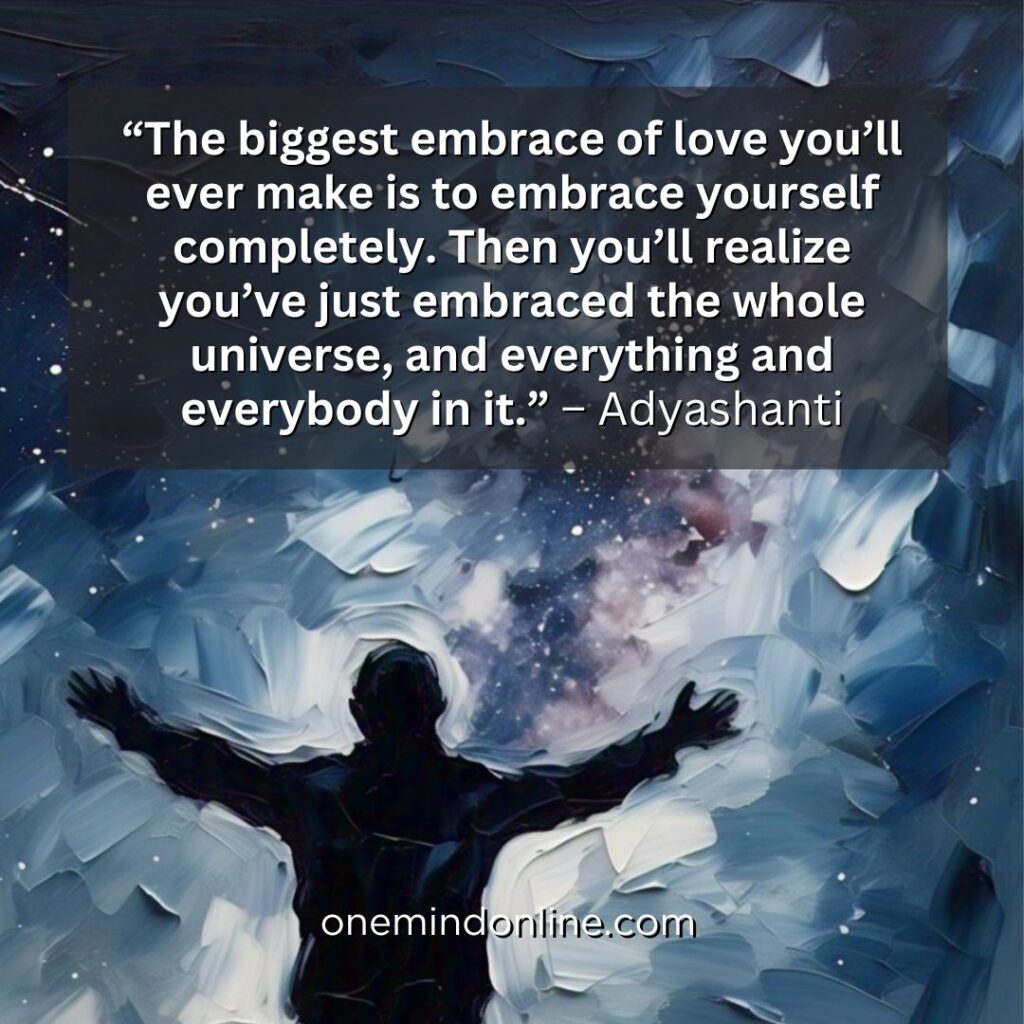
“The biggest embrace of love you’ll ever make is to embrace yourself completely. Then you’ll realize you’ve just embraced the whole universe, and everything and everybody in it.” – Adyashanti
When you become able to embrace yourself, you gain the capacity for more, you extend the acceptance you have found for YOU to more and more people around you. The love that you find for YOU starts to heal the world around you.
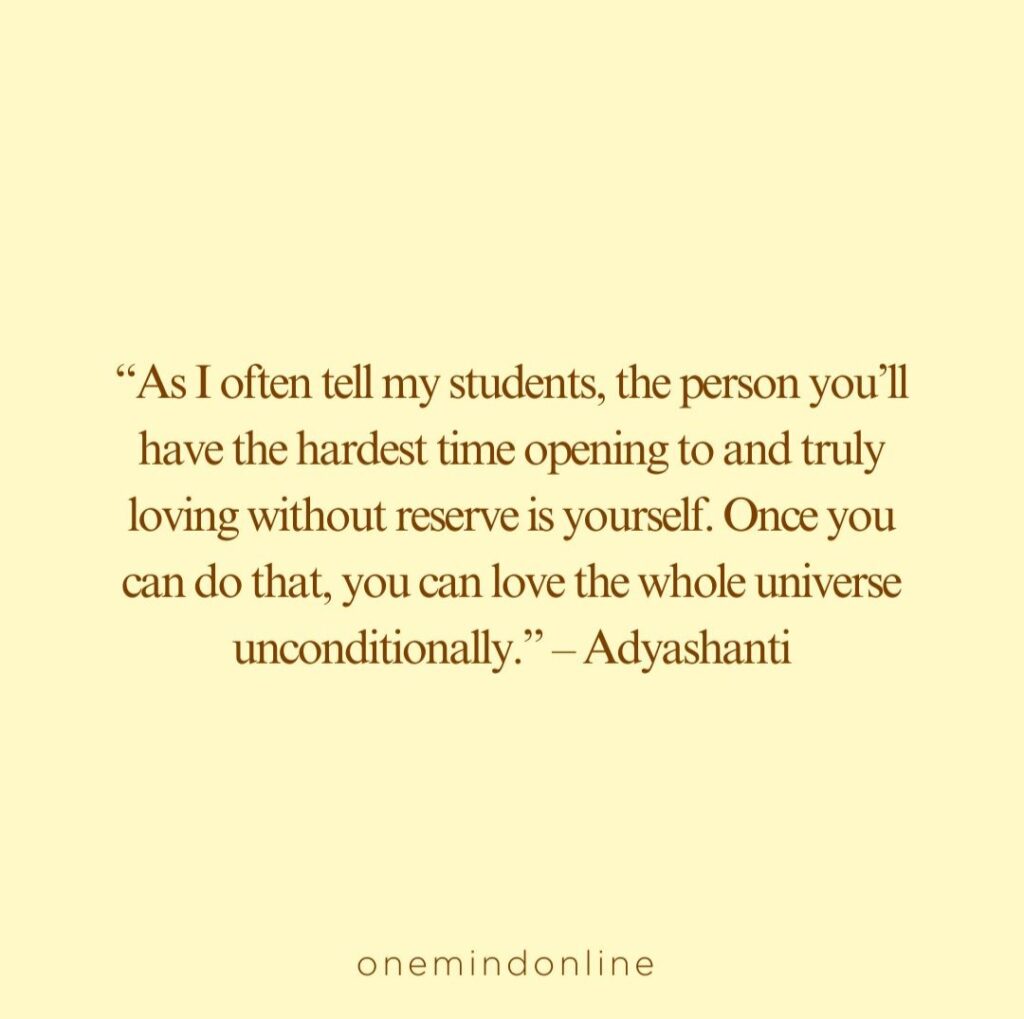
“As I often tell my students, the person you’ll have the hardest time opening to and truly loving without reserve is yourself. Once you can do that, you can love the whole universe unconditionally.” – Adyashanti
It’s a two way street – finding acceptance for yourself is inseparable from finding acceptance for the humans around you, even in the face of their flaws. And when you are no longer trying to control or change the people you deal with, you have given them and also yourself, the gift of freedom.
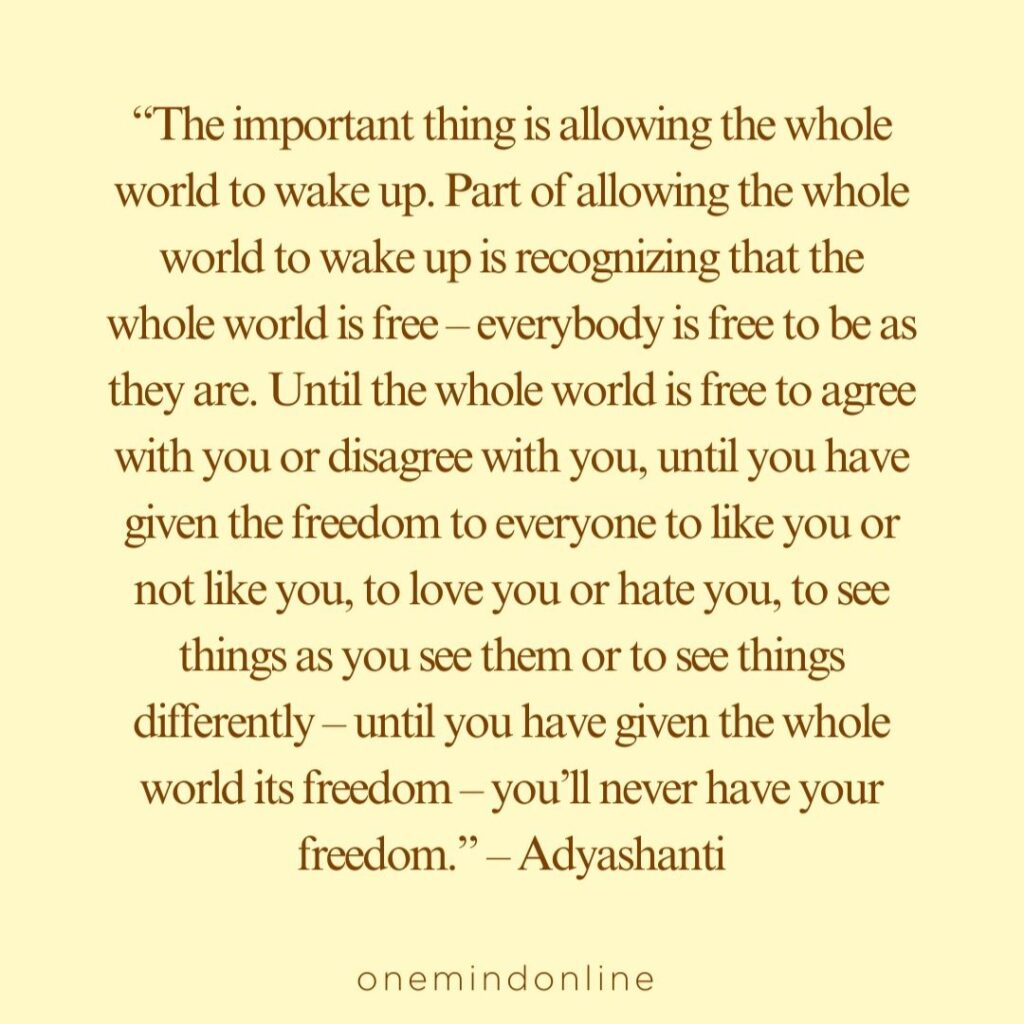
“The important thing is allowing the whole world to wake up. Part of allowing the whole world to wake up is recognizing that the whole world is free – everybody is free to be as they are. Until the whole world is free to agree with you or disagree with you, until you have given the freedom to everyone to like you or not like you, to love you or hate you, to see things as you see them or to see things differently – until you have given the whole world its freedom – you’ll never have your freedom.” – Adyashanti
What you see in the mirror is what you see everywhere. The softer your gaze is when you see your own face, the more love you’ll have for the human faces around you – and the more gentle you are with the imperfections of other people, the better you’ll be able to deal with the imperfections in you.
Your essential work remains beautifully simple: learn what it truly means to love yourself, and watch as transformation unfolds naturally in the world around you.
Here are some mantras to guide you on your path of self-love:
- “I am worthy of love and acceptance.”
- “I forgive myself for my mistakes and imperfections.”
- “I release fear and embrace the flow of love in my life.”
- “The love I have for myself extends to all beings.”
Wishing you the BEST Friday! And please remember to love yourself.
– pierre –
Today’s LIVE meditation is: Sharing love.
Today’s LIVE meditation
https://youtu.be/6VMyTMNQy2U 2024
https://youtu.be/bmPEDncmGq8 2023
https://youtu.be/Nl0I8s19Wfk 2021
Practice the “Daily Dose”
Let’s put it into practice! Choose what works for you – daily, once a week or whenever inspiration strikes. Putting pen to paper wires the neural pathways that will create your new habits.
1 – Affirmation
Write down your favourite affirmation on a sticky note and place it somewhere that you’ll be able to see it the whole day.
- “I am worthy of love and acceptance.”
- “I forgive myself for my mistakes and imperfections.”
- “I release fear and embrace the flow of love in my life.”
- “The love I have for myself extends to all beings.”
2 – A moment of reflection
Use today’s question as a journal prompt. If you don’t have the time to sit down and write, just take a moment to reflect on your response.
Freedom Through Acceptance: Consider the quote: “Until you have given the whole world its freedom – you’ll never have your freedom.” Write about someone in your life whom you’ve been trying to change or control. How might releasing this need for control free both of you? What would it look like to fully accept this person exactly as they are?
3 – Quotes to share
Send a quote to someone who needs it, or share them all on social media to spread the good vibes!



4 – Q&A for deeper learning
Read through the questions and answers and write down at least one “aha moment” that clicked for you.
Q1. What does it mean to “embrace yourself completely” as Adyashanti suggests?
Embracing yourself completely means accepting all aspects of who you are without judgment or conditions. It involves acknowledging your strengths and weaknesses, successes and failures, light and shadow sides with equal compassion. This isn’t about toxic positivity or denying areas for growth, but rather about holding your whole being – including your flaws and struggles – in a space of unconditional love. When you truly embrace yourself this way, you begin to see that you are connected to everything else in existence, which is why Adyashanti says you’ve “embraced the whole universe.”
Q2. How can I identify when fear is blocking my capacity to love?
Fear often manifests as resistance, judgment, control, or avoidance. You might notice yourself being critical of others or yourself, trying to manage situations or people to feel safe, or avoiding vulnerability. Physical sensations like tension, shallow breathing, or an accelerated heartbeat can be indicators. Emotional signs include anxiety, irritability, defensiveness, or feeling stuck. A helpful practice is to pause when you feel these sensations and ask yourself: “What am I afraid might happen here?” This awareness creates space to choose love instead of reacting from fear.
Q3. Why is it often harder to love ourselves than to love others?
Self-love is challenging because we have intimate knowledge of our own perceived flaws, mistakes, and insecurities. We’ve internalized critical messages from childhood, society, and our own harsh self-judgment. Unlike with others, we can’t create emotional distance from ourselves. Additionally, many cultures value humility and selflessness while viewing self-love as selfish or narcissistic. We often hold ourselves to impossible standards that we wouldn’t impose on anyone else. Breaking through these barriers requires conscious effort and practice – which is precisely why self-love is such powerful spiritual work.
Q4. What’s the relationship between giving others freedom and finding my own freedom?
When we try to control how others think about us, agree with us, or behave toward us, we create an energetic prison for both parties. Our happiness becomes dependent on their actions, and we limit their authentic expression. This creates tension and resistance. By genuinely allowing others the freedom to be themselves – even when they disagree with or dislike us – we release ourselves from the exhausting work of managing others’ perceptions. True freedom comes when we understand our worth isn’t determined by others’ opinions and when we can remain centered in our own truth while allowing others theirs.
Q5. How can I practice self-love without becoming self-centered?
Authentic self-love actually prevents self-centeredness because it fills our inner reservoir, enabling greater generosity toward others. Self-centeredness often stems from feeling depleted or insecure. True self-love involves recognizing our interconnectedness with all beings – it’s not about elevating yourself above others but recognizing your inherent worth alongside everyone else’s. Practices like self-compassion, boundary-setting, and self-care actually enhance our capacity to be present and giving with others. Think of it like the airplane oxygen mask instruction: secure your own mask first, then help others.
Q6. What does it mean that love “burns everything other than itself”?
This metaphor describes love’s transformative power. Like fire purifies gold by burning away impurities, love reveals what’s genuine by dissolving what’s inauthentic. When we commit to living from love, aspects of our lives that are built on fear, manipulation, pretense, or falseness become uncomfortable and eventually fall away. This might include unhealthy relationships, inauthentic career paths, or limiting beliefs about ourselves. The “burning” isn’t destructive but purifying—it makes space for more authentic, aligned experiences. This process can be intense but ultimately liberating as we shed layers that don’t serve our highest expression.
Q7. How do I begin the practice of true self-love if it feels completely foreign to me?
Start with small, consistent steps rather than expecting immediate transformation. Begin by observing your self-talk without judgment – notice how you speak to yourself throughout the day. Introduce a simple compassionate practice like placing your hand on your heart when you’re struggling and saying, “This is difficult right now, and that’s okay.” Gradually replace critical thoughts with those you would offer a beloved friend facing similar circumstances. Maintain a “self-compassion journal” where you record moments of difficulty and respond with kindness. Surround yourself with people who model healthy self-regard. Remember that self-love is a practice rather than a destination – it grows stronger with consistent attention, just like any relationship.