
“Your Daily Dose” is a quick two minute read packed with bite-sized wisdom from all the great teachers. But you could also choose to turn it into something more… a powerful daily practice for personal growth. Give it a try!
A message from today’s meditation:
I LOVE Adyashanti’s ability to create a very simple understanding from what can feel so complicated and messy. You’d really do yourself a favour to do a search of his work and just read through some of his thoughts.
“Whatever you resist you become. If you resist anger, you are always angry. If you resist sadness, you are always sad. If you resist suffering, you are always suffering. If you resist confusion, you are always confused. We think that we resist certain states because they are there, but actually they are there because we resist them.” – Adyashanti
I’d like to make the above quote just a little more practical:
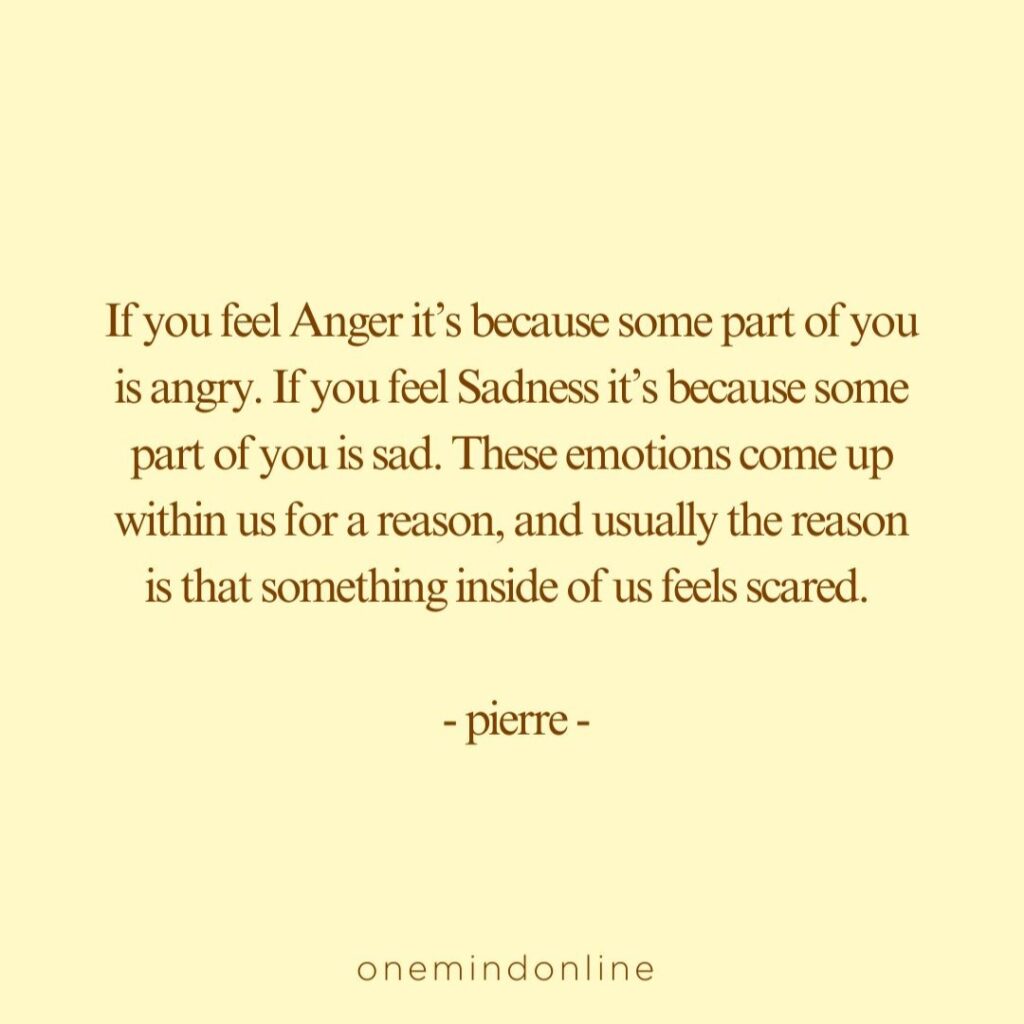
If you feel Anger it’s because some part of you is angry. If you feel Sadness it’s because some part of you is sad. These emotions come up within us for a reason, and usually the reason is that something inside of us feels scared.
If you sit down with Anger or Sadness and ask them in turn, “what is it that you are afraid will happen?” you will almost certainly get an answer from within yourself… “I’m scared that everyone will always treat me as unimportant, that’s why I’m angry at the cashier for her bad service.”… “I’m afraid that no one will ever love me because I really am just unlovable, and I feel desperately sad about this”…
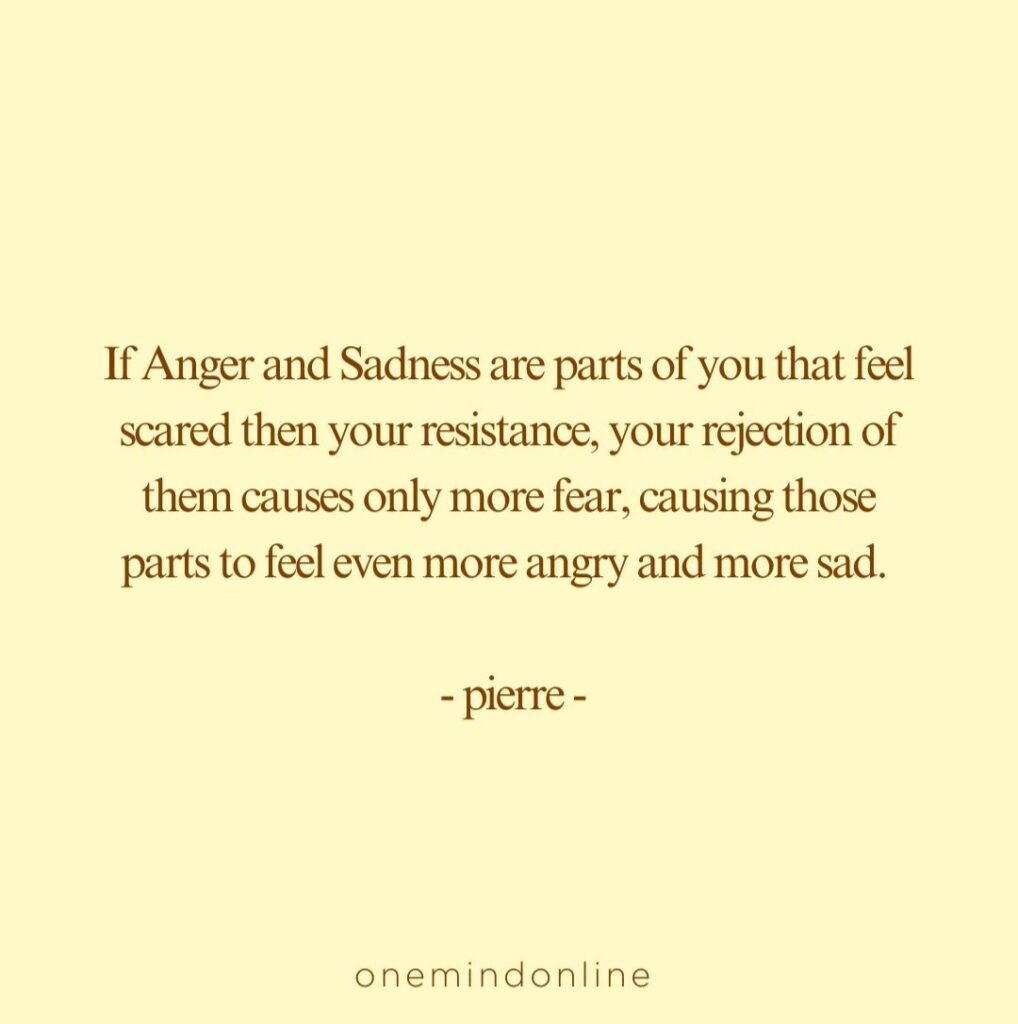
If Anger and Sadness are parts of you that feel scared then your resistance, your rejection of them causes only more fear, causing those parts to feel even more angry and more sad.
You can see the truth in Adyashanti’s words: “If you resist Anger, you are always angry… if you resist Sadness, you are always sad…”
Two more thoughts from Adyashanti:
“Anything you avoid in life will come back, over and over again, until you’re willing to face it – to look deeply into its true nature.” – Adyashanti
“The more in harmony you are with the flow of your own existence, the more magical life becomes.” – Adyashanti
Harmony… flow… we don’t get to experience these states while we are resisting, avoiding, or running. Life becomes more magical when we learn that we can have a different relationship with what we’re experiencing.
Ask Sadness to come and sit with you. Let Sadness know that it’s ok that she feels sad and that you’ll sit next to her until she feels better. And guess what? This already feels better.
I am in awe of people who are doing “the work”, because I know what it takes to show up for yourself and do this work. It’s not what is conventionally thought of as pretty, but it is the most beautiful thing that I have ever seen!
Today’s meditation is an exploration of Sadness, Anger and Fear, and demonstrates a very practical way of creating wholeness within your own system.
As you navigate your emotional landscape, here are some mantras to guide you:
- “I welcome all emotions with compassion and curiosity.”
- “I am safe enough to sit with uncomfortable emotions.”
- “Big emotions are parts of me that need love, not rejection.”
- “My emotional experience does not define who I am, I am the aware presence observing it all.”
- “I am doing the beautiful work of becoming whole.”
By embracing your emotions, even the uncomfortable ones, you’ll be on your way to creating a more harmonious and magical life. So, take a deep breath, invite your emotions in for a cup of tea, and embark on this beautiful journey of self-discovery.
Have a beautiful day beautiful humans!
– pierre –
Today’s LIVE meditation is: A sense of self.
Today’s LIVE meditation
https://youtu.be/bYMxbq6eMBE 2026
https://youtu.be/csFXfuZq7U4 2025
https://youtu.be/GqZ86JMrRNY 2023
https://youtu.be/eDC1bzyG5tI 2021
https://youtu.be/KFZIxjBUIjo 2020
Practice the “Daily Dose”
Let’s put it into practice! Choose what works for you – daily, once a week or whenever inspiration strikes. Putting pen to paper wires the neural pathways that will create your new habits.
1 – Affirmation
Write down your favourite affirmation on a sticky note and place it somewhere that you’ll be able to see it the whole day.
- “I welcome all emotions with compassion and curiosity.”
- “I am safe enough to sit with uncomfortable emotions.”
- “Big emotions are parts of me that need love, not rejection.”
- “My emotional experience does not define who I am, I am the aware presence observing it all.”
- “I am doing the beautiful work of becoming whole.”
2 – A moment of reflection
Use today’s question as a journal prompt. If you don’t have the time to sit down and write, just take a moment to reflect on your response.
What emotion do I avoid feeling the most? Emotions are messengers. We don’t want to place them in the driver’s seat however… they’re always trying to bring something to our attention that we may well need to address. Explore where this feeling shows up in your life and what it’s trying to let you know.
3 – Quotes to share
Send a quote to someone who needs it, or share them all on social media to spread the good vibes!
4 – Q&A for deeper learning
Read through the questions and answers and write down at least one “aha moment” that clicked for you.
Q1. What does it mean to “resist” an emotion?
Resisting an emotion means pushing it away, denying it, distracting yourself from it, or telling yourself you “shouldn’t” feel that way. It’s the mental and emotional effort you put into avoiding or suppressing what you’re actually experiencing. This resistance ironically keeps the emotion locked in place, creating a cycle where the feeling persists because you won’t allow it to be acknowledged and processed.
Q2. Why do my “negative” emotions keep coming back even when I try to move past them?
According to Adyashanti’s wisdom, emotions return repeatedly because we resist them. When you avoid or push away anger, sadness, or fear, you’re essentially telling that part of yourself it’s not welcome—which creates more internal conflict and fear. The emotion isn’t the problem; the resistance to it is. Once you’re willing to face and acknowledge these feelings, they can finally move through you and release.
Q3. How can anger or sadness be rooted in fear? That doesn’t make sense to me.
Most difficult emotions are protective responses to underlying fears. Anger often masks a fear of being disrespected, abandoned, or powerless. Sadness frequently stems from fears of unworthiness, loneliness, or loss. When you sit with these emotions and ask, “What are you afraid will happen?” you’ll often discover the deeper fear driving the surface emotion. Understanding this connection helps you address the root cause rather than just the symptom.
Q4. How do I actually “sit with” an emotion? What does that look like in practice?
Sitting with an emotion means creating intentional space to feel it without judgment or the need to fix it immediately. Find a quiet moment, acknowledge the emotion by name (“I feel angry” or “I feel sad”), and then get curious about it. Ask it questions: “What are you trying to tell me?” or “What do you need?” Breathe with the sensation in your body. Imagine offering compassion to that part of yourself, the way you would comfort a scared child. The goal isn’t to make it disappear—it’s to listen and validate.
Q5. Won’t focusing on negative emotions just make me more negative?
This is a common misconception. There’s a crucial difference between wallowing in emotions (ruminating, storytelling, feeding them) and acknowledging them with awareness. When you resist emotions, they stay trapped in your system and continue influencing your behavior unconsciously. When you acknowledge and process them with compassion, they can actually move through and release, creating more emotional freedom. Acceptance isn’t the same as indulgence—it’s the pathway to genuine healing.
Q6. I’m worried that if I let myself feel anger or sadness fully, I’ll be overwhelmed. Is that a valid concern?
Your concern is understandable—emotions can feel intense. Start small and know that you’re always in control of the process. You don’t have to dive into the deepest pain all at once. Set a timer for five minutes if needed. Remember, you are not your emotions—you are the awareness observing them. You can feel anger without becoming an angry person, or feel sadness without being consumed by it. If emotions feel truly overwhelming, working with a therapist or counselor can provide valuable support and guidance.
Q7. How long does this process take? When will I stop feeling these difficult emotions?
The timeline varies for everyone and depends on how long you’ve been resisting particular emotions. Some feelings may shift quickly once acknowledged, while deeper patterns might take consistent practice over weeks or months. The goal isn’t to never feel difficult emotions again—they’re part of being human. The transformation is in your relationship with them. Instead of fighting a losing battle against your own feelings, you develop the capacity to meet them with compassion, understand their messages, and allow them to flow through naturally. This creates the “harmony” and “magic” Adyashanti describes—not the absence of difficult feelings, but freedom in how you relate to them.