
“Your Daily Dose” is a quick two minute read packed with bite-sized wisdom from all the great teachers. But you could also choose to turn it into something more… a powerful daily practice for personal growth. Give it a try!
A message from today’s meditation:
Surrender. The word itself often conjures images of defeat, of waving a white flag in the face of life’s battles. But what if the real truth about surrender is that it’s the key to unlocking your greatest potential? What if true surrender isn’t about giving up, but about opening up… opening up to a wisdom far greater than our limited understanding?
The journey of surrender is a delicate dance between being and doing. It’s about discerning the moments when we need to actively engage and take action, and those moments when we must simply observe and allow. This can be the work of a lifetime – learning to recognize when to push forward and when to release our grip. Because surrender is not just about surrendering to what we need to let go of, but also surrendering to what needs to get done.
So when to BE and when to DO… how do we learn the difference? Surrender itself is what leads us to this clarity.
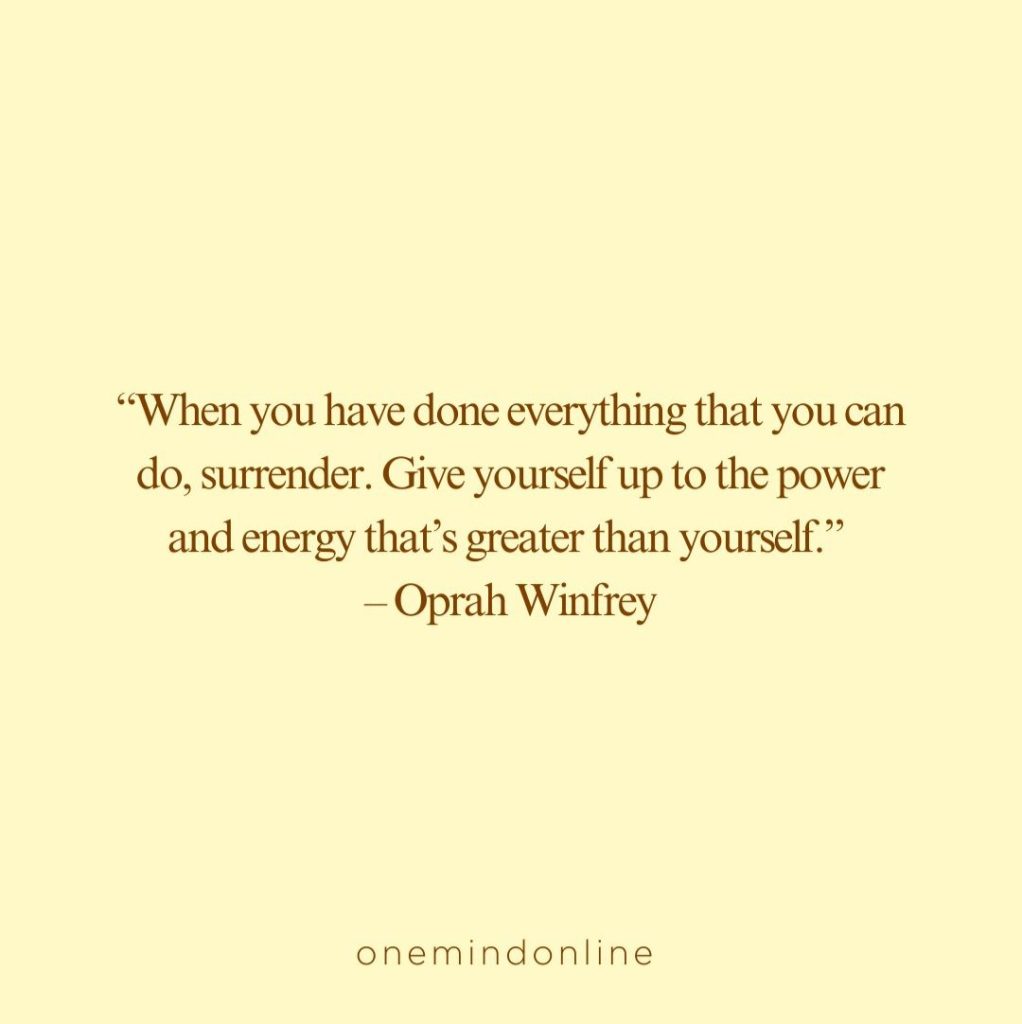
“When you have done everything that you can do, surrender. Give yourself up to the power and energy that’s greater than yourself.” – Oprah Winfrey
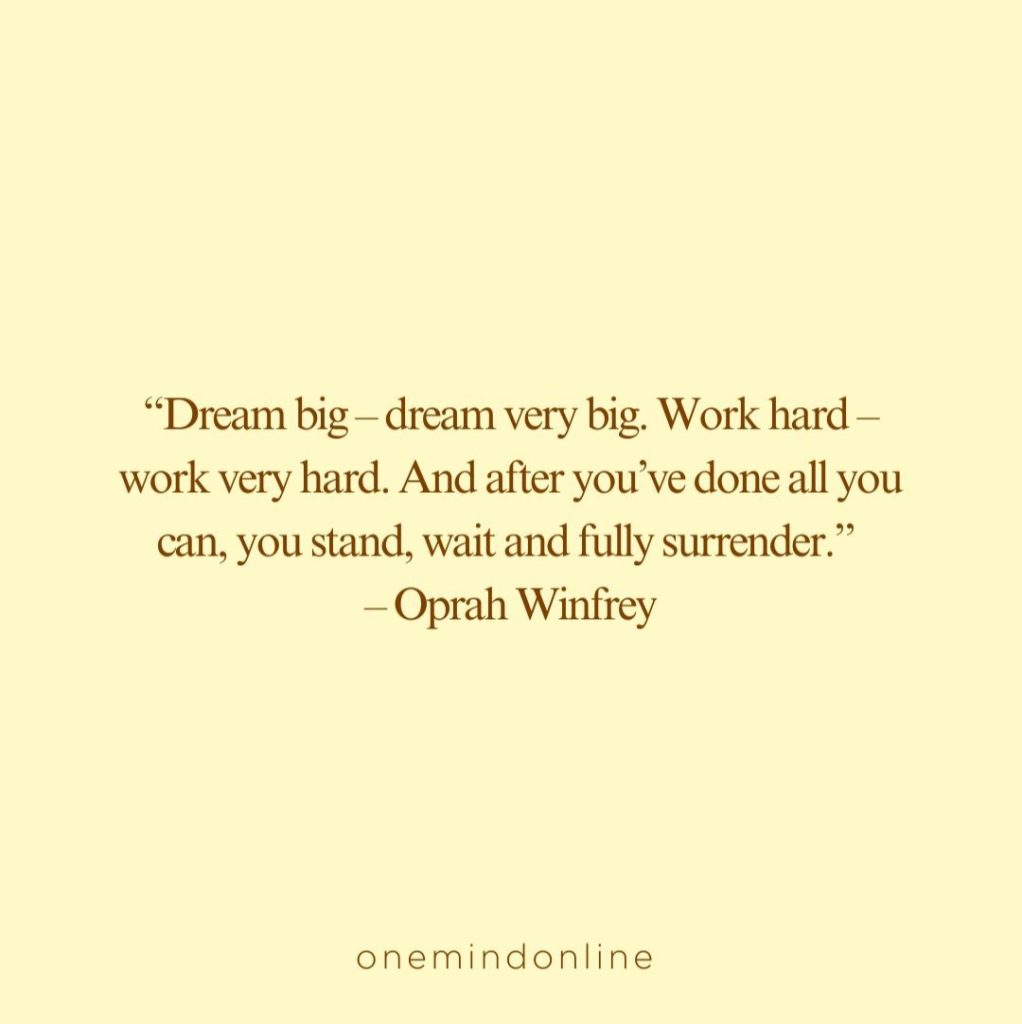
“Dream big – dream very big. Work hard – work very hard. And after you’ve done all you can, you stand, wait and fully surrender.” – Oprah Winfrey
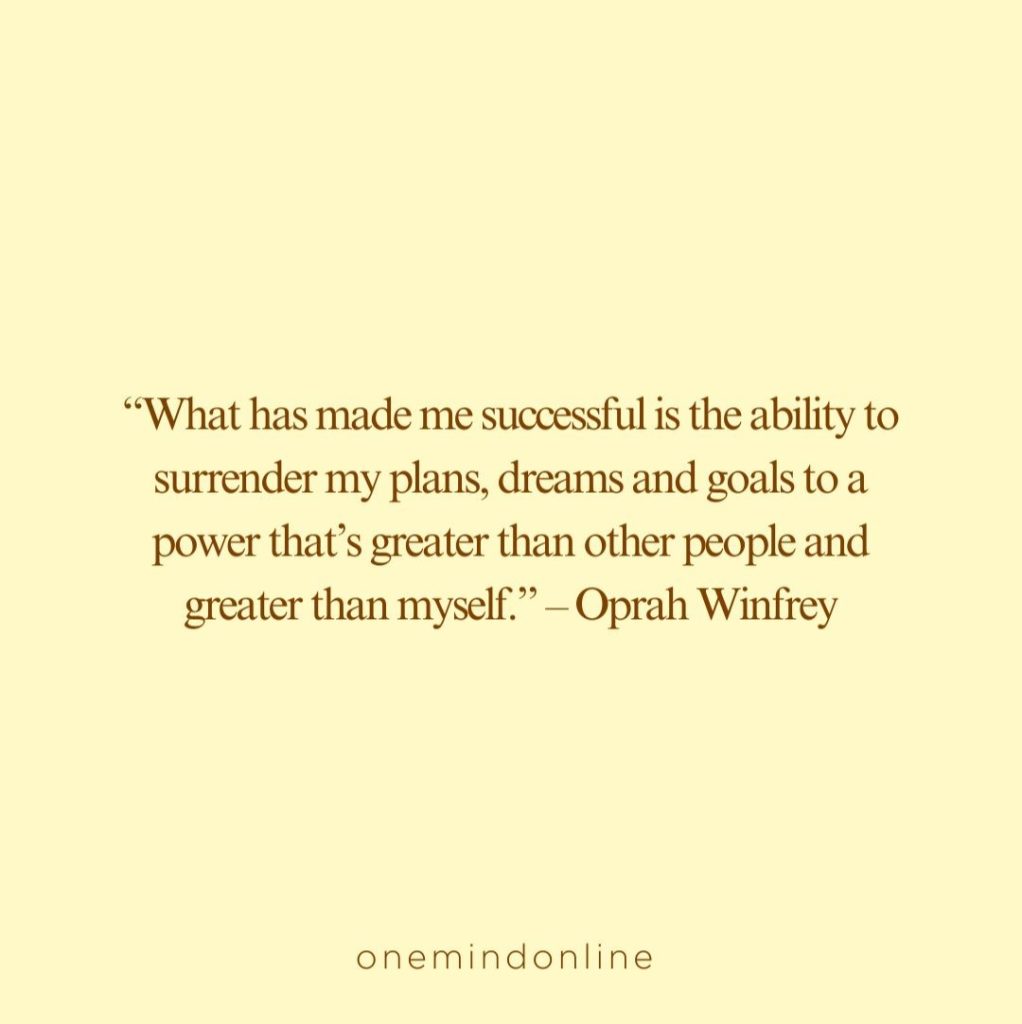
“What has made me successful is the ability to surrender my plans, dreams and goals to a power that’s greater than other people and greater than myself.” – Oprah Winfrey
This is not a call to inaction, but rather an invitation to realize how sometimes our action becomes wasted energy. Trying to control what’s not in our power to control, clinging to outcomes the way that we’ve imagined them, and trying to make the journey we’re on conform to the map that we’ve envisioned – often has us splashing in our pond unproductively.
Surrender is not asking us to be passive but to recognize that how we act, really is the only thing that we CAN control. Surrender asks us to take action wisely, and then to trust in the unfolding however it happens.
When we stop fighting long enough for the water to settle, we tend to see more clearly than we were able to see while we were flailing about, and in this pause… we become open to receiving guidance and support from a higher wisdom – whether you call that God, the universe, divine energy, or your own inner wisdom. This alignment can lead to miraculous breakthroughs, unexpected opportunities, and profound transformation.
Remember though, that surrender is not only about letting go. Surrender means nothing unless we are also surrendered to acting on what needs to get done.
A few questions to reflect on your relationship with surrender:
- “I release my need to control everything, trusting that life is unfolding for my highest good.”
- “I release my attachment to the outcome while fully committing to the process.”
- “I trust the process, even when I cannot see the destination.”
- “I am open to guidance from sources greater than my limited perspective.”
True surrender always leads to clarity but just like anything we want to become better at, we need to practise.
Join us for a very practical experience of surrender.
– pierre –
Today’s LIVE meditation is: Surrender.
Today’s LIVE meditation
https://youtu.be/iN-cUPScVqE 2025
https://youtu.be/hZMDFLbuQvM 2024
https://youtu.be/WbGVEoNGdpo 2023
https://youtu.be/wXhx8X_xtR4 2022
Practice the “Daily Dose”
Let’s put it into practice! Choose what works for you – daily, once a week or whenever inspiration strikes. Putting pen to paper wires the neural pathways that will create your new habits.
1 – Affirmation
Write down your favourite affirmation on a sticky note and place it somewhere that you’ll be able to see it the whole day.
- “I release my need to control everything, trusting that life is unfolding for my highest good.”
- “I release my attachment to the outcome while fully committing to the process.”
- “I trust the process, even when I cannot see the destination.”
- “I am open to guidance from sources greater than my limited perspective.”
2 – A moment of reflection
Use today’s question as a journal prompt. If you don’t have the time to sit down and write, just take a moment to reflect on your response.
Exploring Your Resistance: Think about a specific situation in your life right now where you’re struggling to let go. What are you afraid will happen if you surrender control? What might become possible if you released your tight grip on this outcome?
3 – Quotes to share
Send a quote to someone who needs it, or share them all on social media to spread the good vibes!


4 – Q&A for deeper learning
Read through the questions and answers and write down at least one “aha moment” that clicked for you.
Q1: Isn’t surrender just another word for giving up?
A: No. Surrender is fundamentally different from giving up. Giving up is abandoning effort and hope. Surrender is releasing control over outcomes while remaining fully engaged in meaningful action. You can work hard, dream big, and still surrender by letting go of your attachment to how things must unfold.
Q2: How do I know when to take action versus when to simply let go?
A: This discernment develops through practice and self-awareness. Generally, take action when you have clarity, energy, and capacity to do so. Surrender when you’ve done all you can, when you’re trying to control what isn’t yours to control, or when forcing creates more struggle than progress. Your body often knows—tension and exhaustion signal it’s time to release.
Q3: Can I surrender and still have goals and ambitions?
A: Absolutely. Surrender doesn’t mean abandoning your dreams. It means holding your goals with an open hand rather than a clenched fist. You can be deeply committed to your vision while remaining flexible about how it manifests. As Oprah says, dream big and work hard—then surrender.
Q4: What if surrendering feels like I’m being irresponsible?
A: True surrender includes being surrendered to what needs to get done. It’s not about avoiding responsibility; it’s about releasing the illusion that you can control everything through sheer force of will. Surrender often makes us more effective because we’re working with life rather than against it.
Q5: How is surrender different from apathy or not caring?
A: Apathy is emotional disconnection and lack of engagement. Surrender is conscious choice made from a place of deep engagement. When you surrender, you care deeply but you’ve released the outcome. Apathy means you’ve stopped caring altogether. Surrender creates space; apathy creates emptiness.
Q6: What does it mean to surrender to “a power greater than yourself”?
A: This looks different for everyone. For some, it’s God or divine energy. For others, it’s the universe, life force, or the interconnectedness of all things. It could even be your higher self or deepest intuition. The key is acknowledging that your conscious mind and willpower aren’t the only forces at work in your life.
Q7: How do I practice surrender when I’m used to being in control?
A: Start small. Practice surrender in low-stakes situations—let someone else choose the restaurant, take a different route to work, or sit with uncertainty for five minutes before problem-solving. Notice the discomfort that arises when you’re not controlling, and breathe through it. Like any skill, surrender develops through consistent practice and patience with yourself.