

“Your Daily Dose” is a quick two minute read packed with bite-sized wisdom from all the great teachers. But you could also choose to turn it into something more… a powerful daily practice for personal growth. Give it a try!
A message from today’s meditation:
In 1623 English poet John Donne wrote down the words, “No man is an island” – eloquently reminding his fellow humans that even in those moments that we may feel ourselves to be utterly alone, the truth is we are surrounded by other humans and we rub off on one another. Nothing is created – nothing comes to fruition – unless humans cooperate to bring it into existence. We are in it together for better or worse, so we can just as well upgrade our relationship to the humans around us.
When you pick up the next product off the supermarket shelf (or lift it out of the delivery bag), stop for a moment to recognize the amount of human lives it took to place this product in your hand. From the planting, to the harvesting, to the transporting, to the processing and packaging, to transporting again, to stacking it on a shelf, to delivering it to you…
My ‘being human’ is dependent on the collective humanity of this whole planet.
“As a body everyone is single, as a soul never.” – Hermann Hesse
“Slowly blossomed, slowly ripened in Siddhartha the realization, the knowledge, what wisdom actually was, what the goal of his long search was. It was nothing but a readiness of the soul, an ability, a secret art, to think every moment, while living his life, the thought of oneness, to be able to feel and inhale the oneness.” – Hermann Hesse
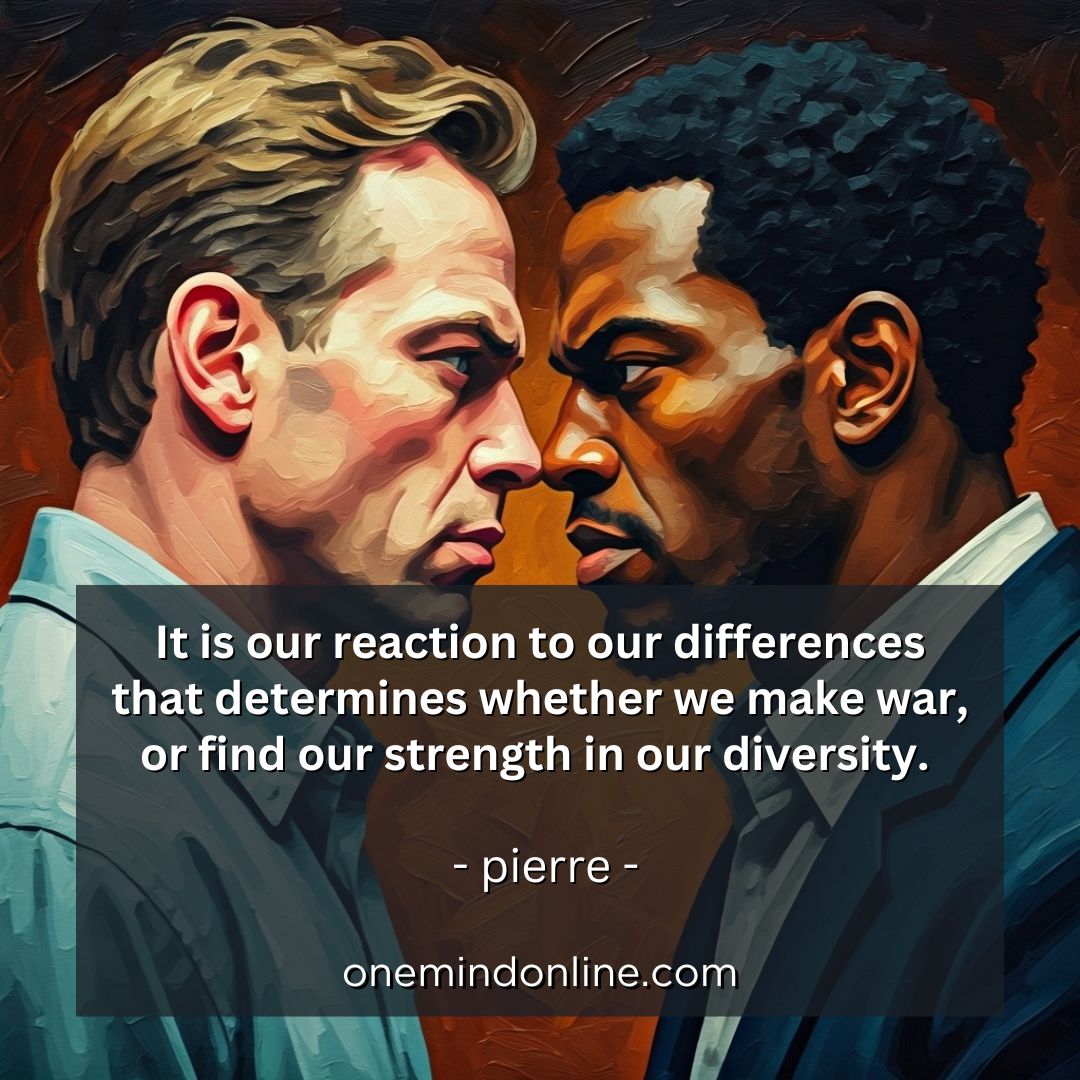
Of course our collective ‘being human’ doesn’t guarantee we get along, it causes friction too! But it is our reaction to our differences that determines whether we make war, or find our strength in our diversity.
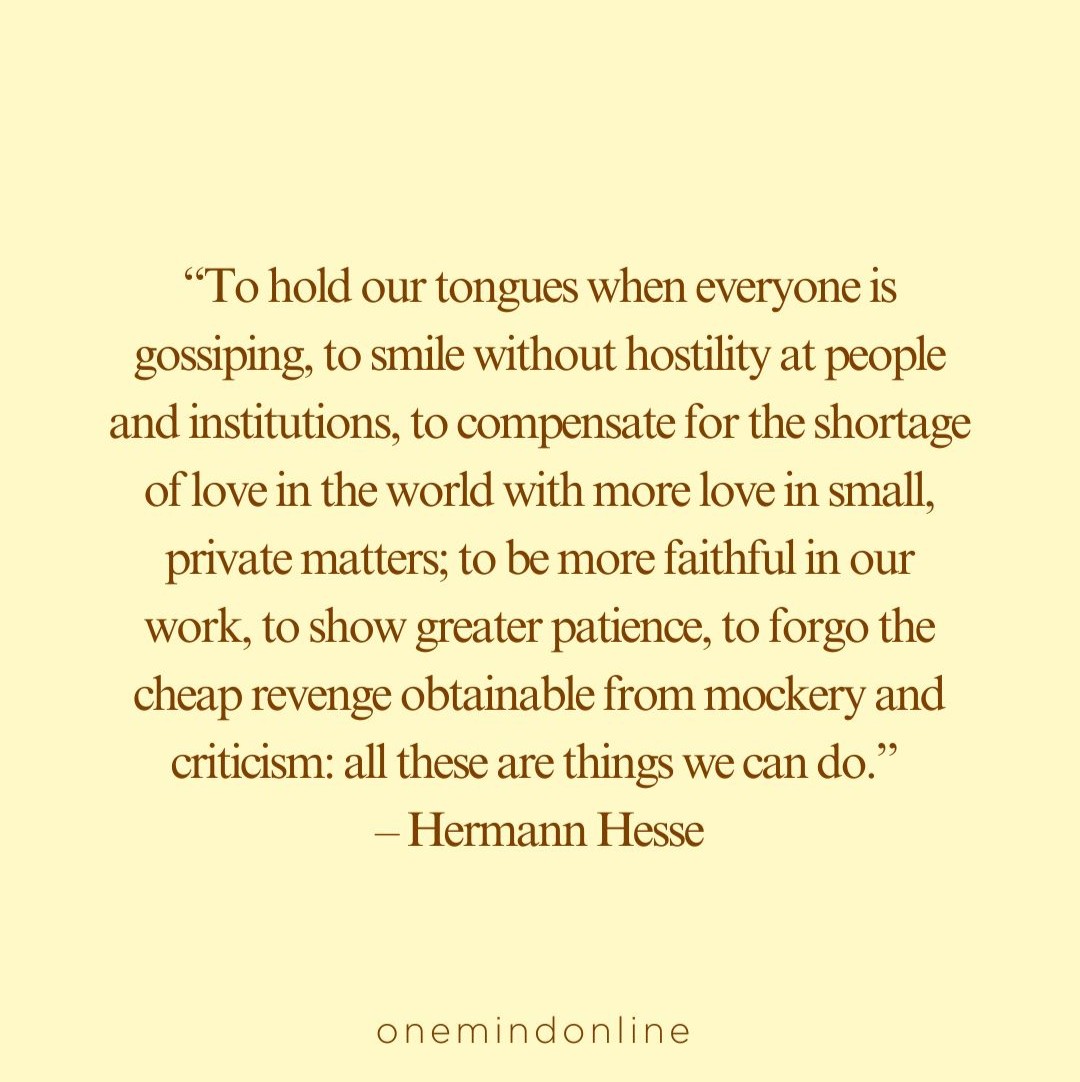
“To hold our tongues when everyone is gossiping, to smile without hostility at people and institutions, to compensate for the shortage of love in the world with more love in small, private matters; to be more faithful in our work, to show greater patience, to forgo the cheap revenge obtainable from mockery and criticism: all these are things we can do.” – Hermann Hesse
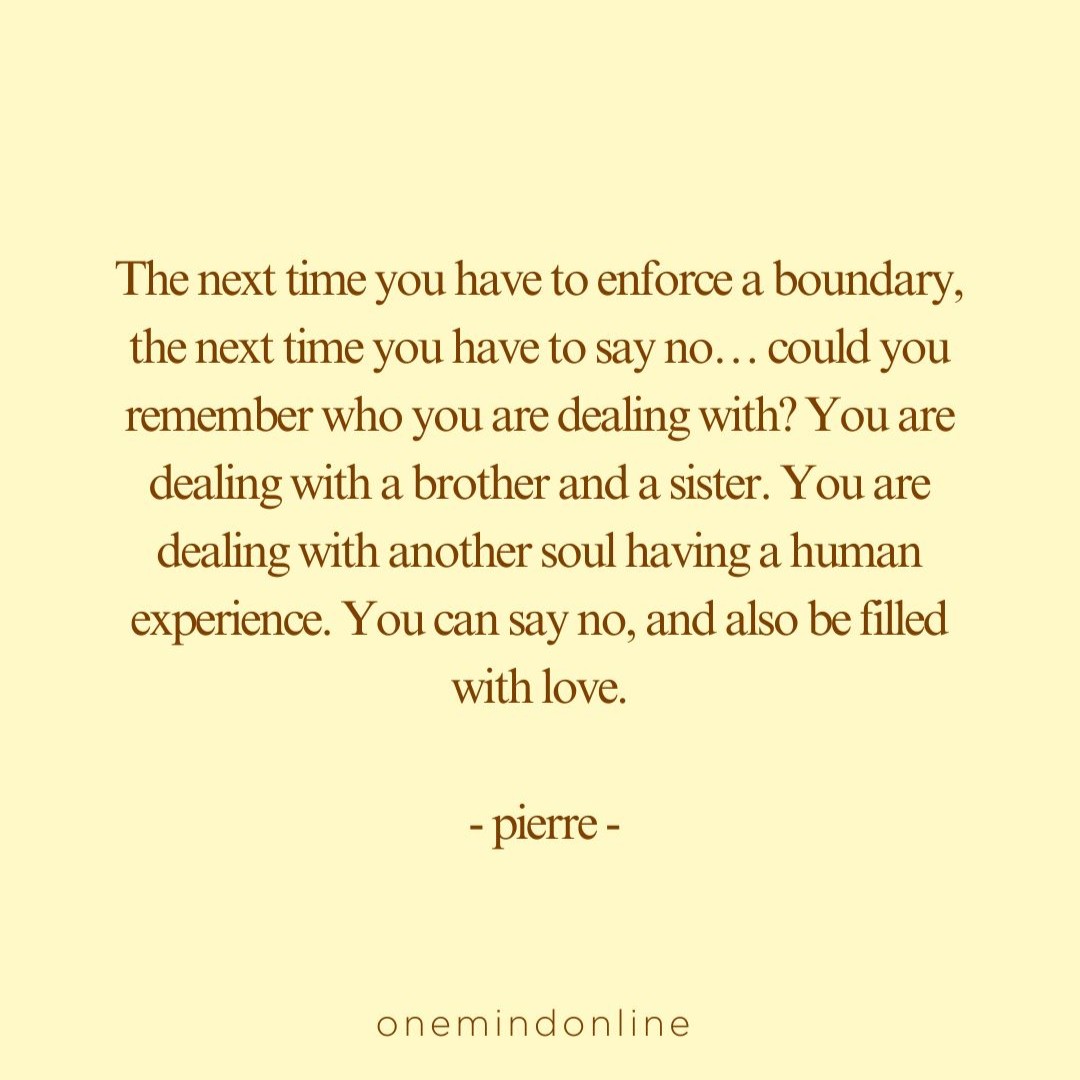
The next time you have to enforce a boundary, the next time you have to say no… could you remember who you are dealing with? You are dealing with a brother and a sister. You are dealing with another soul having a human experience. You can say no, and also be filled with love.
The recognition of our shared humanity isn’t just a philosophical concept – it’s a practical tool for personal transformation. When we see others as extensions of ourselves, criticism becomes more gentle, forgiveness comes more easily, and compassion flows more naturally.
A few affirmations to ponder in your contact with the world around you:
- “I am a part of something greater than myself.”
- “I recognize the divine spark within myself and all others.”
- “I choose compassion and understanding as I interact with the world.”
- “I am grateful for the intricate web of relationships that sustain life on Earth.”
As we deepen our awareness of our shared humanity, we begin to understand the role we all play in the well-being of each other. Let us cultivate a deeper awareness of our interconnectedness. By recognizing the humanity in others, we can transform our relationships, our communities, and ultimately, our world.
– pierre –
Today’s LIVE meditation is: Tonglen
Today’s LIVE meditation
https://youtu.be/vmZxJFqY454 2025
https://youtu.be/aBRwzt_4Rgo 2024
https://youtu.be/Xf5Jjp4iKfM 2023
https://youtu.be/xy4inUzvGtg 2022
Practice the “Daily Dose”
Let’s put it into practice! Choose what works for you – daily, once a week or whenever inspiration strikes. Putting pen to paper wires the neural pathways that will create your new habits.
1 – Affirmation
Write down your favourite affirmation on a sticky note and place it somewhere that you’ll be able to see it the whole day.
- “I am a part of something greater than myself.”
- “I recognize the divine spark within myself and all others.”
- “I choose compassion and understanding as I interact with the world.”
- “I am grateful for the intricate web of relationships that sustain life on Earth.”
2 – A moment of reflection
Use today’s question as a journal prompt. If you don’t have the time to sit down and write, just take a moment to reflect on your response.
Your Ripple Effect: Hermann Hesse suggests we can “compensate for the shortage of love in the world with more love in small, private matters.” Consider your daily interactions – with family, coworkers, strangers in public, service workers, even difficult people. Write about three specific ways you could practice Hesse’s wisdom: holding your tongue when others gossip, smiling without hostility, showing greater patience, or being more faithful in your work. How might these small acts of love create ripples that extend far beyond what you can see?
3 – Quotes to share
Send a quote to someone who needs it, or share them all on social media to spread the good vibes!
4 – Q&A for deeper learning
Read through the questions and answers and write down at least one “aha moment” that clicked for you.
Q1. What does it really mean that “no man is an island”?
This phrase from John Donne points to the fundamental truth that human existence is inherently interconnected. Even when we feel completely alone, we are surrounded by the results of human cooperation – the food we eat, the shelter we live in, the technology we use. Nothing meaningful in our lives exists without the contribution of countless other people. Recognizing this dissolves the illusion of complete independence and reveals our deep interdependence.
Q2. How can I practice seeing others as “brothers and sisters” when they’re being difficult?
Start by remembering that difficult behaviour often comes from pain, fear, or unmet needs. Before reacting, take a moment to silently acknowledge: “This is another soul having a human experience.” This doesn’t mean accepting poor treatment, but rather approaching the situation with curiosity instead of judgment. You can maintain firm boundaries while still holding compassion for the person’s humanity.
Q3. What’s the difference between healthy boundaries and disconnection?
Healthy boundaries maintain your well-being while still recognizing the other person’s humanity. You can say no with love, enforce limits with compassion, and protect yourself while still seeing the divine spark in others. Disconnection, on the other hand, involves dehumanizing others or cutting off empathy entirely. The key is maintaining inner love even when external actions must be firm.
Q4. How do I “compensate for the shortage of love in the world” without burning out?
Yes, there is a shortage of love in the world. But that shortage is not your burden to carry. Healing an entire planet’s worth of coldness and disconnection isn’t a job any single person can carry, and trying to is exactly what leads to burnout. Your job is much smaller than that, and far more doable: simply be the expression of love in your own world. Not everyone’s world – yours. The people in front of you, the moments actually given to you. That’s the whole assignment. And here’s what makes it sustainable rather than depleting – you’re allowed to do this selfishly. When you express love, you’re not just giving something away; every cell in your own body benefits from the vibration of love that you are. Love softens your nervous system, eases your own stress, and restores you even as it moves through you toward someone else. Practiced this way, love isn’t a resource that you deplete – it’s something that flows through you, and by giving it away, it becomes MORE. And then just trust the math. If you simply do your part – one act, one kindness, one soft response instead of a sharp one – and everyone else does theirs, it becomes contagious. Love passed on ripples outward in ways you’ll never fully trace. None of us has to set the whole world ablaze alone. We only have to strike our own match. Do that, together, and the world catches fire on its own.
Q5. Is it naive to see everyone as fundamentally connected when there’s so much conflict in the world?
Not at all – connection is the default setting in nature, not an idealistic add-on. Look at the web of life all around us: microbes in the soil feeding the plants, plants becoming the food on our table, that food becoming the cells in our body. Separation is not the natural state; it’s an interruption of it. Recognizing our interconnectedness doesn’t mean ignoring conflict – the conflict is real. But so is its origin: the disconnect we witness in the world is always caused by people reacting in fear, protecting themselves from a threat they perceive, real or imagined. Of course we should keep ourselves safe – that’s not in question. But once we’re safe, we still face a choice in how we respond, and that choice really comes down to just two directions: do we add to the love in the world, or do we add to the hate in the world? When we meet fear with more fear, more judgment, more walls, we’ve chosen the second path, whether we meant to or not. Seeing the connection first isn’t naive. It’s what lets us stay safe and still choose love.
Q6. How can I maintain this awareness of oneness in my daily life?
Start with simple practices: pause before meals to acknowledge the hands that brought your food to you, look people in the eyes when you interact with them, and practice the mantras provided. When you notice yourself judging someone, ask: “What would change if I remembered this person is doing their best with what they have?” These small shifts in perspective compound over time.
Q7. What if I try to practice these principles but others don’t reciprocate?
Your practice isn’t dependent on others’ responses. As Hermann Hesse suggested, these are “things we can do” regardless of what others choose. Your compassion, patience, and love create ripples that extend far beyond what you can see. Focus on your own growth and trust that authentic love, even when not immediately reciprocated, contributes to the healing of our collective humanity.
One thought on “How we react to our differences, determines whether we make war, or find strength in our diversity.”
Comments are closed.