Need a burst of brilliance in a flash? This inspiring article is a speedy 2-minute adventure. But if you’re ready to put on your explorer hat and journey to the very heart of the matter, our menu is your treasure map to deeper understanding!
A message from today’s meditation:
We live in a world that glorifies action. A “go-go-go” world where we’re constantly bombarded with messages about productivity, hustle, and achieving more. To-do lists overflow, schedules are crammed, and the pressure to constantly achieve can be overwhelming.
Now, of course productivity does have its place, but the over-glorification of action can create an unhealthy imbalance that is often the cause of our dis-ease.
There exists a profound teaching about the balance between action and rest, encompassing three essential states: BE-ing, DO-ing, and BECOME-ing.
BE-ing represents those precious moments when we simply enjoy the beauty that life has to offer – without agenda, without purpose, without the need to produce anything.
DO-ing embodies the productive phases of our lives, when we take meaningful actions that add to the beauty and value of life. And then BECOME-ing, is the understanding that finding the balance between the two, and becoming better at holding both simultaneously, is a constantly evolving journey. The journey of our life.
The piece I’m sharing from Jeff Foster today doesn’t cover this whole balancing act, but it speaks to the over emphasis the world places on non-stop action by reminding us to rest:
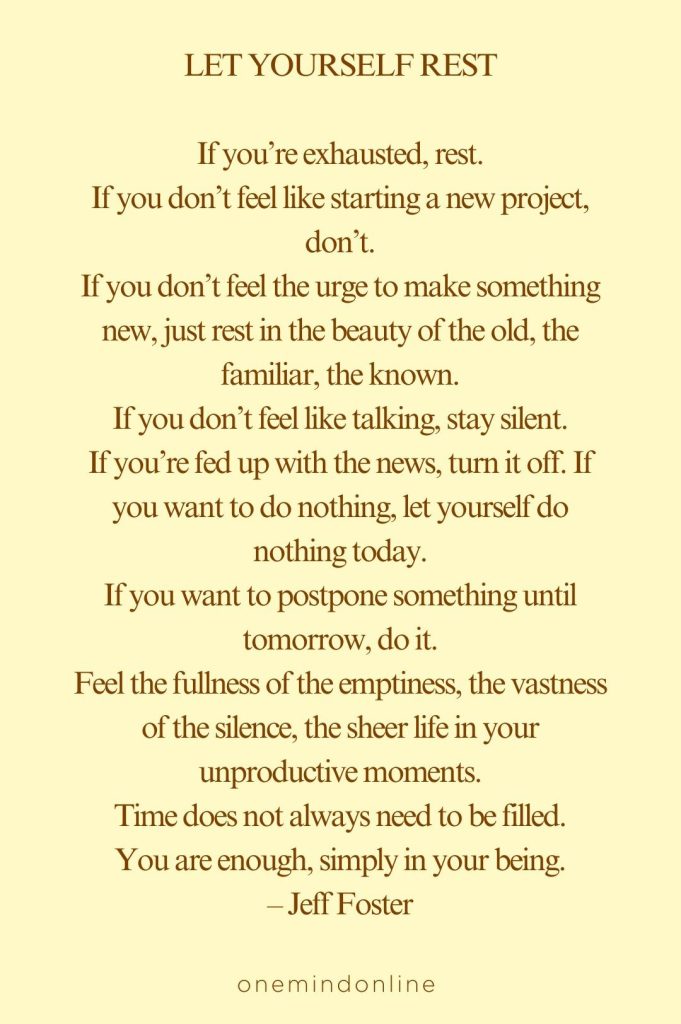
LET YOURSELF REST
If you’re exhausted, rest.
If you don’t feel like starting a new project, don’t.
If you don’t feel the urge to make something new, just rest in the beauty of the old, the familiar, the known.
If you don’t feel like talking, stay silent.
If you’re fed up with the news, turn it off. If you want to do nothing, let yourself do nothing today.
If you want to postpone something until tomorrow, do it.
Feel the fullness of the emptiness, the vastness of the silence, the sheer life in your unproductive moments.
Time does not always need to be filled.
You are enough, simply in your being.
– Jeff Foster
There’s a time for DO-ing, and when it is time to take action let ALL of your focus be poured into your DO-ing. Just don’t forget that there is a time to rest too. And when it is time to BE, let ALL of your attention rest in just BE-ing.
The famous serenity prayer beautifully captures the essence of balancing action and non-action: “Help me see where to surrender, and show me where to take action.” Discerning when to step forward and act and when to step back and let go, is a crucial skill for navigating life’s challenges.
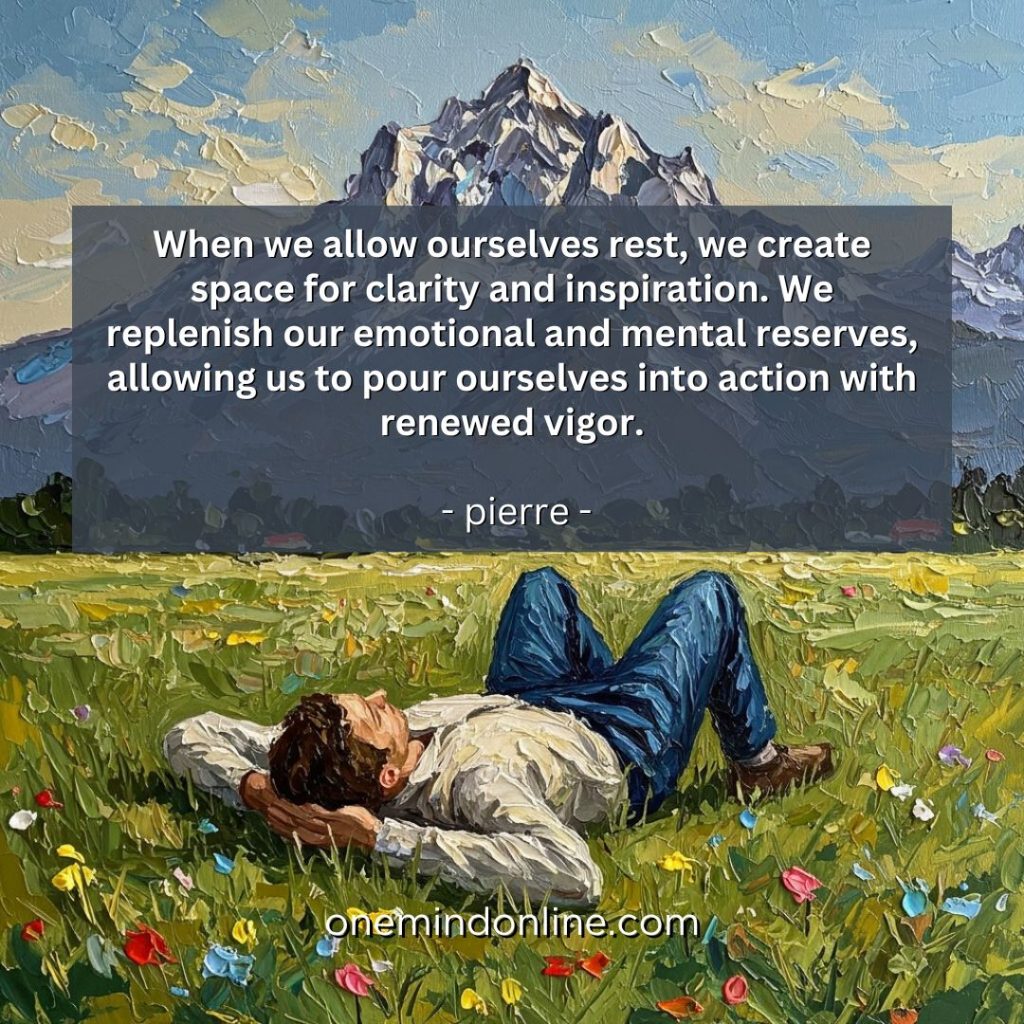
When we allow ourselves rest, we create space for clarity and inspiration. We replenish our emotional and mental reserves, allowing us to pour ourselves into action with renewed vigor.
Guiding mantras for self-reflection:
- “Allowing myself to rest isn’t weakness, it’s strength.”
- “Just like a wave needs stillness to gather power, I need rest to fuel my actions.”
- “I will honor my natural rhythms, allowing space for surrender and space for focused action.”
- “I can discern when to act with purpose and when to simply be present in the moment.”
By cultivating this awareness and integrating these reflections into your daily life, you’ll discover the transformative power of allowing yourself to rest. Remember, sometimes the most powerful action we can take is simply allowing ourselves to be.
Have a beautiful day beautiful humans!
– pierre –
Today’s LIVE meditation is: The serenity prayer.
A moment of reflection
(If you have the time, use this question as a journal prompt, because whenever you put pen to paper you’re wiring the neural pathways that create your new habits. But if you don’t have the time, just take a moment to reflect on your response.)
Mapping Your BE-ing, DO-ing, and BECOME-ing Patterns: Consider the three states described in the article: BE-ing (enjoying life’s beauty), DO-ing (productive action), and BECOME-ing (balancing both). Draw or write about your current life rhythm. Which state dominates your daily experience? When do you feel most naturally drawn to BE-ing versus DO-ing? Describe a specific situation where you struggled to know whether to take action or surrender. What wisdom would you offer your future self about recognizing when it’s time for each state?
Today’s LIVE meditation
https://youtu.be/6430oIYCUYM 2025
https://youtu.be/PN6RAVxshYg 2024
https://youtu.be/W_AiKJ7RR8k 2023
https://youtu.be/yQ9MajR0TLg 2021

Q&A for deeper learning
1. How do I know when it’s time to rest versus when I’m just being lazy?
The key difference lies in awareness and intention. True rest comes from recognizing your genuine need for restoration and consciously choosing to honor that need. Laziness often stems from avoidance, procrastination, or numbness. When you need rest, your body and mind will give you clear signals – exhaustion, scattered thinking, or emotional depletion. Trust these signals. Rest that comes from self-awareness and self-care will leave you feeling restored, while avoidance-based inactivity typically leaves you feeling more drained or anxious.
2. Won’t I fall behind if I take time to rest in such a competitive world?
This perspective assumes that constant action equals progress, but research shows the opposite. Strategic rest actually enhances performance, creativity, and decision-making. Think of professional athletes – their rest and recovery periods are as crucial as their training. When you rest mindfully, you return to action with greater clarity, energy, and effectiveness. You’re not falling behind; you’re positioning yourself to move forward more powerfully when the time is right.
3. What does “BE-ing” actually look like in practical terms?
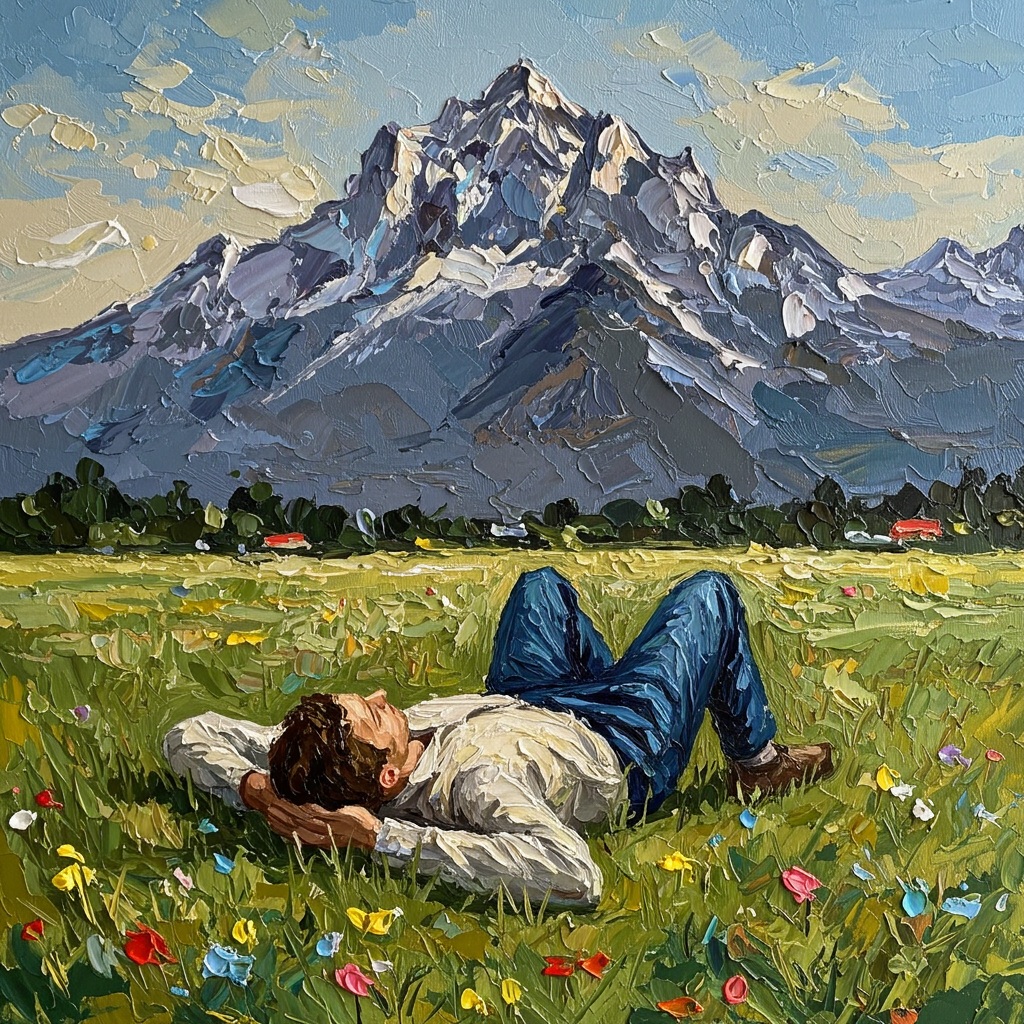
BE-ing can take many forms: sitting quietly with your morning coffee without checking your phone, taking a walk without a destination, lying in nature and simply observing, listening to music without multitasking, or having a conversation without an agenda. It’s any moment where you’re fully present without trying to produce, achieve, or fix anything. The key is presence without purpose – simply experiencing life as it unfolds.
4. How can I overcome the guilt that comes with resting or doing nothing?
Guilt around rest often stems from internalized messages about worthiness being tied to productivity. Start by reframing rest as an investment rather than indulgence. Just as you wouldn’t feel guilty about sleeping or eating, rest is a basic human need. Practice self-compassion by asking: “What would I tell a dear friend who felt guilty about resting?” Often, we’re kinder to others than ourselves. Remember that your worth isn’t determined by your output.
5. How do I apply the serenity prayer concept to everyday decisions?
Begin by pausing before reacting to situations. Ask yourself: “Is this something I can influence through action, or is this something I need to accept and surrender to?” For actionable items, focus your energy there. For things outside your control – others’ behaviors, past events, uncertain outcomes – practice letting go. This doesn’t mean becoming passive, but rather directing your energy where it can actually create change.
6. What if my responsibilities don’t allow for much rest time?
Even small moments of BE-ing can be transformative. Consider micro-rests: three conscious breaths between tasks, mindful transitions from one activity to another, or briefly pausing to notice your surroundings. Quality matters more than quantity. Additionally, examine whether all your “responsibilities” are truly necessary or if some are self-imposed pressures. Sometimes we can create more space for rest than we initially believe possible.
7. How do I know if I’m in my BECOME-ing phase versus stuck in imbalance?
BECOME-ing feels like a conscious dance between action and rest, where you’re aware of both needs and can flow between them. You’ll notice greater ease in transitions and less internal resistance. Being stuck in imbalance often feels like constant tension – either restless anxiety from too much action or stagnant frustration from too much inactivity. In BECOME-ing, you develop intuitive wisdom about timing and can trust your inner guidance about when to engage and when to step back. The journey itself becomes less about perfection and more about conscious awareness.