
Ready for a quick dose of inspiration? This article is a 2-minute sprint. Now, if you’re in the mood to go a longer distance, take a peek at our extended menu!
A message from today’s meditation:
Life. It’s a word we use a lot, yet it often feels like we don’t quite know what to even do with it. It seems like “life” often becomes something we chase after. Some future destination that we believe will somehow be “better” than right now, instead of the vibrant tapestry we are weaving from moment to moment.
Why do we postpone experiencing LIFE in all its richness? What if everything you’re seeking is already here?
“Why does it often take extreme life situations to bring back an awareness of the magic and mystery of life? Why do we often wait until we’re about to die before discovering a deep gratitude for life as it is? Why do we exhaust ourselves seeking love, acceptance, fame, success, or spiritual enlightenment in the future? Why do we work or meditate ourselves into the grave? Why do we postpone life? Why do we hold back from it? What are we looking for exactly? What are we waiting for? What are we afraid of? Will the life we long for really come in the future? Or is it always closer than that?” – Jeff Foster
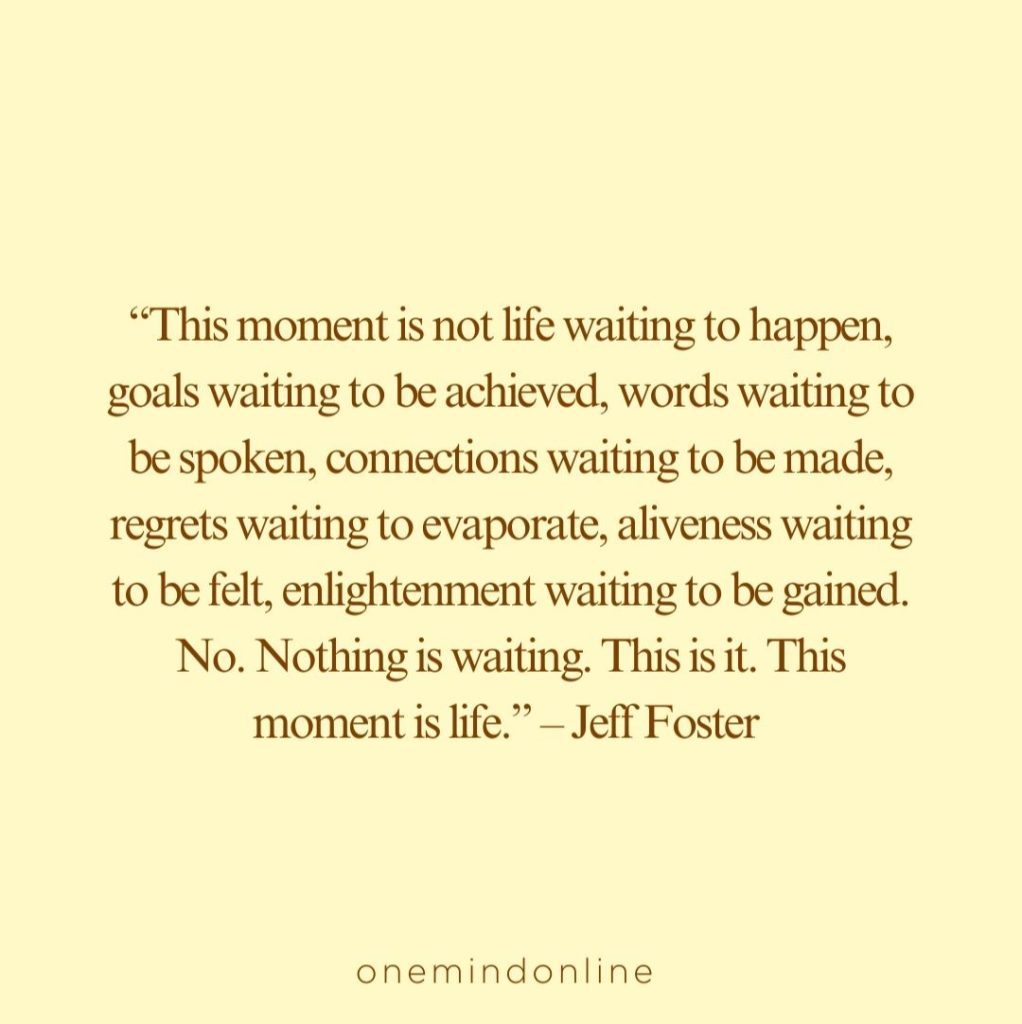
“This moment is not life waiting to happen, goals waiting to be achieved, words waiting to be spoken, connections waiting to be made, regrets waiting to evaporate, aliveness waiting to be felt, enlightenment waiting to be gained. No. Nothing is waiting. This is it. This moment is life.” – Jeff Foster
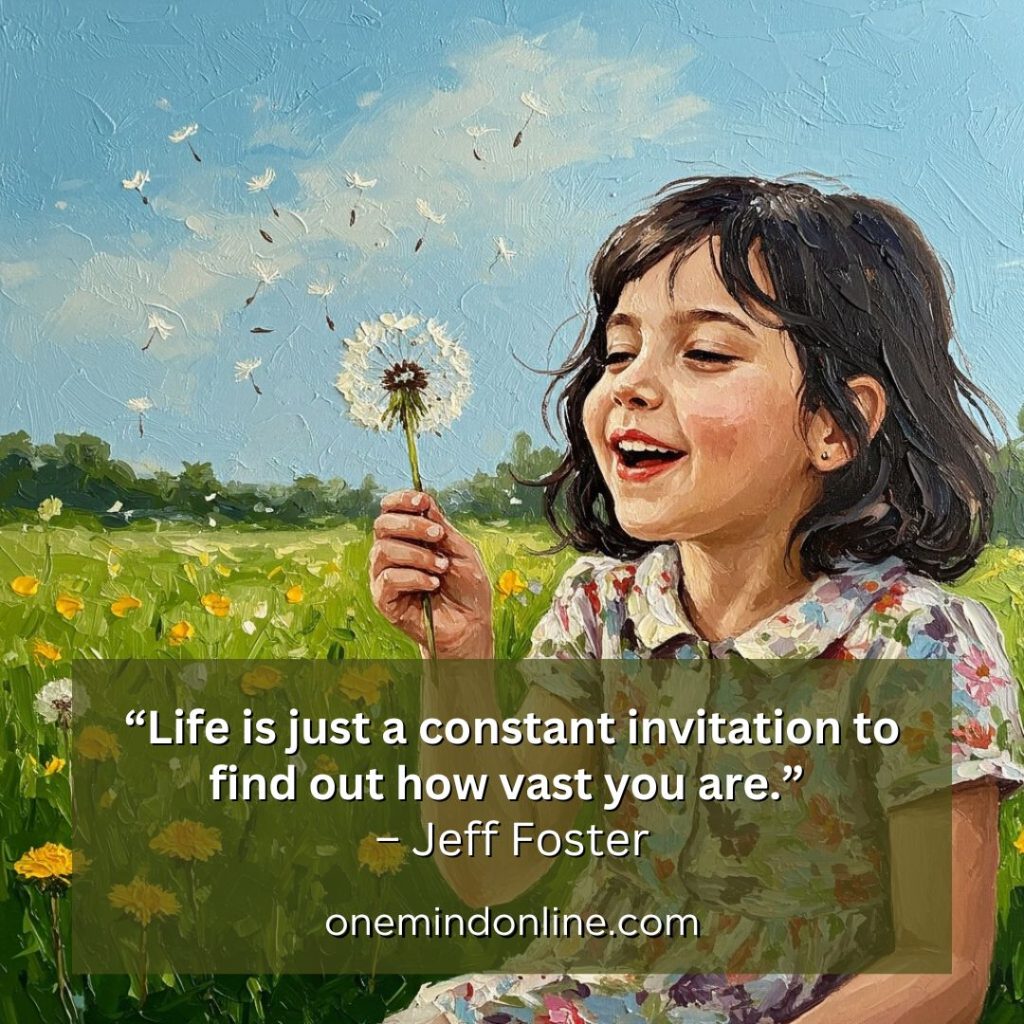
“Life is just a constant invitation to find out how vast you are.” – Jeff Foster
We tell ourselves we’ll be happy when we get the promotion, when we find the right relationship, when we lose the weight, or when we achieve that elusive state of enlightenment. We exhaust ourselves chasing external validation – love, acceptance, fame, success – believing these achievements will somehow unlock the “real” life we’ve been waiting for.
Because of our minds’ tendency to dwell on old wounds from the past or fret over fears about the future, we need to spend some time training our brains to pay attention to what is happening right here, right now where the actions we take, can have a real effect.
Today’s meditation journey is just this… can you just connect with this moment? Can you connect with your body in this moment? This is not an attempt at escaping from the world around us but a reminder to our brain and body to remain involved in what this very moment asks us to pay attention to. Because right here is where life is happening!
A few thoughts to help you ponder your ability to be present:
- “This is it. This moment is life.” Repeat this to yourself throughout the day as a reminder to appreciate the present.
- “What is happening right now?” Ask yourself this question regularly to shift your attention from mental chatter to your immediate experience.
- “I am alive.” Feel the truth of this statement in your body. Breathe deeply and savor the gift of being right here, right now.
Life is an invitation to explore the depths of your human experience. Don’t wait for the magic to begin, you ARE magic, so come alive right now! Magic is already happening, waiting to be discovered in the precious present moment.
– pierre –
Today’s LIVE meditation is: Come to your senses.
A moment of reflection
(If you have the time, use this question as a journal prompt, because whenever you put pen to paper you’re wiring the neural pathways that create your new habits. But if you don’t have the time, just take a moment to reflect on your response.)
The Postponement Pattern: Reflect on the ways you postpone life. What future conditions are you waiting for before you allow yourself to fully engage with your current reality? Write about a specific area where you’ve been “waiting” and explore what it would mean to embrace that aspect of your life right now.
Today’s LIVE meditation
https://youtu.be/RFCsIS5xgB0 2025
https://youtu.be/ESqONR2GMSM 2023
https://youtu.be/RqFQdY_FEG0 2021
https://youtu.be/jvn4keYQEpU 2020


Q&A for deeper learning
Q1: How can I stop my mind from constantly wandering to the past and future?
A: Mind wandering is natural and normal—the goal isn’t to stop it completely but to notice when it happens and gently return to the present. Use your senses as anchors: feel your breath, notice physical sensations, or engage with your immediate environment. With practice, you’ll catch yourself sooner and return to presence more easily.
Q2: Isn’t it irresponsible to focus only on the present when I have goals and plans to consider?
A: Present-moment awareness doesn’t mean abandoning planning or goal-setting. It means being fully engaged when you’re planning (instead of anxiously obsessing) and taking inspired action from a grounded state. Most effective action actually comes from presence, not from scattered mental energy.
Q3: What if my present moment feels painful or difficult? Should I still try to embrace it?
A: Embracing the present doesn’t mean forcing yourself to enjoy difficult experiences. It means acknowledging what’s actually happening without adding layers of resistance or mental stories. This creates space for authentic responses and often reduces unnecessary suffering while honoring genuine challenges.
Q4: How do I know if I’m truly living in the present or just telling myself I am?
A: Genuine presence has distinct qualities: decreased mental chatter, enhanced sensory awareness, a sense of ease or flow, and spontaneous responses rather than rehearsed reactions. Your body will feel more relaxed, and you’ll notice increased clarity and natural joy arising without forcing it.
Q5: Can this approach help with anxiety and depression?
A: While present-moment practices can be supportive, they’re not a replacement for professional mental health care when needed. Many people find that grounding in the present reduces anxiety (which often stems from future-focused worry) and depression (which can involve past-focused rumination), but it’s important to work with qualified professionals for serious mental health concerns.
Q6: How can I maintain presence during busy or stressful periods?
A: Start with micro-moments of presence—even three conscious breaths can reset your system. Build presence practices into existing routines: mindful transitions between activities, conscious eating, or present-moment awareness during daily tasks. The key is consistency with small practices rather than waiting for perfect conditions.
Q7: What’s the difference between being present and being passive or unmotivated?
A: True presence is actually highly engaged and responsive, not passive. When you’re genuinely present, you respond more authentically and effectively to what’s needed. Passivity often comes from disconnection or overwhelm, while presence brings clarity and appropriate action. Present-moment awareness can actually increase motivation by connecting you with what truly matters to you.