

“Your Daily Dose” is a quick two minute read packed with bite-sized wisdom from all the great teachers. But you could also choose to turn it into something more… a powerful daily practice for personal growth. Give it a try!
A message from today’s meditation:
We all carry within us a piece of childhood – a playful, curious, and sometimes wounded younger self. This “inner child” isn’t just a metaphor; it’s a very real aspect of our emotional landscape. Often, in the pursuit of strength and maturity, we neglect this vulnerable part. In our quest for “adulting,” we push down uncomfortable emotions, suppress our creativity, and silence the whispers of our deepest desires. But here’s the thing: a neglected inner child doesn’t disappear. It festers, becoming a source of self-doubt, negativity, and emotional baggage.
Tara Brach, psychologist and meditation teacher, offers some insight into meeting our inner experiences with open arms instead of resistance. She beautifully articulates how denying our inner children the care that they are yearning for, only traps us in a deep sense of unworthiness that we struggle to escape from.
“Clearly recognizing what is happening inside us, and regarding what we see with an open, kind and loving heart, is what I call Radical Acceptance. If we are holding back from any part of our experience, if our heart shuts out any part of who we are and what we feel, we are fueling the fears and feelings of separation that sustain the trance of unworthiness. Radical Acceptance directly dismantles the very foundations of this trance.” – Tara Brach
“You can think of spiritual practice as a kind of spiritual re-parenting… You’re offering yourself the two qualities that make up good parenting: understanding – seeing yourself for who you truly are – and relating to what you see with unconditional love.” – Tara Brach
“The most powerful healing arises from the simple intention to love the life within you, unconditionally, with as much tenderness and presence as possible.” – Tara Brach
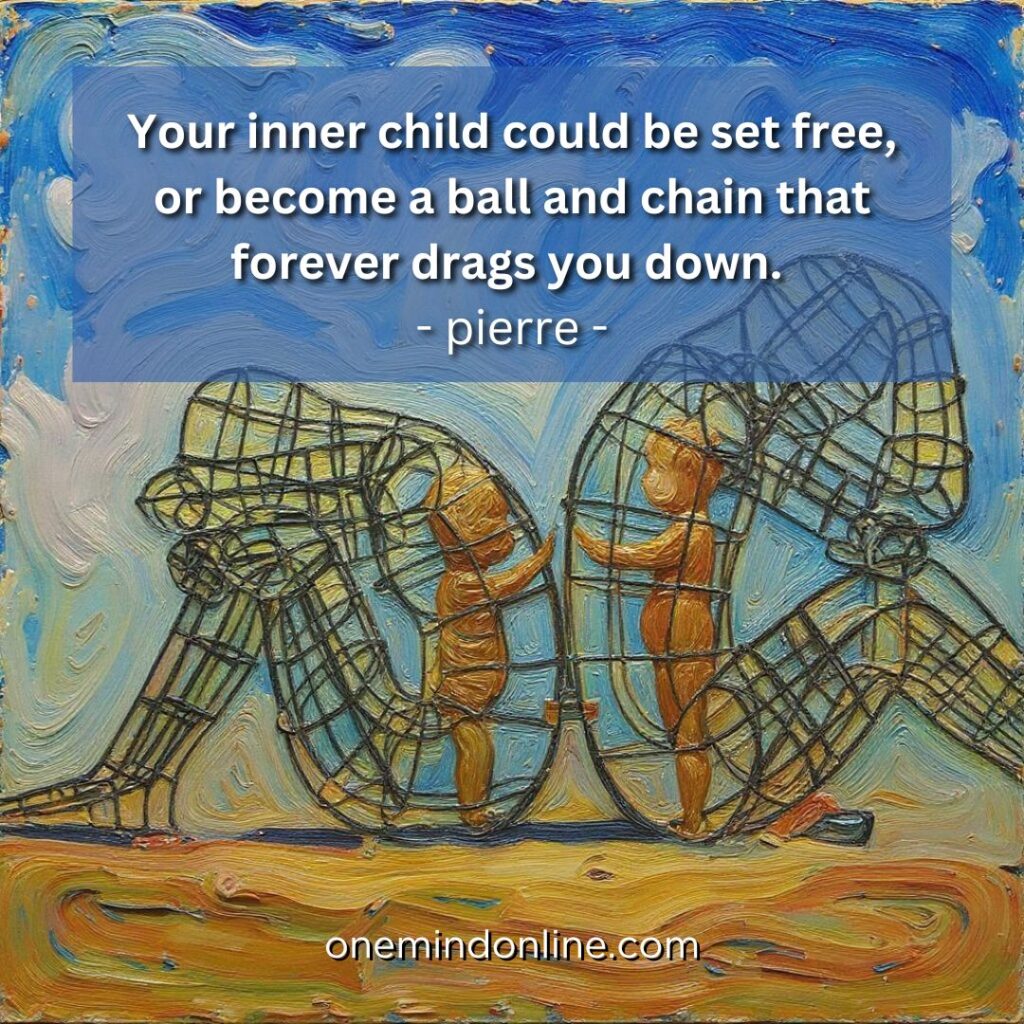
We all have an inner child (or a whole day care centre) who we might have been neglecting in an attempt to appear ‘strong’. Your inner child can be liberated and experience a sense of worthiness, through your unconditional love and acceptance. Or, if you keep neglecting the small voice within that is asking to be held, it can become the ball and chain that forever drags you down.
Today’s meditation is an opportunity to invite your own inner-children for a conversation. The most beautiful healing arises when you become able to listen, and simply love the life that’s in you.
A few thoughts to guide some self-reflection:
- Notice: “What am I feeling right now, in my body and mind? What inner voice is speaking, and what is it saying?”
- Nurture: “It’s okay to feel this way. These emotions make sense, and they are a natural reaction to the experiences that you’ve had.”
- Navigate: “How will I show up differently for this part of myself moving forward?”
By incorporating these practices into your daily life you are offering acceptance to yourself for being human, and you begin to dismantle the trance of unworthiness. The journey towards self-compassion is a marathon, not a sprint. Be patient with yourself, and celebrate every step you take towards a more loving and accepting relationship with yourself.
Have a beautiful day!
– pierre –
Today’s LIVE meditation is: A sense of SELF.
Today’s LIVE meditation
https://youtu.be/icqmnEh61ok 2023
Practice the “Daily Dose”
Let’s put it into practice! Choose what works for you – daily, once a week or whenever inspiration strikes. Putting pen to paper wires the neural pathways that will create your new habits.
1 – Affirmation
Write down your favourite affirmation on a sticky note and place it somewhere that you’ll be able to see it the whole day.
- Notice: “What am I feeling right now, in my body and mind? What inner voice is speaking, and what is it saying?”
- Nurture: “It’s okay to feel this way. These emotions make sense, and they are a natural reaction to the experiences that you’ve had.”
- Navigate: “How will I show up differently for this part of myself moving forward?”
2 – A moment of reflection
Use today’s question as a journal prompt. If you don’t have the time to sit down and write, just take a moment to reflect on your response.
The Conversation Your Inner Child Has Been Waiting For: Imagine sitting across from your younger self at the age when you felt most vulnerable or misunderstood. What would that child want to tell you about their fears, dreams, and unmet needs? Write a dialogue between your current self and your inner child. Let your younger self speak first – what are they asking for? What do they need to feel safe and loved? Then respond as the wise, compassionate adult you are today. What assurances can you give? What understanding can you offer? How will you show up differently for this part of yourself moving forward?
3 – Quotes to share
Send a quote to someone who needs it, or share them all on social media to spread the good vibes!



4 – Q&A for deeper learning
Read through the questions and answers and write down at least one “aha moment” that clicked for you.
Q1. What exactly is the “inner child” and why does it matter for my adult life?
Your inner child represents the emotional, creative, and vulnerable aspects of yourself that were formed during childhood. It’s not just a psychological concept – it’s the part of you that holds your deepest needs for love, safety, and acceptance. This matters because unhealed childhood experiences continue to influence your adult relationships, career choices, self-worth, and ability to experience joy. When you ignore or reject your inner child, you create internal conflict that manifests as self-sabotage, anxiety, perfectionism, or difficulty trusting others. Healing this relationship is essential for authentic happiness and emotional freedom.
Q2. How do I know if my inner child is “wounded” or needs attention?
Signs of a wounded inner child include persistent feelings of unworthiness, difficulty setting boundaries, people-pleasing behaviors, fear of abandonment, perfectionism, emotional reactivity to criticism, or feeling like you’re “not enough” despite external success. You might also notice patterns of attracting unhealthy relationships, chronic anxiety, or a persistent inner critic. Physical symptoms can include tension in your body, difficulty relaxing, or feeling disconnected from joy and spontaneity. If you find yourself repeatedly triggered by situations that remind you of childhood experiences, your inner child is likely seeking healing attention.
Q3. What does “radical acceptance” actually look like in daily practice?
Radical acceptance means acknowledging your feelings and experiences without immediately trying to fix, change, or judge them. In practice, this might look like saying “I notice I’m feeling anxious, and that’s okay” instead of “I shouldn’t feel this way.” It means allowing yourself to feel disappointed after a setback rather than forcing positivity. It involves speaking to yourself with the same kindness you’d show a good friend. Radical acceptance doesn’t mean you become passive or don’t work toward change – it means you stop fighting reality and start working with your true experience as the foundation for growth.
Q4. I had a “good” childhood – why would I need to do inner child work?
Even loving families can unintentionally create wounds through well-meaning actions. Perhaps your emotions were minimized (“don’t cry”), your creativity was redirected toward achievement (“art is nice, but focus on practical things”), or your sensitivity was seen as weakness. Growing up in a performance-oriented culture, dealing with family stress, or simply learning to suppress natural emotions to fit in can create an inner child that needs healing. Additionally, trauma isn’t just about major events – it can be the accumulation of small moments where you learned your authentic self wasn’t acceptable. Inner child work benefits everyone because it reconnects you with joy, creativity, and self-compassion.
Q5. How is “spiritual re-parenting” different from regular therapy or self-help?
Spiritual re-parenting focuses specifically on becoming the loving, understanding parent to yourself that you needed as a child. While therapy helps you understand your patterns and self-help provides tools, spiritual re-parenting is about developing an ongoing, nurturing inner relationship. It involves consciously offering yourself the two essential elements of good parenting: understanding (seeing yourself clearly without judgment) and unconditional love (accepting yourself completely). This practice creates a secure internal base from which you can heal and grow, rather than constantly seeking external validation or trying to “fix” yourself.
Q6. What if connecting with my inner child brings up painful emotions I’d rather avoid?
Feeling reluctant to face painful emotions is completely natural and actually shows your inner child’s intention of protecting you. However, avoiding these emotions takes enormous energy and keeps you trapped in patterns that limit your life. The key is approaching this work gently, with support, and at your own pace. Start with small moments of self-compassion rather than diving into deep trauma work alone. Consider working with a therapist if emotions feel overwhelming. Remember that feeling the pain is temporary, but avoiding it keeps you stuck forever. Your inner child has been carrying these emotions alone – offering them loving presence finally allows healing to begin.
Q7. How long does it take to heal the relationship with my inner child, and what can I realistically expect?
Inner child healing is not a destination but an ongoing relationship that deepens over time. You might notice some shifts – like increased self-compassion or reduced self-criticism – within weeks of starting this work. More significant changes, like breaking generational patterns or healing deep trauma, typically unfold over months or years. The beautiful thing is that every moment of kindness you show yourself matters immediately. Expect the process to be non-linear, with periods of insight followed by old patterns resurfacing. This isn’t failure – it’s normal. The goal isn’t to “fix” your inner child but to develop a loving, ongoing relationship that supports your growth throughout life. Small, consistent acts of self-compassion create profound transformation over time.