

“Your Daily Dose” is a quick two minute read packed with bite-sized wisdom from all the great teachers. But you could also choose to turn it into something more… a powerful daily practice for personal growth. Give it a try!
A message from today’s meditation:
We’ve all been there – standing in front of someone, desperately hoping that they’ll approve of who we are, while secretly knowing we’re not showing them our true self. That carefully constructed mask we wear? It’s exhausting, and it’s time to let it go.
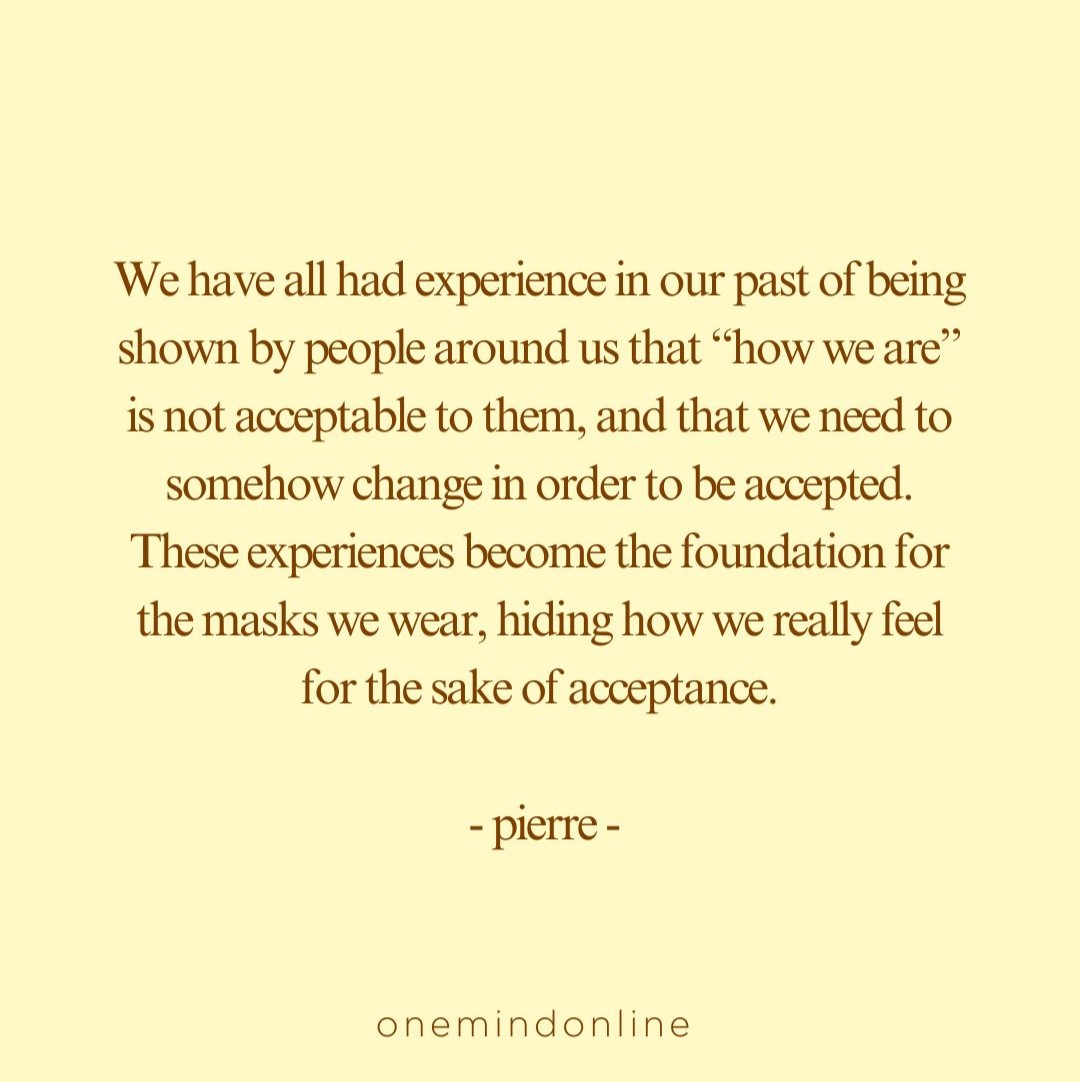
We have all had experience in our past of being shown by people around us that “how we are” is not acceptable to them, and that we need to somehow change in order to be accepted. These experiences become the foundation for the masks we wear, hiding how we really feel for the sake of acceptance.
Byron Katie’s suggestion for us today is that when each of us becomes the primary source of our own sense of acceptance, approval and appreciation, we free ourselves from the need to seek external validation.
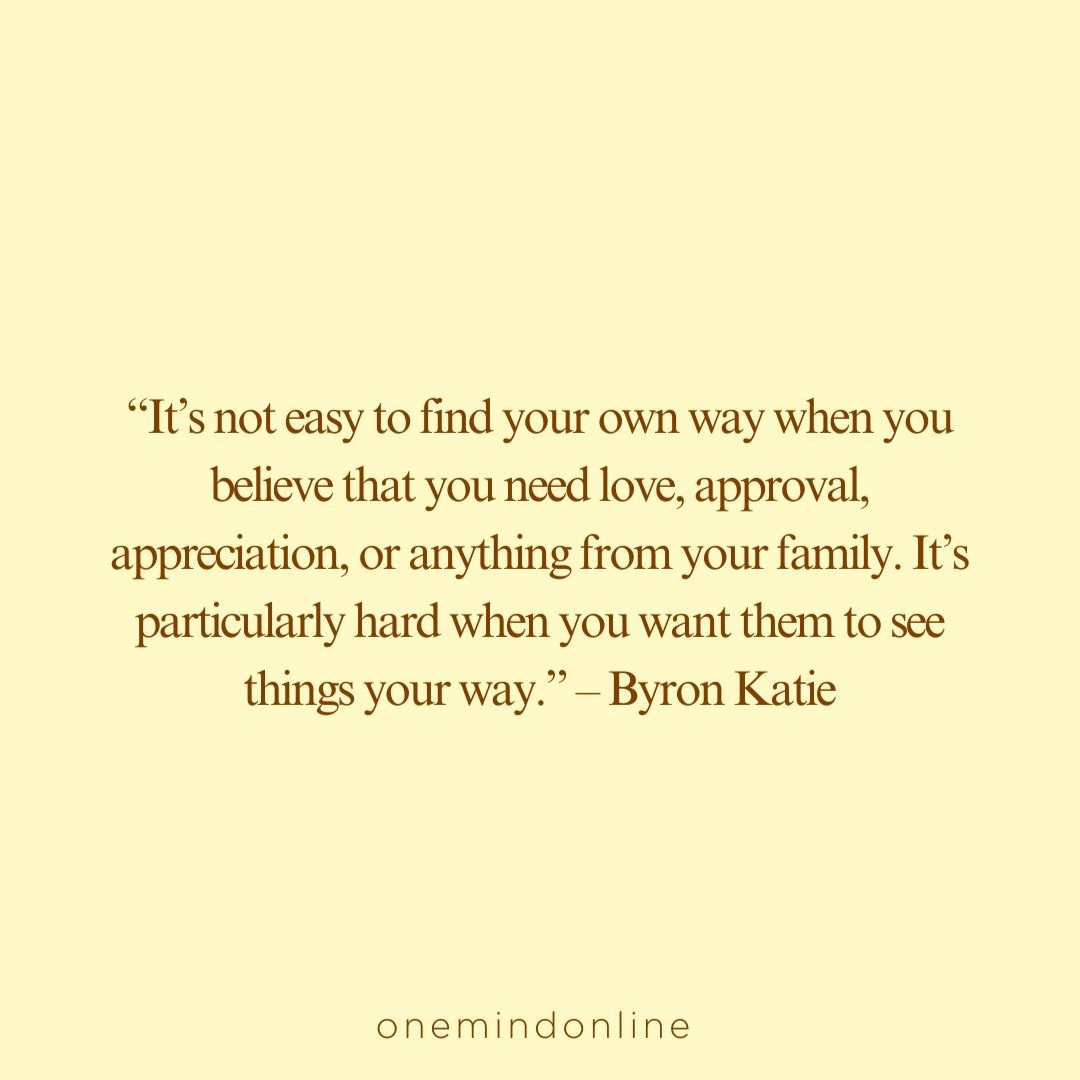
“It’s not easy to find your own way when you believe that you need love, approval, appreciation, or anything from your family. It’s particularly hard when you desperately want them to see things your way.” – Byron Katie
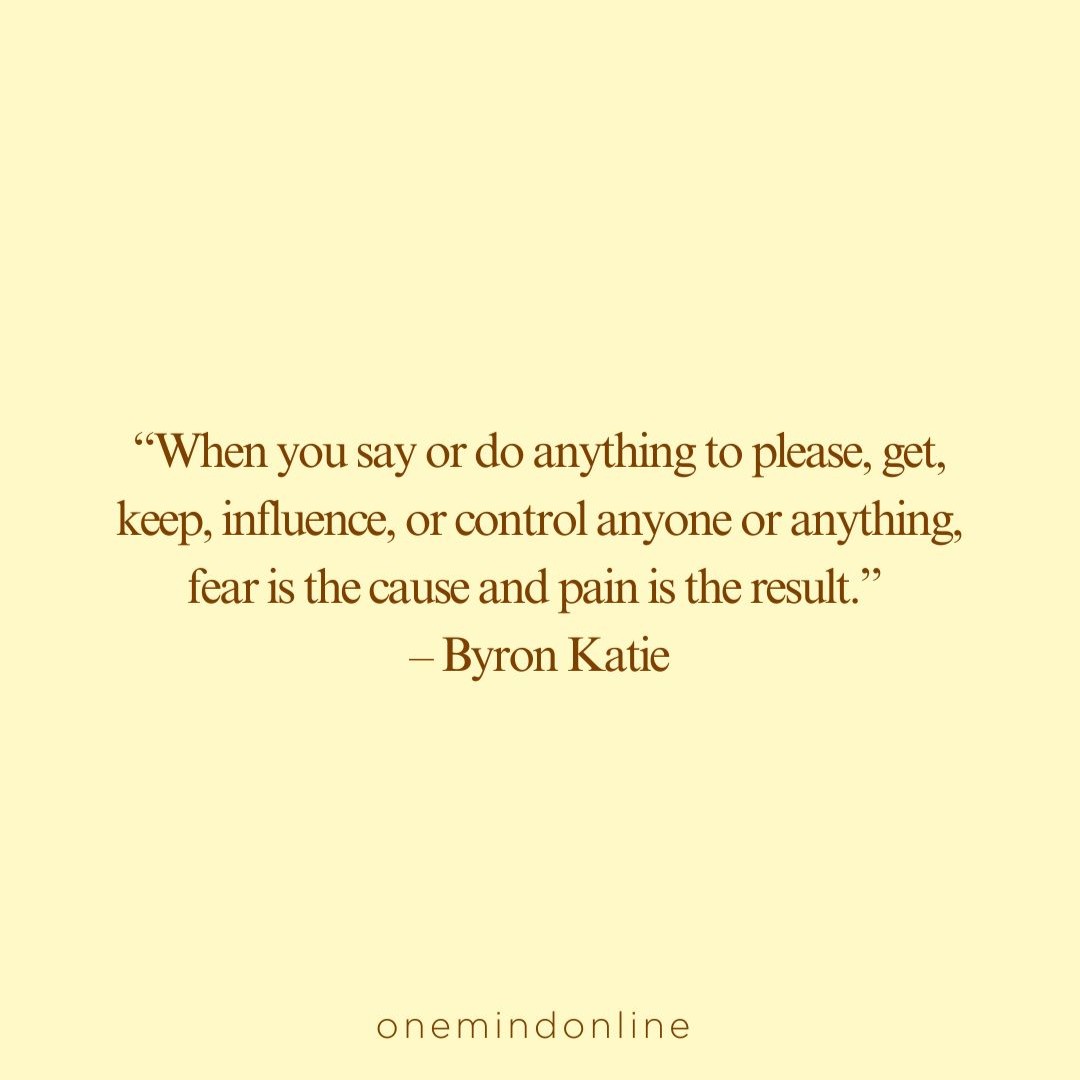
“When you say or do anything to please, to get, to keep, to influence, or to control anyone or anything, fear is the cause of this behaviour and pain is always the result.” – Byron Katie
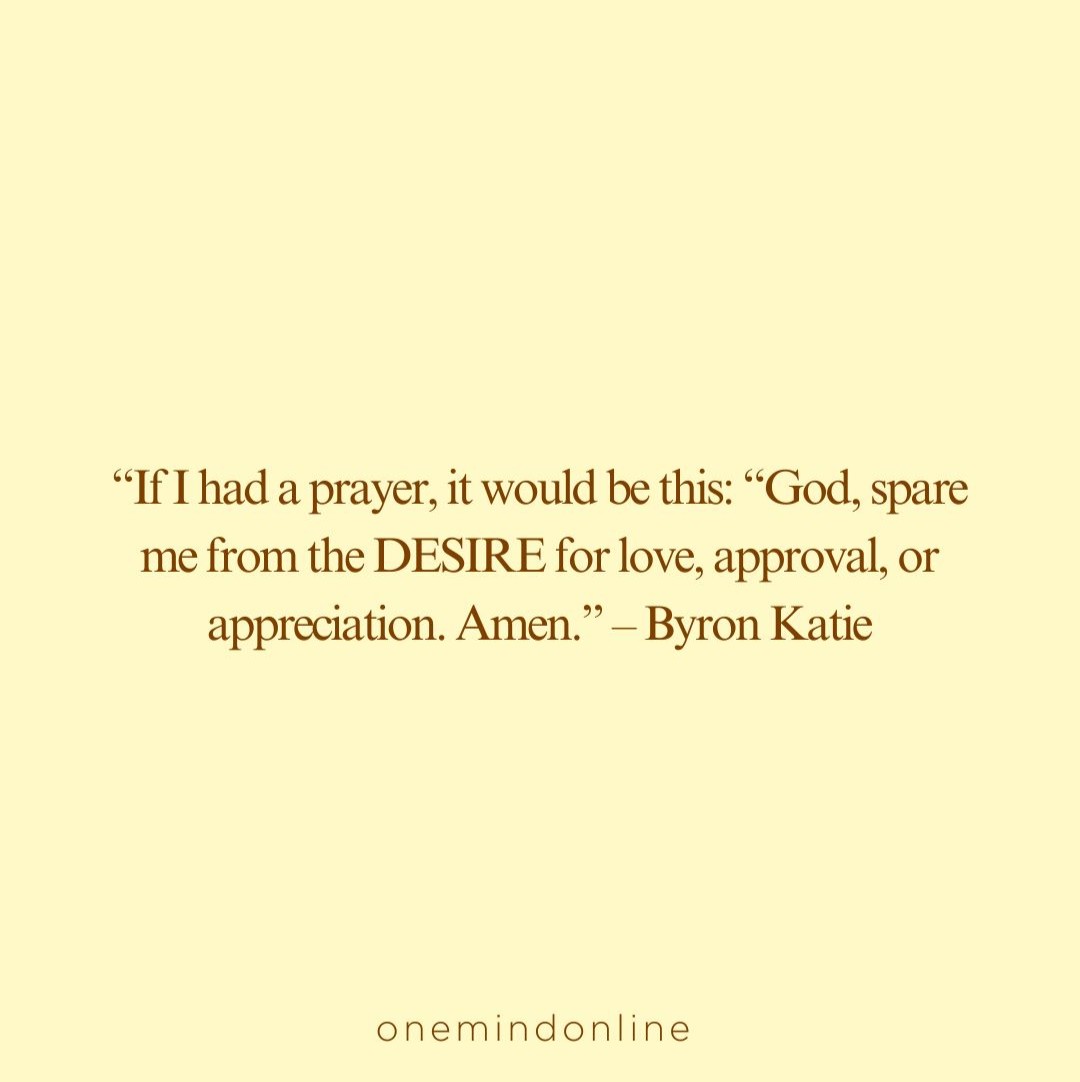
“If I had a prayer, it would be this: “God, spare me from the DESIRE for love, approval, or appreciation. Amen.” – Byron Katie
It is human nature to want to fit in, after all in human history if your tribe kicked you out, you were unlikely to survive on your own.
Even in the modern world that we live in today our bodies still remember this ancient truth, and it’s natural to feel fear when you sense rejection, and to incur deep wounds from these experiences.
Your work is to take on the task of BEING the acceptance that your wounded parts crave. You can reach out to the parts of yourself that have suffered shame, guilt and fear of abandonment and say, “I AM the one who is here to hold you. I AM the one who is here to love you. And I AM never pushing you away again.”
“Do you want to meet the love of your life? Look in the mirror.” – Byron Katie
There is – of course – nothing wrong with enjoying it deeply when we receive love, approval or appreciation from the people around us. Our body chemistry shows that we are at our absolute BEST when we are in healthy relationships.
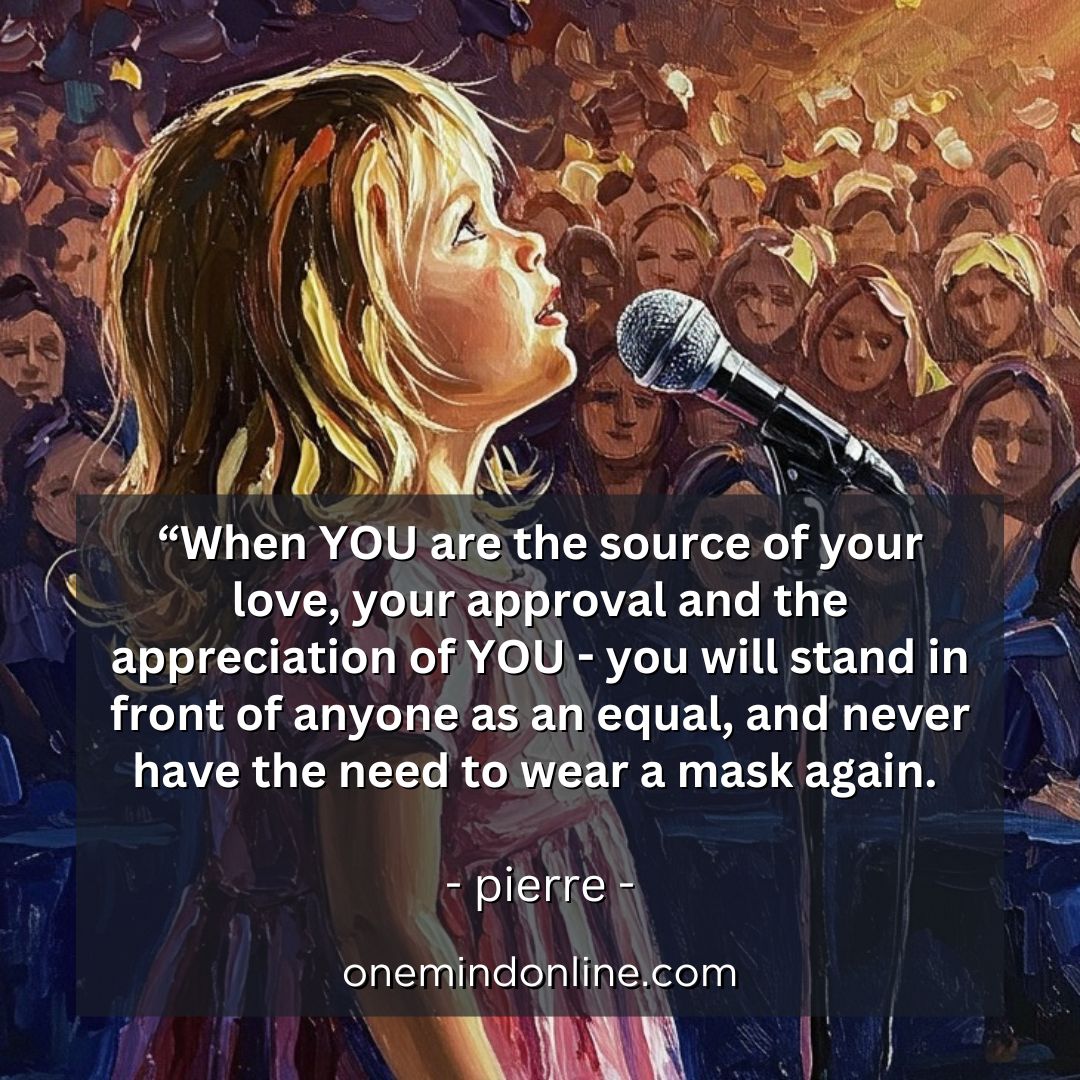
But when YOU are the source of your love, your approval and the appreciation of YOU, you will stand in front of anyone as an equal, and never have the need to wear a mask again.
Consider these guiding mantras for self-reflection:
- “I cultivate self-compassion as a foundation for growth.”
- “My value is intrinsic, not dependent on external validation.”
- “I am worthy of my own love and acceptance, unconditionally.”
- “I release the need to please others at the expense of being myself.”
Let’s shed the masks that no longer serve us and step into the fullness of who we are. Let go of the need to prove yourself to others. Embrace your authenticity. You are enough, just as you are.
Join us for today’s journey and see if perhaps there is a mask that you have outgrown now.
– pierre –
Today’s LIVE meditation is: The masks we wear.
Today’s LIVE meditation
https://youtu.be/QkC9Bu99sgM 2025
https://youtu.be/9yV6SERrtJg 2024
https://youtu.be/bMZAKbSa96A 2023
https://youtu.be/nnFUjfu2AI0 2022
Practice the “Daily Dose”
Let’s put it into practice! Choose what works for you – daily, once a week or whenever inspiration strikes. Putting pen to paper wires the neural pathways that will create your new habits.
1 – Affirmation
Write down your favourite affirmation on a sticky note and place it somewhere that you’ll be able to see it the whole day.
- “I cultivate self-compassion as a foundation for growth.”
- “My value is intrinsic, not dependent on external validation.”
- “I am worthy of my own love and acceptance, unconditionally.”
- “I release the need to please others at the expense of being myself.”
2 – A moment of reflection
Use today’s question as a journal prompt. If you don’t have the time to sit down and write, just take a moment to reflect on your response.
Life Without Masks: Imagine walking into a room full of people whose opinions used to matter deeply to you – but this time, you’re not performing, editing, or bracing for their reaction. You’re just… you, because your own acceptance of yourself has become more valuable to you than anyone else’s validation. What shifts in your posture, your voice, the things you’re willing to say? Now picture carrying that same freedom into your everyday life, where no one’s approval determines whether you’re enough. What becomes possible for you that wasn’t before? Describe the person who emerges when they stop shrinking to fit other people’s comfort.
3 – Quotes to share
Send a quote to someone who needs it, or share them all on social media to spread the good vibes!
4 – Q&A for deeper learning
Read through the questions and answers and write down at least one “aha moment” that clicked for you.
Q1. What does it mean to “wear a mask” in relationships?
Wearing a mask refers to hiding your authentic thoughts, feelings, and behaviours in order to gain acceptance from others. It’s when you present a version of yourself that you think others want to see, rather than showing up as who you truly are. This often involves suppressing parts of your personality, agreeing when you disagree, or changing your behavior to fit in or avoid conflict.
Q2. Why do we develop these masks in the first place?
We develop masks as a survival mechanism based on past experiences where we received messages that our authentic selves weren’t acceptable. From childhood onward, we learn that certain behaviours, emotions, or aspects of our personality lead to rejection, criticism, or abandonment. Our brains, still wired with ancient survival instincts, interpret social rejection as a threat to our survival, so we create masks to protect ourselves from this perceived danger.
Q3. Isn’t it natural to want approval from others? Why should we try to eliminate this desire?
While seeking connection and positive relationships is natural and healthy, the problem arises when we become dependent on external validation for our sense of self-worth. Byron Katie’s suggestion to be “spared from the desire” for approval isn’t about becoming cold or disconnected – it’s about freeing ourselves from the desperate need that keeps us trapped in inauthentic patterns. When we’re not dependent on others’ approval, we can enjoy their love and appreciation without compromising our authentic selves.
Q4. How can I become “the source of my own acceptance”?
Becoming your own source of acceptance involves developing a loving, compassionate relationship with yourself. This means practicing self-compassion, treating yourself with the same kindness you’d show a good friend, and learning to validate your own feelings and experiences. It involves inner work like talking to your wounded parts with love, acknowledging your intrinsic worth, easily forgiving yourself for mistakes you’ve made, and making a commitment to never abandon yourself for others’ approval.
Q5. What if being authentic means losing important relationships?
This is a common fear, but consider this: relationships built on masks aren’t actually intimate or sustainable. When you show up authentically, you give others permission to do the same, often deepening your connections. Some relationships may change or end, but this makes space for relationships based on genuine acceptance and love. Remember, losing relationships that require you to be inauthentic isn’t actually a loss – it’s freedom.
Q6. I feel like every time I show up authentically, people recoil from me. Why does this happen?
This is worth sitting with carefully, because authenticity and reactivity can feel identical in the moment but come from very different places. Ask yourself: is the first thing that comes out of you truly your authentic voice, or is it your wounding reacting to feeling triggered? A sharp comment born from an old hurt isn’t necessarily “the real you” – it may just be pain looking for an exit. It’s natural to want the people around us to hold space for our vulnerability. But healing is ultimately our own responsibility, not something we can outsource to everyone we encounter – especially since they’re often carrying their own wounds too. As the saying goes, “if you don’t heal your wounds, you’ll bleed over people who didn’t hurt you.” So if authenticity keeps causing people to pull away, it may be less about being “too real” and more about which part of you is doing the talking – the grounded self, or the unhealed one still asking to be seen.
Q7. Is it really possible to never need external validation again?
While completely eliminating the human need for connection and positive feedback may not be realistic or even desirable, you can dramatically reduce your dependence on external validation. The goal isn’t to become isolated or indifferent to others’ responses, but to develop such a strong foundation of self-acceptance that others’ opinions become interesting information rather than determining factors in your self-worth. You can enjoy appreciation when it comes while remaining centered in your own sense of value.