

“Your Daily Dose” is a quick two minute read packed with bite-sized wisdom from all the great teachers. But you could also choose to turn it into something more… a powerful daily practice for personal growth. Give it a try!
A message from today’s meditation:
It’s Monday!
We’re at the start of a new week, let’s see what this week has in store for us…
Our teacher for this week is Alan Watts. He was an English writer, speaker, and self-styled “philosophical entertainer”, known for interpreting and popularizing Buddhist, Taoist, and Hindu philosophy for a Western audience. He wrote more than 25 books and articles on religion and philosophy, and his 1957 book “The Way of Zen,” was one of the first best selling books on Buddhism.
So as we look into the week ahead, Alan Watts has some guidance for us –
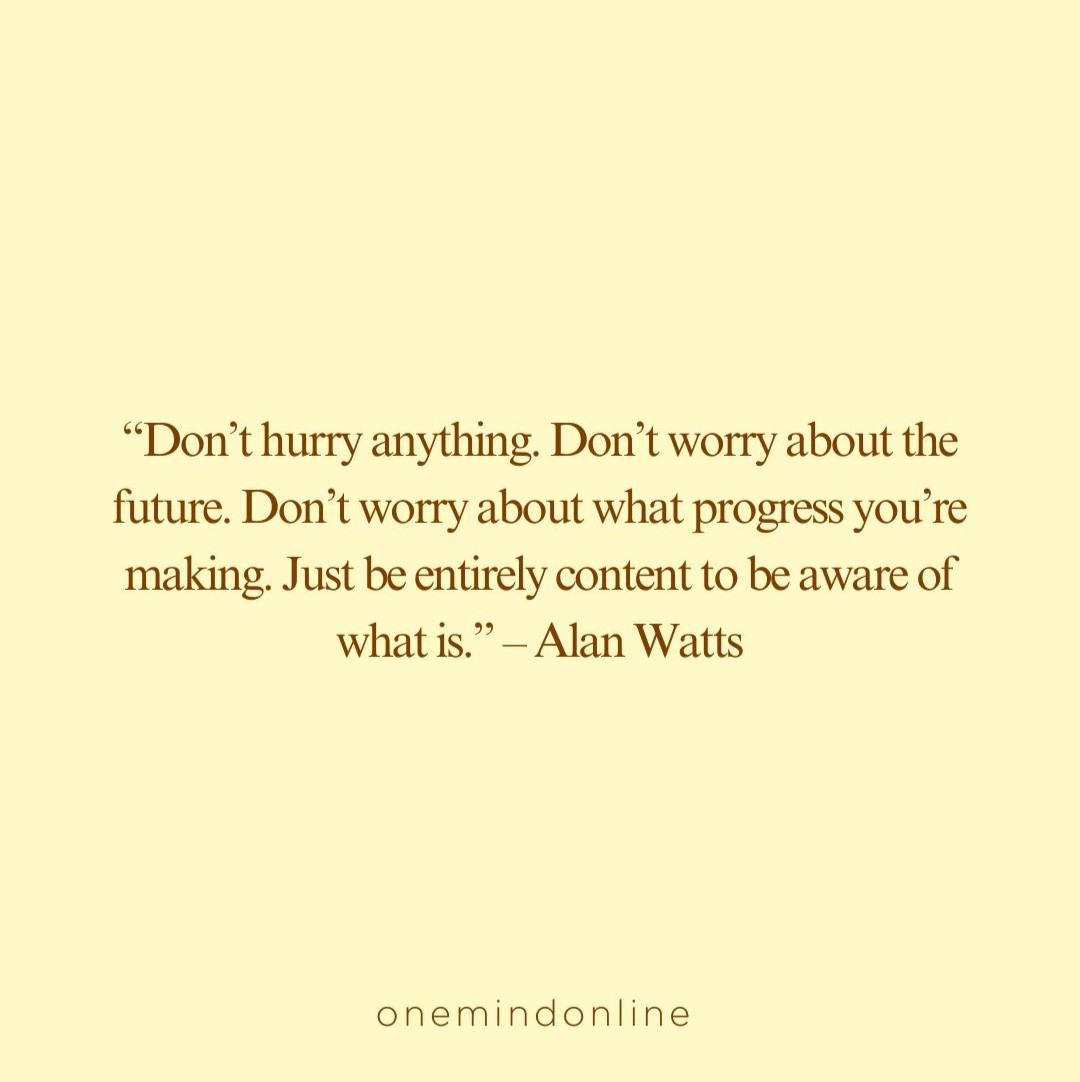
“Don’t hurry anything. Don’t worry about the future. Don’t worry about what progress you’re making. Just be entirely content to be aware of what is.” – Alan Watts
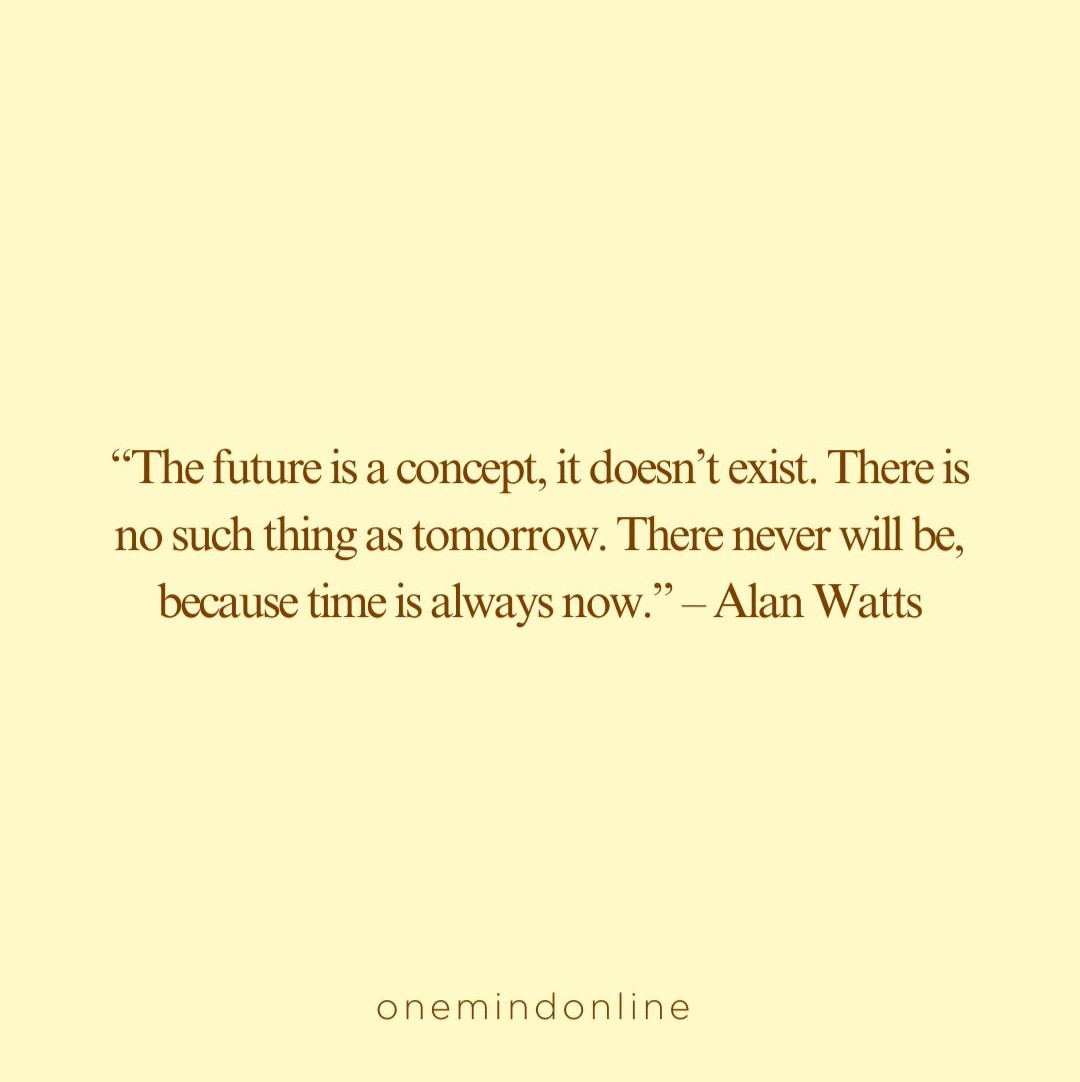
“The future is a concept, it doesn’t exist. There is no such thing as tomorrow. There never will be, because time is always now.” – Alan Watts
Hmmm…
So, how do we interpret what he’s saying when it seems that he suggests we don’t plan for the future at all.
I can only share with you how it works for me:
When I pull a pen and a piece of paper closer to write down some “goals” or an “intention” for the day, the week, or “my future”, in that moment I am still being present. What my present moment activity then is, is to look into the future and create a picture, a map so to speak of what I’d like to create.
And then when I put down the pen and piece of paper, I remind myself that the map is not the actual territory. I can’t place my feet on the map, on the piece of paper. I can only place my feet right here in this present moment and the map – my goals – they are what help me decide where to place my attention in this present moment, where to focus and direct my energy right now.
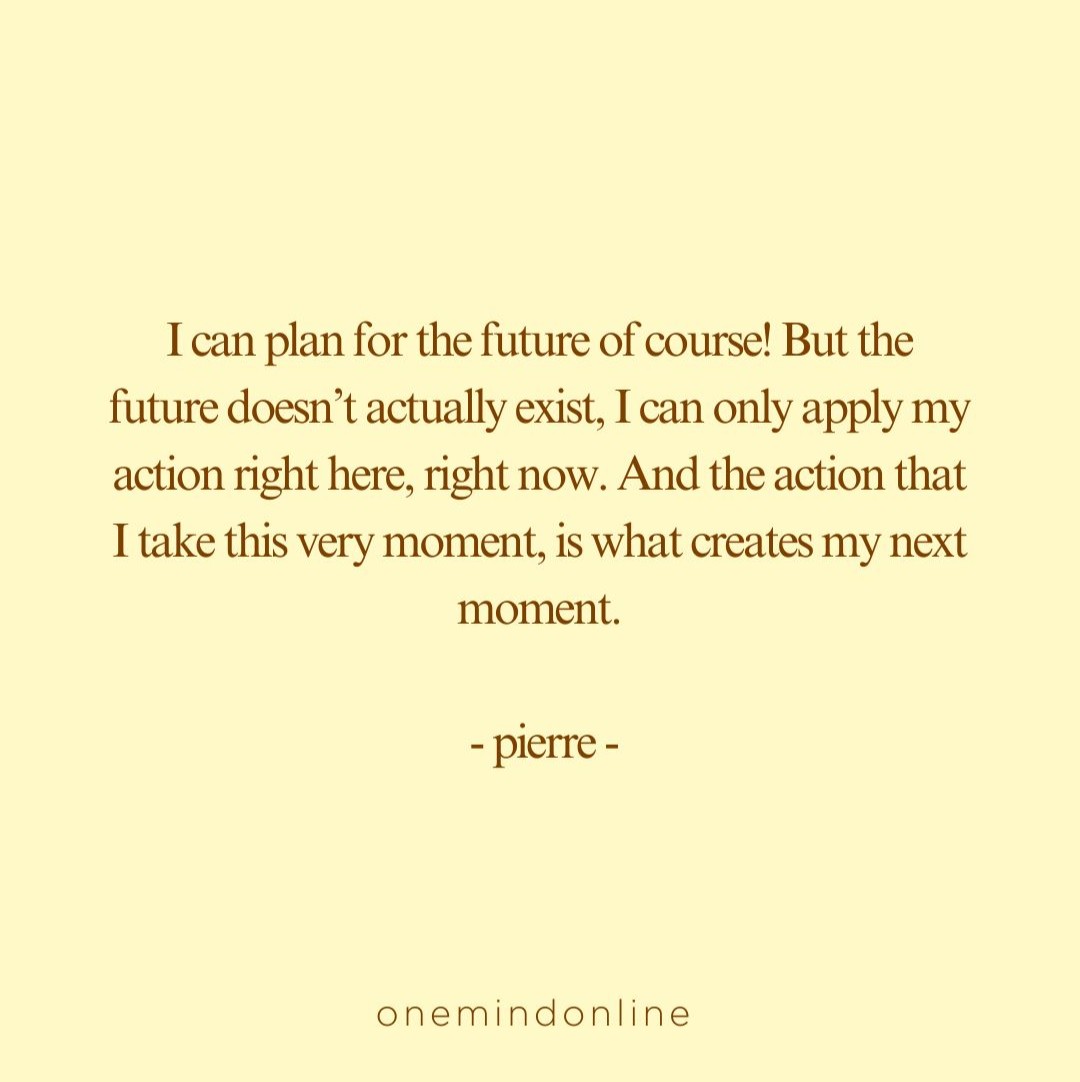
I can plan for the future of course! But the future doesn’t actually exist, I can only apply my action right here, right now. And the action that I take this very moment, is what creates my next moment.
So here are some supporting thoughts from Alan Watts on how to be present and create at our highest potential:
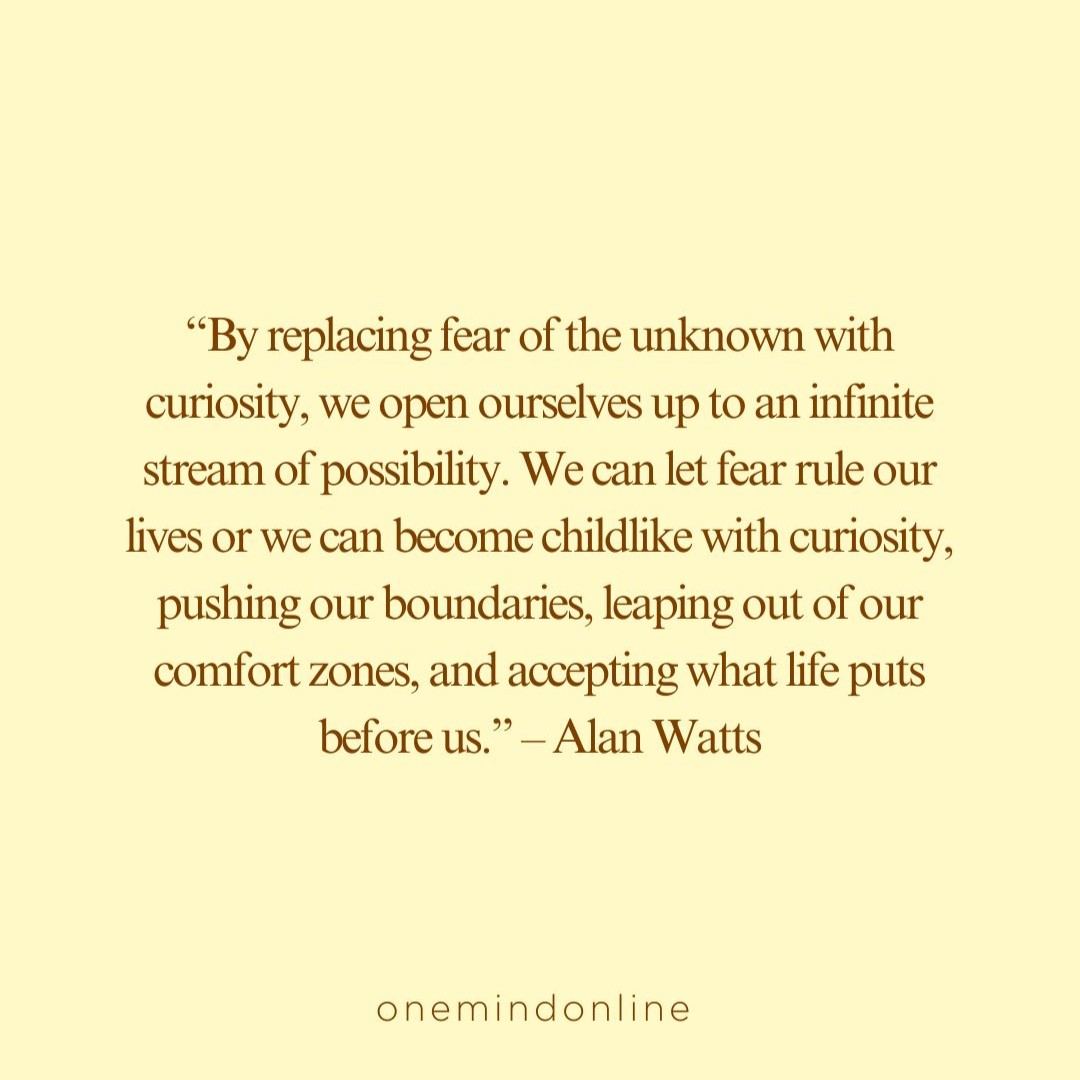
“By replacing fear of the unknown with curiosity, we open ourselves up to an infinite stream of possibility. We can let fear rule our lives or we can become childlike with curiosity, pushing our boundaries, leaping out of our comfort zones, and accepting what life puts before us.” – Alan Watts
“Life is not a problem to be solved. Life is an experience to be had.” – Alan Watts
“We thought of life by analogy with a journey, a pilgrimage, which had a serious purpose at the end, and the thing was to get to that end, success or whatever it is, maybe heaven after you’re dead. But we missed the point the whole way along. It was a musical thing and you were supposed to sing or to dance while the music was being played.” – Alan Watts
“You must not be afraid of playing wrong notes. Just forget it, play it wrong! But play!” – Alan Watts
The future is not a thing that exists, NOW is the only existence we have. Yet the eternal present moment is always in motion, and we will meet an older version of ourselves year after year. The only way that we can take care of the older version of ourselves – who we will inevitably meet – IS by doing our best right now.
So of course we should do our best, but not do our best to get to some future finish line, because the song that rushes to its ending isn’t better… it’s incomplete… Let’s apply our best to participate in the invitation that life extends to us right now – the invitation to dance. The invitation to play at our hardest without fear of playing the “wrong” notes.
The surest way to guarantee that we never reach our full potential, is to not play at all, because we are scared of getting it “wrong”.
Step into your week with curiosity:
- Embrace the Imperfect: “I release my fear of wrong notes and trust myself to play fully in this moment.”
- Live in the Present: “I pour my attention into the opportunities that this moment makes available to me.”
- Trust the Process: “I have faith that everything unfolds as it should, and that all I need to do, is do my best from moment to moment.”
- Play with Life: “Life is not a problem I must solve but an experience I get to have. I am dancing to life’s music, not racing to the final note.”
Are you ready to unleash yourself upon this week with a spirit of curiosity and playfulness!? Let’s dance to the rhythm of life together.
Have a playful week peeps!
– pierre –
Today’s LIVE meditation is: Jumpstart the week!
Today’s LIVE meditation
https://youtu.be/vIDoI7w2htc 2025
https://youtu.be/et_MAcW98AM 2024
https://youtu.be/OSUnLCaZq_I 2023
https://youtu.be/mMxqudgCfng 2022
Practice the “Daily Dose”
Let’s put it into practice! Choose what works for you – daily, once a week or whenever inspiration strikes. Putting pen to paper wires the neural pathways that will create your new habits.
1 – Affirmation
Write down your favourite affirmation on a sticky note and place it somewhere that you’ll be able to see it the whole day.
- Embrace the Imperfect: “I release my fear of wrong notes and trust myself to play fully in this moment.”
- Live in the Present: “I pour my attention into the opportunities that this moment makes available to me.”
- Trust the Process: “I have faith that everything unfolds as it should, and that all I need to do, is do my best from moment to moment.”
- Play with Life: “Life is not a problem I must solve but an experience I get to have. I am dancing to life’s music, not racing to the final note.”
2 – A moment of reflection
Use today’s question as a journal prompt. If you don’t have the time to sit down and write, just take a moment to reflect on your response.
Playing The Wrong Notes: Write about a time you “played a wrong note” – made a mistake, failed, or did something imperfectly. Looking back, what did that experience teach you? How did it contribute to the music of your life in ways you couldn’t have predicted?
3 – Quotes to share
Send a quote to someone who needs it, or share them all on social media to spread the good vibes!
4 – Q&A for deeper learning
Read through the questions and answers and write down at least one “aha moment” that clicked for you.
Q1: If the future doesn’t exist, why should I bother setting goals at all?
Because a goal is less a claim on the future, and more a tool for the present. When you write down an intention, you’re doing something in this very moment: sketching a map of where you’d like to head. But a map isn’t the territory, and you can’t stand on it. You can only stand here, and the real value of a goal is in what it tells you about where to place your attention and energy right now. A goal that has you spend this hour practicing, this afternoon making a difficult call, or this evening resting so you can show up tomorrow is doing its job, whether or not the outcome you imagine ever arrives. Seen this way, goals don’t pull you out of the present moment. They give the present moment direction, so that the action you take now, which is the only action you ever can take, shapes the moment that follows.
Q2: How can I plan responsibly for things like retirement or my children’s education if I only focus on the present?
Focusing on the present doesn’t mean ignoring the future. It means recognizing where your power to shape it actually lives. It’s true that year after year we will meet an older version of ourselves, and it’s true that this person will need to be cared for, whether that means a secure retirement, a child’s education, or simply good health and peace of mind. But the best way to take care of your future self is to do your best now. That older version of you can’t be reached directly, because the future is never something we can step into ahead of time. Each well-made choice today becomes the foundation of the next moment, and those moments add up to the future you eventually arrive in. In that sense, planning for the people you will become isn’t opposed to living in the present. It is one of the most caring things you can do with the present moment.
Q3: What does “playing wrong notes” actually mean in practical life terms?
Playing wrong notes means accepting that anything you do will contain some imperfection. Even the finest musicians hit a wrong note now and then, but because the music keeps moving the performance is judged on the whole, not on one slip. In everyday life, this means sending the email even though the wording isn’t flawless, starting the business, the painting, or the difficult conversation before you feel fully ready, and speaking up in the meeting even if your voice wobbles. The real danger isn’t the wrong note itself but the hesitation that comes from waiting to be perfect before you begin, because if perfection is the entry requirement, you will never play a single note. A wrong note can be corrected, learned from, or even woven into the melody, but a note never played teaches you nothing and adds nothing to the music. So the invitation is simply to begin, imperfectly and with curiosity, and to trust that the music of your life is made by playing, not by waiting.
Q4: How do I shift from fear to curiosity when I’m genuinely anxious about something?
The shift doesn’t require you to stop feeling afraid, because the requirement is not that you never get scared. The requirement is that you trust you can take the next step even while you’re scared. Fear and curiosity can exist in the same moment, so let the anxiety be there without fighting it or treating it as a verdict on whether you should continue. Then offer yourself some gentle encouragement, the way you would speak to a friend standing at the edge of something new: “I know you can do this,” or “Don’t be afraid to play a few wrong notes.” Keep the next step small enough to feel doable, and take it while your legs are shaking if you need to. Each time you act while afraid, you collect evidence that you are more capable than your fear suggested, and THAT evidence is what steadily turns the unknown from a threat into an invitation.
Q5: If I’m “supposed to dance while the music plays,” what do I do when life feels heavy and dancing feels impossible?
In Watts’ analogy, he reminds us that in life, just like in dancing, the point is not to get to the end but to participate in the process. The song that rushes to its ending isn’t a better song. It’s an incomplete one, and the slow, heavy passages are part of the music, not interruptions to it. Of course, there are heavier moments when we can’t seem to find our rhythm at all, when the steps feel clumsy or the music feels out of reach. In those moments, we can sit down for a bit and rest, and there is no shame in that. Rest is part of the dance, and you can lean on others while you catch your breath. But when you’re ready, you have to come back to the question, “How do I participate in this life?” The answer doesn’t need to be graceful or joyful. It might be getting out of bed, taking a slow walk, sitting honestly with your grief, or doing the one small thing today asks of you. Even a barely perceptible sway counts, because the invitation was never to perform perfectly. It was to stay in the music, rather than waiting for it to be over.
Q6: How do I know if I’m truly living in the present or just using “being present” as an excuse to avoid reality?
True presence includes an honest assessment of what this moment requires. Being present isn’t the same as “chilling out”, and it isn’t a license to drift. Watts invites us to be aware of “what is”, and what is includes the unpaid bill, the conversation we’ve been putting off, and the plan that needs making. So the test is to ask yourself, “What does this moment actually ask of me?” Sometimes the honest answer is rest, stillness, or simply noticing your breath. Other times it’s making a phone call, sitting down with your budget, apologizing, or asking for help. If “I’m just living in the moment” always seems to point toward whatever is easiest, or conveniently away from something uncomfortable, that’s a sign you may be avoiding the present rather than meeting it. Avoidance is a kind of absence, because part of you is elsewhere, dodging what is right in front of you. Real presence is willing to look at all of reality, including the parts we’d rather not see, and to respond with the action that fits. In that sense, taking the difficult next step is one of the fullest ways of being here.
One thought on “You must not be afraid of playing wrong notes. Even if you play it wrong… just play!”
Comments are closed.