
“Your Daily Dose” is a quick two minute read packed with bite-sized wisdom from all the great teachers. But you could also choose to turn it into something more… a powerful daily practice for personal growth. Give it a try!
A message from today’s meditation:
Today’s message from Hermann Hesse speaks of how past, future and the whole concept of time, all come together in this present moment.
Our mind struggles with this though. Our analytical mind’s habit is to pull everything apart into separate components and become frazzled as we bounce around between our attachment to the past and our fear about the future.
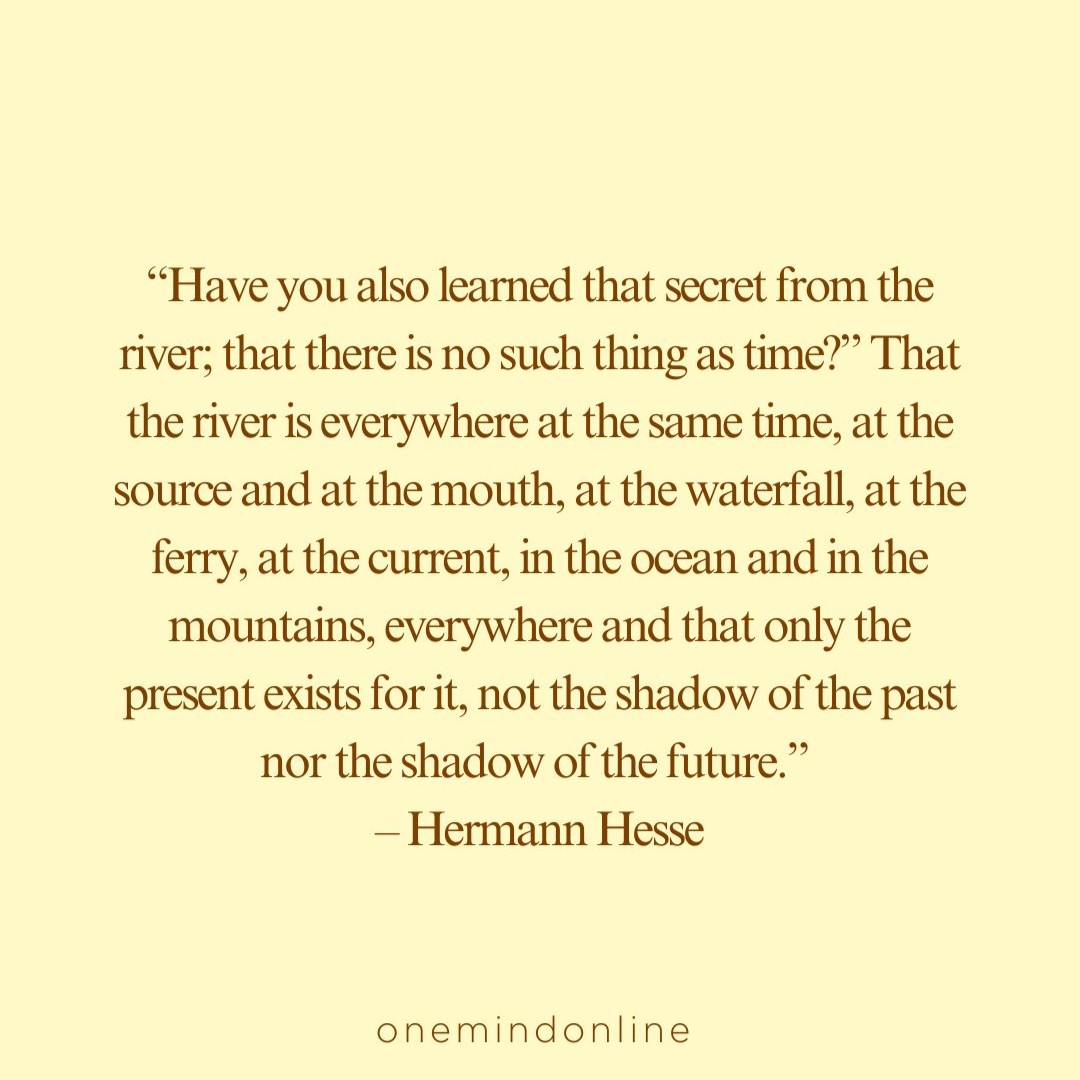
“Have you also learned that secret from the river; that there is no such thing as time?” That the river is everywhere at the same time, at the source and at the mouth, at the waterfall, at the ferry, at the current, in the ocean and in the mountains, everywhere and that only the present exists for it, not the shadow of the past nor the shadow of the future.” – Hermann Hesse
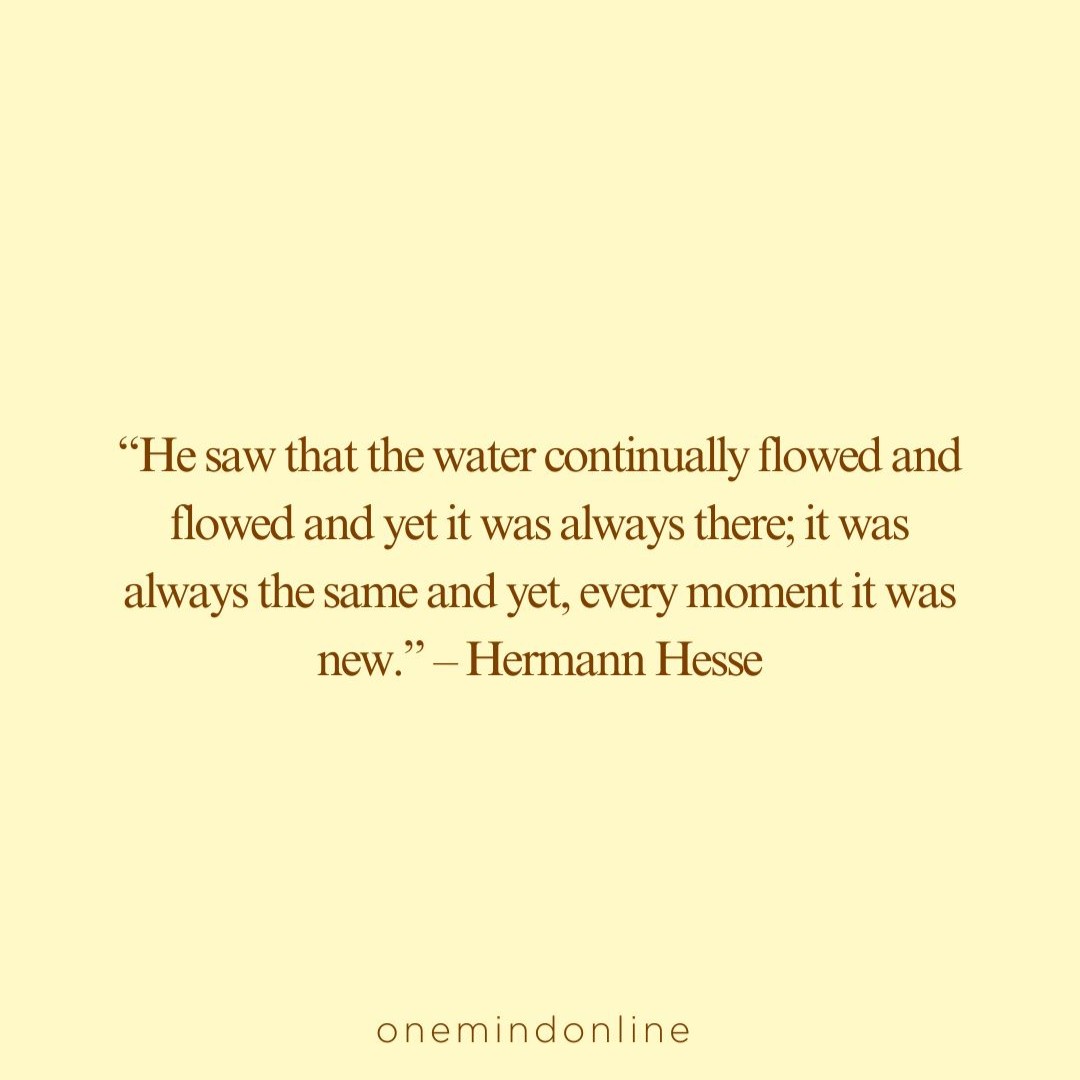
“He saw that the water continually flowed and flowed and yet it was always there; it was always the same and yet, every moment it was new.” – Hermann Hesse
“This day will never come again and anyone who fails to eat and drink and taste and smell it will never have it offered to him again in all eternity. The sun will never shine as it does today… but you must play your part and sing a song, one of your best.” – Hermann Hesse
Dropping from your head into your body and taking a few moments to taste, and smell, and feel, and see, is a grounding experience because it pulls all of your thinking from ruminating in the past and future into the now. When you’re busy experiencing the sensations of your body, then you’re not stuck in your head.
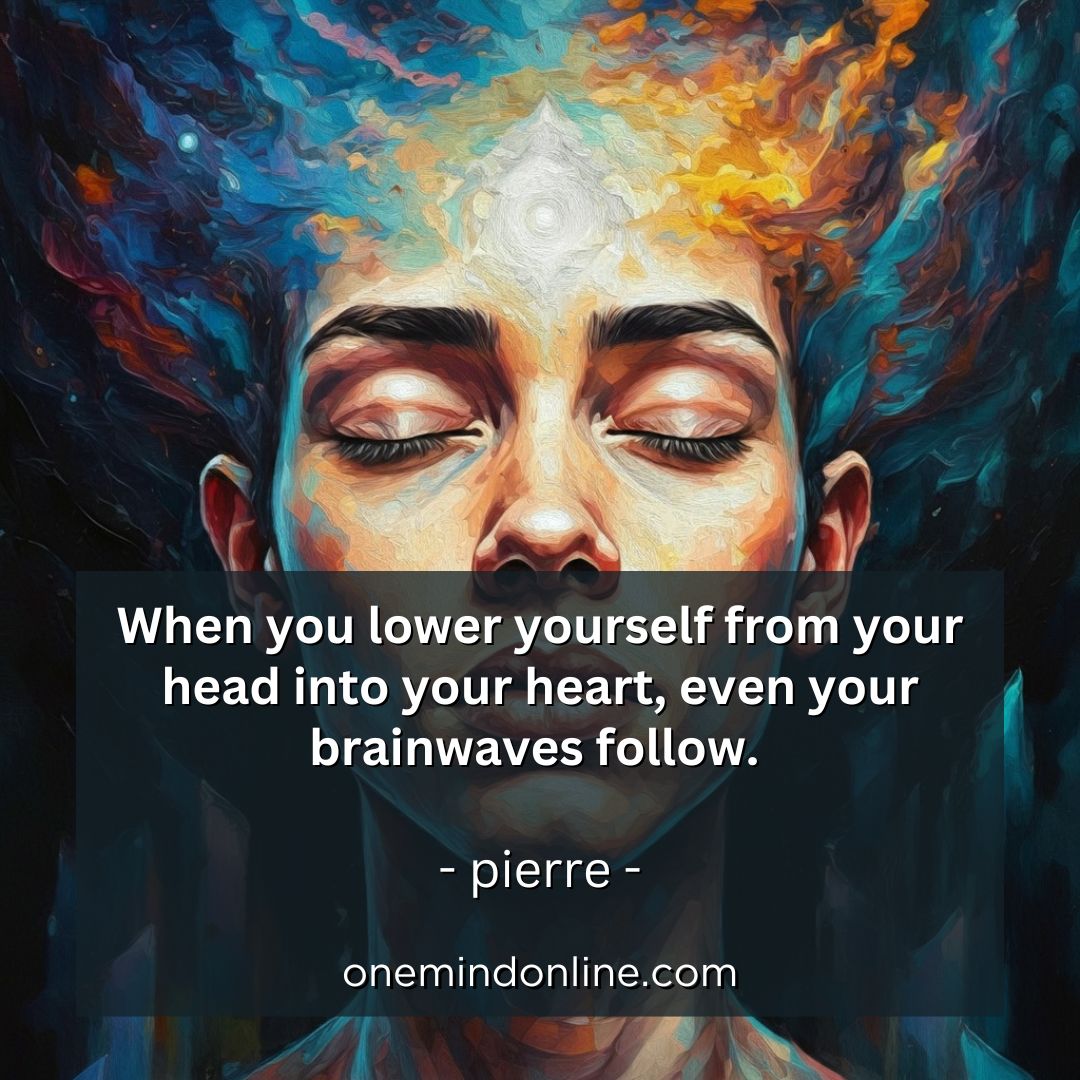
When you lower yourself from your head into your heart, even your brainwaves follow, from high Beta, to Beta, to Alpha and perhaps even lower into Theta. This is always a refreshing and restful experience for your brain. As you emerge from a few minutes of breathing and feeling, your cluttered white board is wiped clean, and you become available to the conscious choice of what to pay attention to next.
A few thoughts for grounding in presence:
- “I am here. I am now.”
- “I choose peace and clarity.”
- “I trust the wisdom of my heart.”
- “My body is my anchor to the present.”
- “I release the grip of the past and future.”
So, let’s embrace the wisdom of the river and the invitation to presence. Let us savor the taste of this moment, inhale its fragrance, and feel its energy coursing through our veins. In doing so, we discover a life that is rich, meaningful, and eternally new.
Join us for an embodied experience of your senses, and have yourself an awesome weekend!
– pierre –
Today’s LIVE meditation is: Come to your senses.
Today’s LIVE meditation
https://youtu.be/0epEn3o2f_A 2025
https://youtu.be/HVh4MHWCKL8 2024
https://youtu.be/BKJaNJDLssI 2023
https://youtu.be/4rg8KCDMJHM 2022
Practice the “Daily Dose”
Let’s put it into practice! Choose what works for you – daily, once a week or whenever inspiration strikes. Putting pen to paper wires the neural pathways that will create your new habits.
1 – Affirmation
Write down your favourite affirmation on a sticky note and place it somewhere that you’ll be able to see it the whole day.
- “I am here. I am now.”
- “I choose peace and clarity.”
- “I trust the wisdom of my heart.”
- “My body is my anchor to the present.”
- “I release the grip of the past and future.”
2 – A moment of reflection
Use today’s question as a journal prompt. If you don’t have the time to sit down and write, just take a moment to reflect on your response.
Your Mind’s Time Prison: Reflect on the ways your analytical mind pulls you away from the present moment. What specific thoughts about the past tend to hook you? What future worries consume your mental energy? Write about a time when being stuck in your head caused you to miss something beautiful or meaningful that was happening right in front of you. How might you gently redirect your attention when you notice yourself caught in this mental ping-pong game?
3 – Quotes to share
Send a quote to someone who needs it, or share them all on social media to spread the good vibes!

4 – Q&A for deeper learning
Read through the questions and answers and write down at least one “aha moment” that clicked for you.
Q1: What does it actually mean to “drop from your head into your heart”?
“Dropping from your head into your heart” describes a shift away from the mental loops we so easily get trapped in – the ruminating, the replaying of old stories, the same well-worn thoughts cycling through old programming again and again. This kind of thinking keeps us tethered to the past or anxious about the future, running on autopilot rather than truly living. An embodied experience interrupts that loop. When you drop into your heart, you open the door to what this exact moment makes available to you – the texture of the air, the warmth of a breath, the quiet aliveness of simply being here. It’s not about silencing the mind, but about stepping out of its old grooves long enough to meet reality fresh, open to the potential that this moment makes available.
Q2: How can I tell if I’m living too much in my head versus being present?
Signs you’re stuck in your head include feeling anxious about the future, ruminating about past events, difficulty enjoying simple pleasures, feeling disconnected from your body, and experiencing mental fatigue. When you’re present, you feel more grounded, aware of your surroundings, and able to respond rather than react to situations.
Q3: Is it realistic to live in the present moment all the time?
No, and understanding why actually frees you from the pressure of trying. Your brain is wired for energy efficiency, and the most efficient thing it can do is run on old, well-practiced patterns that don’t require heavy conscious thought – that’s simply how it’s built. The problem is that many of us have built patterns in the past around fighting tigers that aren’t actually in the room anymore: old fears, old threats, old survival responses looping on autopilot. Instead of saving energy, we end up spending it all re-fighting battles that have nothing to do with what’s actually happening right now. So… our brain architecture says that being “present” a hundred percent of the time is not actually possible simply because it consumes too much energy, but that we can use our moments of present awareness to build the new patterns that will better serve this present moment of our lives – rather than the one your nervous system rehearsed years ago.
Q4: What’s the scientific basis for brainwaves changing when we become present?
When you shift from busy, analytical thinking into present-moment awareness, your brainwaves slow down – moving from high-beta, the frequency of stress and overthinking, into alpha and sometimes theta, the frequencies of relaxed awareness and deep calm. This isn’t just a pleasant side effect; it has real practical use. In these slower states, your nervous system downshifts out of fight-or-flight, giving your body a genuine chance to rest and repair. Your access to creativity and intuition also tends to open up, since alpha and theta states are associated with the kind of loose, associative thinking that produces insight rather than forced, effortful problem-solving. And because these slower frequencies clear out the mental clutter of rumination, you’re left with more available bandwidth to consciously choose what deserves your attention next – rather than defaulting to whatever old thought pattern happens to be loudest.
Q5: How can I use my body as an “anchor to the present” in practical situations?
Simple techniques include feeling your feet on the ground, taking three conscious breaths, noticing physical sensations without judgment, or engaging your senses (what can you see, hear, smell, taste, or touch right now?). These practices interrupt the mental loop of past-future thinking and bring you back to immediate experience.
Q6: What if I try to be present but my mind keeps wandering to worries and regrets?
This is completely normal and part of the human experience. The goal isn’t to stop thoughts but to notice when you’ve been carried away by them and gently return to the present. Think of it like training a puppy – you don’t get angry when it wanders off; you simply guide it back with patience and consistency.
Q7: How does living in the present moment actually improve my daily life?
There are countless ways presence improves daily life, but let’s focus on just one right now: your relationships. Without present awareness, you react to the people in your life from old patterns – which means, often without realizing it, you respond to the person in front of you as if they were the one who wounded you years ago. Presence is what interrupts that. It’s what allows you to meet what’s actually happening right now, with this person, in this moment, without the clutter of old hurts distorting what you see. This is how beautiful relationships are built – not by having fewer old wounds, but by being present enough to not project them onto the people who don’t deserve them. Without that presence, we keep repeating the past, again and again, with people who were never part of the original story.