
Below is a 2 minute read to put some sparkle in your day, or… plunge into these topics for a deeper understanding.
A message from today’s meditation:
What an amazing time to be alive! In the annals of human history, often thousands of years have passed by without much changing in the human story. We know well that it is completely different in our lifetime, where from one year to the next, change feels like it’s happening at the speed of light.
It can be rather hard to find our centre in the constantly increasing volume of information coming our way. And to remind ourselves that every piece of information produced, serves the creator of that information, an attempt to influence our opinion – whether it’s an article, a podcast or a product.
How then do we find clarity amongst all the noise?
“The glorification of busy will destroy us. Without space for healing, without time for reflection, without an opportunity to surrender, we risk a complete disconnect from the authentic self. We burn out on the fuels of willfulness, and eventually cannot find our way back to centre. And when we lose contact with our core, we are ripe for the picking by the unconscious media and other market forces. After all, consumerism preys on the uncentered. The farther we are from our intuitive knowing, the more easily manipulated we are. The more likely we are to make decisions and affix to goals that don’t serve our healing and transformation. To combat this, we have to form the conscious intention to prioritize our inner life. To notice our breath, our bodies, our feelings. To step back from the fires of overwhelm and remember ourselves. It may feel counter-intuitive in a culture that is speed-addicted, but the slower we move, the faster we return home.” – Jeff Brown
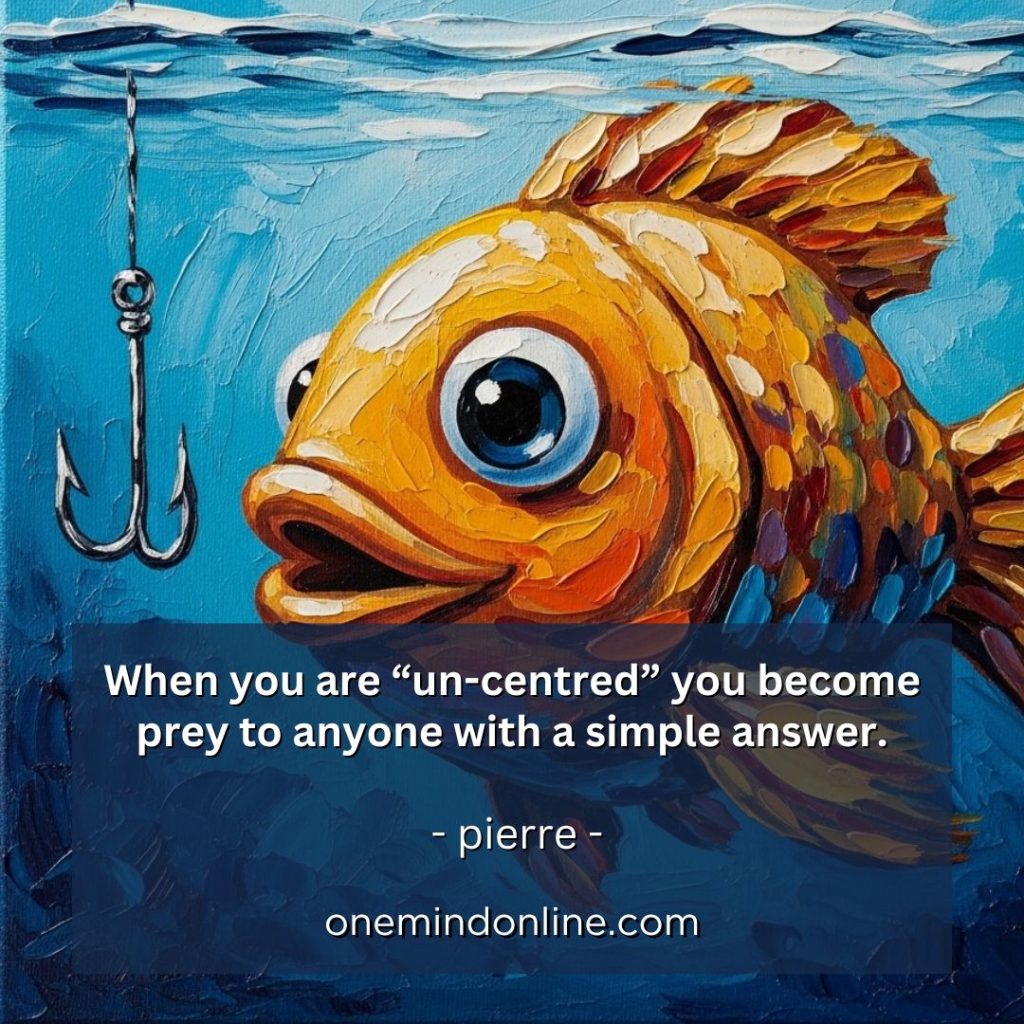
When you are “un-centred” you become prey to anyone with a simple answer whether it’s “here, buy this bling” or “here, go on this holiday” or “here, drink this brand of alcohol”… the products themselves are not “bad” but they are being marketed to our woundedness, our insecurities, which makes us easy targets when we feel overwhelmed. The only way to avoid these traps is to “step back from the fires of overwhelm” and find your centre again.
“It is important to grant yourself permission to wander as part of your spiritual journey. So often mischaracterized as lostness, there is a kind of immersion in the not knowing that is actually quite necessary if we are going to find our way home. So much information can come up when we are looking in no particular direction. By surrendering to the unknown, we create the space for a deeper knowing to emerge. In the heart of the not knowing, the paths that we are here to walk reveal themselves…” – Jeff Brown
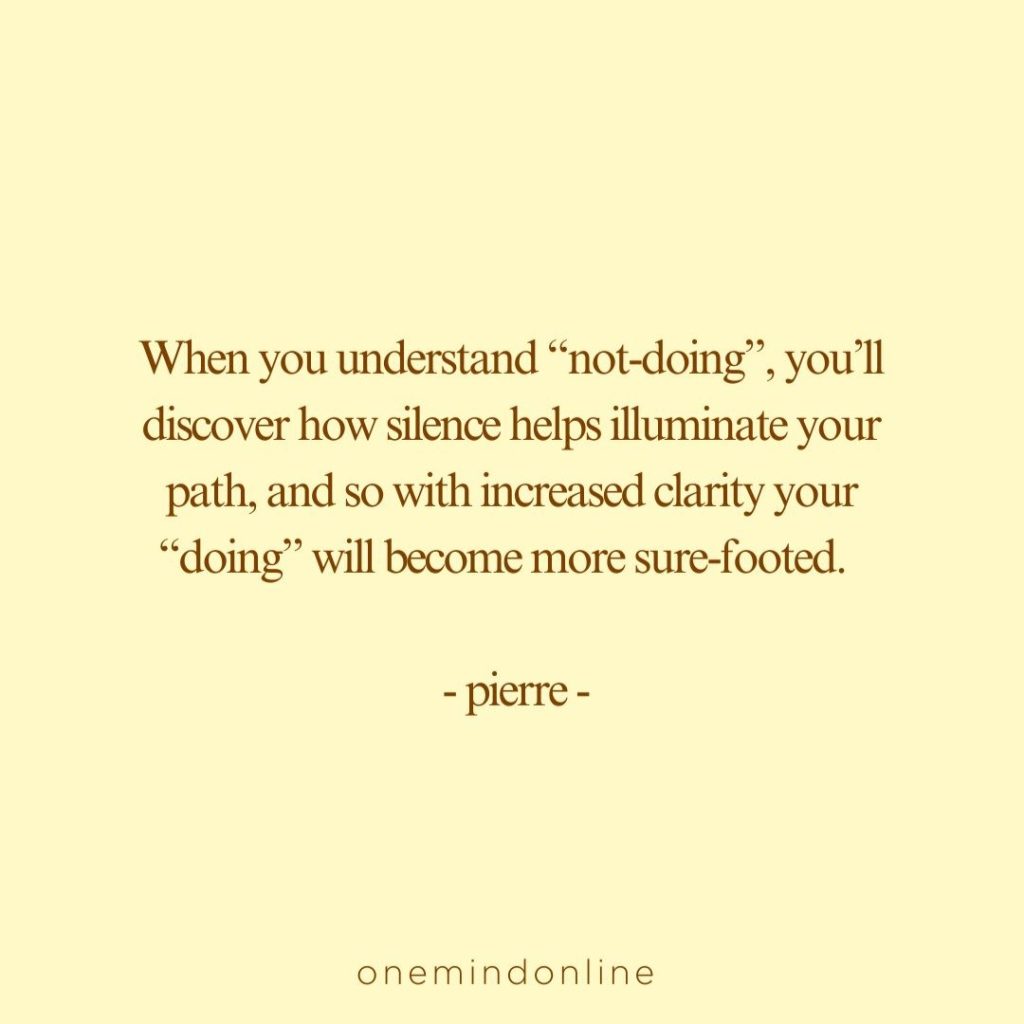
When you understand “not-doing”, you’ll discover how silence helps illuminate your path, and so with increased clarity your “doing” will become more sure-footed.
There is a natural balance between doing and not-doing. Our modern culture has made not-doing seem like a sin to the point that most people have no idea who/what they really are, knowing themselves only as constantly needing to be busy.
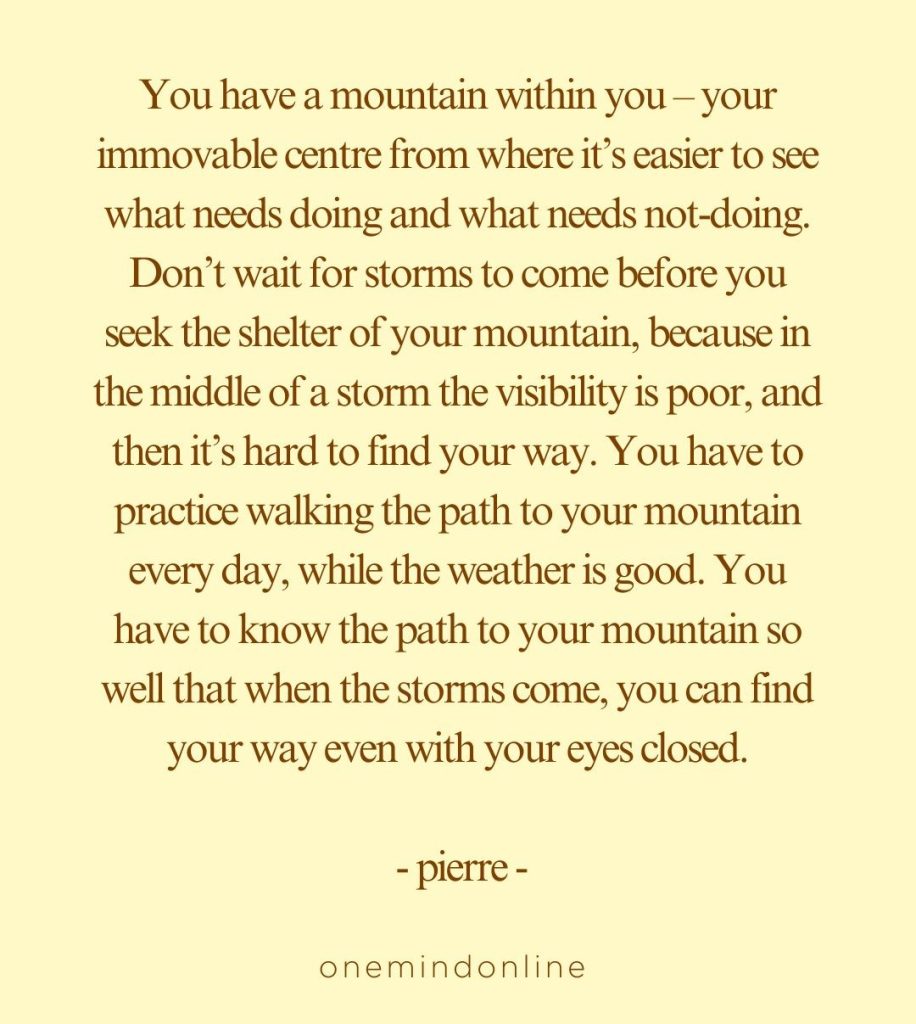
You have a mountain within you – your immovable centre from where it’s easier to see what needs doing and what needs not-doing. You have to practice walking the path to this mountain because it’s not always immediately obvious. Practice every day, don’t wait for the storm to come before you seek refuge in your mountain. If you don’t become really good at finding the path on the beautiful sunny days, it will be very hard to find when the storms come.
So how do we find this center in a world that glorifies busyness? Here are a few key takeaways:
- Slow Down: Our culture celebrates speed, but Brown reminds us, “the slower we move, the faster we return home.” Take time for activities that bring you peace, whether it’s meditation, spending time in nature, or simply taking a few deep breaths.
- Embrace the Unknown: Sometimes, feeling lost isn’t a bad thing. As Brown says, “there is a kind of immersion in the not knowing that is actually quite necessary if we are going to find our way home.” Allow yourself to explore different paths, even if they seem uncertain. This openness can lead to unexpected discoveries.
- Practice “Not-Doing”: Our modern world equates busyness with productivity. But there’s immense power in stillness. Silence allows us to hear the whispers of our intuition, to connect with our true selves and to take action based in wisdom.
Take a deep breath, close your eyes, and begin your journey inward. Finding your center is a lifelong practice, but the rewards are immeasurable. You are the master of your own path, and the mountain within holds the key to navigating it with grace and purpose.
– pierre –
Today’s LIVE meditation is: I am the mountain.
A moment of reflection
(If you have the time, use this question as a journal prompt, because whenever you put pen to paper you’re wiring the neural pathways that create your new habits. But if you don’t have the time, just take a moment to reflect on your response.)
Identifying Your Manipulation Triggers: Think about recent purchases, decisions, or commitments you’ve made. Which ones were driven by external pressure, advertising, or the promise of a “quick fix” to an emotional need? What patterns do you notice about when you’re most susceptible to these influences? How can you create space between feeling a need and acting on it?
Today’s LIVE meditation
https://youtu.be/0_5L0VJ5hD4 2025
https://youtu.be/9ZRUhpVqedA 2023
https://youtu.be/bnC0VUDbXHc 2022
Q&A for deeper learning
Q1: What does it mean to be “uncentered” exactly?
A: Being uncentered means losing touch with your authentic self and inner wisdom. It’s when you’re so caught up in external demands, information overload, and constant busyness that you can no longer hear your own intuition or make decisions from a place of inner knowing. When uncentered, you’re more likely to be influenced by marketing, peer pressure, and external validation rather than acting from your core values.
Q2: How is being busy actually harmful if I’m getting things done?
A: While productivity isn’t inherently bad, the “glorification of busy” becomes harmful when it prevents space for reflection, healing, and authentic self-connection. Constant busyness can lead to burnout, poor decision-making, and vulnerability to manipulation because you’re operating from overwhelm rather than wisdom. True productivity comes from centered action, not frantic activity.
Q3: What’s the difference between being lost and “wandering” as part of spiritual growth?
A: Being lost typically involves anxiety, resistance, and the desperate need for immediate answers. Spiritual wandering, on the other hand, is a conscious embrace of not knowing—allowing yourself to explore without forcing outcomes. This kind of wandering creates space for deeper insights to emerge naturally, whereas being lost often leads to grasping at quick fixes that don’t serve your authentic growth.
Q4: How can I practice “not-doing” in a world that demands constant action?
A: “Not-doing” doesn’t mean complete inactivity; it means creating intentional spaces of stillness and reflection. This might include meditation, mindful breathing, spending time in nature without agenda, or simply sitting quietly for a few minutes each day. The key is balancing action with reflection, so your eventual “doing” comes from a centered, wise place rather than reactive overwhelm.
Q5: What does the “mountain within” represent, and how do I find it?
A: The mountain within represents your immovable center—the part of you that remains stable regardless of external circumstances. It’s your authentic self, your core values, and your inner wisdom. You find it through practices like meditation, journaling, time in nature, or any activity that helps you tune out external noise and tune into your inner knowing. Like any skill, it requires regular practice.
Q6: Why should I slow down when everyone else is moving fast? Won’t I fall behind?
A: The paradox is that “the slower we move, the faster we return home.” When you operate from a centered place, your actions become more intentional, effective, and aligned with your true goals. You waste less energy on things that don’t serve you and make better decisions overall. Quality of action matters more than quantity of activity.
Q7: How can I tell if I’m being manipulated by marketing or making authentic choices?
A: Ask yourself: “Am I choosing this from a place of inner knowing, or am I trying to fill a void or fix an insecurity?” Manipulative marketing often preys on feelings of inadequacy, promising that external purchases will solve internal issues. Authentic choices usually come from a calm, centered place and align with your deeper values, not from urgency, fear, or the promise of instant transformation.