Fancy a quick shot of inspiration? This article is a zippy 2-minute read. But if you’re feeling like a super sleuth wanting to uncover all the secrets, our menu of extra goodies is just the place to dig in!
A message from today’s meditation:
We all crave it, talk about it, and sometimes desperately search for it. But what if everything you were taught about love was slightly… off? Today’s meditation brings a simple insight: love isn’t a void to be filled, but a wellspring to be shared.
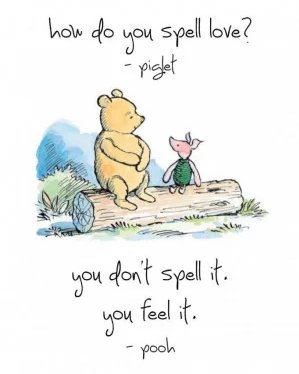
“How do you spell love?” Asked Piglet
“You don’t spell it, you feel it.” Answered Pooh
Ask a hundred people to describe what love is, and you’re likely to get a hundred different answers. It can be a complicated topic because for most of us, our history with love is well… complicated…
We first learn about love in our childhood homes where from a kid’s perspective, it’s so easy to feel like love is something we need to earn – we’re loved when we’re “good” but we’re rejected when we’re “bad”.
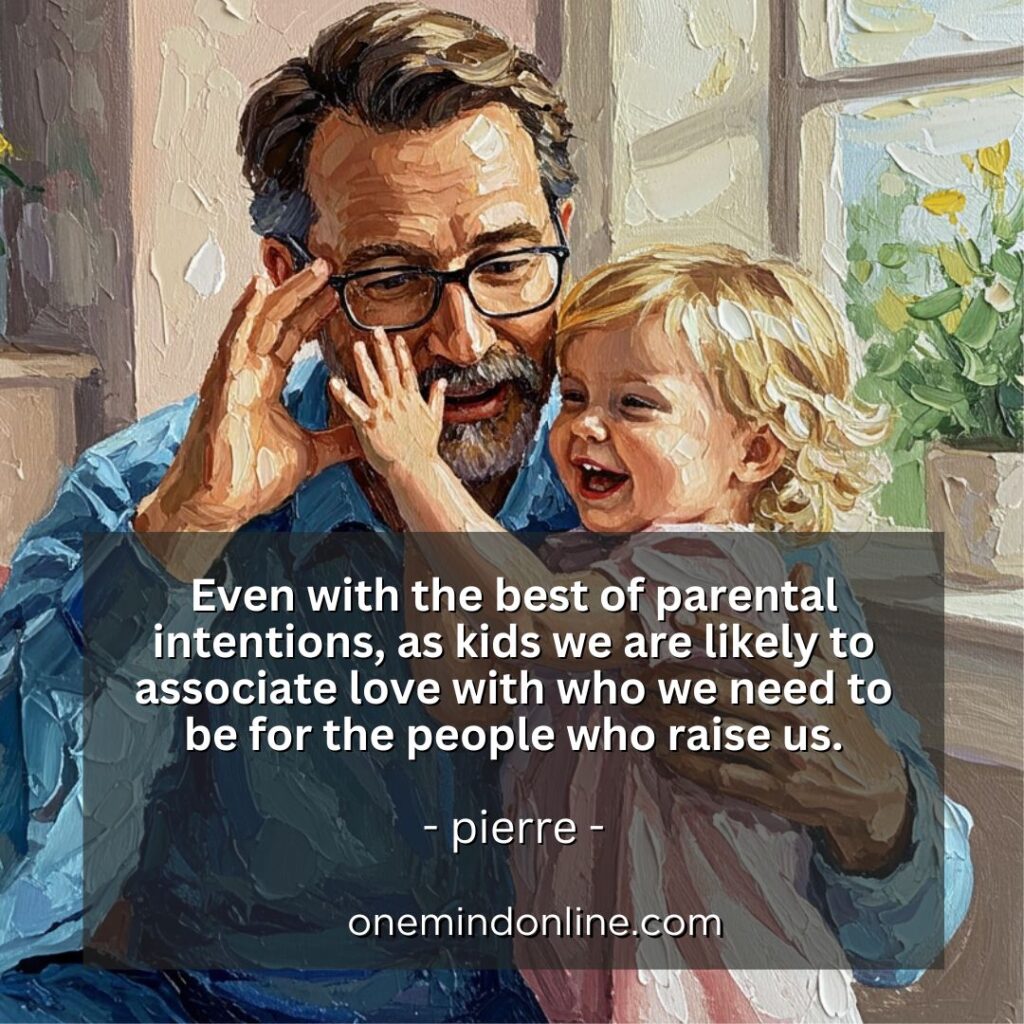
Even with the best of parental intentions, as kids we are likely to associate love with who we need to be for the people who raise us.
Outside of our home and as we grow older we tend to repeat the same pattern, “who do I need to be in order to be acceptable and be loved in return?”
It’s easy to see how the meaning we make of love becomes distorted, how “love” becomes a desperate transaction that buys approval but always feels as though it’s about to slip out of our grasp. We have learned that without the acceptance of some other human we are incomplete.
“When we’re incomplete, we’re always searching for somebody to complete us. When, after a few years or a few months of a relationship, we find that we’re still unfulfilled, we blame our partners and take up with somebody more promising. This can go on and on – serial polygamy – until we admit that while a partner can add sweet dimension to our lives, we – each of us – are responsible for our own fulfillment. Nobody else can provide it for us, and to believe otherwise is to delude ourselves dangerously and to program for eventual failure, every relationship we enter.” – Tom Robbins
While we believe that our wholeness is dependent on something or someone being added to our lives, we will always be disappointed in the humans around us – because no one is perfect enough to always say just the right thing. And also, we’ll always be disappointed in ourselves too – because when we feel rejected, it must mean that we’re not good enough.
When you finally come to the very deep realization that the only acceptance that you need is from YOU, then your wholeness becomes something that is established from within, and then love is no longer something that you need, but something that you share.
Loving from wholeness radiates from you and doesn’t ask for anything in return, because when you are whole, there’s absolutely nothing that you “need”.
“True love begins when nothing is looked for in return.” – Antoine de Saint-Exupery
“We come to love not by finding the perfect person, but by learning to see an imperfect person perfectly.” – Sam Keen
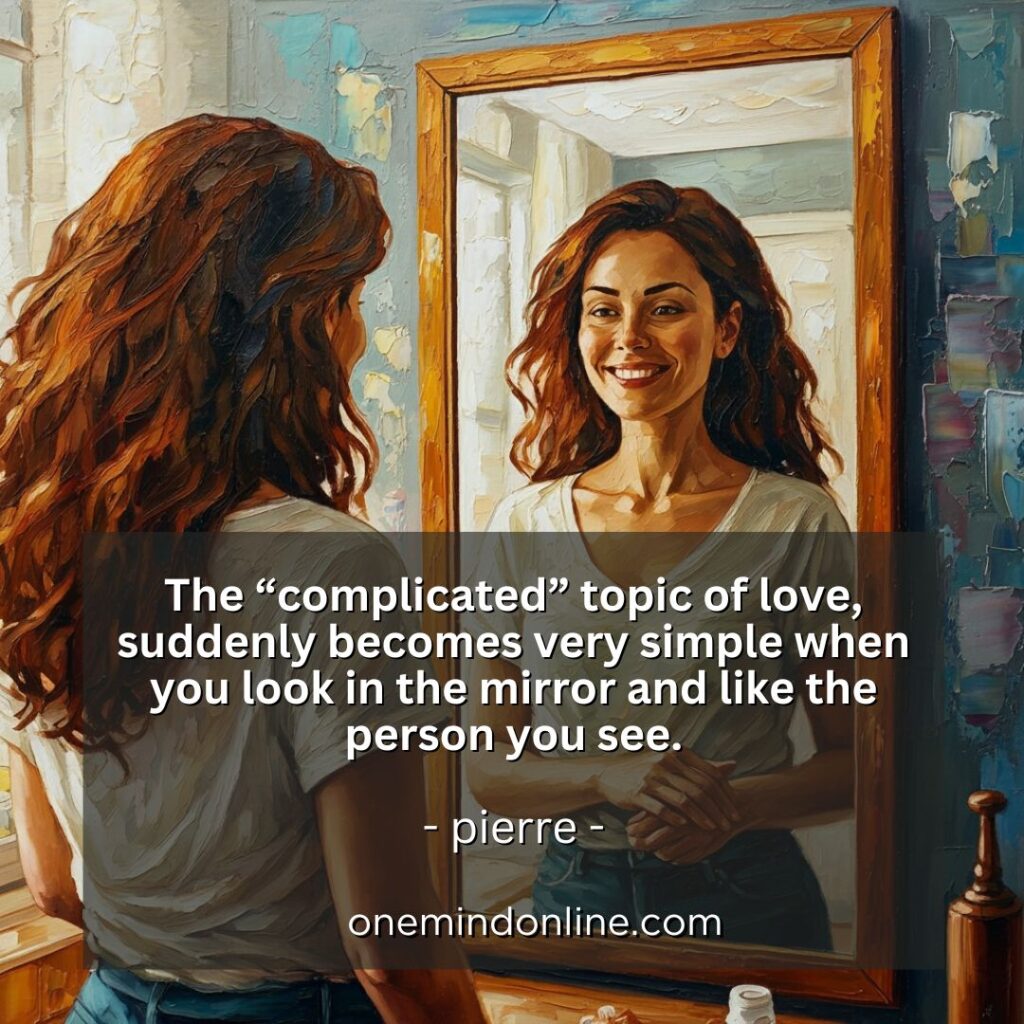
The “complicated” topic of love, suddenly becomes very simple when you look in the mirror and like the person you see.
Here are some guiding mantras for a Friday filled with love:
- “My self-worth is inherent and independent of external validation.”
- “I choose love and acceptance for myself, cultivating inner peace and radiating it outwards.”
- “I am a work in progress, and my journey of self-discovery is a source of constant growth and joy.”
Happy Friday beautiful human! Remember, love isn’t something you need – it’s something you are. When you embrace your wholeness, you become a beacon of love, sharing it freely with the world around you. Join us if you’d like to explore this concept further through meditation and connect with the love that flows abundantly within you.
– pierre –
Today’s LIVE meditation is: Sharing love.
(credit: https://www.benjaminhoffauthor.com/ )
A moment of reflection
(If you have the time, use this question as a journal prompt, because whenever you put pen to paper you’re wiring the neural pathways that create your new habits. But if you don’t have the time, just take a moment to reflect on your response.)
Reflect on your earliest understandings of love from your childhood. How did you learn what it meant to be “loved” or “unloved”? Who did you have to be in order to feel like you were being loved or accepted? How might those early experiences still influence your expectations or behaviors in relationships today?
Today’s LIVE meditation





Q&A for deeper learning
1. The article mentions that as children, we often learn love is something we need to earn. How does this early conditioning typically play out in our adult relationships?
As adults, we may unconsciously repeat the pattern of trying to be who we think others want us to be in order to gain their love and acceptance. This can manifest as people-pleasing, feeling the need to constantly prove our worth, and experiencing anxiety around whether we are “good enough” to be loved.
2. What does Tom Robbins mean when he talks about “serial polygamy” stemming from the belief that someone else can complete us?
Robbins suggests that if we believe our fulfillment depends on a partner, we will continuously seek someone new when the initial relationship doesn’t provide that complete feeling. This cycle of moving from one partner to another in search of completion is what he refers to as “serial polygamy.”
3. The article states that true wholeness comes from within. What are some ways we can cultivate this inner sense of completeness?
Cultivating inner wholeness involves self-acceptance, recognizing your inherent worth, and understanding that your value isn’t dependent on external validation. Practices like self-reflection, mindfulness, and self-compassion can help build this internal foundation.
4. What is the key difference between “needing” love and “sharing” love, as described in the article?
Needing love comes from a place of feeling incomplete and seeking external validation to fill that void. Sharing love, on the other hand, arises from a sense of inner wholeness; it’s about radiating the love you already possess without expecting anything in return.
5. The quote from Antoine de Saint-Exupery says, “True love begins when nothing is looked for in return.” How can we apply this idea in our daily lives?
We can apply this by focusing on giving and expressing care without expecting reciprocation. This could involve acts of kindness, active listening, or simply being present for someone without any personal agenda or expectation of a specific response. This is very difficult to sustain when we experience our own inner lack of wholeness, but it becomes the default way of being when our inner wholeness is complete.
6. Sam Keen’s quote suggests “learning to see an imperfect person perfectly” is how we come to love. What does this imply about our expectations in relationships?
This implies that instead of searching for a flawless partner, true love involves accepting and appreciating individuals with their imperfections. It’s about shifting our perspective to see the inherent worth and beauty in someone, just as they are.
7. The article concludes by saying, “love isn’t something you need – it’s something you are.” What does this mean practically for how we approach ourselves and our relationships?
This suggests that love is not a commodity to be sought externally but a quality that resides within us. When we embrace our own inherent lovability and wholeness, we naturally emanate love, influencing how we interact with ourselves and others from a place of abundance rather than lack.