
“Your Daily Dose” is a quick two minute read packed with bite-sized wisdom from all the great teachers. But you could also choose to turn it into something more… a powerful daily practice for personal growth. Give it a try!
A message from today’s meditation:
You will learn to trust yourself, because you will begin to understand what you really are…
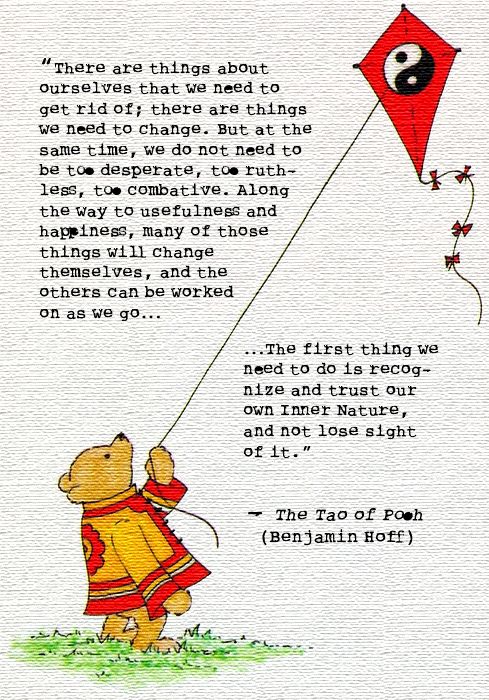
“There are things about ourselves that we need to get rid of; there are things we need to change. But at the same time, we do not need to be too desperate, too ruthless, too combative. Along the way to usefulness and happiness, many of those things will change themselves, and the others can be worked on as we go. The first thing we need to do is recognize and trust our own Inner Nature, and not lose sight of it.” – The Tao of Pooh
“Do you really want to be happy? You can begin by being appreciative of who you are and what you’ve got.” – The Tao of Pooh
“How can you get very far,
If you don’t know who you are?
How can you do what you ought,
If you don’t know what you’ve got?
And if you don’t know which to do
Of all the things in front of you,
Then what you’ll have when you are through,
Is just a mess without a clue –
Of all the best that can come true,
If you know What and Which and Who.”
– The Tao of Pooh
“The masters of life know the way, for they listen to the voice within them, the voice of wisdom and simplicity, the voice that reasons beyond cleverness and knows beyond knowledge.” – The Tao of Pooh
Each of these beautiful little pieces contains a phrase that leads you to YOU:
- “the first thing we need to do is recognize and trust our own Inner Nature, and not lose sight of it”
- “begin by being appreciative of who you are”
- “how can you get very far, if you don’t know who you are?”
- “the masters of life know the way, for they listen to the voice within them”
There are many spiritual teachings that have at their core the belief that our number one job as a human being is to remember who we are. To quote from “Conversations with God:
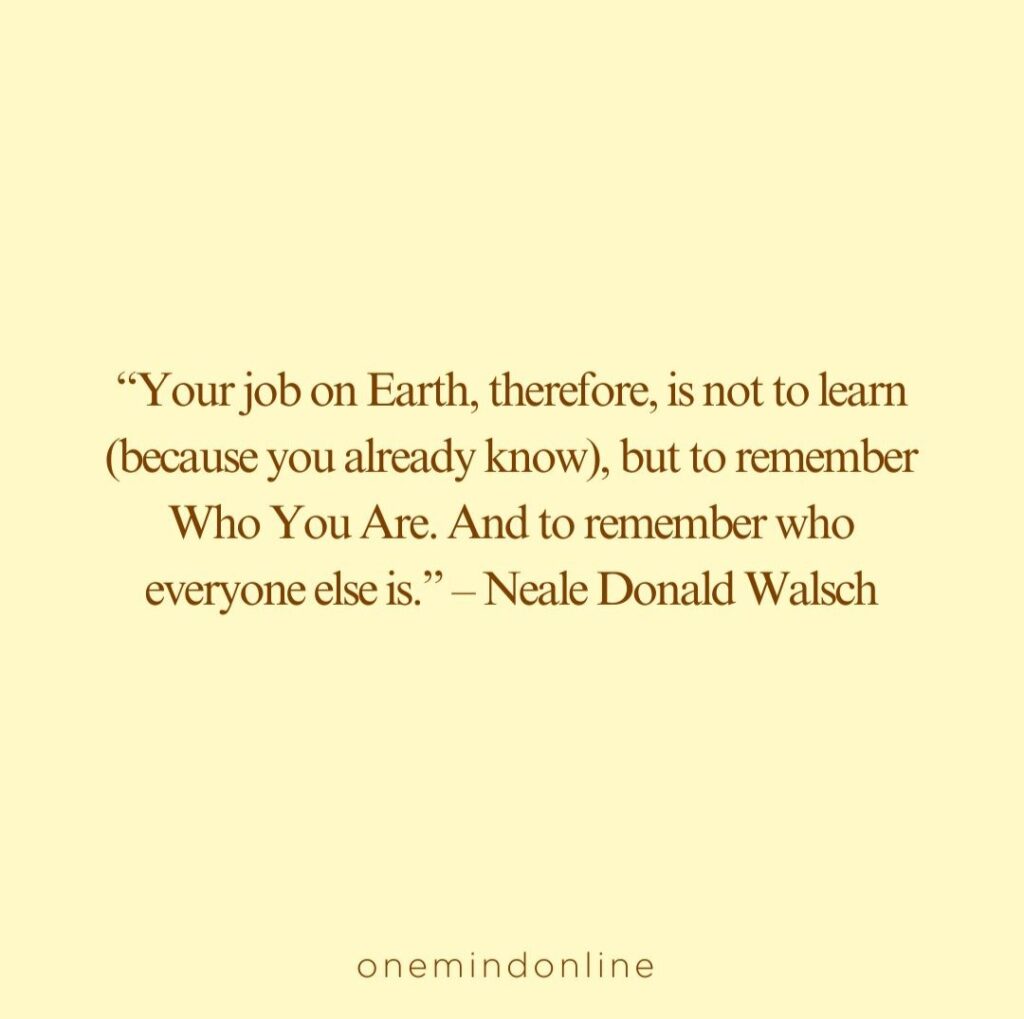
“Your job on Earth, therefore, is not to learn (because you already know), but to remember Who You Are. And to remember who everyone else is.” – Neale Donald Walsch
Why is this so difficult though, to just remember who we are? And even when we have profound experiences that remind us, why do we seem to forget again?
As a biological system, your human architecture is beautifully designed for survival first and foremost! Like any other animal your brain makes a big deal about the information that says anything about your ability to survive. And to this end, since you were born you’ve been learning from the world around you what you need to know in order to survive.
Today’s quotes from the Tao Of Pooh stressed the need to “know who you are”, and since being a child you’ve been listening to the voices in your environment to learn you who you are, and perhaps they’ve been telling you:
- You are naughty
- You are disorganized
- You are disrespectful
- You are ugly
- You are disgusting
- Stop being stupid!
- Are you performing again?
- Who do you think you are?
- I’ll give you something to cry about!
… these old recordings from the past shaped how you see yourself, and they speak loudly within you still, reminding you of what you were told was true about you. But these stories were never the truth of who you are, they were just the reactions of the imperfect humans around you who were themselves acting and reacting from their own past woundedness.
Let’s keep doing the work to remember who we REALLY are…
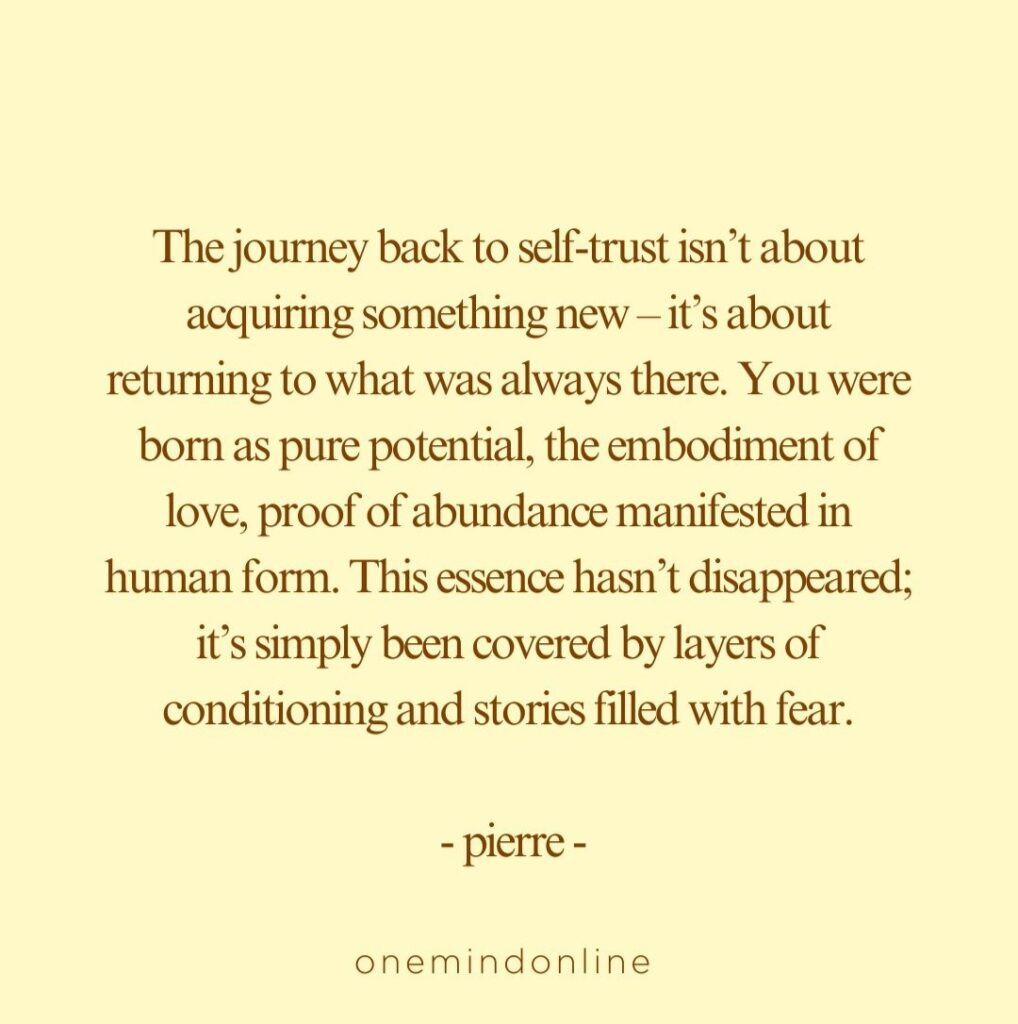
The journey back to self-trust isn’t about acquiring something new – it’s about returning to what was always there. You were born as pure potential, the embodiment of love, proof of abundance manifested in human form. This essence hasn’t disappeared; it’s simply been covered by layers of conditioning and stories filled with fear.
Today’s meditation uses the work of Paul Selig who asks us to claim the following three statements in truth: “I know WHO I am – I know WHAT I am – I know HOW I serve”, and to trust that your SOUL knows, even if you sometimes forget.
You will learn to trust yourself. You will learn to trust that you always find your way back to the BEST version of you, because in fact you always do!
So for today just one very powerful mantra to keep on repeat:
- “I trust that I will always find my way back to the best version of me. Because the truth is, in the past I always have.”
Even in your darkest moments, a spark of your true nature remains, guiding you home when you’re ready to listen. By quieting the external noise and turning inward, we can begin to hear the voice of our own wisdom, the voice that “reasons beyond cleverness and knows beyond knowledge.”
– pierre –
Today’s LIVE meditation is: Finding inner wisdom.
(credit: https://www.benjaminhoffauthor.com/ )
Today’s LIVE meditation
https://youtu.be/zuTLT85hDig 2026
https://youtu.be/kzvUBHiaR_c 2025
https://youtu.be/XsJUBcGkfRI 2023
Practice the “Daily Dose”
Let’s put it into practice! Choose what works for you – daily, once a week or whenever inspiration strikes. Putting pen to paper wires the neural pathways that will create your new habits.
1 – Affirmation
Just one powerful affirmation for today. Write it down on a sticky note and place it somewhere that you’ll be able to see it the whole day.
- “I trust that I will always find my way back to the best version of me. Because the truth is, in the past I always have.”
2 – A moment of reflection
Use today’s question as a journal prompt. If you don’t have the time to sit down and write, just take a moment to reflect on your response.
“The masters of life know the way, for they listen to the voice within them,” states one of the quotes. Think about the difference between your inner critic (those old recordings from the past) and your inner wisdom. Write about a recent decision where these voices conflicted. How did you distinguish between them? What helps you hear your authentic inner wisdom more clearly?
3 – Quotes to share
Send a quote to someone who needs it, or share them all on social media to spread the good vibes!




4 – Q&A for deeper learning
Read through the questions and answers and write down at least one “aha moment” that clicked for you.
Q1: Why do we struggle to remember who we truly are?
According to the essay, our struggle stems from our biological wiring for survival. From birth, our brains prioritize information related to survival, including messages from our environment about who we are. Unfortunately, many of these messages are negative and limiting (“You are naughty,” “You are disorganized”). These old recordings didn’t just disappear when we became adults. They have become internalized and continue to speak loudly within us still. And if we become scared that what they’re saying is true, then those inner voices become louder louder, drowning out our authentic wisdom and making us forget our true nature.
Q2: What does it mean to “trust your Inner Nature”?
Trusting your Inner Nature means recognizing and honoring your authentic self—your core values, intuition, and inner wisdom—rather than being guided primarily by external expectations or past conditioning. As The Tao of Pooh suggests, it’s about not losing sight of who you truly are beneath the layers of societal programming and self-criticism, and allowing that authentic self to guide your choices and actions.
Q3: How can meditation help in rediscovering self-trust?
Meditation serves as a powerful tool for self-discovery by quieting external noise and creating space for introspection. Through consistent observation we become better at distinguishing between how our loud and fearful inner recordings speak, and “the voice of our own wisdom”—the voice that “reasons beyond cleverness and knows beyond knowledge.” Regular meditation helps separate our authentic voice from conditioned responses, allowing us to reconnect with our inner guidance system.
Q4: What does the quote “Your job on Earth is not to learn, but to remember Who You Are” mean?
This quote from Neale Donald Walsch suggests that our essential nature—our true self—is already complete and whole. Rather than needing to acquire new knowledge or skills to become worthy or complete, our primary task is to remember and reconnect with the wisdom, love, and potential we already possess at our core. It’s about peeling away false beliefs rather than adding something new.
Q5: How can I distinguish between my authentic inner voice and my inner critic?
Your authentic inner voice typically speaks with compassion, wisdom, and calm clarity, even when it is a difficult conversation. It feels expansive and aligned with your deeper values. The inner critic, by contrast, often speaks in absolute terms (“You always,” “You never”), uses the language of shame, feels constricting, and echoes the critical voices from your past. With practice and self-awareness, you can learn to distinguish between these very different internal voices.
Q6: What are practical first steps toward rebuilding self-trust?
Begin with self-compassion and introspection. As suggested in the essay, appreciate who you are and what you’ve got. Practice the mantras provided, especially “I trust that I will always find my way back to the best version of me.” Make small promises to yourself and keep them to rebuild trust. Create quiet moments daily to listen to your inner wisdom through meditation or journaling. Notice when you’re operating from old conditioning versus your authentic self.
Q7: Why does the essay emphasize “remembering” rather than “becoming”?
The essay follows the spiritual perspective that your true nature—as “pure potential, the embodiment of love, proof of abundance”—is not something you need to create or achieve. It’s already who you are at your core. The challenge isn’t becoming something new but rather remembering and uncovering what has been obscured by conditioning, limiting beliefs, and painful experiences. This perspective is ultimately empowering because it suggests that everything you seek is already within you.