

“Your Daily Dose” is a quick two minute read packed with bite-sized wisdom from all the great teachers. But you could also choose to turn it into something more… a powerful daily practice for personal growth. Give it a try!
A message from today’s meditation:
Today’s meditation is called “The power of NOW”. It is the same as the title of Eckhart Tolle’s book which recognizes that the only place where we have true agency – the only place where we have any power to be effective at all – is in this present moment.
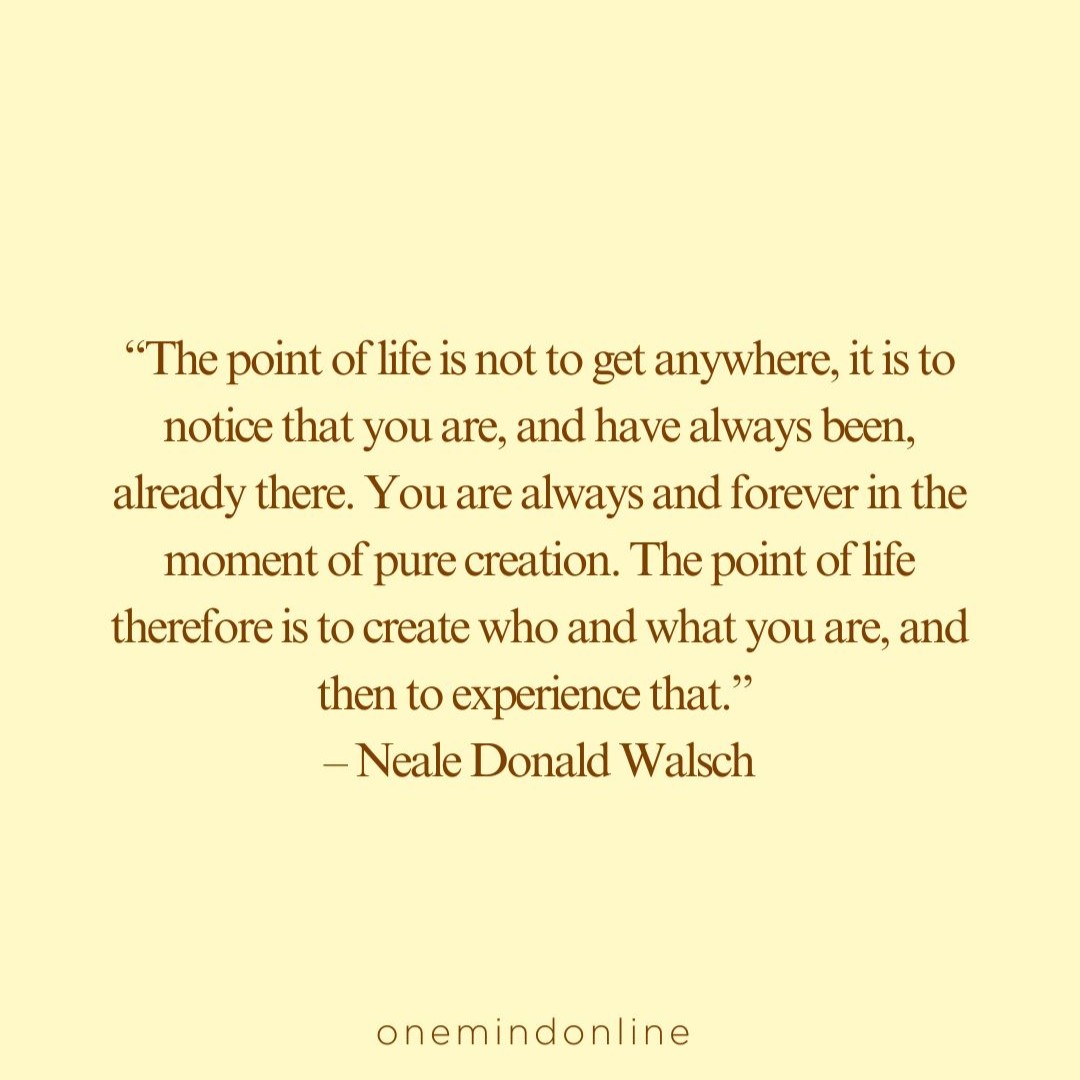
“The point of life is not to get anywhere, it is to notice that you are, and have always been, already there. You are always and forever in the moment of pure creation. The point of life therefore is to create who and what you are, and then to experience that.” – Neale Donald Walsch
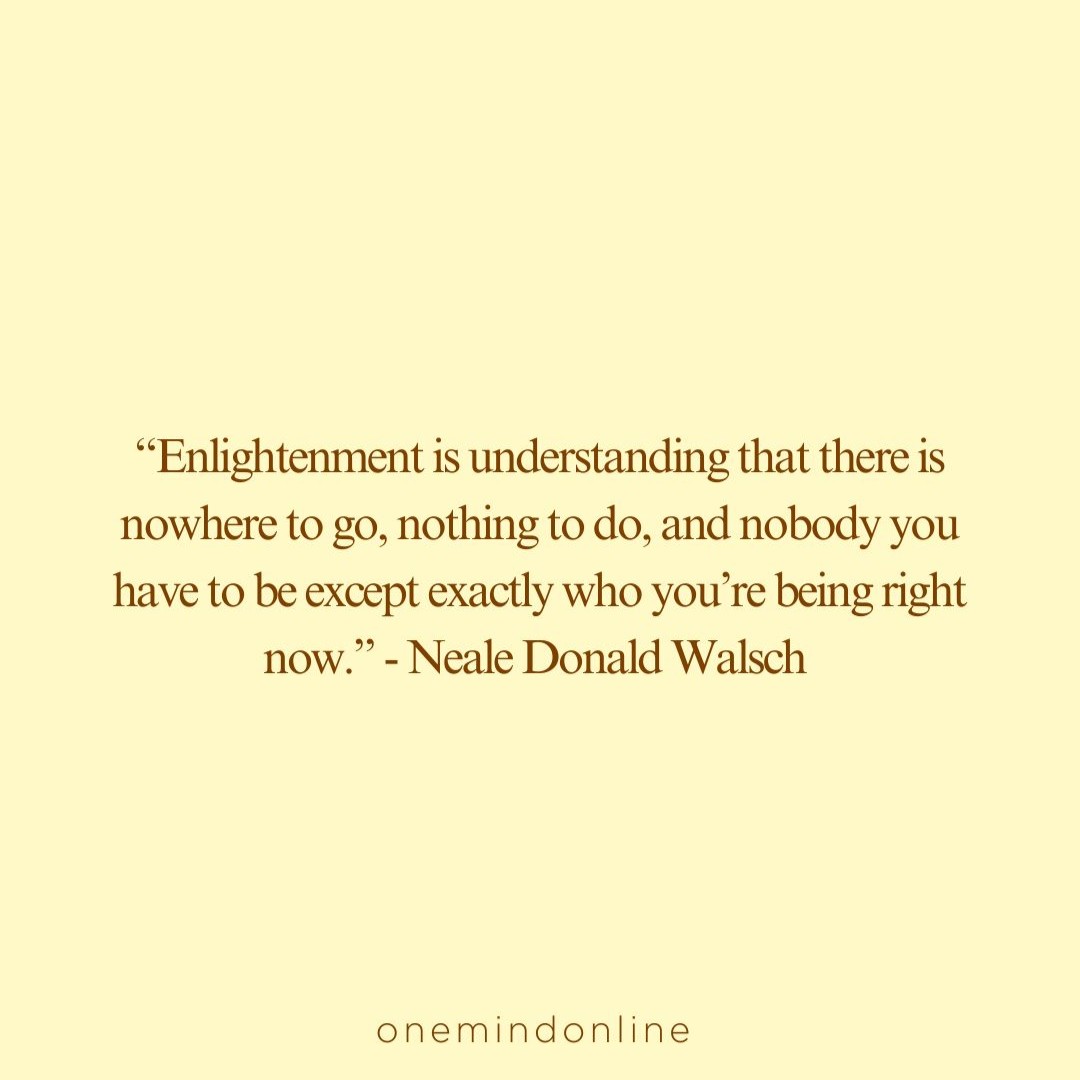
“Enlightenment is understanding that there is nowhere to go, nothing to do, and nobody you have to be except exactly who you’re being right now.” – Neale Donald Walsch
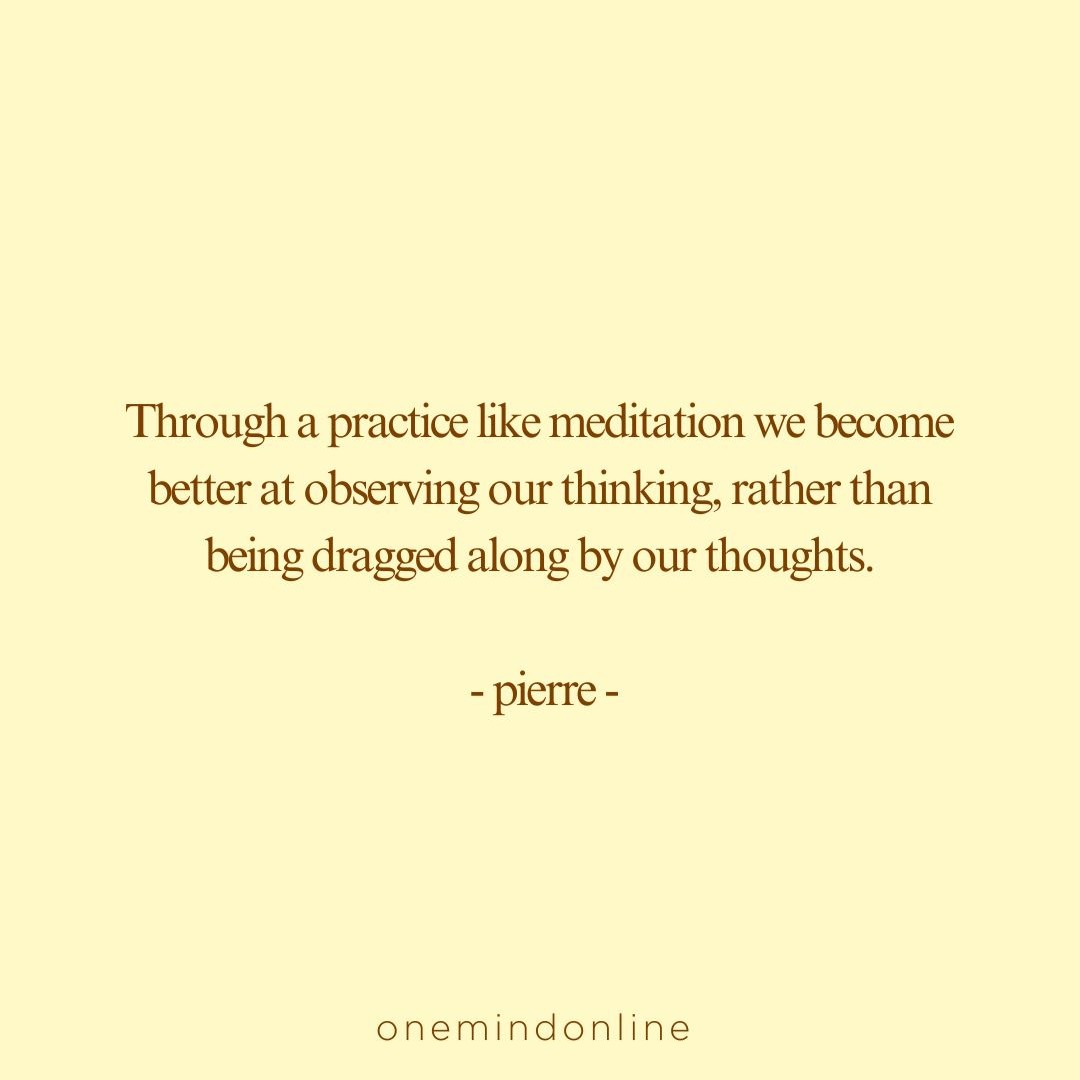
Through a practice like meditation we become better at observing our thinking, rather than being dragged along by our thoughts.
We think thousands of thoughts in a day. Studies show that our brain can come up with anything from 40,000 to 80,000 thoughts every day, it’s just what a human brain does – and about 80% of those thoughts are on repeat, the same thoughts as the day before and the day before that.
So when I am unaware that all of this is “old thinking”, then my present moment is always hijacked by thoughts from the past. And when I act from this old thinking, then thoughts from my past keep creating my next moment, and next day, and next year constantly reinforcing an old story – that I don’t even want – into perpetuity. Always creating and re-creating the past.
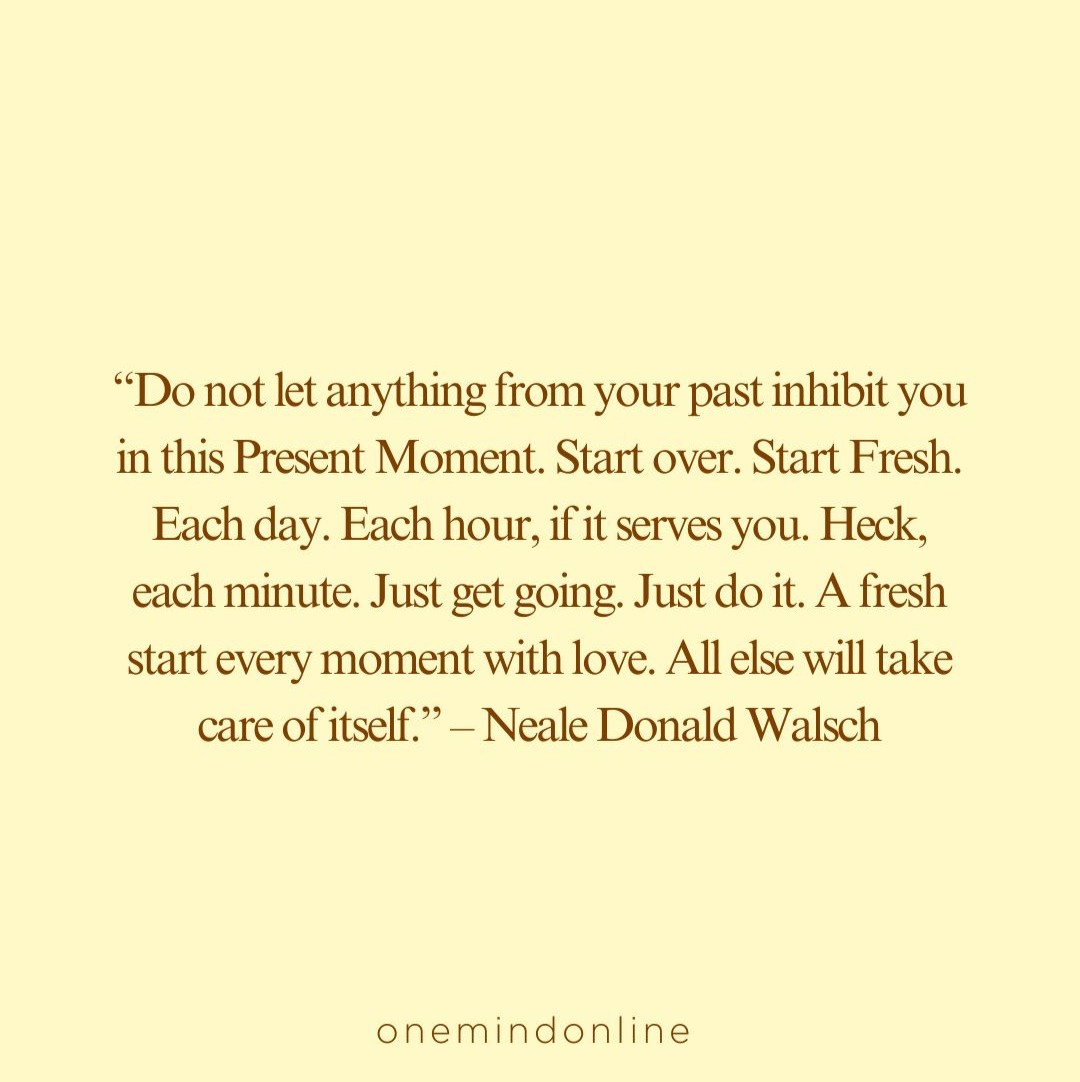
“Do not let anything from your past inhibit you in this Present Moment. Start over. Start Fresh. Each day. Each hour, if it serves you. Heck, each minute. Just get going. Just do it. A fresh start every moment with love. All else will take care of itself.” – Neale Donald Walsch
“So much of your present experience is based on your previous thought. Thought leads to experience, which leads to thought, which leads to experience. This can produce constant joy when the Sponsoring Thought is joyous. But also it can, and does, produce continual hell when the Sponsoring Thought is hellatious.” – Neale Donald Walsch
The past serves either as a teacher or a trap.
We can of course avoid falling into the trap of the past, and make ourselves available to the beautiful teacher that the past can be.
On autopilot the past will repeat itself and forever be your master, but when you are present, every moment is a fresh start. In conscious awareness you can learn from the past and choose how you want to experience the present.
Let’s remind ourselves to constantly bring ourselves back to present awareness, and ask – from moment to moment: What does this moment require of me? What does this moment ask me to step up and do? What opportunity does this moment make available to me?
Moment to moment, bring your attention back from the past into the only place you have any power to create anything new:
- “I choose to be the conscious author of my experience, not a prisoner of my past.”
- “Each breath brings me back to the only place where transformation is possible – here and now.”
- “I trust in my ability to respond to each moment in presence, creating new possibilities with awareness and love.”
Right now, in this moment you have the power to choose a different response than you ever have before. One step at a time, one breath at a time, moment by moment, you are giving shape to a new future.
– pierre –
Today’s LIVE meditation is: The power of NOW.
Today’s LIVE meditation
https://youtu.be/UZ8avtsvixs 2026
https://youtu.be/RgouLSbLl2k 2025
https://youtu.be/kvypq_D6lGI 2024
https://youtu.be/IRokAPx1GFU 2023
https://www.youtube.com/watch?v=OnBCXe3xWEQ 2020
Practice the “Daily Dose”
Let’s put it into practice! Choose what works for you – daily, once a week or whenever inspiration strikes. Putting pen to paper wires the neural pathways that will create your new habits.
1 – Affirmation
Write down your favourite affirmation on a sticky note and place it somewhere that you’ll be able to see it the whole day.
- “I choose to be the conscious author of my experience, not a prisoner of my past.”
- “Each breath brings me back to the only place where transformation is possible – here and now.”
- “I trust in my ability to respond to each moment in presence, creating new possibilities with awareness and love.”
2 – A moment of reflection
Use today’s question as a journal prompt. If you don’t have the time to sit down and write, just take a moment to reflect on your response.
The Past as Teacher vs. Trap: Reflect on a recurring challenge or pattern in your life that seems to repeat itself. Write about how this pattern first emerged from your past experiences. Then explore: In what ways has this past experience served as a teacher, offering you wisdom or growth? In what ways has it become a trap, limiting your present responses? How might you honour the lesson while releasing the limitation?
3 – Quotes to share
Send a quote to someone who needs it, or share them all on social media to spread the good vibes!
4 – Q&A for deeper learning
Read through the questions and answers and write down at least one “aha moment” that clicked for you.
Q1. Why are at least 80% of our automatic thoughts a repetition of old thoughts?
Your brain’s oldest and most non-negotiable job is keeping you alive, and its entire knowledge base for doing this is built from your experience of the past – it has no other raw material to draw from, so it constantly scans the present and compares it against what it already knows from the past. On top of this survival function, your brain is also wired for efficiency: running a fresh analysis on every situation would be exhausting and slow, so it creates mental shortcuts and patterns, storing familiar responses so it doesn’t have to think everything through from scratch. For routine tasks, like tying your shoes or driving a familiar route, this is a gift, freeing up mental energy for what actually needs your attention. But this same efficiency mechanism doesn’t distinguish between a shortcut that still serves you and one that’s become a rut. It will just as readily replay an outdated fear, a limiting belief, or an old story about who you are, simply because it’s familiar and requires less energy than questioning it. This is why roughly 80% of your thoughts repeat: it’s not a flaw, it’s your brain doing exactly what it evolved to do – reach for the fastest, most tested response – even when that response is no longer the one that actually serves you.
Q2. How can I tell the difference between being “dragged along” by thoughts versus observing them?
Honestly, in the body, the two can feel nearly identical – both can trigger the exact same racing heart, tight chest, or wave of dread, which is why observing your thoughts can feel like it isn’t working; you don’t necessarily feel calmer or better in the moment, and that can be discouraging if you were expecting relief. The real difference isn’t in how intense the feeling is, but in the angle you’re seeing it from. Being dragged along sounds like “I am drowning and I can’t breathe” – you’re fully inside the experience, and it feels like the total truth of the moment. Observing sounds like “I can see that it feels like I’m drowning right now, but I’m not actually in water and I can take a deep breath” – the sensation is still there, just as strong, but there’s now a sliver of space between you and it, enough to remember that a feeling is not the same thing as a fact. That sliver of space is the whole shift. It won’t necessarily make the storm feel smaller, but it changes your relationship to it, from being in the storm to being the one who notices it passing through.
Q3. What does “enlightenment is understanding there’s nowhere to go” actually mean in practical terms?
Quite often our goal of wanting to “get somewhere”, translates as rejection to being right here. We might think that by running away from where we are now, might get us to where we really want to be. “Enlightenment is understanding there’s nowhere to go” reminds us there only ever is right here – this moment – and that however much we run, we will find ourselves in a moment that still is “now”, and it probably won’t live up to our expectations, which means we’ll never stop running. Enlightenment is understanding that right here where I am is where I have to show up. Enlightenment is understanding that when I equip myself to willingly deal with whatever this moment asks me to take care of, then I am empowering myself to create the next moment and the next moment in the way that I want my beautiful life to be, without ever trying to be anywhere else but right here.
Q4. How can I break free from old thinking patterns that seem automatic?
The first thing to understand is that these old, automatic thinking patterns are not going to stop – not anytime soon anyway. They were carved into your brain over years, sometimes decades, and those neural pathways don’t dissolve just because you’ve decided you’re ready for something new; they will keep firing, often at the exact moments you’d least like them to. So the goal was never to silence them – that’s a losing battle that’s been frustrating you for years. Your actual job is to stop believing them as truth. Let the old thought show up, actually allow it to show up, but meet it with a quiet compassion “I hear you, but this is an old story, and I’m ready to choose a new response.” Freedom isn’t the absence of the old pattern; it’s the presence of a new choice you didn’t used to have – the choice to notice the familiar old thought, and then decline to let it have the wheel.
Q5. What’s the difference between learning from the past and being trapped by it?
The past is genuinely full of information, and biologically speaking, it’s the only information your brain has to work with – it has no other biological source to trust. But here’s the catch: the meaning we made of past events is often not factually correct, it’s just the interpretation we landed on at the time, usually while young, scared, or overwhelmed. And because your brain treats that interpretation as “truth,” it gets replayed in the present moment, quietly trapping you into recreating the same past over and over, as though it were still happening. The past becomes a teacher rather than a trap the moment you can be present enough to catch the old pattern firing, recognize it for what it is, and choose to apply what you’ve actually learned with fresh eyes, rather than defaulting to the old conclusion. This is the invitation Neale Donald Walsch offers when he says, “Start over. Start fresh. Each day… A fresh start every moment with love.” That fresh start isn’t about erasing the past – it’s about honouring the lessons while releasing the limitations.
Q6. How do I practically apply “What does this moment ask of me?” throughout my day?
Make this question a regular check-in tool. Set reminders on your phone, use transition moments (like everytime you walk through a doorway, or every time you make a cup of tea…), or create specific pause points in your routine. When you ask this question, listen for what feels most aligned, necessary, or opportunity-rich in that moment. It might be as simple as taking a deep breath, as practical as making a phone call, or as profound as offering forgiveness.
Q7. Can focusing on the present moment help with anxiety about the future?
Absolutely. Anxiety is often fueled by projecting past experiences onto future scenarios. When you ground yourself in present-moment awareness, you realize that right now, in this moment, you are safe and capable. You can plan for the future from a place of clarity rather than fear, and you develop trust in your ability to handle whatever comes. The present moment is the only place where you have any actual power to influence your future.