
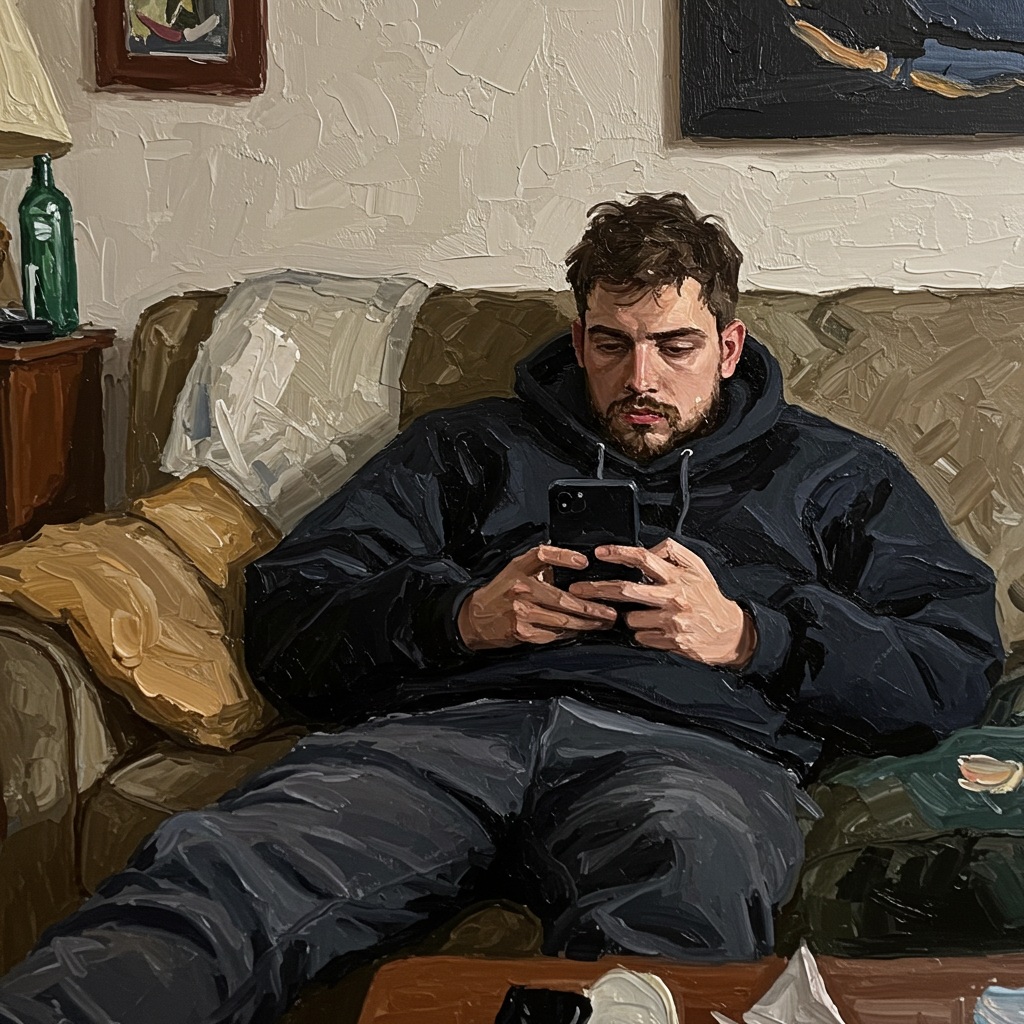
“Your Daily Dose” is a quick two minute read packed with bite-sized wisdom from all the great teachers. But you could also choose to turn it into something more… a powerful daily practice for personal growth. Give it a try!
A message from today’s meditation:
Sometimes in the pursuit of growth, we may find ourselves in a world obsessed with self-improvement, where every behavior that doesn’t serve our highest potential gets labeled as “self-sabotage.” This narrative is not only harmful – it’s fundamentally wrong. The truth is, there’s nothing within you that desires to sabotage your success or happiness. What we often mistake for self-destructive behavior is actually your inner survival system working exactly as it was designed to.
Your coping mechanisms didn’t develop to hold you back. They emerged to keep you alive. Whether it’s perfectionism that protected you from criticism, people-pleasing that helped you avoid conflict, or the substances that helped you not feel the pain you were dealing with, these adaptations probably served a vital purpose.
There was a time where your “coping mechanism” might have literally kept you alive and that needs to be honoured, not judged. This doesn’t negate the fact that things are going to have to change if you are to move forward. There might be really hard work ahead, but start with self-compassion, not self-hatred.
“Our survival adaptations are so tough, but our wounds are so delicate. To heal, we have to lift the armor carefully- it saved our lives, after all. It’s like moving your best friend off to the side of the path. You don’t trample on her, you don’t hit her with a sledgehammer. You honor her presence like a warm blanket that has kept you safe and sound during wintry times. And then, when the moment is right, you get inside and stitch your wounds with the thread of love, slowly and surely, not rushing to completion, nurturing as you weave, tender and true. The healing process has a heart of its own, moving at its own delicate pace. We are such wondrous weavers…” – Jeff Brown
“I am so tired of how hard we are on ourselves. Not attractive enough, not smart enough, not cool enough, not purpose-full enough, not spiritual enough, not flexible enough, not creative enough, not rich enough, not happy enough, not healthy enough, not sexy enough, not wise enough. It’s like a collective shame fest that begins when we are born and continues until we die. So much magnificent life is lost when it is swept under a mountain of shame. Billions of us walking around convinced we are not ‘something enough.’ We are missing the point. Just staying alive on this planet is a great achievement, demanding that we sift through all of the ‘not-enough’ inner chatter to find a reason to go on. How about if we begin every day with an ‘I am enough’ meditation? Let’s begin right now: I am enough! I am enough. I AM ENOUGH.” – Jeff Brown
“I bow to those who keep their hearts open when it is most difficult, those who refuse to keep their armor on any longer than they have to, those who recognize the courage at the heart of vulnerability. After all the malevolent warriors end each other, the open-hearted will inherit the earth.” – Jeff Brown
Today’s meditation can totally be considered an “I am enough” meditation. Join us and revel in the sensory experience that your amazing human body provides you. Take a moment to show gratitude for this divine vehicle you were gifted and remind your human form that you really are worthy and enough just as you are.
Guiding mantras for self-reflection:
- “I honor the parts of me that worked so hard to keep me safe.”
- “I am allowed to heal at my own pace, without rushing or forcing.”
- “I meet myself with kindness, not criticism, as I grow and change.”
- “It takes courage to keep my heart open, and I have that courage within me.”
Remember, you are not broken. You are a survivor, and within you lies the strength to heal and grow. Embrace your journey with kindness and love. By honoring your past and embracing self-compassion, you pave the way for a future filled with growth and possibility.
Have a good weekend peeps!
– pierre –
Today’s LIVE meditation is: Come to your senses.
Today’s LIVE meditation
https://youtu.be/l7sUkD1I3lc 2026
https://youtu.be/qU2rD_F7p7A 2025
https://youtu.be/xFaQ_FnABVo 2024
https://youtu.be/WHg184yzhPs 2023
https://youtu.be/i93v2wRFqlQ 2022
Practice the “Daily Dose”
Let’s put it into practice! Choose what works for you – daily, once a week or whenever inspiration strikes. Putting pen to paper wires the neural pathways that will create your new habits.
1 – Affirmation
Write down your favourite affirmation on a sticky note and place it somewhere that you’ll be able to see it the whole day.
- “I honor the parts of me that worked so hard to keep me safe.”
- “I am allowed to heal at my own pace, without rushing or forcing.”
- “I meet myself with kindness, not criticism, as I grow and change.”
- “It takes courage to keep my heart open, and I have that courage within me.”
2 – A moment of reflection
Use today’s question as a journal prompt. If you don’t have the time to sit down and write, just take a moment to reflect on your response.
Honoring Your Protective Mechanisms: Think about a coping mechanism or behavior pattern you’ve been critical of in yourself. Instead of judging it, imagine having a conversation with this part of yourself as if it were a dear friend who has been protecting you. Write a letter to this protective mechanism, acknowledging how it has served you. What situations did it help you navigate? What pain did it shield you from? How did it keep you safe when you needed it most? End the letter by thanking it for its service and explaining how you’re growing stronger, and will need less of this coping strategy in future.
3 – Quotes to share
Send a quote to someone who needs it, or share them all on social media to spread the good vibes!


4 – Q&A for deeper learning
Read through the questions and answers and write down at least one “aha moment” that clicked for you.
Q1. What’s the difference between coping mechanisms and self-sabotage?
Coping mechanisms are adaptive strategies your psyche developed to help you survive difficult situations, trauma, or ongoing stress. They served a protective function at the time they were created. Self-sabotage, on the other hand, is a term that implies an intentional desire to harm yourself, which isn’t accurate. What we often label as self-sabotage is actually old coping mechanisms that no longer serve us in our current circumstances but continue operating because they once kept us safe.
Q2. How can I tell if my coping mechanisms are still serving me or holding me back?
Ask yourself these questions: Does this behavior help me feel safe and connected in healthy ways? Does it support my current goals and relationships? Am I using it consciously or does it feel automatic and compulsive? If your coping mechanism is creating more problems than it solves, isolating you from others, or preventing you from growing, it may be time to gently explore new approaches while honoring the protection it once provided.
Q3. Why is self-compassion important when working with old patterns?
Self-compassion creates the safety necessary for genuine change. When we approach our patterns with judgment and criticism, we activate our nervous system’s threat response, which actually reinforces the very protective mechanisms we’re trying to change. Compassion allows us to see our patterns clearly without shame, making space for conscious choice rather than reactive behavior.
Q4. What does it mean to “honour” my coping mechanisms before changing them?
Honouring means acknowledging the important role these mechanisms played in your survival and wellbeing. It involves recognizing that they developed for good reasons and served you when you needed them most. This might involve gratitude, understanding the context in which they emerged, or simply recognizing their protective intention before consciously choosing new responses.
Q5. How do I overcome the constant feeling of being “not enough”?
Start by recognizing that this feeling is often a cultural wound rather than a personal failing. Practice the affirmations daily, but also look for evidence of your inherent worth beyond achievements or external validation. Remember that simply staying alive and navigating this complex world is an achievement in itself. Consider that your perceived inadequacies might actually be evidence of your humanity and courage to keep growing.
Q6. What’s the difference between being vulnerable and being unprotected?
Vulnerability is a conscious choice to open your heart and share your authentic self despite the risk of rejection or hurt. It’s courage in action. Being unprotected, however, means having no boundaries or discernment about when and with whom to share your tender parts. Healthy vulnerability involves choosing when to lower your armor based on safety and connection, not abandoning your protective mechanisms entirely.
Q7. How long does it take to heal old patterns and wounds?
Healing happens at its own pace and varies greatly from person to person. As Jeff Brown notes, “The healing process has a heart of its own, moving at its own delicate pace.” Some patterns may shift relatively quickly once you bring consciousness to them, while others may take years of patient, gentle work. The key is not rushing the process but approaching it with consistent compassion and commitment to growth, understanding that healing is not linear and that setbacks are part of the journey.