
“Your Daily Dose” is a quick two minute read packed with bite-sized wisdom from all the great teachers. But you could also choose to turn it into something more… a powerful daily practice for personal growth. Give it a try!
A message from today’s meditation:
Our teacher this week is Jack Kornfield who spent the years 1967 to 1972 becoming a monk in Thailand and Burma. Since 1974 he has been teaching meditation worldwide and was instrumental in introducing Buddhist mindfulness practices to the West.
Standing at the start of a new week looking ahead, here are some thoughts from Jack to reflect on:
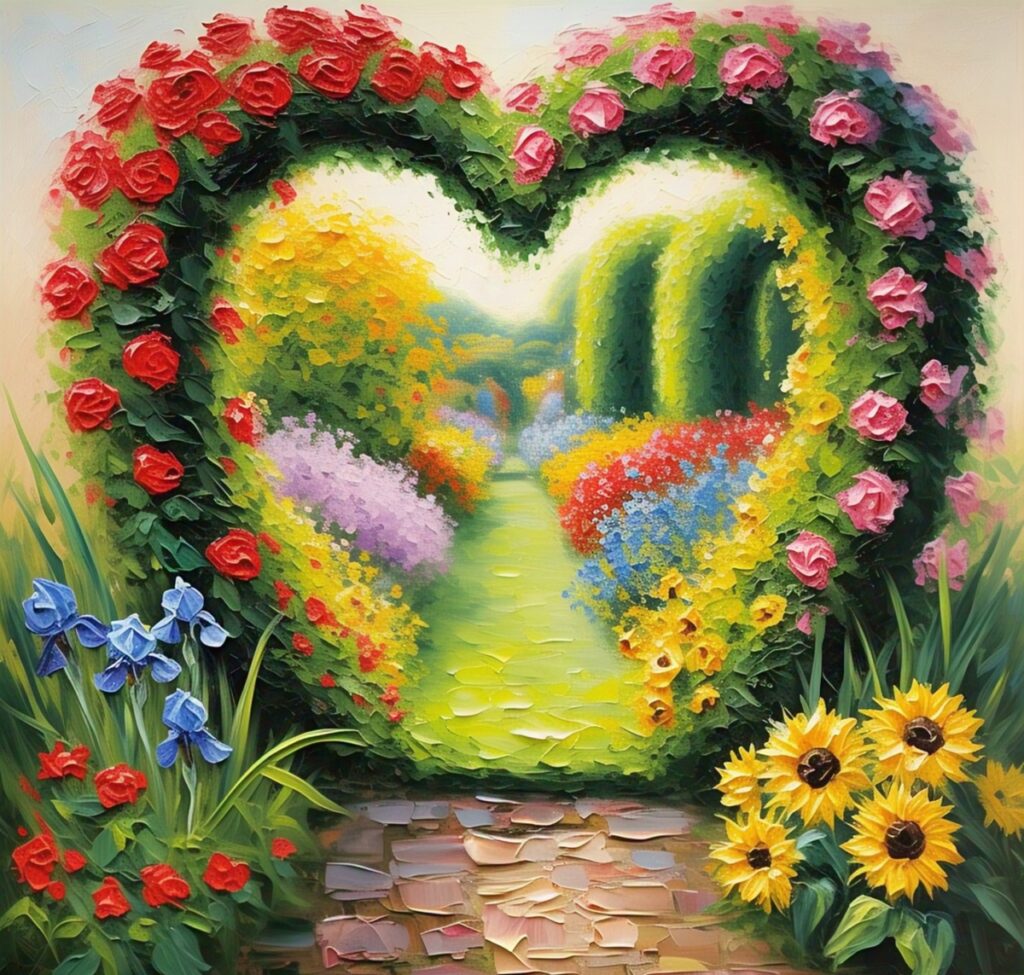
“The heart is like a garden. It can grow compassion or fear, resentment or love. What seeds will you plant there?” – Jack Kornfield
We have the power to cultivate the inner landscape of our hearts. Each experience, thought, and interaction becomes a seed we sow. Over time, these seeds grow into the very essence of who we are.
As we embark on a new week, what kind of garden are we nurturing within? Will it be filled with vibrant blooms of compassion, forgiveness, and love? Or will it be choked by weeds of fear, anger, and resentment?
What seeds will you plant in your heart this week?
“Wherever you are is the perfect place to awaken. This moment is the exact place to practice compassion and loving awareness. You have all the ingredients to breathe and find freedom just where you are.” – Jack Kornfield
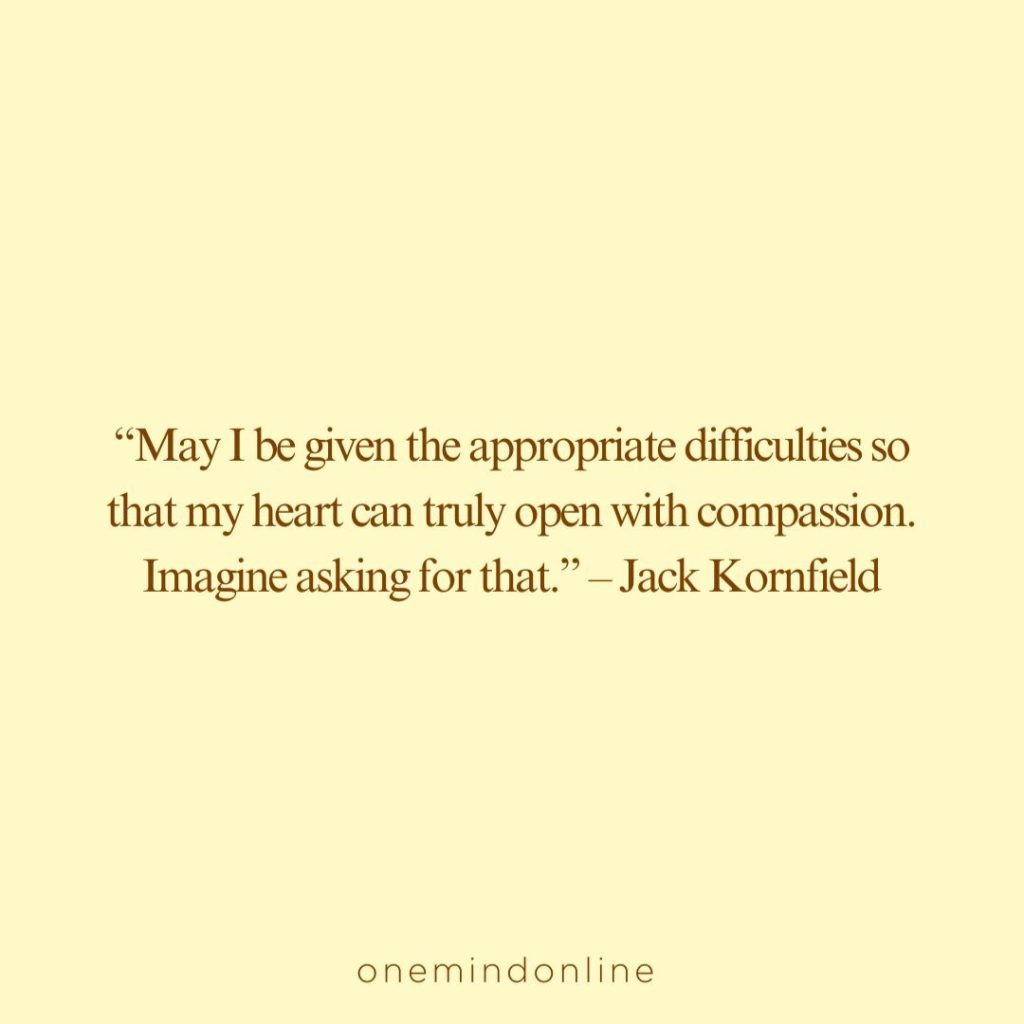
“May I be given the appropriate difficulties so that my heart can truly open with compassion. Imagine asking for that.” – Jack Kornfield
I appreciate this reminder from Jack as I step into a new week – there is no growth without facing difficulties so instead of trying to avoid stumbling blocks and obstacles, I am asking “please send me the appropriate difficulties”.
Help me remember that there is no ‘there’ on the horizon where I will finally be ‘enlightened’. But that right here, right now, facing what is right in front of me is the perfect place to breathe and create an inner spaciousness from where I can see with more clarity.
The key to tending our heart garden lies in becoming aware of our reactions to life. When challenges arise, we have a choice: we can react automatically out of fear, or we can stop, breathe, and consciously choose our response.
The practice looks something like this: “I will not act (react) in fear. I will stop and I will breathe. I will not run, I will stay present. And then I will consciously choose the action (not reaction) that is the true expression of my being. I will not act in fear. I am creating in freedom!”
As you move through the coming days, remember to be the gardener of your own heart. Choose your seeds wisely. Plant compassion instead of judgment. Water understanding rather than assumption. Cultivate gratitude for what is, rather than resentment for what isn’t.
Every moment offers a fresh opportunity to tend your inner garden. Every difficulty is an appropriate one, perfectly designed to help your heart open wider. And right here, right now, you have everything you need to begin.
So, how do we cultivate a heart garden overflowing with positive emotions? Here are a few guiding mantras:
- “I choose compassion over fear. When faced with a challenge, I will take a deep breath and respond with understanding rather than react out of fear.”
- “I see difficulties as opportunities for growth. Every obstacle holds the potential to strengthen my heart and open me to new perspectives.”
- “I find joy in the present moment. I will appreciate the beauty of what is right here, right now, and cultivate gratitude for the experiences that shape me.”
By consciously planting seeds of love, kindness, and acceptance, we cultivate a heart garden that blossoms into a life filled with joy, resilience, and inner peace. Remember, you are the gardener of your own heart. Choose your seeds wisely and watch your beautiful garden bloom.
– pierre –
Today’s LIVE meditation is: Jumpstart the week!
Today’s LIVE meditation
https://youtu.be/BqgpOyAlvmU 2026
https://youtu.be/5D8L0ULotW0 2025
https://youtu.be/CqtAdilEMfM 2024
https://youtu.be/SHZNKHw6OHM 2022
Practice the “Daily Dose”
Let’s put it into practice! Choose what works for you – daily, once a week or whenever inspiration strikes. Putting pen to paper wires the neural pathways that will create your new habits.
1 – Affirmation
Write down your favourite affirmation on a sticky note and place it somewhere that you’ll be able to see it the whole day.
- “I choose compassion over fear. When faced with a challenge, I will take a deep breath and respond with understanding rather than react out of fear.”
- “I see difficulties as opportunities for growth. Every obstacle holds the potential to strengthen my heart and open me to new perspectives.”
- “I find joy in the present moment. I will appreciate the beauty of what is right here, right now, and cultivate gratitude for the experiences that shape me.”
2 – A moment of reflection
Use today’s question as a journal prompt. If you don’t have the time to sit down and write, just take a moment to reflect on your response.
Gratitude for the Present: Jack Kornfield reminds us that “wherever you are is the perfect place to awaken.” What aspects of your current life situation – even the challenging ones (especially the challenging ones) – can you find genuine gratitude for? How might accepting where you are right now, rather than waiting for some future state, open you up to the next steps that are available to you?
3 – Quotes to share
Send a quote to someone who needs it, or share them all on social media to spread the good vibes!




4 – Q&A for deeper learning
Read through the questions and answers and write down at least one “aha moment” that clicked for you.
Q1: What does it mean that “the heart is like a garden”?
This metaphor suggests that our emotional and spiritual life requires intentional cultivation, just like a garden. We can choose to plant and nurture positive qualities like compassion, love, and understanding, or we can allow negative patterns like fear and resentment to take root. The gardener metaphor empowers us by showing that we have agency over cultivating our inner landscape—we’re not just passive recipients of whatever emotions arise.
Q2: Why would anyone ask for “appropriate difficulties”? Doesn’t that invite unnecessary suffering?
Asking for appropriate difficulties isn’t about seeking out pain, but rather about recognizing that growth will always be somewhat challenging. It’s a shift from avoiding discomfort to welcoming the experiences that stretch us and help our hearts open wider. The word “appropriate” is key—these aren’t overwhelming traumas, but rather the right-sized challenges that help us develop resilience, compassion, and wisdom. This reframing transforms obstacles from enemies into teachers.
Q3: How can “wherever I am” be the perfect place to awaken when my circumstances are genuinely difficult?
This teaching doesn’t minimize real difficulties or suggest that all circumstances are equally comfortable. Instead, it points to the truth that awakening—developing awareness, compassion, and inner freedom—rarely comes from ideal external conditions. The truth is that even in challenging circumstances, you have the capacity to breathe, to be present, and to choose your response. “Perfect” refers to the opportunity for growth that exists right now. Whatever you’re experiencing right this moment, is inviting you to ask this question, “how do I use this experience to grow?”
Q4: What’s the difference between reacting and responding?
Reacting is automatic and unconscious—when something triggers us, we immediately act out of habit, fear, or conditioned patterns. Responding is conscious and intentional—we create a pause (often through breathing), observe what’s happening, and then choose an action that aligns with our values. Reacting comes from our wounds; responding comes from our wisdom. The practice is to create space between stimulus and response where choice lives.
Q5: How do I actually “plant seeds” in my heart? What does that look like practically?
Planting seeds in your heart happens through the thoughts you choose to give your attention to, the perspectives you cultivate, and the actions you take. Practically, this might look like: choosing to meet criticism with curiosity instead of defensiveness; actively looking for things to appreciate rather than complain about; or pausing to breathe and respond thoughtfully instead of reacting impulsively. Each conscious choice is a seed planted. Over time, these choices become patterns, and patterns become character.
Q6: I’ve been cultivating negative patterns for a long time. Is it too late to change my “heart garden”?
It’s never too late. Gardens can be replanted at any season of life. While long-standing patterns have deep roots, awareness itself is the beginning of transformation. Start where you are: notice the patterns without harsh judgment, make one small conscious choice differently, and be patient with yourself. Even a single seed of compassion planted today can grow into something beautiful. The key is consistency and self-compassion—you’re learning to garden, not demanding instant perfection.
Q7: How can I remember these teachings when I’m in the middle of a stressful situation?
Start by establishing a foundation through regular practice when you’re not stressed—perhaps morning meditation, journaling, or simply reading these teachings. Then create simple anchors you can access quickly: a single breath, a word like “pause” or “breathe,” or a phrase like “I choose compassion.” You might also place visual reminders where you’ll see them—a note on your mirror, your phone background, or a bracelet you touch when you need centering. With practice, the pause becomes more automatic, and you’ll find yourself able to access your centered self even in challenging moments.