
“Your Daily Dose” is a quick two minute read packed with bite-sized wisdom from all the great teachers. But you could also choose to turn it into something more… a powerful daily practice for personal growth. Give it a try!
A message from today’s meditation:
The themes for our meditations this week are inspired by four teachers: The Boy, The Mole, The Fox and The Horse.
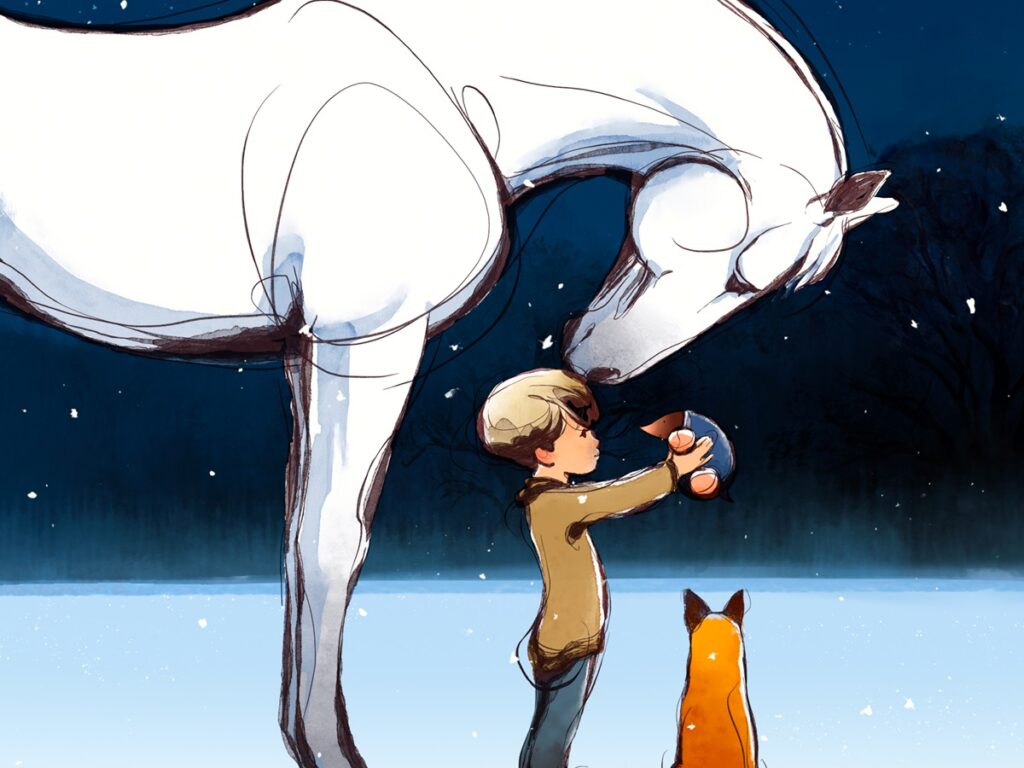
“The Boy, the Mole, the Fox and the Horse” is a 2019 illustrated book by Charlie Mackesy, which follows the developing friendship between these four characters.
The Boy is lost in the winter wilderness, where he meets the friendly Mole, who offers to help him find his way, searching for a home which he’s never had before. While exploring the wilderness, they encounter a river, and decide to follow it until they find a village.
On this journey, a horse and a fox become a part of the story too.
“This book is for everyone, whether you’re eight or 80”, says author and illustrator Charlie Mackesy who was attempting to make sense of his own feelings when he drew a picture of a boy talking to a horse and posted it to his Instagram account. Eventually Charlie had an entire book of words and pictures: an uncomplicated tale that he hoped would offer a pathway to healing for any troubled soul that discovered it.
The four creatures in the story – a lonely boy, a greedy mole, a wary fox and a gentle horse – were all elements of Charlie’s own make-up, and mirrors parts of all of our personalities. As the boy and the mole meet for the first time, the initial fear they must overcome is the landscape itself. As Charlie himself states, “I think the wild is a bit like life. Frightening sometimes, but beautiful.”
As we all embark on the journey of a new week which perhaps is also frightening but beautiful, we take some inspiration from this story:
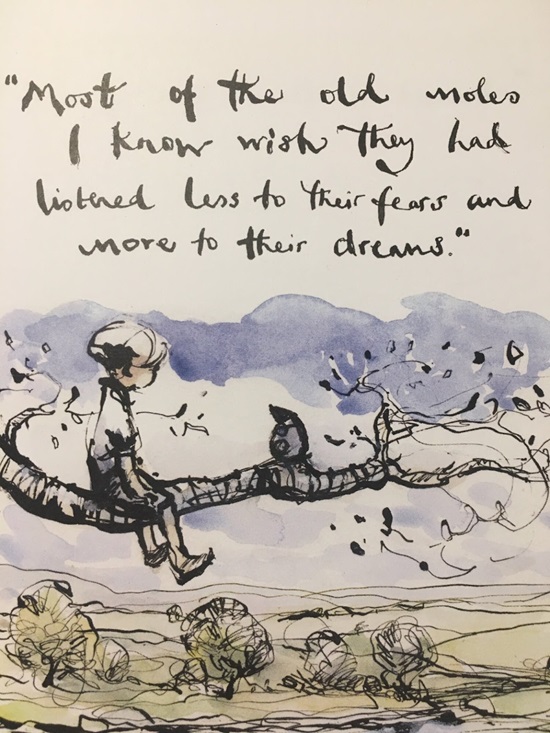
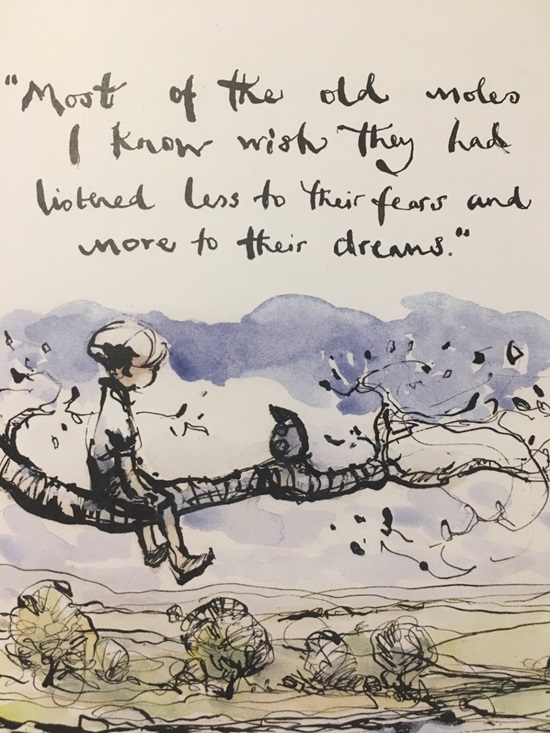
“Most of the old moles I know wish they had listened less to their fears and more to their dreams,” said the mole. – the Boy the Mole the Fox and the Horse
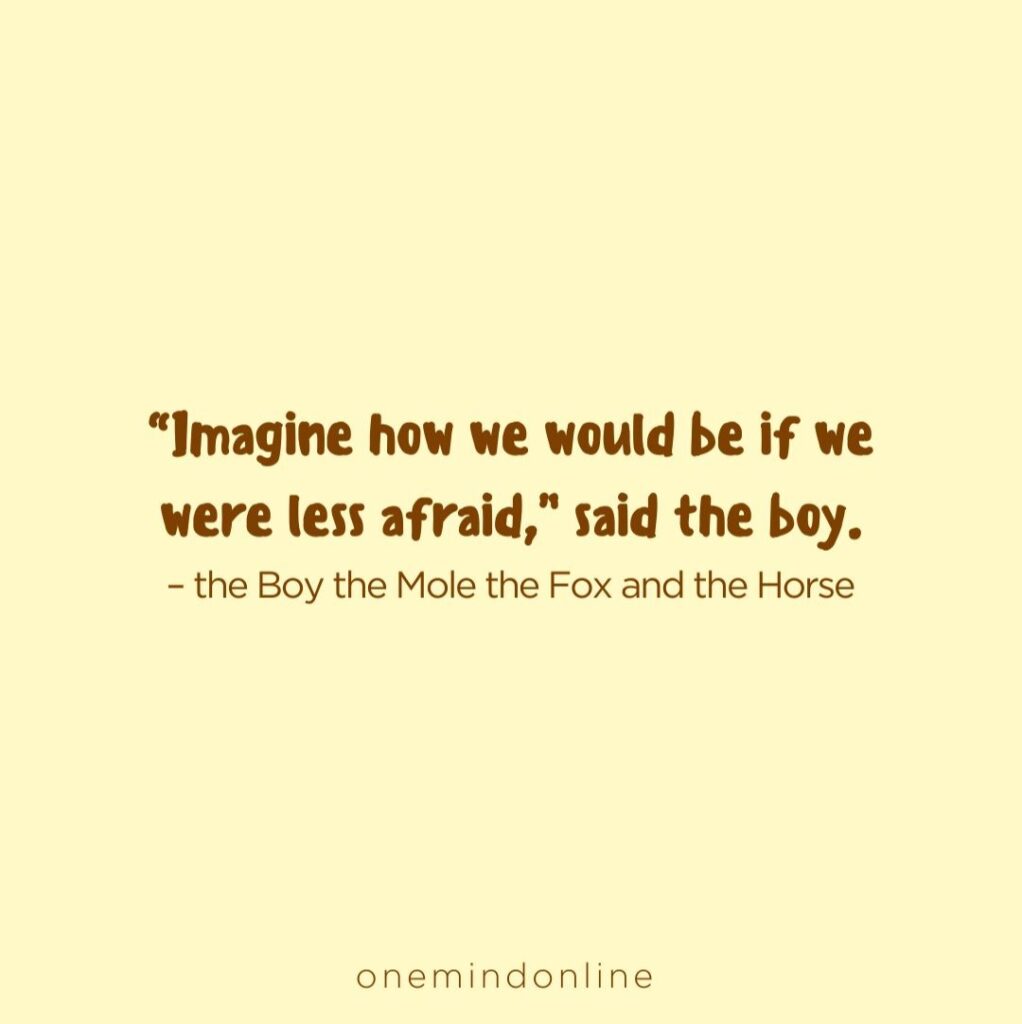
“Imagine how we would be if we were less afraid,” said the boy. – the Boy the Mole the Fox and the Horse
There’s a new week ahead of you, and you can decide whether you’ll be creating from a place of fear or from a place of freedom. What is it that will motivate your actions this week? How will you choose which actions to take?
Because we are human, all too often our goals and the actions we take are hijacked by what scares us. We “create” in order to survive because if we don’t create there’ll be consequences:
“I HAVE to go to work”, “I HAVE to keep a roof over our heads”, “I HAVE to put food on the table” … All of these are valid reasons for creating, and it’s a reality that we all have to deal with.
But the problem with creating from fear is that you never have a way to outrun it – you will never create so much that the fear disappears, even if you do reach the goal that you set, it will quickly be replaced by a new concern, a new worry, a new “have to.”
Creating from fear keeps you playing small and ensures that the best you can ever do is only just escape “punishment”.
Creating from a place of freedom, shifts your focus from problems to possibilities.
Freedom suggests that instead of just trying to avoid bad “consequences”, why don’t you create at your highest potential?
But the very human truth is that sometimes the fear is overwhelming, and we struggle to see anything beyond the storm that we’re currently facing. If this is the experience you’re having, please don’t be disappointed in yourself for being scared, but trust that storms always end up passing, and that you always find your way back to more clarity.
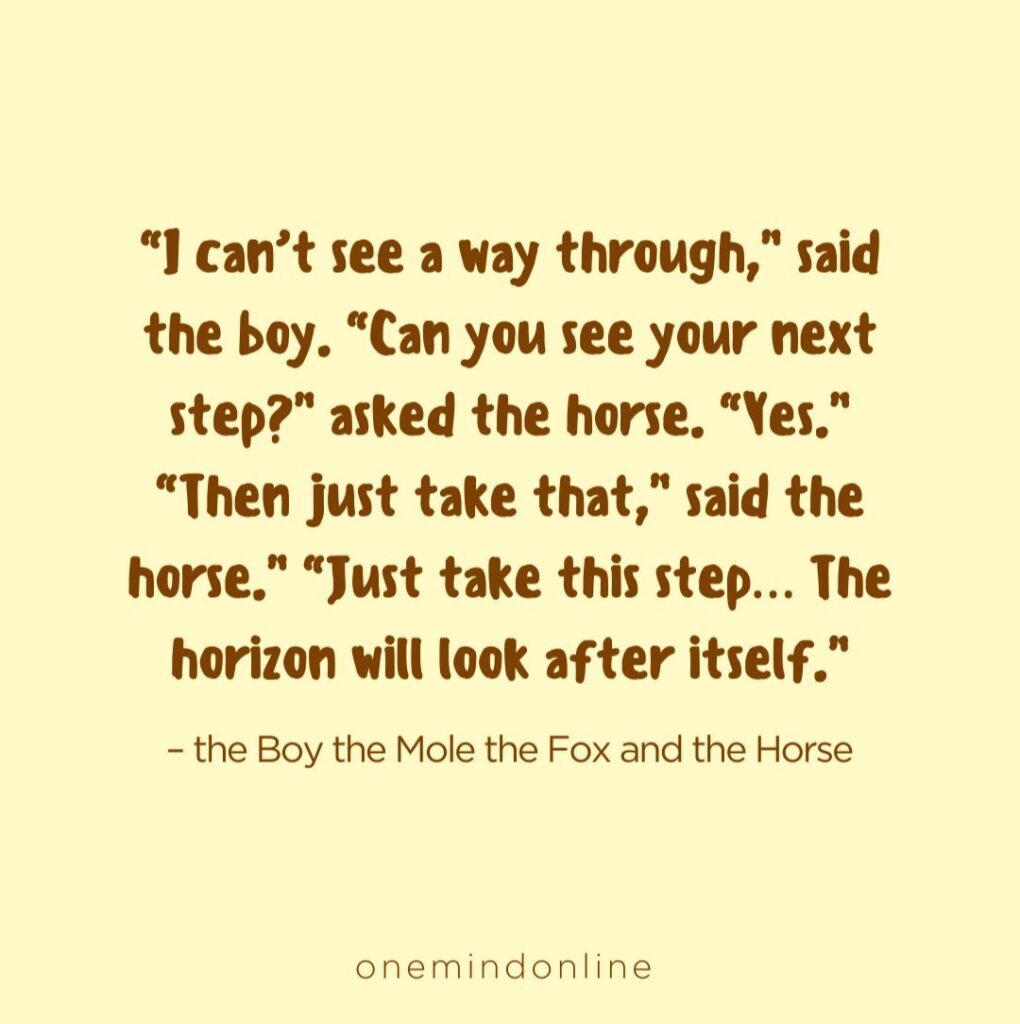
“I can’t see a way through,” said the boy. “Can you see your next step?” asked the horse. “Yes.” “Then just take that,” said the horse.” – the Boy the Mole the Fox and the Horse
“Just take this step… The horizon will look after itself.” – the Boy the Mole the Fox and the Horse
Forgive yourself for the moments when you are scared, and in those moments don’t try to see too far ahead, just take the next small step. We all have unrealized potential, and you will find yours when you get beyond fear and start believing that this is true.
Mantras to move you from problems to possibilities:
- “Today, I choose possibility over fear.”
- “I focus on my next step, not the entire journey.”
- “My potential is greater than my fear.”
- “I create from freedom, not obligation.”
- “I am never lost when I listen to my inner wisdom.”
This week, take inspiration from “The Boy, the Mole, the Fox and the Horse.” Embrace the adventure, face your fears, and remember, you are never truly lost as long as you keep moving forward, one step at a time.
I hope you have an awesome week, whether it is easy or hard.
– pierre –
Today’s LIVE meditation is: Jumpstart the week.
(Image credit: “The boy, the mole, the fox and the horse” by Charlie Mackesy)
https://youtu.be/aBCyknbBROo 2025
https://youtu.be/Ws43yyuNEig 2024
https://youtu.be/ihbu6Y1DUF4 2023
https://youtu.be/PawRTwNEVSw 2021
Today’s LIVE meditation
Practice the “Daily Dose”
Let’s put it into practice! Choose what works for you – daily, once a week or whenever inspiration strikes. Putting pen to paper wires the neural pathways that will create your new habits.
1 – Affirmation
Write down your favourite affirmation on a sticky note and place it somewhere that you’ll be able to see it the whole day.
- “Today, I choose possibility over fear.”
- “I focus on my next step, not the entire journey.”
- “My potential is greater than my fear.”
- “I create from freedom, not obligation.”
- “I am never lost when I listen to my inner wisdom.”
2 – A moment of reflection
Use today’s question as a journal prompt. If you don’t have the time to sit down and write, just take a moment to reflect on your response.
Your Next Brave Step: In what area of your life are you struggling to “see a way through”? Describe in detail the single next step you can take, however small. How might trusting the process and focusing only on this step free you from the paralysis of needing to see the entire path?
3 – Quotes to share
Send a quote to someone who needs it, or share them all on social media to spread the good vibes!



4 – Q&A for deeper learning
Read through the questions and answers and write down at least one “aha moment” that clicked for you.
Q1. What is the main message of “The Boy, the Mole, the Fox and the Horse”?
The central message is about finding courage, kindness, and wisdom through connection with others while navigating life’s uncertainties. Charlie Mackesy’s book reminds us that we all struggle with fear and doubt, but through friendship, vulnerability, and taking one step at a time, we can find our way through life’s wilderness. The story encourages us to listen more to our dreams than our fears.
Q2. How can I distinguish between creating from fear versus creating from freedom?
Creating from fear is reactive and feels like obligation – you act to avoid negative consequences and often feel constricted or anxious. You’ll notice phrases like “I have to” or “I should” dominating your thoughts. Creating from freedom feels expansive and purposeful – you act from inspiration, possibility, and choice. Your motivation comes from growth and contribution rather than avoidance. Ask yourself: “Am I doing this to escape something negative, or to move toward something meaningful?”
Q3. What can I do when I feel overwhelmed by fear?
When fear feels overwhelming, focus on taking just the next small step rather than trying to see the entire path. Practice self-compassion – acknowledge the fear without judgment. Remind yourself that storms always pass and clarity will return. Ground yourself in the present moment through deep breathing or mindfulness. Consider writing down your fears to gain perspective, and then identify one tiny action that feels manageable.
Q4. Why do we get stuck in fear-based thinking patterns?
We get stuck in fear-based thinking because our brains are wired for survival – they’re designed to scan for threats. This biological tendency is reinforced by societal messaging that emphasizes security and certainty. Additionally, past negative experiences create neural pathways that trigger automatic fear responses. These patterns become habitual and self-reinforcing, especially when we avoid what scares us, which prevents us from gathering evidence that might challenge our fears.
Q5. How can I apply the wisdom of “just take the next step” in practical terms?
To apply this wisdom practically, break down overwhelming goals into the smallest possible actions. For example, instead of “start exercising,” make your next step “just walk for five minutes” or even “put on workout clothes”. Create visual reminders of this principle where you’ll see them daily. Practice mindfulness to stay focused on the present rather than worrying about future steps. Celebrate each small step to reinforce the progress you’re making, however incremental it may seem.
Q6. What does it mean to “shift your focus from problems to possibilities”?
Shifting from problems to possibilities means training your attention to look for opportunities rather than obstacles. Instead of asking “What’s wrong?” ask “What’s possible?” This cognitive shift doesn’t ignore challenges but approaches them with creativity rather than dread. It involves questioning limiting beliefs, exploring multiple perspectives, and remaining curious. This mindset recognizes that within every problem lies potential for growth, learning, and unexpected positive outcomes.
Q7. How do I forgive myself for being afraid?
Forgiving yourself for fear starts with recognizing that fear is a universal human experience, not a personal failing. Practice self-compassion by speaking to yourself as you would to a dear friend. Acknowledge the protective intention behind your fear – it’s trying to keep you safe. Write a letter to yourself from a perspective of understanding. Remember that courage isn’t the absence of fear but acting despite it. Set aside perfectionistic expectations and celebrate your willingness to feel fear and still move forward.