

“Your Daily Dose” is a quick two minute read packed with bite-sized wisdom from all the great teachers. But you could also choose to turn it into something more… a powerful daily practice for personal growth. Give it a try!
A message from today’s meditation:
The human experience is a tapestry woven with threads of both light and also shadow, joy and also sorrow, strength and also vulnerability. We often find ourselves caught in the internal struggle of reconciling these opposing forces, conditioned to label one as “good” and the other as “bad,” to cling to certainty and avoid the discomfort of the unknown.
Do you have the ability to hold both? Are you able to tell both stories? Let’s ask Krishnamurti to explain:
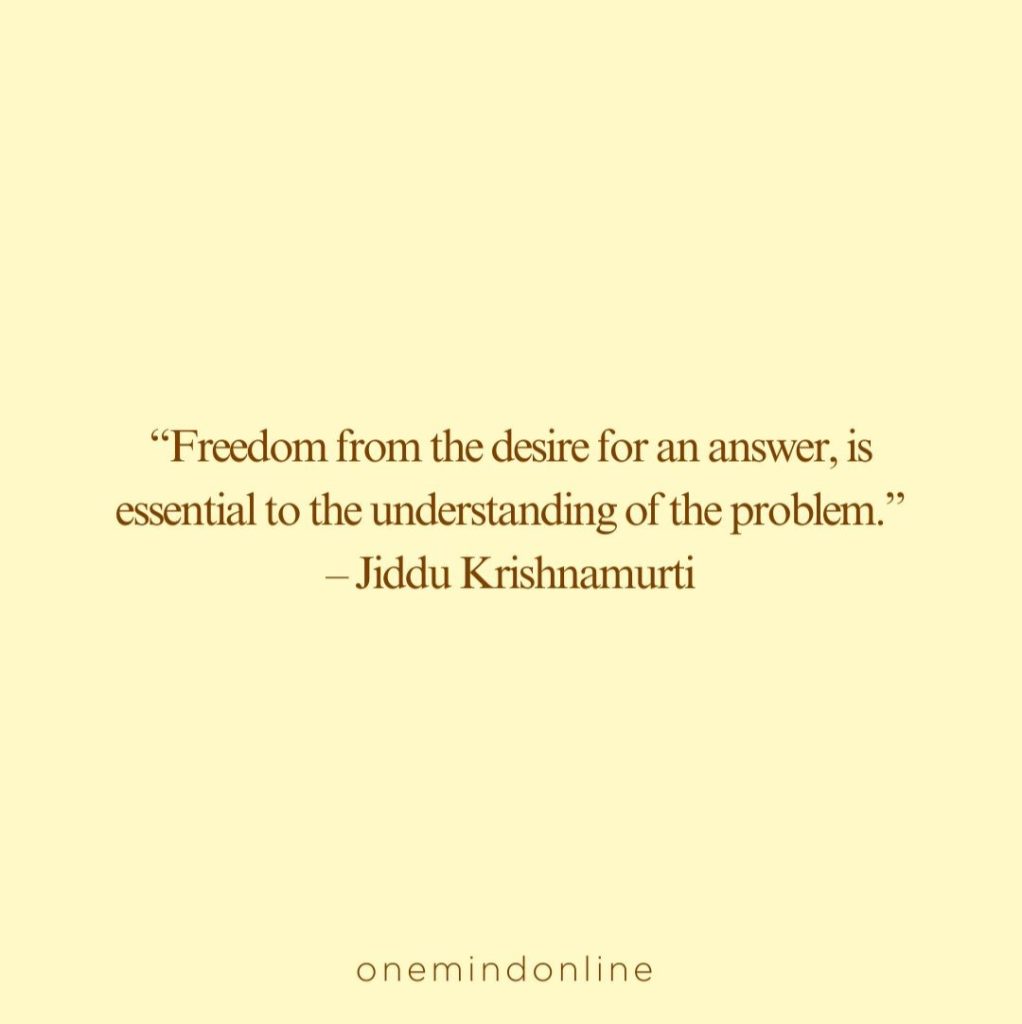
“Freedom from the desire for an answer, is essential to the understanding of the problem.” – Jiddu Krishnamurti
“The highest form of human intelligence, is to observe yourself without judgement.” – Jiddu Krishnamurti
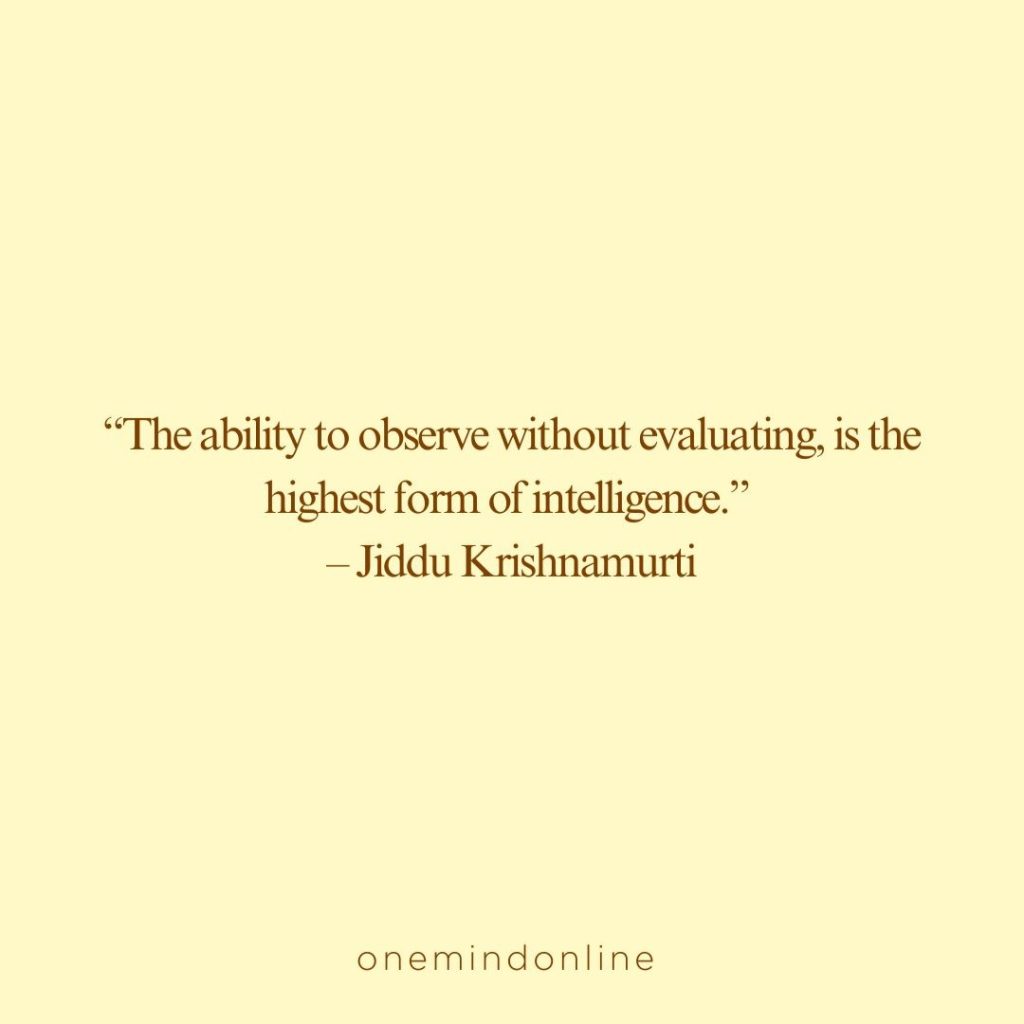
“The ability to observe without evaluating, is the highest form of intelligence.” – Jiddu Krishnamurti
It took me many years to fully understand this teaching by Krishnamurti and he was by no means the first, the same wisdom was taught through such great teachers as Lao Tzu, the Buddha, Aristotle and Jesus.
So let’s look at some practical examples and see if we can build an understanding by getting into the application of it.
Take a look at YOU. See if you can form an awareness of both sides of you? Can you see the scared human who often reacts in fear? Can you also see the Fearless Creator who strives to act in freedom? Can you see the part of you that feels heavy and is easily negative as well as the part of you that loves to feel light and see the positive side to everything? While you’re looking at the whole of YOU, do you “need” to make one side right and one side wrong? A part of you “good” and another part “bad”? Or can you just hold both?
Now here’s the real question: In this moment while I AM able to hold both – WHO am I BEING??? If I am able to look at both these sides of being human and not feel the need to judge, which part of me am I “being”?
Understanding the ego provides important context. The ego is fundamentally invested in physical survival, and fear drives it toward binary thinking. The ego demands “either/or” kind of certainty, insisting that something must be either black or white, with no room for shades of grey.
So while I can see both sides of me I’m certainly not being ego, I’m not being my small-self who desperately needs some sort of certainty in order to feel like I can survive.
My ability to hold both without judgement comes from my higher-self, from my soul.
Now of course we can’t always be only observing and saying “nothing is either good or bad”. Sometimes action is required. Sometimes a decision needs to be made… but which part of me do I want to give that responsibility to?
Do you want to give the responsibility to make important decisions to your ego? To the part of you that judges harshly and is so ready to condemn you for all your past sins? Or do you want to give the responsibility of making decisions to wisdom? To the part that can gently hold it all and then say, “I can see both sides, and now here is what’s best for you.” ???
Practice observing without judgement. Practice seeing both sides without choosing either – practice this in all things. What you are practicing is seeing through the eyes of your soul, and everything you continue practicing you will become better at. Seeing through the eyes of your soul will lead you to clarity, always.
Guiding mantras for self-reflection:
- “I see both sides, embracing the wholeness of my being.”
- “My soul is the wise observer, guiding me with compassion.”
- “I choose to act from clarity and wisdom, not fear or negativity.”
Wishing you a beautiful day!
– pierre –
Today’s LIVE meditation is: The observer.
Today’s LIVE meditation
https://youtu.be/a7IHb_pt_wQ 2026
https://youtu.be/aSFLVIt-TnU 2025
https://youtu.be/T35Z38iBw0s 2024
https://youtu.be/R7PnxErYKuI 2023
Practice the “Daily Dose”
Let’s put it into practice! Choose what works for you – daily, once a week or whenever inspiration strikes. Putting pen to paper wires the neural pathways that will create your new habits.
1 – Affirmation
Write down your favourite affirmation on a sticky note and place it somewhere that you’ll be able to see it the whole day.
- “I see both sides, embracing the wholeness of my being.”
- “My soul is the wise observer, guiding me with compassion.”
- “I choose to act from clarity and wisdom, not fear or negativity.”
2 – A moment of reflection
Use today’s question as a journal prompt. If you don’t have the time to sit down and write, just take a moment to reflect on your response.
Mapping Your Inner Landscape: Reflect on a recent situation where you felt internal conflict. Describe both sides of yourself that showed up – the fearful and the courageous, the negative and the positive, the contracted and the expansive. Write without labeling either side as good or bad. Simply observe: What did each part of you want? What was each part trying to protect or achieve? How does it feel to acknowledge both without choosing a winner?
3 – Quotes to share
Send a quote to someone who needs it, or share them all on social media to spread the good vibes!



4 – Q&A for deeper learning
Read through the questions and answers and write down at least one “aha moment” that clicked for you.
Q1. What does it mean to “hold both sides” without judgment?
Holding both sides means developing the capacity to simultaneously acknowledge contrasting aspects of yourself (and others) or a situation without needing to label one as good and the other as bad. It’s observing that you can be both fearful and courageous, both negative and positive, without forcing yourself to pick a side or condemn part of your experience. This practice allows you to see the fullness of reality rather than a flattened, either/or version of it.
Q2. If I observe without judgment, does that mean I never take action or make decisions?
Not at all. Observing without judgment doesn’t mean passivity or indecision. Rather, it’s about which part of you is making the decision. When you first observe without judgment, you engage your higher self—your wisdom and soul perspective. From that grounded, compassionate place, you can then make decisions that are aligned with your deepest truth rather than driven by fear, ego, or reactivity. Action from wisdom looks very different than reaction from fear.
Q3. How is the ego different from the soul in terms of decision-making?
The ego is primarily concerned with survival and seeks certainty as a way to feel safe. It thinks in binary terms—black or white, good or bad—and tends to judge harshly. The ego makes decisions from fear and the need to be right. The soul, on the other hand, can hold multiple perspectives simultaneously. It observes with compassion and makes decisions from wisdom, clarity, and love. The soul doesn’t need to condemn or cling to certainty; it trusts in the process of unfolding understanding.
Q4. Why does Krishnamurti say that freedom from the desire for an answer is essential?
When we desperately seek an answer, we’re often driven by anxiety and the need for certainty. This desperation actually clouds our ability to truly understand the problem we’re facing. By releasing the urgent need for an immediate answer, we create space for deeper insight to emerge. We can sit with complexity, observe patterns, and allow understanding to develop organically rather than forcing a premature conclusion that serves our ego’s need for control.
Q5. How can I tell if I’m being my ego or my higher self in any given moment?
A key indicator is whether you feel the need to judge, categorize, or choose between opposites. If you’re thinking in black-and-white terms, feeling defensive, or desperately clinging to being “right,” you’re likely operating from ego. If you can observe your experience with curiosity and compassion, hold paradox without discomfort, and see multiple perspectives simultaneously, you’re accessing your higher self. Your higher self feels spacious and calm; your ego feels contracted and urgent.
Q6. Is it realistic to practice non-judgment all the time?
The practice isn’t about achieving perfect non-judgment at every moment—that would be another form of perfectionism and judgment. Rather, it’s about building the muscle of awareness. Start by practicing in small moments: observe your thoughts without immediately believing them, notice your reactions without condemning yourself for having them, and catch yourself when you’re thinking in extremes. Over time, this capacity strengthens, and you’ll naturally access this perspective more frequently.
Q7. How does seeing through the eyes of my soul lead to clarity?
When you observe from your soul perspective, you’re not distorting reality through the lens of fear, judgment, or the need to be right. You see things more completely and accurately because you’re not cutting away the parts that make you uncomfortable. This fuller view naturally brings clarity because you’re working with accurate information rather than a defensive, filtered version of reality. The soul’s clarity isn’t about having all the answers—it’s about seeing what’s truly present and responding from wisdom rather than reaction.