
“Your Daily Dose” is a quick two minute read packed with bite-sized wisdom from all the great teachers. But you could also choose to turn it into something more… a powerful daily practice for personal growth. Give it a try!
A message from today’s meditation:
This first quote from Swami Vivekananda can possibly be a little controversial –
“The greatest religion is to be true to your own nature. Have faith in yourselves.” – Swami Vivekananda
From experience I know that this can be a touchy subject… religion… and then the suggestion that your own true nature should be your religion…?
When we think of human nature, our minds typically gravitate toward our flaws, mistakes, and limitations. We see our bad habits, our fears, our moments of weakness, and we easily dwell on typical human destructive tendencies.
But is there something deeper? Is there some fundamental goodness beneath these surface layers that we can find when we work our way through all the layers of armour we have covered ourselves with?
“In a conflict between the heart and the brain, follow your heart.” – Swami Vivekananda
“All power is within you; you can do anything and everything.” – Swami Vivekananda
“Where can we go to find God if we cannot see Him in our own hearts and in every living being.” – Swami Vivekananda
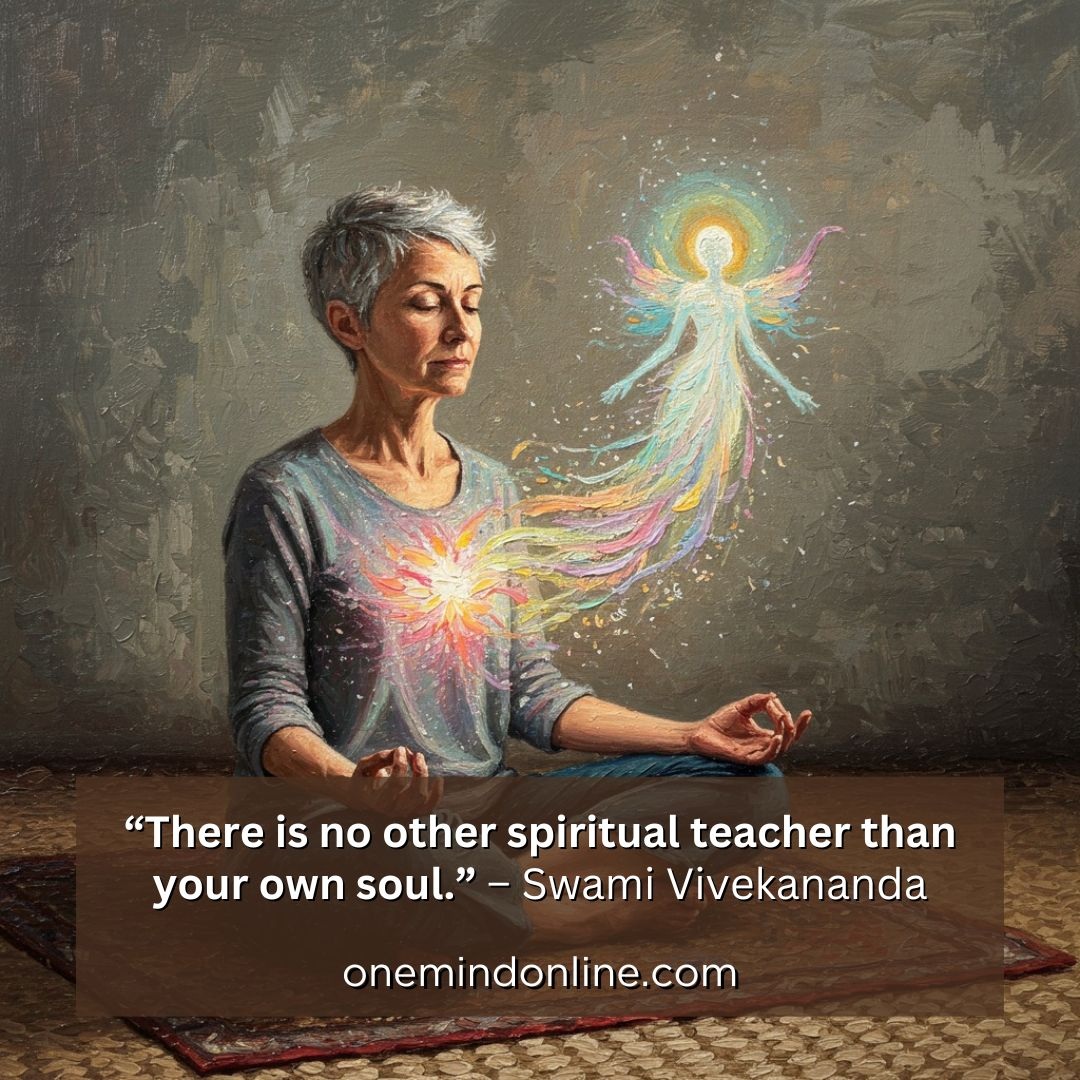
“There is no other spiritual teacher than your soul.” – Swami Vivekananda
The point that Swami Vivekananda is trying to make is that if God is to be found anywhere, it is within you.
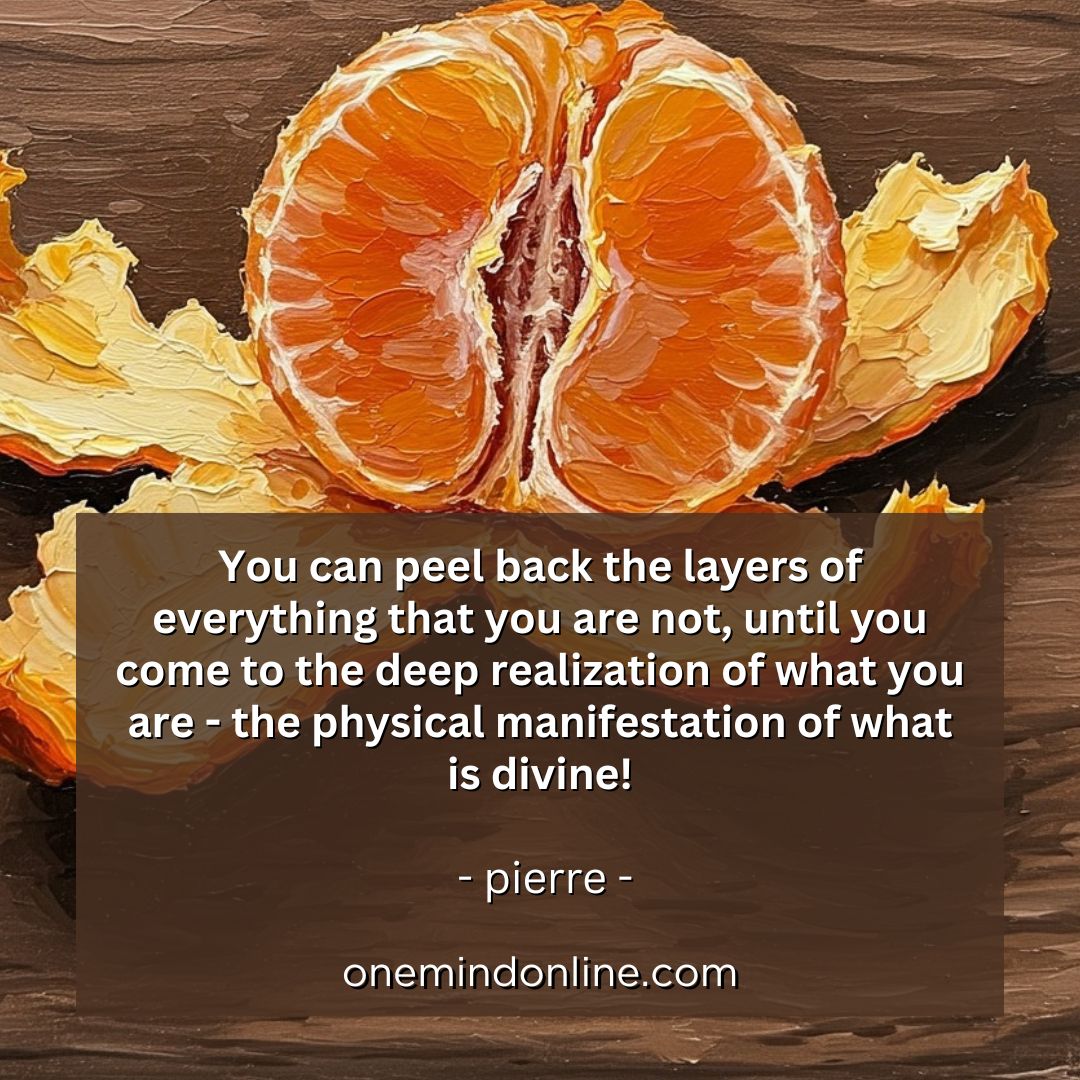
You might have built a whole collection of coping mechanisms on top of your original foundation, but you can work our way back again. You can peel back the layers of everything that you are not, until you come to the deep realization of what you are – the physical manifestation of what is divine!
Your divine essence is waiting to be rediscovered beneath the layers of conditioning, habits, and self-doubt. The inner compass that guides you towards alignment with your soul. This alignment unlocks immense potential, and silence can be a valuable practice on this journey.
Affirmations to remind you of your true nature:
- “I honour both my humanity and my divinity.”
- “Every breath connects me to the sacred within.”
- “My inner wisdom guides me toward my authentic path.”
- “I am willing to release what no longer serves my highest good.”
Your divine essence is not a destination to reach but a reality to remember. It’s not something you become but something you’ve always been, waiting patiently beneath the surface for you to come home to yourself.
Have a beautiful Sunday, beautiful people.
– pierre –
Today’s LIVE meditation is: Finding silence.
Today’s LIVE meditation
https://youtu.be/asIoChbbegc 2022
Practice the “Daily Dose”
Let’s put it into practice! Choose what works for you – daily, once a week or whenever inspiration strikes. Putting pen to paper wires the neural pathways that will create your new habits.
1 – Affirmation
Write down your favourite affirmation on a sticky note and place it somewhere that you’ll be able to see it the whole day.
- “I honour both my humanity and my divinity.”
- “Every breath connects me to the sacred within.”
- “My inner wisdom guides me toward my authentic path.”
- “I am willing to release what no longer serves my highest good.”
2 – A moment of reflection
Use today’s question as a journal prompt. If you don’t have the time to sit down and write, just take a moment to reflect on your response.
The Conflict Between Head and Heart: Think of a recent decision where your logical mind was pulling you in one direction, but your heart or intuition was calling you toward something else. Write about both sides of this internal dialogue. What was your analytical mind concerned about? What was your heart trying to tell you? Which voice did you ultimately follow, and how did that choice unfold? Explore what it would mean to trust your heart’s wisdom more deeply, even when it seems to contradict conventional logic.
3 – Quotes to share
Send a quote to someone who needs it, or share them all on social media to spread the good vibes!

4 – Q&A for deeper learning
Read through the questions and answers and write down at least one “aha moment” that clicked for you.
Q1. What does it mean to make your “own nature” your religion?
Making your own nature your religion means treating your authentic self with the same reverence and attention you might give to traditional spiritual practices. It’s about recognizing that your true essence – beneath conditioning and social expectations – is inherently sacred and worthy of honour. This doesn’t mean being selfish or ignoring moral principles, but rather trusting that when you align with your authentic nature, you naturally act from a place of integrity and compassion.
Q2. How do I know if I’m following my heart or just being impulsive?
Following your heart differs from impulsivity in several key ways. Heart-centered decisions tend to create a sense of inner peace and alignment, even if they’re challenging. They’re often accompanied by a quiet knowing rather than urgent reactivity. Impulsive decisions typically come from emotional intensity, fear, or the need for immediate relief. Take time to sit quietly with important decisions – your heart’s wisdom often becomes clearer in stillness, while impulsive urges tend to demand immediate action.
Q3. What are these “layers” that cover our true nature?
These layers include learned behaviors, social conditioning, defense mechanisms, limiting beliefs, and roles we’ve adopted to feel safe or accepted. They might manifest as perfectionism, people-pleasing, chronic self-doubt, or constant defensive barriers. While these adaptations often served important protective functions, they can eventually become barriers to authentic self-expression. The goal isn’t to judge these layers harshly, but to recognize them with compassion and gradually release what no longer serves your growth.
Q4. How can I access my inner wisdom when my mind is constantly racing?
Racing thoughts often indicate that your nervous system is in a state of activation. Start with practices that calm your body first – deep breathing, gentle movement, or spending time in nature. Create regular periods of silence, even if just for five minutes daily. Journaling can help externalize mental chatter, creating space for deeper insights to emerge. Remember that accessing inner wisdom is an ongoing practice, not a destination – be patient with yourself as you develop this skill.
Q5. Is it possible to have both human flaws and divine nature?
Absolutely – in fact, this is the beautiful paradox of human existence. Perfection is not reality – it doesn’t exist – so your divine nature cannot be free from human struggles. It exists alongside your humanity, not in spite of it. Your flaws, mistakes, and challenges are all part of your human experience and can actually serve as doorways to greater compassion and wisdom. The divine aspect of yourself is found in the unchanging awareness that embraces all of your human experiences with acceptance, and then guides you toward deeper understanding that bring wiser responses in the future.
Q6. How do I differentiate between my authentic self and my ego?
Your authentic self typically feels expansive, peaceful, and connected to something larger than yourself. It operates from love, creativity, and genuine concern for others’ wellbeing. Your ego, while serving important functions, often operates from fear, comparison, and the need to protect your self-image. Authentic self-expression usually feels effortless and aligned, while ego-driven actions often feel forced or performative. With practice, you’ll develop sensitivity to these different energetic qualities within yourself.
Q7. What if I don’t feel divine or spiritual at all?
Feeling divine or spiritual isn’t a requirement for this wisdom to be true. Your divine nature isn’t dependent on your beliefs about it or your emotional state. It’s more like gravity – it exists whether you feel it or not. Start simple: notice moments of genuine joy, unexpected kindness, or creative inspiration. These are glimpses of your divine nature expressing itself naturally. The spiritual journey isn’t about achieving a particular feeling, but about recognizing the sacred in your ordinary, everyday human experience.