
“Your Daily Dose” is a quick two minute read packed with bite-sized wisdom from all the great teachers. But you could also choose to turn it into something more… a powerful daily practice for personal growth. Give it a try!
A message from today’s meditation:
Sundays are traditionally a time for rest and reflection, and what better way to embrace that stillness than by delving into the profound power of silence? Silence is not the absence of sound, but a gateway to the core of our being.
Today’s beautiful thoughts on silence come from the 13th Century Persian poet Rumi:
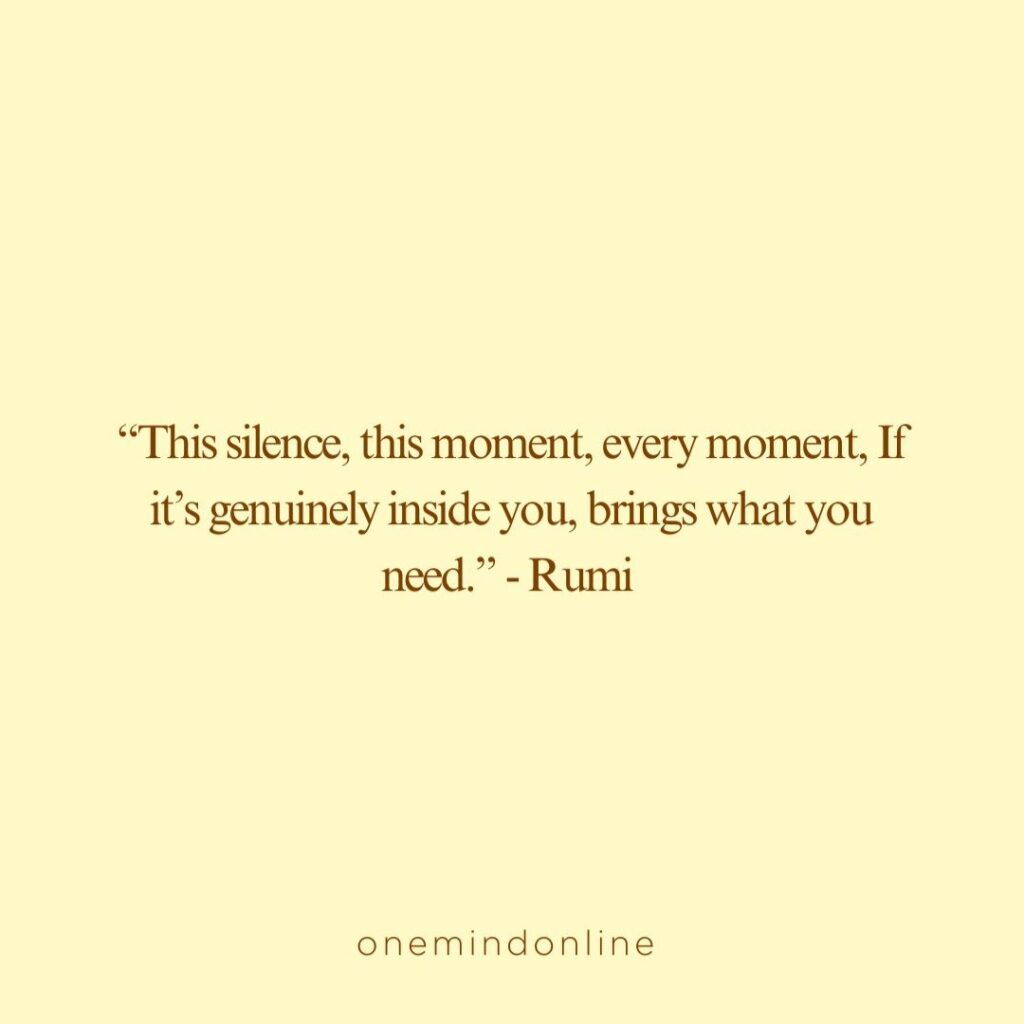
“This silence, this moment, every moment, if it’s genuinely inside you, brings what you need.” – Rumi
“Let silence take you to the core of life.” – Rumi
“Last night I begged the Wise One to tell me the secret of the world. ‘Gently, gently, he whispered, be quiet, the secret cannot be spoken, it is wrapped in silence.’” – Rumi
“Silence is the language of God, all else is poor translation.” – Rumi
“Why are you so afraid of silence, silence is the root of everything. If you spiral into its void, a hundred voices will thunder messages you long to hear.” – Rumi
And then arguably Rumi’s most well known phrase:
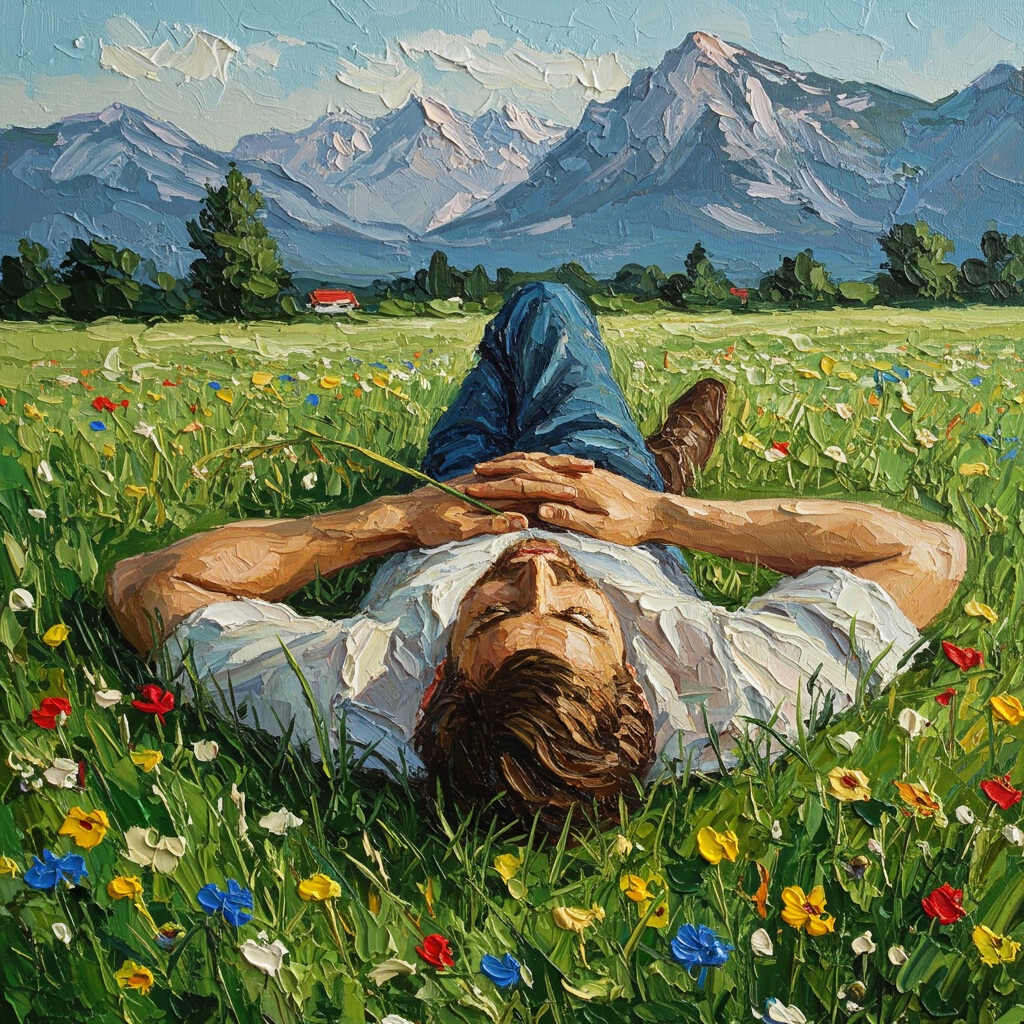
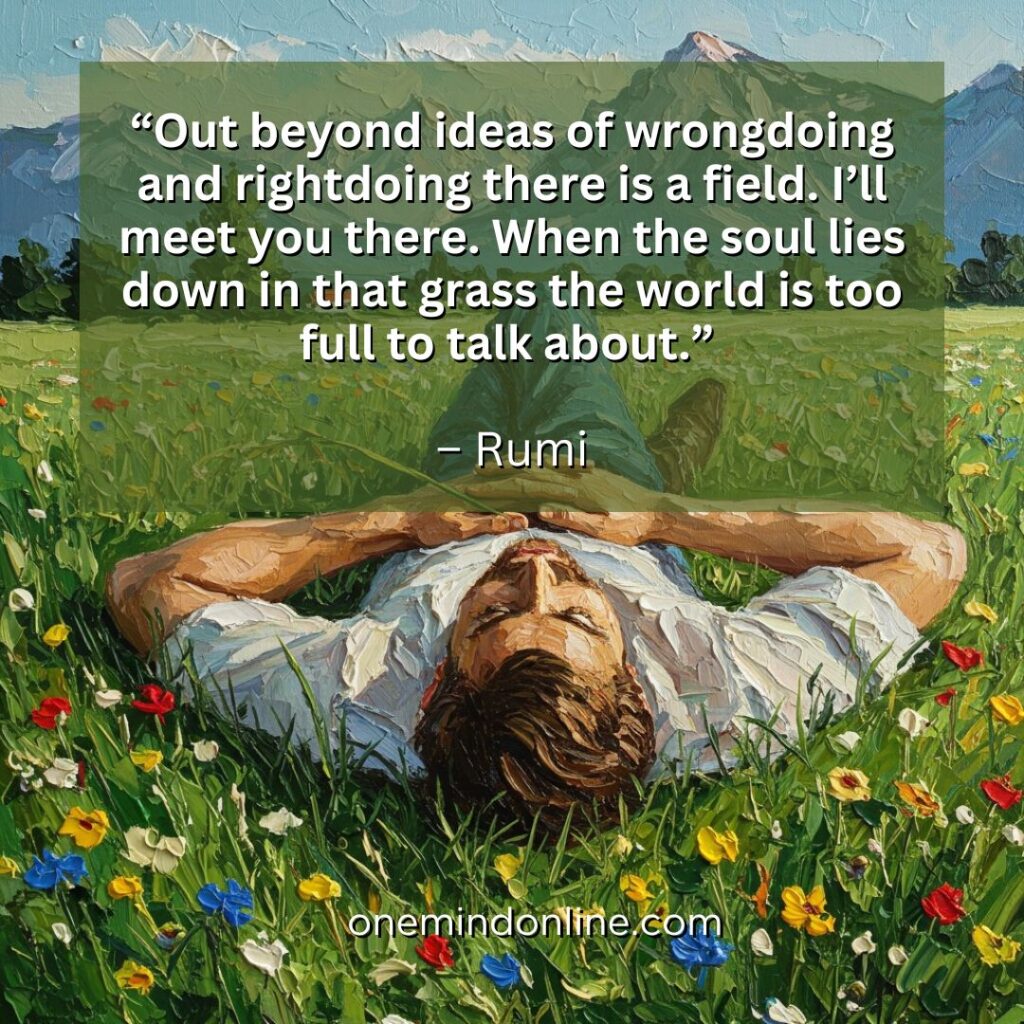
“Out beyond ideas of wrongdoing and rightdoing there is a field. I’ll meet you there. When the soul lies down in that grass the world is too full to talk about.” – Rumi
When you have downtime, how do you use that space? Chances are, you’re geared to filling in that time – probably without even thinking about it – by answering a few emails, doing a little work, cleaning, surfing the web, scrolling social media or catching up on your TV shows. You may not think to yourself, “I think I’ll just sit in silence”.
Yet most of us crave more down time, more stillness. So why don’t we make it happen?
Silence can make us uncomfortable because when we’re truly silent, we have to face whatever is inside of us. So we’ve become conditioned to fill every spare moment with activity, to seek solace in the constant hum of information and interaction.
Dr. Stephanie Ludwig, Director of Spiritual Wellness at Canyon Ranch Tucson say’s “We’re so used to distracting ourselves from what we’re feeling, from difficult emotions like fear, resentment or anger that we’d rather keep moving and making plans and doing things for others. We live in such a ‘doer’ culture – go, go, go, do, do, do! If we really knew the blessings that come with silence, we would definitely make more time for it.”
Mantras for embracing silence:
- “In the quiet, I find myself.”
- “Silence is not an absence, but a presence waiting to be discovered.”
- “Today, I choose stillness over stimulation.”
- “I listen to the whispers of my soul, and they guide me home.”
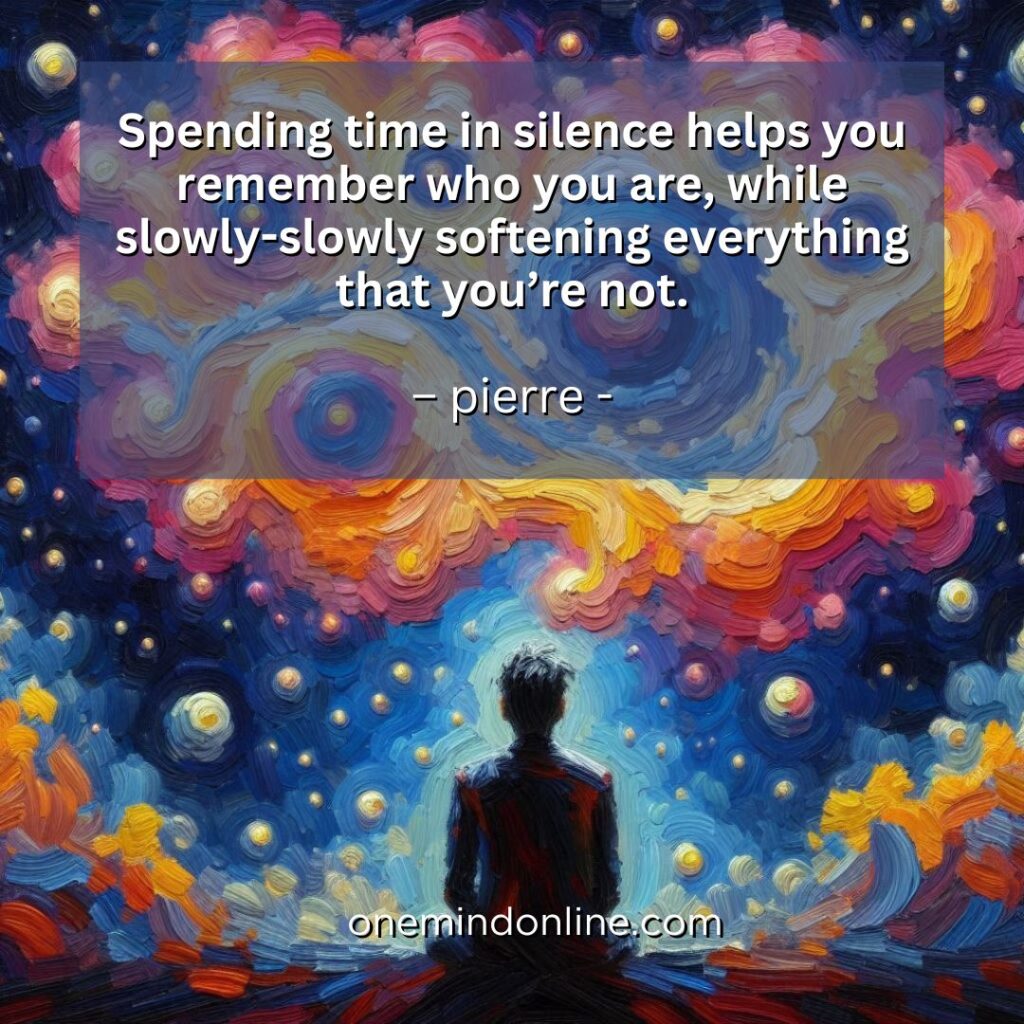
Spending time in silence helps you remember who you are, while slowly-slowly softening everything that you’re not.
Have a beautiful Sunday.
– pierre –
Today’s LIVE meditation is: Finding silence.
Today’s LIVE meditation
https://youtu.be/yV_3HwAPUVY 2024
https://youtu.be/Gbpo6_lRBY8 2023
Practice the “Daily Dose”
Let’s put it into practice! Choose what works for you – daily, once a week or whenever inspiration strikes. Putting pen to paper wires the neural pathways that will create your new habits.
1 – Affirmation
Write down your favourite affirmation on a sticky note and place it somewhere that you’ll be able to see it the whole day.
- “In the quiet, I find myself.”
- “Silence is not an absence, but a presence waiting to be discovered.”
- “Today, I choose stillness over stimulation.”
- “I listen to the whispers of my soul, and they guide me home.”
2 – A moment of reflection
Use today’s question as a journal prompt. If you don’t have the time to sit down and write, just take a moment to reflect on your response.
The provided mantras suggest that “in the quiet, I find myself” and that “silence is not an absence, but a presence waiting to be discovered.” Explore what these statements mean to you personally. What aspects of yourself might you connect with in silence? What kind of “presence” do you imagine waiting to be discovered within stillness?
3 – Quotes to share
Send a quote to someone who needs it, or share them all on social media to spread the good vibes!


4 – Q&A for deeper learning
Read through the questions and answers and write down at least one “aha moment” that clicked for you.
Q1. Why does silence feel uncomfortable for so many people?
Silence removes the buffer between us and our inner world. Without noise or activity to distract us, unresolved emotions, fears, and unprocessed feelings surface. We’ve been conditioned to stay in motion — culturally rewarded for doing and producing — so stillness can feel unnatural, even threatening. The discomfort is actually a sign that silence is working: it’s bringing you closer to yourself.
Q2. What does it mean that silence is “the language of God”?
Rumi’s phrase points to the idea that the deepest truths — about existence, meaning, love, and the self — cannot be fully captured in words. Language is a translation of something larger. Silence is where that larger thing lives. Whether you hold this spiritually or simply as metaphor, the invitation is the same: stop narrating your experience long enough to have it.
Q3. I already rest — I watch TV, scroll, decompress. Isn’t that the same thing?
Passive consumption and genuine stillness are different experiences. Watching TV or scrolling keeps the mind engaged and stimulated — it’s rest from external demands, but not from internal noise. True silence allows the nervous system to reset at a deeper level. It’s the difference between pausing a machine and actually switching it off.
Q4. How do I actually practise silence — where do I start?
Start smaller than you think you need to. Five minutes without a screen or background noise is a real beginning. Morning coffee before you reach for your phone. A walk without earphones. Sitting at a window for a few minutes before the day starts. You don’t need a formal practice or a retreat — you need only the willingness to resist the next impulse to fill the quiet.
Q5. What is Rumi’s “field beyond wrongdoing and rightdoing,” really?
It’s a metaphor for a state of being that exists beyond judgment, comparison, and the mental categories we use to divide experience into good and bad. In that field, you are not assessing, defending, or performing. You simply are. Many people encounter a glimpse of this in deep meditation, moments of awe in nature, or genuine connection with another person. Rumi is suggesting it is always available — we just need to stop and lie down in it.
Q6. What are the actual benefits of spending more time in silence?
Research and contemplative traditions alike point to similar benefits: reduced stress and anxiety, greater emotional clarity, improved focus, access to creativity and intuition, and a stronger sense of identity — of knowing who you are beneath the roles you play. Dr. Stephanie Ludwig of Canyon Ranch notes that when we stop distracting ourselves from difficult emotions, we create space for those emotions to move through rather than accumulate. Silence doesn’t just feel good; it reorganises something.
Q7. I have a very busy life. Is silence really realistic for me?
The busyness is exactly why it matters. The belief that silence requires large amounts of time or ideal conditions is itself part of the avoidance. A minute of genuine stillness — one breath taken consciously, one moment where you stop and feel where you are — counts. The practice is less about duration and more about direction: turning toward yourself rather than away. Even in a crowded life, that turning is always available.