

“Your Daily Dose” is a quick two minute read packed with bite-sized wisdom from all the great teachers. But you could also choose to turn it into something more… a powerful daily practice for personal growth. Give it a try!
A message from today’s meditation:
There is a beautiful paradox to being human. We are a glorious tapestry woven with vibrant threads of strength, resilience, and love, and also… among these vibrant threads there are undeniably threads of imperfection, insecurities, and occasional stumbles, inseparable from the woven whole.
The question isn’t whether these so-called flaws exist. They do. The real question is whether they diminish our value or are essential to our beauty. And that is something only you can answer for yourself.
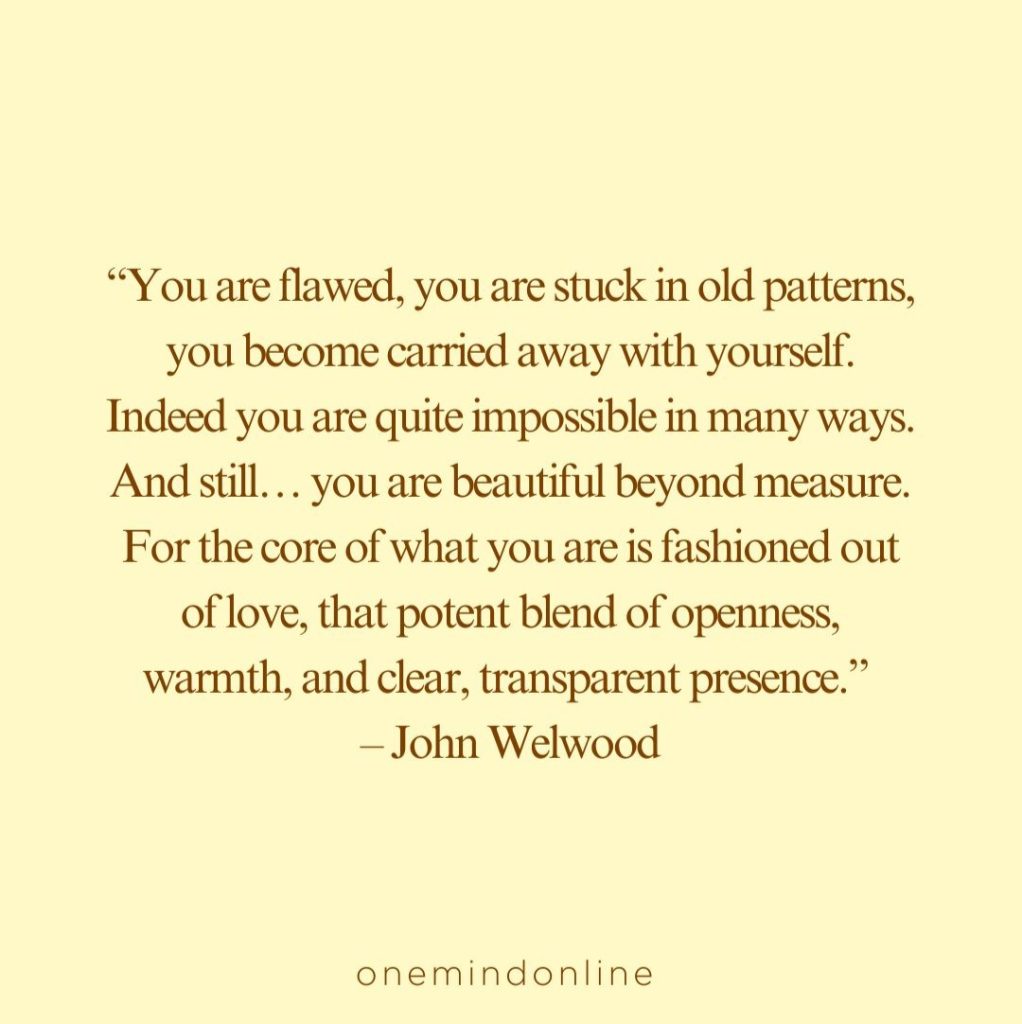
“You are flawed, you are stuck in old patterns, you become carried away with yourself. Indeed you are quite impossible in many ways. And still… you are beautiful beyond measure. For the core of what you are is fashioned out of love, that potent blend of openness, warmth, and clear, transparent presence.” – John Welwood
There is a messiness to being human, and most of us were taught that being less than perfect makes us unacceptable. The truth is that being a human animal means that we are both – messy and also beautiful.
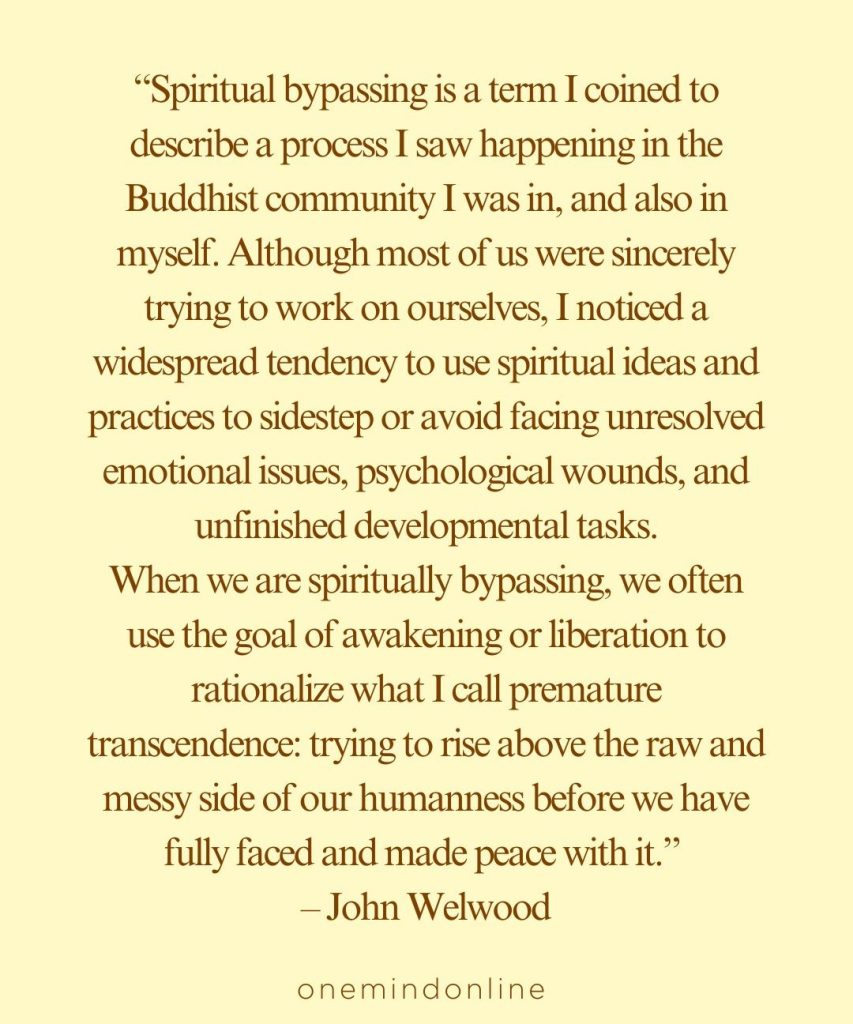
“Spiritual bypassing is a term I coined to describe a process I saw happening in the Buddhist community I was in, and also in myself. Although most of us were sincerely trying to work on ourselves, I noticed a widespread tendency to use spiritual ideas and practices to sidestep or avoid facing unresolved emotional issues, psychological wounds, and unfinished developmental tasks.
When we are spiritually bypassing, we often use the goal of awakening or liberation to rationalize what I call premature transcendence: trying to rise above the raw and messy side of our humanness before we have fully faced and made peace with it.” – John Welwood
We don’t step into the power of our light, by pretending we don’t have shadow. Don’t run from any of this. Stay. Sit. Be with it.
Growth doesn’t spring from a place of self punishment or striving for flawlessness. It blossoms from a place of self-acceptance and gentle forgiveness. So, the next time you stumble, the next time your ego takes the wheel, don’t run. Sit with it. Feel the discomfort, the shame, the anger. Hold those scared parts within you until they feel a little lighter. Then, ask yourself, “Who am I being while I hold these scared parts?” This simple question can be a powerful catalyst for self-discovery and acceptance.
We don’t do better because we stop making mistakes. We do better because we become a bit softer and gentler and forgive a bit easier… ourselves and others.
So how do we embrace this messy magnificence? Here are a few guiding mantras:
- Be Present: Don’t run from your emotions, good or bad. Sit with them, acknowledge them, and allow them to flow through you.
- Embrace the Imperfect: You are a work in progress, and that’s okay. Celebrate your strengths while acknowledging your flaws.
- Practice Self-Compassion: Forgive yourself for mistakes. Be kind to yourself as you would be to a dear friend.
- Find the Beauty in the Mess: There’s an undeniable beauty in our imperfections. It’s in our vulnerability, our resilience, and our capacity for growth.
The most beautiful souls are often the ones who have known struggle, embraced their flaws, and chosen kindness in the face of imperfection. You are beautifully messy, and that’s exactly what makes you extraordinary.
– pierre –
Today’s LIVE meditation is: A sense of self.
Today’s LIVE meditation
https://youtu.be/p6yLMJGRP54 2026
https://youtu.be/Dc6YntL4Gwg 2025
https://youtu.be/D4tIDTypEiM 2024
https://youtu.be/YcZ3vpVZazE 2022
https://www.youtube.com/watch?v=VEuuoDRoj9E 2020
Practice the “Daily Dose”
Let’s put it into practice! Choose what works for you – daily, once a week or whenever inspiration strikes. Putting pen to paper wires the neural pathways that will create your new habits.
1 – Affirmation
Not affirmations today, but some beautiful principles for wholeness. Write down your favourite one on a sticky note and place it somewhere that you’ll be able to see it the whole day.
- Be Present: Don’t run from your emotions, good or bad. Sit with them, acknowledge them, and allow them to flow through you.
- Embrace the Imperfect: You are a work in progress, and that’s okay. Celebrate your strengths while acknowledging your flaws.
- Practice Self-Compassion: Forgive yourself for mistakes. Be kind to yourself as you would be to a dear friend.
- Find the Beauty in the Mess: There’s an undeniable beauty in our imperfections. It’s in our vulnerability, our resilience, and our capacity for growth.
2 – A moment of reflection
Use today’s question as a journal prompt. If you don’t have the time to sit down and write, just take a moment to reflect on your response.
Redefining Your Relationship with Imperfection: You were likely taught that being less than perfect makes you unacceptable. Write a letter to your younger self explaining the truth: that being messy and beautiful simultaneously is what makes you human. What would you want that younger version of you to know about the value of imperfection? How would your life be different today if you had always believed you were worthy exactly as you are?
3 – Quotes to share
Send a quote to someone who needs it, or share them all on social media to spread the good vibes!



4 – Q&A for deeper learning
Read through the questions and answers and write down at least one “aha moment” that clicked for you.
Q1. What does it mean to be “beautifully messy”?
Being beautifully messy means accepting that you are simultaneously flawed and magnificent. It’s the recognition that your imperfections, insecurities, and stumbles are not separate from your beauty—they’re woven into the very fabric of who you are. Just as a tapestry gains depth and character from varied threads, your wholeness includes both light and shadow. The messiness doesn’t diminish your worth; it’s part of what makes you authentically human and extraordinary.
Q2. What is spiritual bypassing and how do I know if I’m doing it?
Spiritual bypassing, a term coined by psychologist John Welwood, is the tendency to use spiritual ideas and practices to avoid facing unresolved emotional issues, psychological wounds, and unfinished developmental tasks. You might be spiritually bypassing if you use positivity to deny difficult emotions, push yourself to “transcend” pain before processing it, use meditation or mindfulness to escape your feelings rather than engage with your feelings, or rationalize avoiding difficult personal work by focusing on enlightenment or awakening. True growth requires facing the raw and messy parts of our humanness, not prematurely trying to rise above them.
Q3. How can I stop running from my difficult emotions?
The practice is simple but not easy: stay, sit, and be with your emotions. When discomfort, shame, or anger arises, resist the urge to distract yourself or push the feelings away. Instead, acknowledge what you’re feeling without judgment. Create space to feel the sensations in your body. Breathe through the discomfort. Hold those scared parts of yourself with compassion until they feel a little lighter. Ask yourself, “Who am I being while I hold these scared parts?” This question can transform your relationship with difficult emotions from avoidance to acceptance.
Q4. Why is self-compassion more effective than self-criticism for personal growth?
Growth doesn’t spring from self-punishment or striving for flawlessness—it blossoms from self-acceptance and gentle forgiveness. When you criticize yourself harshly, you activate your threat response system, which makes you defensive and less capable of learning. Self-compassion, on the other hand, creates psychological safety that allows you to acknowledge mistakes without your identity feeling threatened. We don’t do better because we stop making mistakes; we do better because we become softer, gentler, and more forgiving with ourselves and others. This gentleness creates the conditions for sustainable transformation.
Q5. How do I know if my flaws decrease or increase my value?
This is a question only you can answer for yourself, and your answer will shape your entire relationship with your humanity. From one perspective, flaws can be seen as defects that make you less than. From another, they’re evidence of your lived experience, your resilience, your capacity for growth. Consider this: are the most inspiring people you know those who appear perfect, or those who have struggled, failed, and chose to continue anyway? Your so-called flaws often create the depth, empathy, and wisdom that make you capable of genuine connection and impact. The question isn’t whether you have imperfections—you do. The question is whether you’ll allow them to be part of your wholeness or continue treating them as obstacles to it.
Q6. What’s the difference between accepting my flaws and using them as an excuse not to grow?
Accepting your flaws doesn’t mean resigning yourself to them or using them to justify harmful behavior. True acceptance means seeing your imperfections clearly without either denial or excessive self-criticism, creating space for them to exist while also remaining open to transformation. When you accept your flaws, you’re not saying, “This is who I am and I’ll never change.” You’re saying, “This is where I am right now, and I’m worthy of love and respect even as I continue to evolve.” Growth from acceptance is sustainable because it comes from self-love rather than self-rejection. Growth from non-acceptance is exhausting because you’re constantly at war with yourself.
Q7. How do I practice being present with my imperfections in daily life?
Start small and be consistent. When you notice yourself making a mistake or falling into an old pattern, pause instead of immediately trying to fix or flee. Take three deep breaths and name what you’re feeling without judgment: “I’m feeling ashamed right now” or “I notice my ego is activated.” Practice the question, “Who am I being while I hold these scared parts?” Notice how your relationship with yourself shifts when you bring compassion rather than criticism to your stumbles. Create a daily practice of acknowledging one imperfection without trying to change it—simply observe it with curiosity. Over time, this practice builds your capacity to be present with all of yourself, which is the foundation of genuine transformation.