

“Your Daily Dose” is a quick two minute read packed with bite-sized wisdom from all the great teachers. But you could also choose to turn it into something more… a powerful daily practice for personal growth. Give it a try!
A message from today’s meditation:
Happy Friday!
I usually prefer to share just two or three thoughts from our teacher of the week in the daily message, but every so often it’s too difficult to choose, and today this is true for Byron Katie’s thoughts on love, so here’s a whole bunch!
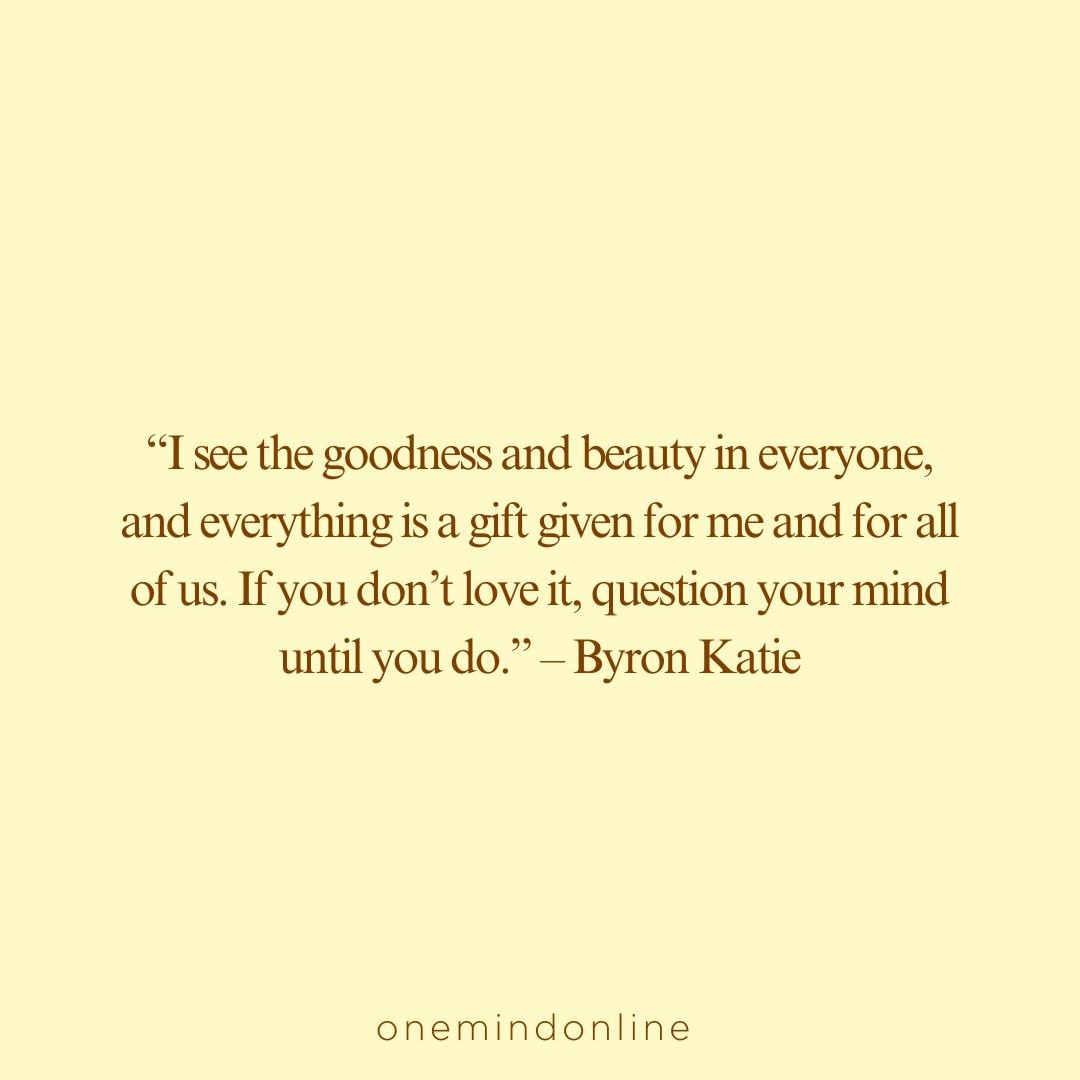
“I see the goodness and beauty in everyone, and everything is a gift given for me and for all of us. If you don’t love it, question your mind until you do.” – Byron Katie
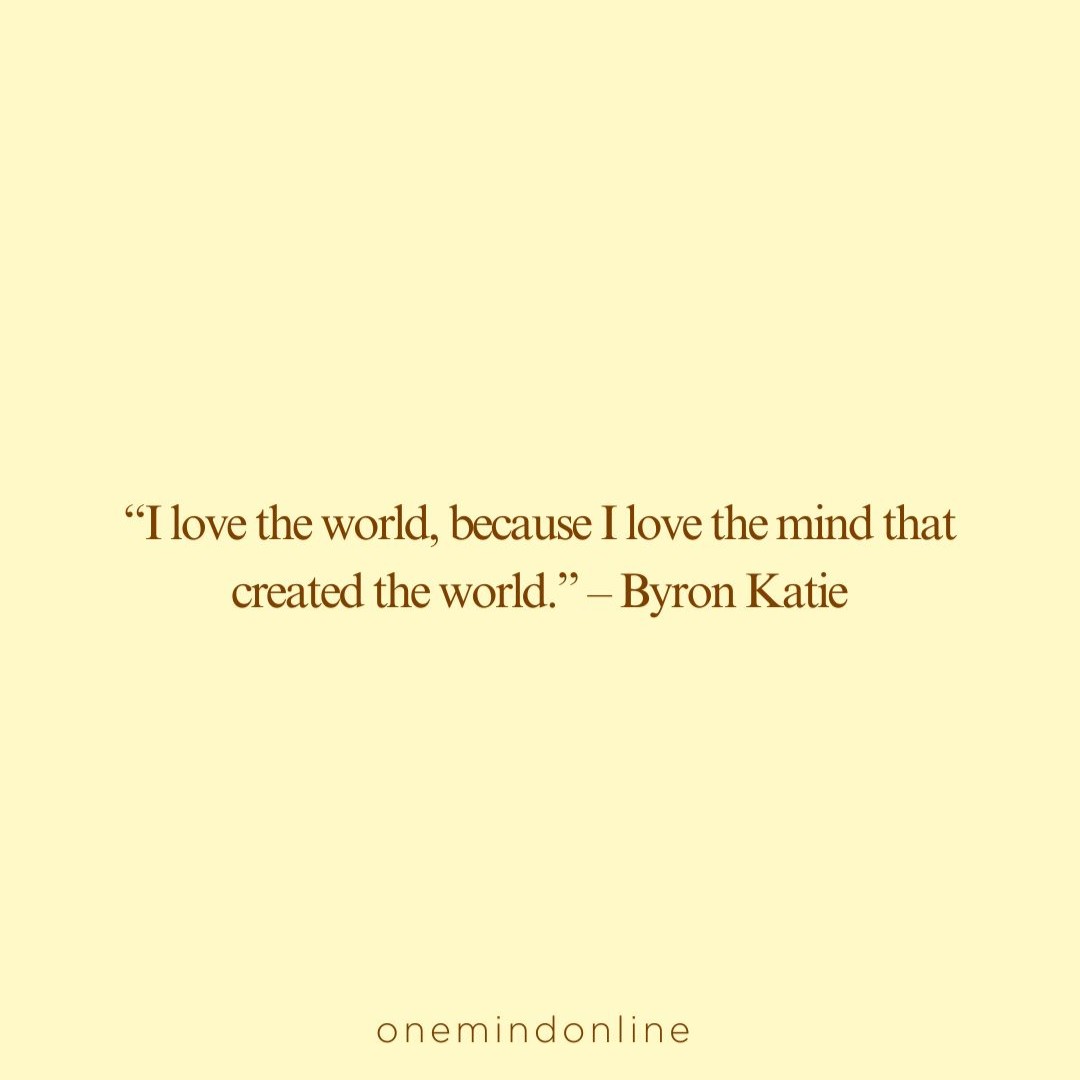
“I love the world, because I love the mind that created the world.” – Byron Katie
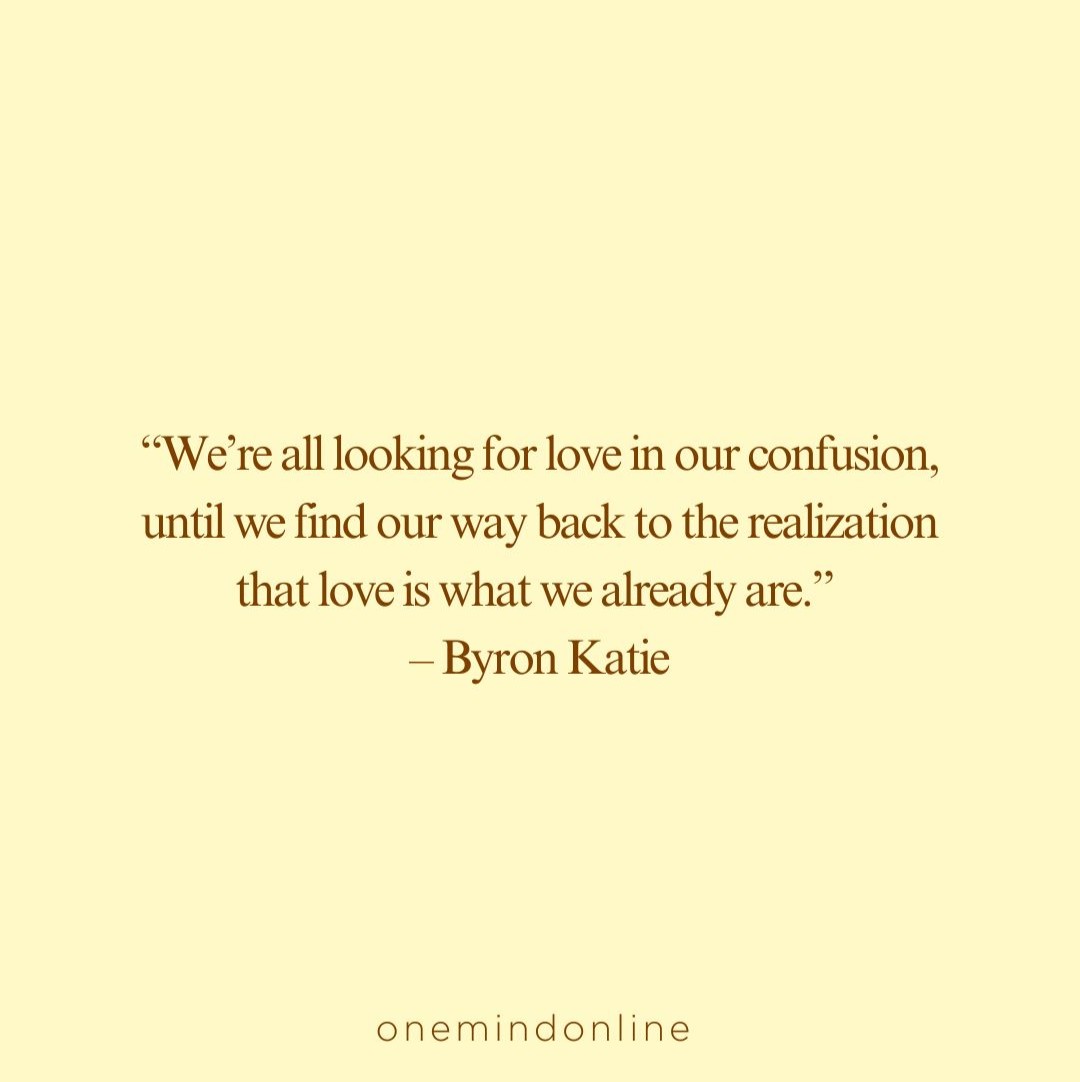
“We’re all looking for love in our confusion, until we find our way back to the realization that love is what we already are.” – Byron Katie
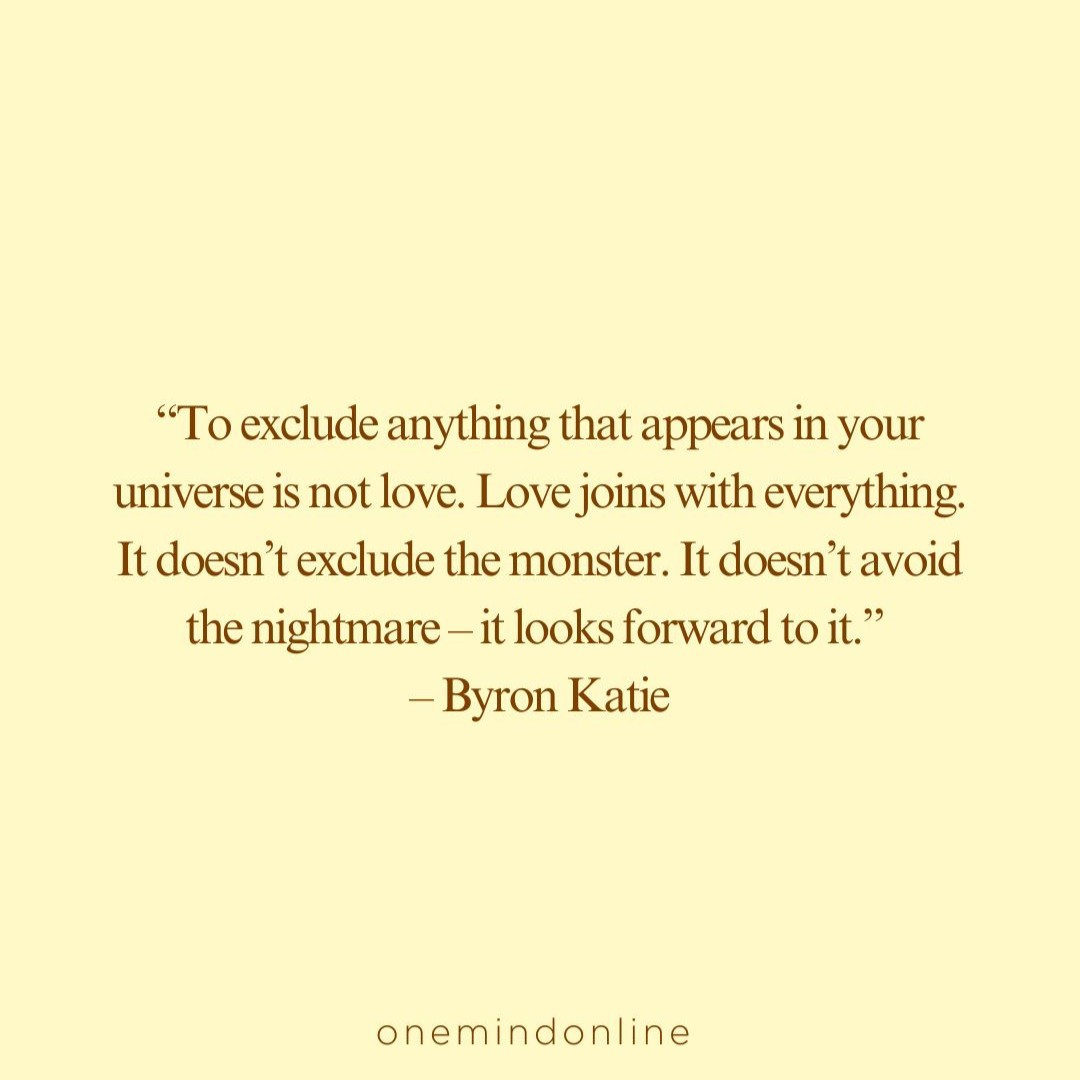
“To exclude anything that appears in your universe is not love. Love joins with everything. It doesn’t exclude the monster. It doesn’t avoid the nightmare – it looks forward to it.” – Byron Katie
“When we love what is, it becomes so simple to live in the world. The world is exactly as it should be.” – Byron Katie
“A lover of what is looks forward to everything: life, death, disease, loss, earthquakes, bombs, anything the mind might be tempted to call ‘bad.’ Life will bring us everything we need, to show us what we haven’t undone yet. Nothing outside ourselves can make us suffer. Except for our own unquestioned thoughts, every place is paradise.” – Byron Katie
“Our job is unconditional love. The job of everyone else in our life is to push our buttons.” (so we can realize where we don’t have unconditional love yet) – Byron Katie
“When they attack you and you notice that you love them with all your heart, your Work is done.” – Byron Katie
Byron Katie suggests that we challenge our own thoughts and beliefs about love until we dismantle the barriers that prevent us from experiencing the world with open hearts. It’s about accepting and embracing all aspects of life, including the challenging ones.
The takeaway message for me, reminds me of something I read in Shantaram a lifetime ago. Living in a slum in India he came to a conclusion that has stuck with me ever since:
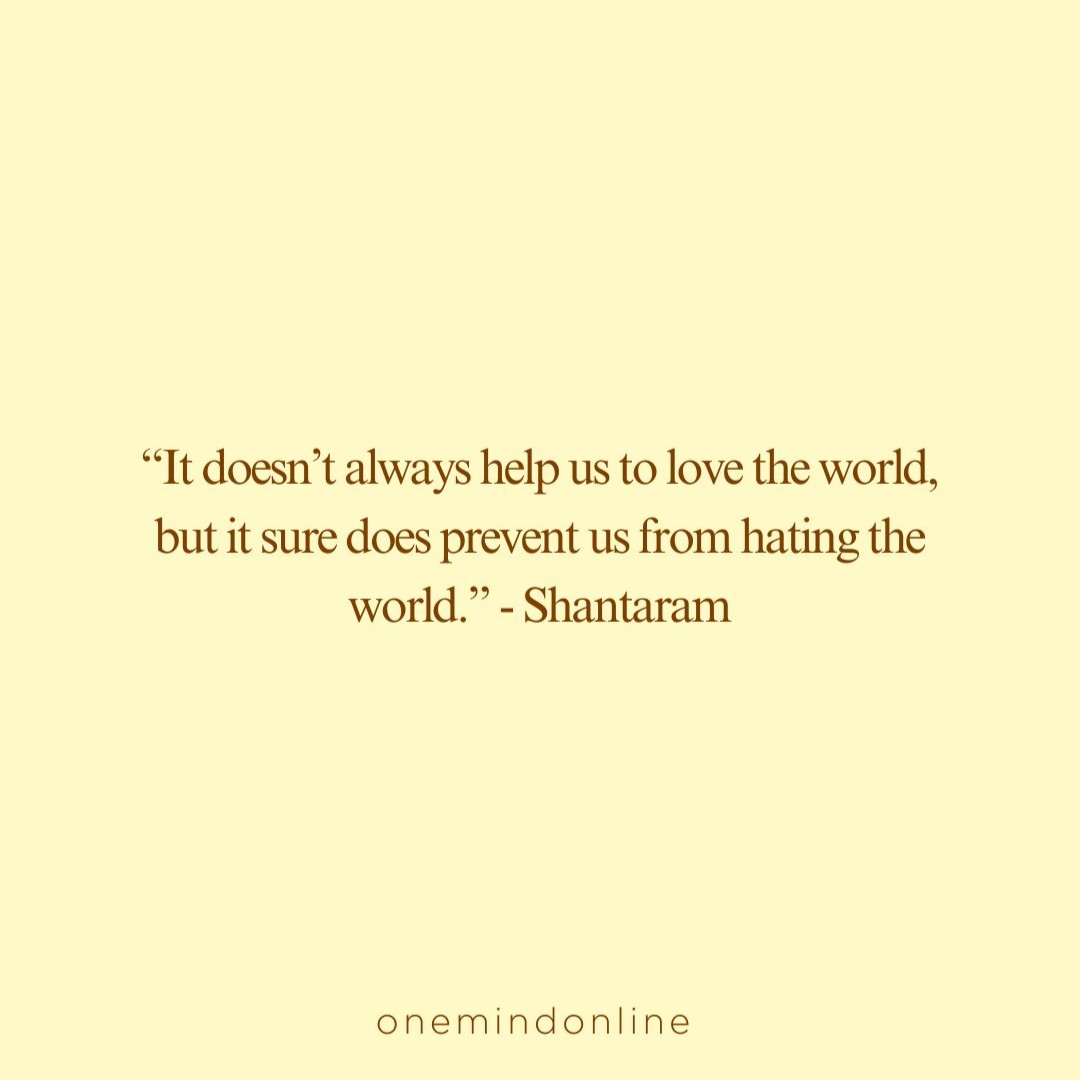
“It doesn’t always help us to love the world, but it sure does prevent us from hating the world.” – Shantaram
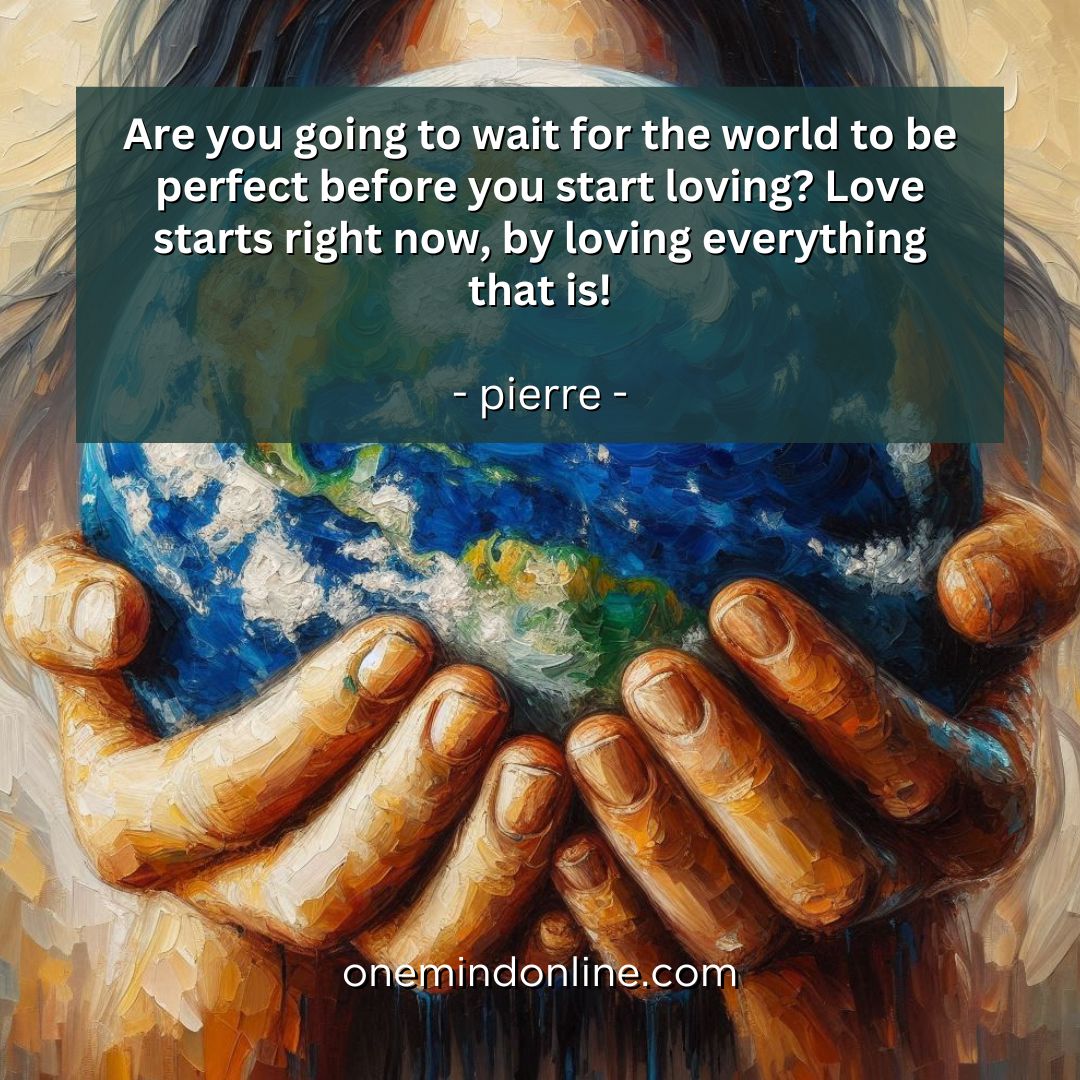
Are you going to wait for the world to be perfect before you start loving? Love starts right now, by loving everything that is!
A few affirmations to ground yourself in love:
- “Love starts now.”
- “I cultivate gratitude for everything that is.”
- “I choose love as my response to all of life’s experiences.”
- “I am willing to question my thoughts and beliefs about what I see.”
- “I embrace all of life, including the challenges, as opportunities for growth.”
Of course, this is never to say that we should ever put up with abuse in the name of love. There are often good reasons to step away from a situation and “love from a distance”. But even in the worst situations when the best decision is to step away, you can live with love in your heart or you can live with hate in your heart, and clearly only one of those options leads to health.
Have a happy Friday peeps!
– pierre –
Today’s LIVE meditation is: Sharing love.
Today’s LIVE meditation
https://youtu.be/-u7Q1ShTc7Q 2026
https://youtu.be/kkkkgCbE9LQ 2025
https://youtu.be/-4mP0NPSWaY 2024
https://youtu.be/zh_hOCPXYQk 2023
https://youtu.be/72ydxFQJkgQ 2022
Practice the “Daily Dose”
Let’s put it into practice! Choose what works for you – daily, once a week or whenever inspiration strikes. Putting pen to paper wires the neural pathways that will create your new habits.
1 – Affirmation
Write down your favourite affirmation on a sticky note and place it somewhere that you’ll be able to see it the whole day.
- “Love starts now.”
- “I cultivate gratitude for everything that is.”
- “I choose love as my response to all of life’s experiences.”
- “I am willing to question my thoughts and beliefs about what I see.”
- “I embrace all of life, including the challenges, as opportunities for growth.”
2 – A moment of reflection
Use today’s question as a journal prompt. If you don’t have the time to sit down and write, just take a moment to reflect on your response.
Discovering Your Unconditional Love Edges: Byron Katie suggests that others “push our buttons” to show us where we don’t have unconditional love yet. Think of a recent moment when someone triggered a strong emotional reaction in you, and notice what that reaction revealed about where your love quietly draws a line. This isn’t really a question of whether or not to have boundaries; healthy boundaries and refusing to tolerate harm are simply non-negotiable. The deeper question is whether a boundary has to mean the absence of love, whether saying no requires you to recast the other person as an enemy in your mind. So as you write, explore what it would mean to hold both at once: to protect what you need while still seeing this person with some measure of compassion, and consider what this moment was really teaching you – not about them, but about your own capacity to say no without closing your heart.
3 – Quotes to share
Send a quote to someone who needs it, or share them all on social media to spread the good vibes!
4 – Q&A for deeper learning
Read through the questions and answers and write down at least one “aha moment” that clicked for you.
Q1. Does “loving what is” mean I should accept abuse or stay in harmful situations?
Absolutely not. Loving what is doesn’t mean becoming passive or tolerating abuse. It means responding to difficult situations from a place of clarity rather than reactive resistance. Sometimes love means creating healthy boundaries, leaving toxic situations, or “loving from a distance.” The key is whether you carry love or hate in your heart as you make these necessary changes. You can protect yourself and still not fall into the trap of resentment.
Q2. How can I love someone who has hurt me deeply?
Loving someone who has caused you pain doesn’t mean excusing their behavior or pretending it didn’t happen. It means freeing yourself from the burden of carrying hatred and resentment. Start by questioning your thoughts about the situation – what beliefs are keeping you stuck in anger? What does holding onto this anger seem to protect you from? Loving them doesn’t require reconciliation or even contact; simply seeing them as another hurt human unconsciously lashing out from their own woundedness. It’s an internal stance that serves your own peace and healing.
Q3. Isn’t this just spiritual bypassing or toxic positivity?
No, this practice is quite different from forced positivity or spiritual bypassing. It’s not about pretending everything is fine or suppressing difficult emotions. Instead, it’s about honestly examining your thoughts and beliefs about reality. It acknowledges that suffering comes from our resistance to what is, not from the circumstances themselves. This requires deep self-inquiry and emotional honesty, not denial.
Q4. How do I start practicing this when I’m dealing with significant challenges?
Begin small. Instead of trying to love major traumas immediately, start with minor daily irritations. Question your thoughts about traffic, weather, or small disappointments. Practice asking yourself: “What would it feel like to love this situation as it is?” Build your capacity gradually. Remember that this is a practice, not a destination – even small shifts in perspective can create profound changes in your experience.
Q5. What does it mean that “love is what we already are”?
This suggests that love isn’t something we need to earn, find, or create – it’s our natural state. Our judgments, fears, and resistance create barriers to experiencing this love. Like clouds covering the sun, our thoughts and beliefs can obscure our loving nature, but they don’t change what we fundamentally are. The practice involves removing these barriers rather than trying to manufacture love.
Q6. How can I love difficult people when they keep pushing my buttons?
The people who push our buttons most persistently are often, oddly enough, our most effective teachers. Not because they are consciously trying to teach us anything, but because our reaction to them shows us exactly where we are limited, where we are not free. Rather than focusing your energy on trying to change them or wishing they’d act differently, turn the question back toward yourself: what is this person’s behavior stirring up in me, and why? Their actions belong to them, shaped by their own history and struggles that likely have little to do with you. Your reaction, though, belongs entirely to you – and it’s yours to work with. If someone else’s words or actions control your emotional state, then you are trapped, you are not free. Each difficult interaction becomes less a battle to win and more an invitation to notice where you have work to do.
Q7. What’s the difference between loving what is and being resigned to it?
Loving what is comes from a place of empowerment and choice, while resignation comes from a sense of defeat or powerlessness. When you love what is, you’re not giving up – you’re choosing to embrace the full spectrum of life itself, and respond from clarity rather than resistance. This actually makes you more effective in creating positive change because you’re acting from wisdom rather than reaction. You can work toward improvement while simultaneously accepting the present moment as your starting point.