

“Your Daily Dose” is a quick two minute read packed with bite-sized wisdom from all the great teachers. But you could also choose to turn it into something more… a powerful daily practice for personal growth. Give it a try!
A message from today’s meditation:
Here’s a little inspiring nugget that’ll take you about 2 minutes to chew on. Now, if you’re hungry for the whole story and want to
Imagine for a moment, yourself as a superhero. But in this superhero fantasy your superpower isn’t superhuman strength or the ability to fly, but something far more profound.
This power allows you to see situations with absolute clarity, to understand the hidden currents of emotion and thought in yourself and others, and to act with profound wisdom instead of impulse. This superpower is awareness, and the beautiful truth is that in reality this power can develop within each of us through a consistent practice of meditation.
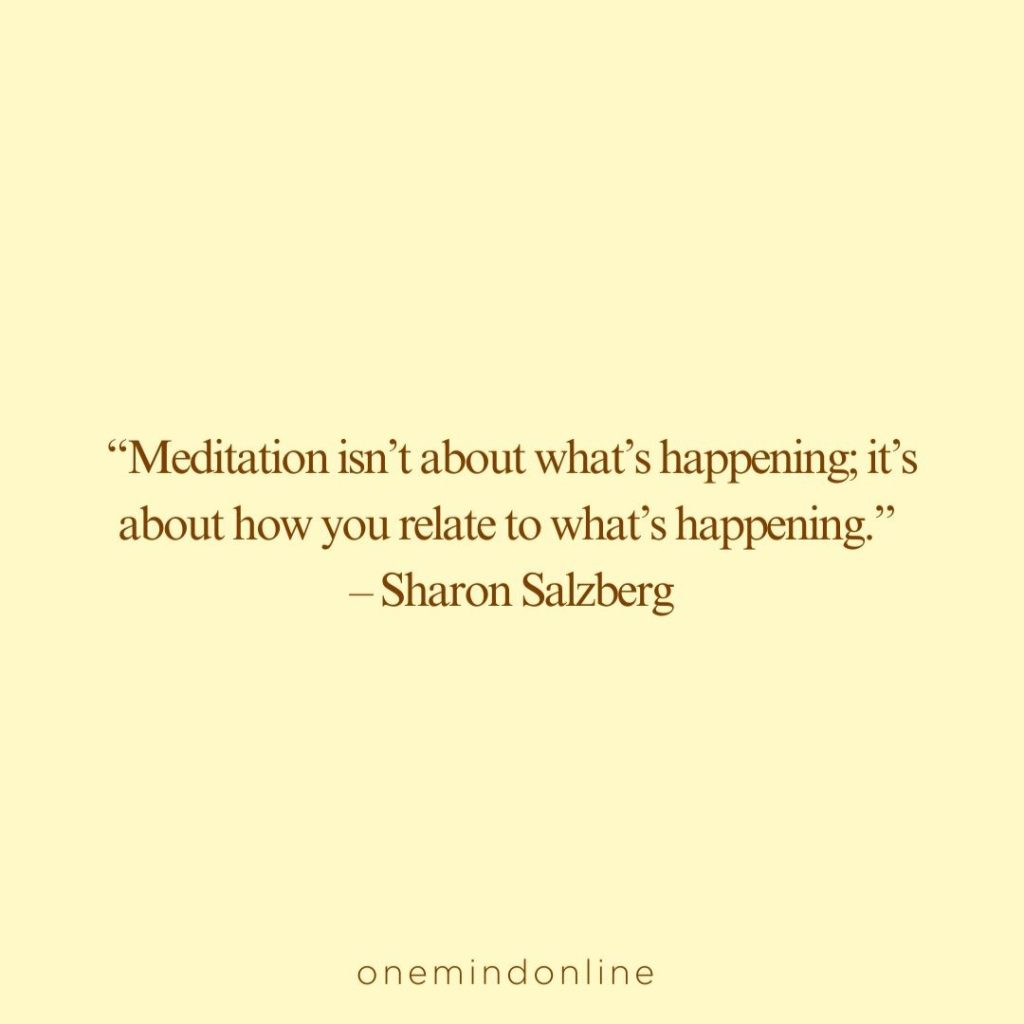
“Meditation isn’t about what’s happening; it’s about how you relate to what’s happening.” – Sharon Salzberg
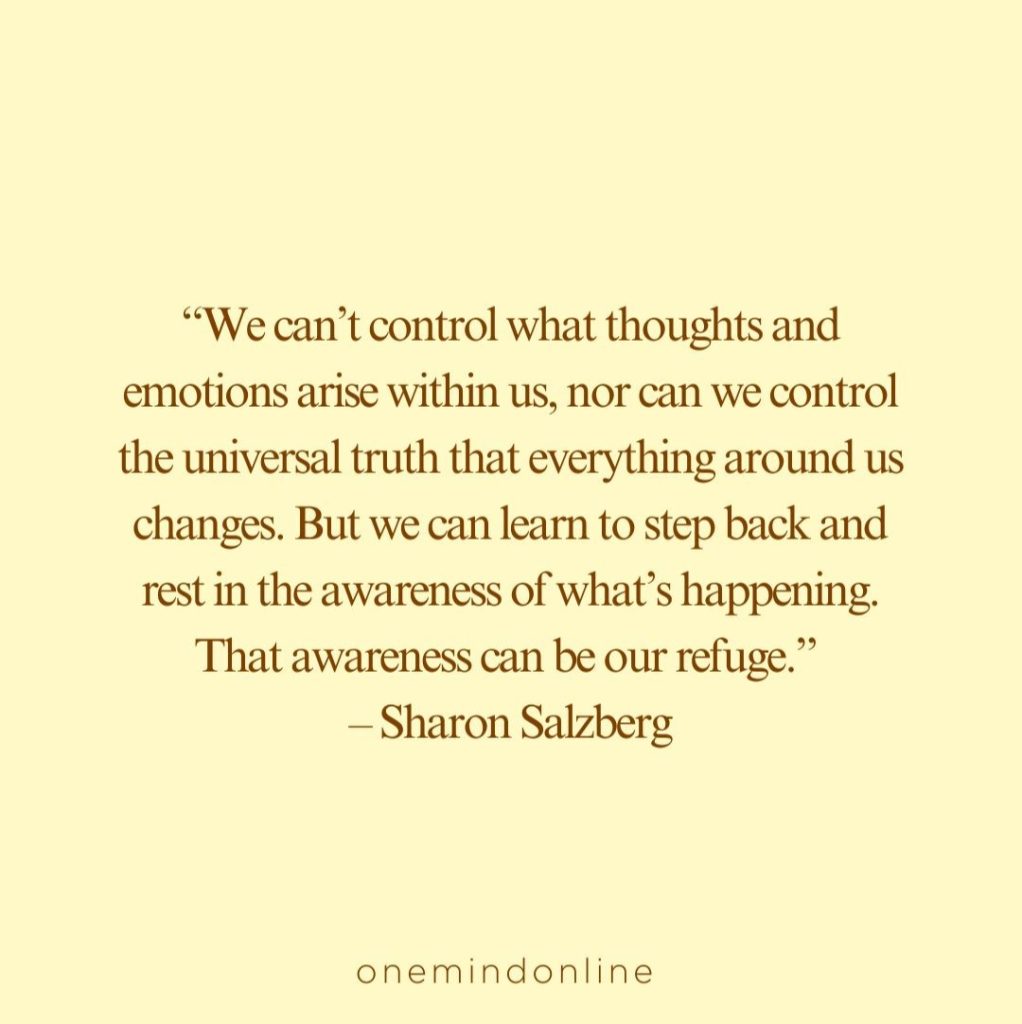
“We can’t control what thoughts and emotions arise within us, nor can we control the universal truth that everything around us changes. But we can learn to step back and rest in the awareness of what’s happening. That awareness can be our refuge.” – Sharon Salzberg
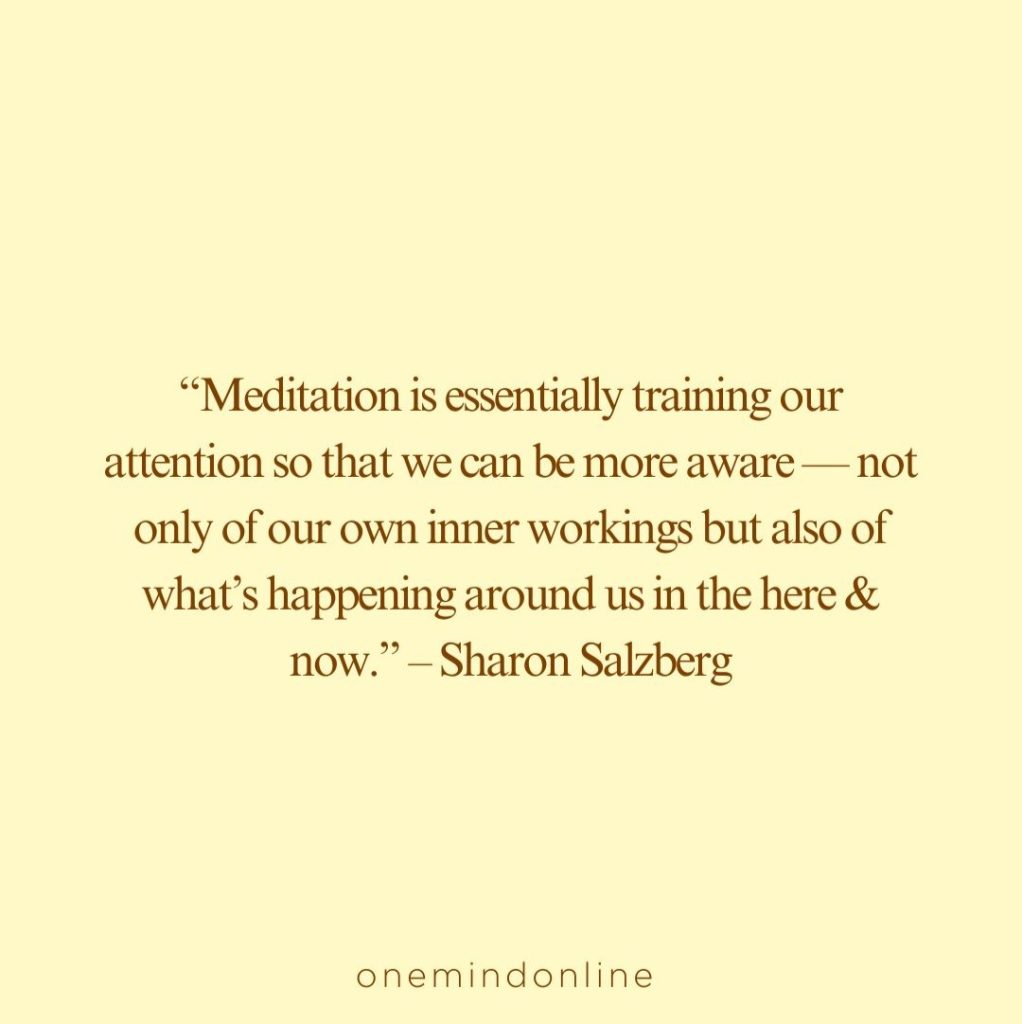
“Meditation is essentially training our attention so that we can be more aware — not only of our own inner workings but also of what’s happening around us in the here & now.” – Sharon Salzberg
We don’t have control over the things that arise around us or even within us, but when we create the habit of taking a step back and watching without reacting, then we’re stepping into a deeper awareness that begins to understand why things are happening the way they do. It’s only when we act from understanding that our actions have a shot at being effective. But first we have to create the habit of stepping back and just observing.
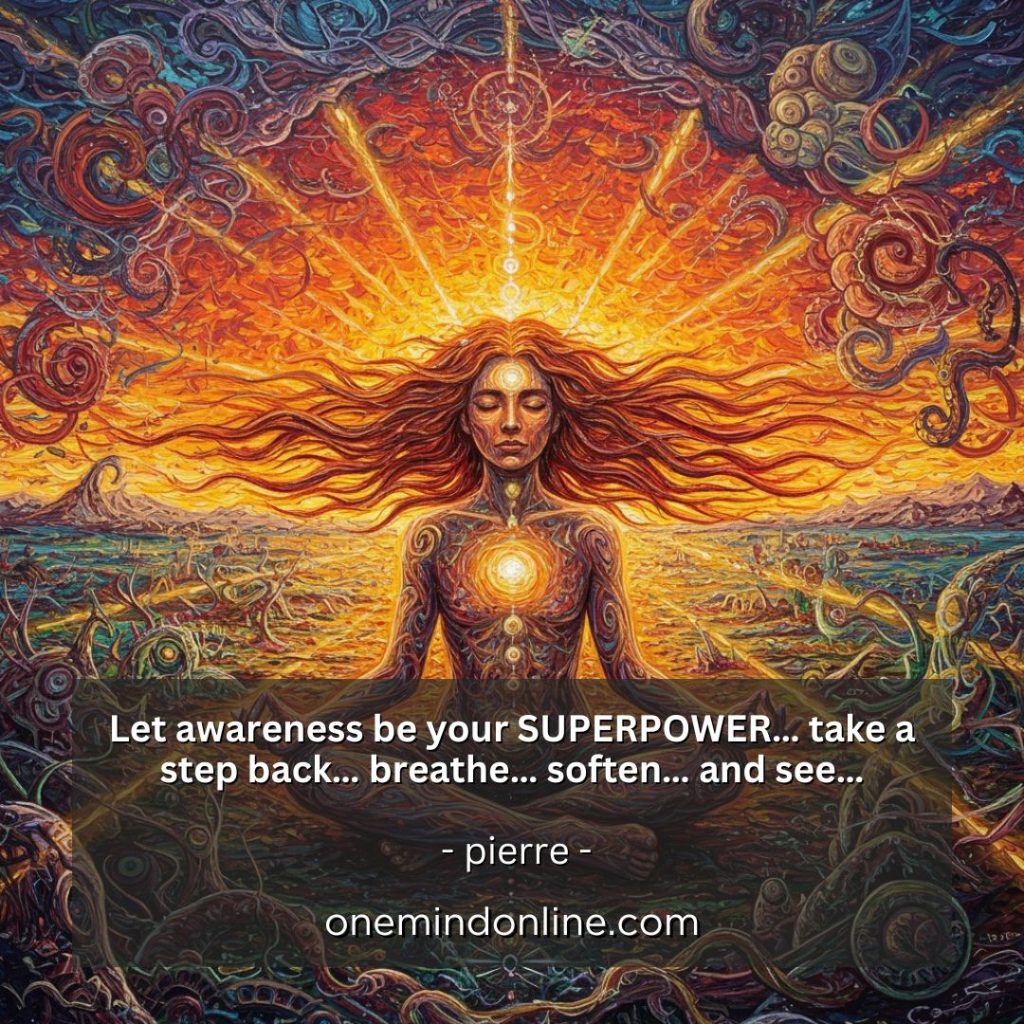
Let awareness be your SUPERPOWER… take a step back… breathe… soften… and see…
“As we practice meditation, we get used to stillness and eventually are able to make friends with the quietness of our sensations.” – Sharon Salzberg
A few affirmations to pump up your superpower:
- Be patient. “I am not behind. I am not broken. I am in the process of becoming – and every breath is a quiet act of growth. I trust the pace of my own unfolding.”
- Be kind to yourself. “I release the need to be a perfect meditator, a perfect thinker, a perfect anything. My mind will wander, and each time I return to myself with gentleness, I am going deeper.”
- Be curious. “I am the witness, not the judge. My thoughts and feelings are visitors, not verdicts. I greet them with open arms and an open heart, curious about what they carry, but never defined by what they say.”
- Be present. “This moment is enough. This breath, this sound, this sensation – they are all the invitation I need to arrive fully in my own life. I am here. I am awake. I am home.”
Just like a tool that needs regular sharpening, our ability to step into awareness needs regular practice. Today’s meditation specifically uses your senses as the door into expanding your own access to awareness.
– pierre –
Today’s LIVE meditation is: Come to your senses.
Today’s LIVE meditation
https://youtu.be/yyrN0p-QblM 2026
https://youtu.be/VeEspV9noMg 2025
https://youtu.be/fsmt9NwL7OQ 2024
https://youtu.be/4b6bnr5PaSY 2023
Practice the “Daily Dose”
Let’s put it into practice! Choose what works for you – daily, once a week or whenever inspiration strikes. Putting pen to paper wires the neural pathways that will create your new habits.
1 – Affirmation
Write down your favourite affirmation on a sticky note and place it somewhere that you’ll be able to see it the whole day.
- Be patient. “I am not behind. I am not broken. I am in the process of becoming – and every breath is a quiet act of growth. I trust the pace of my own unfolding.”
- Be kind to yourself. “I release the need to be a perfect meditator, a perfect thinker, a perfect anything. My mind will wander, and each time I return to myself with gentleness, I am going deeper.”
- Be curious. “I am the witness, not the judge. My thoughts and feelings are visitors, not verdicts. I greet them with open arms and an open heart, curious about what they carry, but never defined by what they say.”
- Be present. “This moment is enough. This breath, this sound, this sensation – they are all the invitation I need to arrive fully in my own life. I am here. I am awake. I am home.”
2 – A moment of reflection
Use today’s question as a journal prompt. If you don’t have the time to sit down and write, just take a moment to reflect on your response.
Sharon Salzberg states, “Meditation isn’t about what’s happening; it’s about how you relate to what’s happening.” Reflect on a recurring challenge in your life (at work, in a relationship, etc.). How do you currently relate to it – with resistance, fear, frustration? What would it look and feel like to mindfully change your relationship with this challenge, viewing it with curiosity and awareness instead?
3 – Quotes to share
Send a quote to someone who needs it, or share them all on social media to spread the good vibes!

4 – Q&A for deeper learning
Read through the questions and answers and write down at least one “aha moment” that clicked for you.
Q1: Is this “superpower” of awareness just a nice metaphor, or is it real?
It’s a powerful metaphor used to describe a very real psychological skill. While you won’t be stopping bullets, developing deep awareness allows you to navigate conflict, stress, and complex decisions with a clarity and calm that can feel superhuman in today’s frenetic world. It’s about transforming your inner state to more effectively manage your outer reality.
Q2: My mind is always racing. How can I possibly “step back and observe” when I feel so overwhelmed by my thoughts?
This is the most common experience when beginning, and it’s a sign that you’re perfectly normal. The goal isn’t to stop your thoughts – it’s to change your relationship with them. Start small. For just one minute, try to observe your racing mind as you would watch clouds passing in the sky. The simple act of noticing your thoughts without judging yourself for having them is the first step. It gets easier with consistent, gentle practice.
Q3: The article says we can’t control our thoughts or emotions. That sounds hopeless. What’s the point then?
At first, this idea can seem discouraging, but it’s actually incredibly freeing. The constant struggle to control uncontrollable thoughts is a primary source of anxiety. The point isn’t control, but influence. By cultivating awareness, you learn not to be swept away by every thought or emotion. You create a space between the feeling and your reaction, which gives you the freedom to choose a wise response instead of being controlled by your impulses.
Q4: What is the practical difference between a reaction and a response?
A reaction is typically immediate, unconscious, and driven by past conditioning or raw emotion – like snapping at someone who criticizes you. A response, which is cultivated through awareness, is conscious and intentional. It involves pausing to observe the situation and your inner state, and then choosing a course of action that aligns with your values and goals. Reaction is automatic; response is empowered choice.
Q5: How will I know if my awareness is actually growing? What are the signs?
Progress often appears in small, subtle shifts in your daily life. You might notice you’re less irritated during your commute. You might catch yourself before making a sarcastic comment you’d later regret. You may find you can listen more deeply to a friend without just waiting for your turn to speak. It’s not a single moment of enlightenment, but a gradual increase in inner peace, clarity, and the space you feel between a stimulus and your chosen response.
Q6: Do I have to sit on a cushion for an hour every day to build this awareness?
Absolutely not. While formal sitting meditation is a powerful tool, the true practice is training your attention. You can practice awareness for a few minutes at your desk by focusing on your breath. You can practice it while washing dishes by paying full attention to the sensation of the warm water and soap. The key is consistency and intention, not duration or a specific posture.
Q7: The idea of “making friends with my sensations” is scary. What if I discover things I don’t like about myself?
This is a courageous and completely valid concern. Many of us stay busy and distracted to avoid the difficult emotions or thoughts that can surface in quiet moments. The practice of awareness invites you to meet these parts of yourself with compassion and curiosity, rather than fear. Remember, you are not your thoughts or feelings; you are the steady, calm awareness that observes them. Acknowledging what’s there, even if it’s uncomfortable, is the first step toward releasing its power over you and achieving genuine self-understanding.