
“Your Daily Dose” is a quick two minute read packed with bite-sized wisdom from all the great teachers. But you could also choose to turn it into something more… a powerful daily practice for personal growth. Give it a try!
A message from today’s meditation:
We scroll through social media feeds bombarded by curated perfection. Lives seemingly effortless, relationships picture-perfect. But beneath the carefully crafted veneer, a deeper truth resonates: we’re all just “winging it.” This, according to Charlie Mackesy’s heartwarming book, “The Boy, the Mole, the Fox and the Horse,” is the very essence of being human.
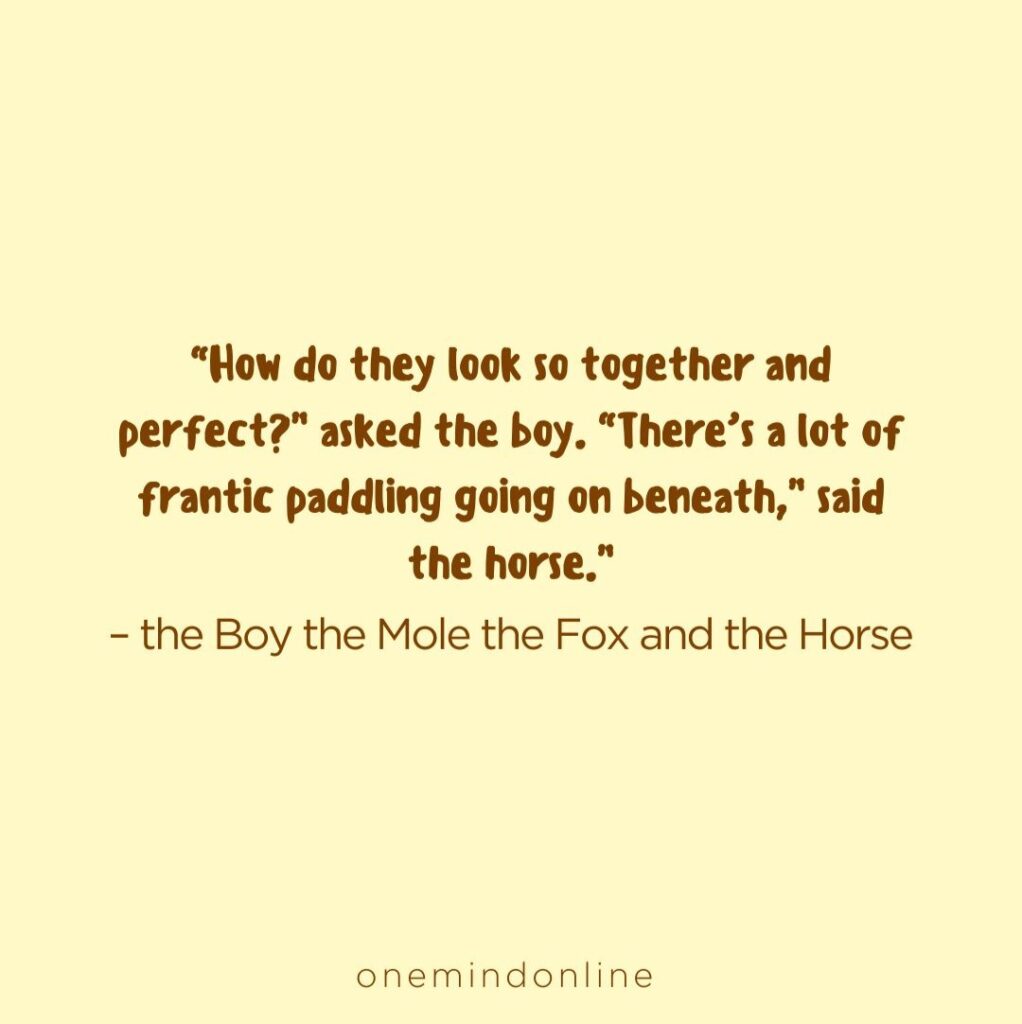
“How do they look so together and perfect?” asked the boy. “There’s a lot of frantic paddling going on beneath,” said the horse.” – the Boy the Mole the Fox and the Horse
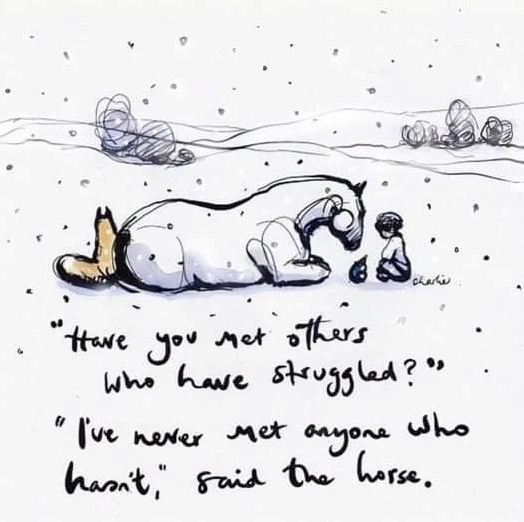
“Have you met others who have struggled?” asked the boy. “I’ve never met anyone who hasn’t,” said the horse. – the Boy the Mole the Fox and the Horse
“The truth is everyone is winging it.” – the Boy the Mole the Fox and the Horse
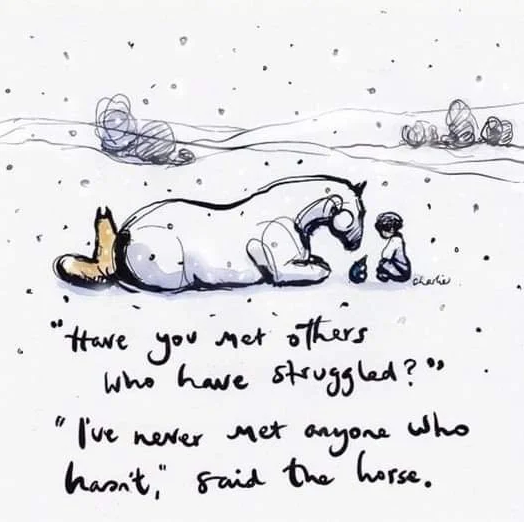
Tonglen meditation asks us to look at the humans around us and realize that everyone is fighting a battle that we may know nothing about. And that although we can’t fight their battles for them, when we choose to see people with compassion, our own attitudes change to the people around us, and when we respond to the world differently we’ll find that the world around us changes too.
“What do you want to be when you grow up?” asked the horse. “Kind,” said the boy.” – the Boy the Mole the Fox and the Horse
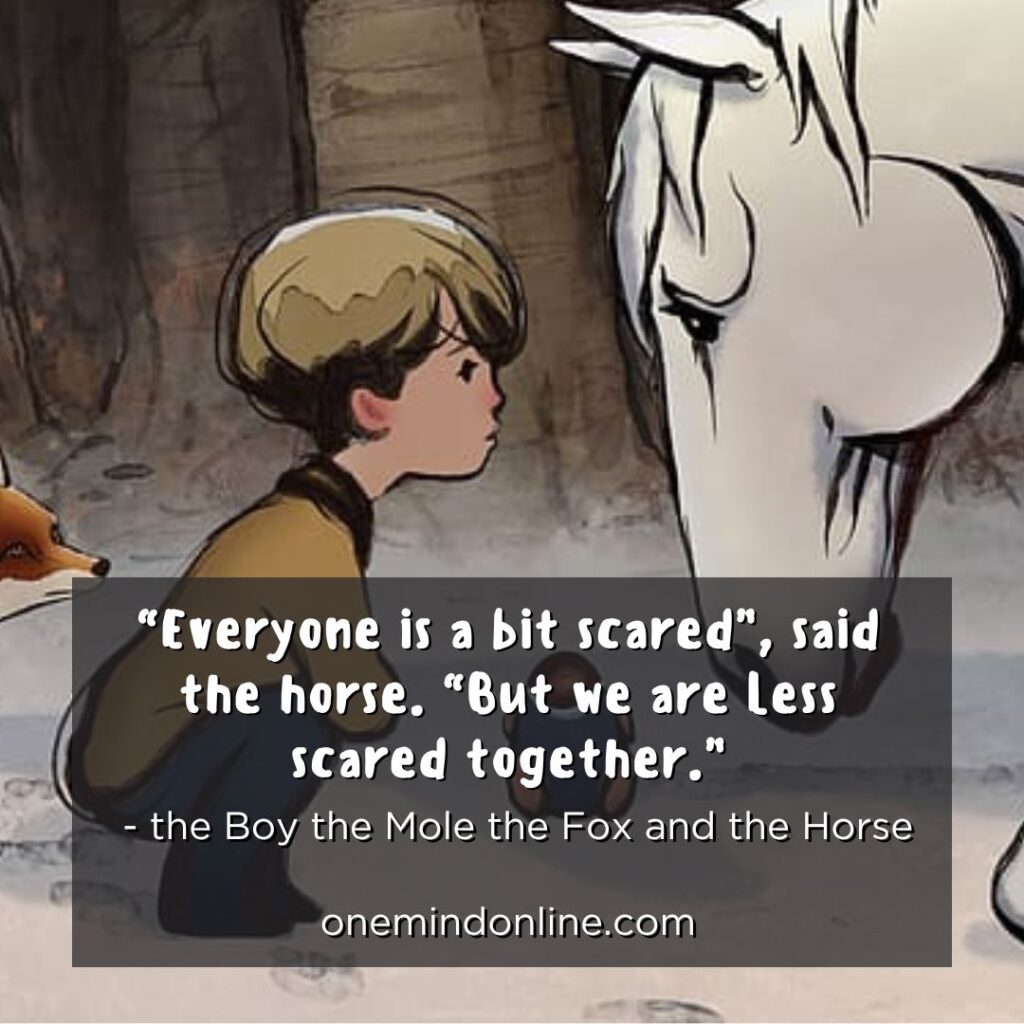
“Everyone is a bit scared”, said the horse. “But we are Less scared together.” – the Boy the Mole the Fox and the Horse
It’s easy to fall into the trap of feeling at odds with the world, like we’re in a constant battle with the humans around us. But when we always see the world as a dangerous place, we find ourselves isolated and alone, always defensive – and this is a really exhausting way to live.
“Sometimes all you hear about is the hate, but there is more love in this world than you could possibly imagine.” – the Boy the Mole the Fox and the Horse
It’s only when we deliberately choose to see the humans around us with love – and recognize that everyone is somewhat wounded and just doing their own best to survive – that we have a shot at doing better together.
“What is the bravest thing you’ve ever said?” asked the boy. ‘Help,’ said the horse. ‘Asking for help isn’t giving up,’ said the horse. ‘Asking for help is refusing to give up.” – the Boy the Mole the Fox and the Horse
“The funny thing is,” said the mole… “the tiniest act of kindness can save a life.” – the Boy the Mole the Fox and the Horse
“But what do we do when it’s our hearts that hurt?” asked the boy. “We wrap them with friendship, with shared tears and time, till they wake hopeful and happy again.” – the Boy the Mole the Fox and the Horse
“Human-ing” is a team sport, and we only play it well when we choose to see our team members as the manifestation of life itself.
Here are some guiding mantras to reflect on:
- “I am not alone in my struggles. Everyone is paddling furiously beneath their surface – even those who seem most put-together.”
- “Compassion creates connection. When I choose to see others with love rather than judgment, I build bridges instead of walls.”
- “My vulnerability is my strength. When I’m brave enough to ask for help, I create space for authentic connection.”
- “Small kindnesses matter. Each compassionate action, no matter how tiny, contributes to a more loving world.”
- “We rise or fall together. On Team Human, my success isn’t diminished by others’ success – it’s multiplied by it.”
Join us for a Tonglen meditation session – a powerful tool to cultivate compassion and strengthen your connection to “Team Human”. Remember, you’re not alone. We’re all in this, paddling furiously but with a shared destination: a more connected, kinder world.
Come and wave the flag for “team human” !!!
– pierre –
Today’s LIVE meditation is: Tonglen!
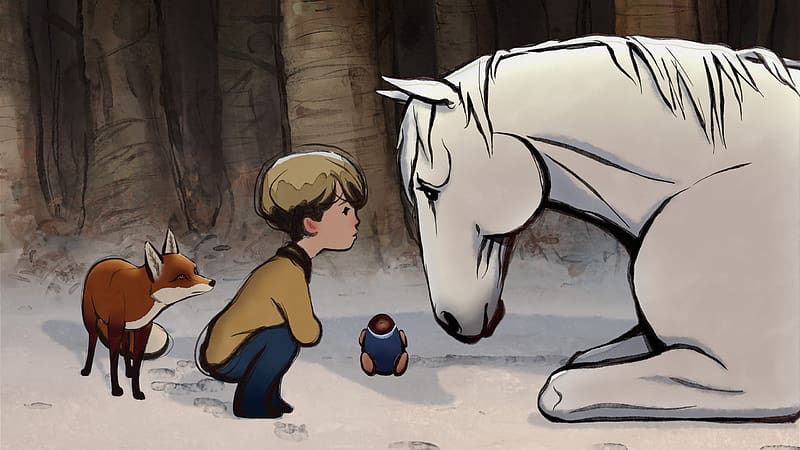
(Image credit: “The boy, the mole, the fox and the horse” by Charlie Mackesy)
Today’s LIVE meditation
https://youtu.be/bvQDx5gvvDA 2025
https://youtu.be/s2djNPWF-C0 2024
https://youtu.be/x0VW870v2HA 2023
Practice the “Daily Dose”
Let’s put it into practice! Choose what works for you – daily, once a week or whenever inspiration strikes. Putting pen to paper wires the neural pathways that will create your new habits.
1 – Affirmation
Write down your favourite affirmation on a sticky note and place it somewhere that you’ll be able to see it the whole day.
- “I am not alone in my struggles. Everyone is paddling furiously beneath their surface – even those who seem most put-together.”
- “Compassion creates connection. When I choose to see others with love rather than judgment, I build bridges instead of walls.”
- “My vulnerability is my strength. When I’m brave enough to ask for help, I create space for authentic connection.”
- “Small kindnesses matter. Each compassionate action, no matter how tiny, contributes to a more loving world.”
- “We rise or fall together. On Team Human, my success isn’t diminished by others’ success – it’s multiplied by it.”
2 – A moment of reflection
Use today’s question as a journal prompt. If you don’t have the time to sit down and write, just take a moment to reflect on your response.
Acts of Compassion: Think about the last time someone showed you unexpected kindness. How did it impact your day, your perspective, or your emotional state? Now consider: what “tiny act of kindness” could you offer tomorrow that might profoundly affect someone else’s journey?
3 – Quotes to share
Send a quote to someone who needs it, or share them all on social media to spread the good vibes!


4 – Q&A for deeper learning
Read through the questions and answers and write down at least one “aha moment” that clicked for you.
Q1. Why do we feel like everyone else has life figured out except us?
This perception stems from our tendency to compare our complete reality – including our struggles, doubts, and failures – with others’ carefully curated public personas. Social media amplifies this effect by showcasing highlight reels rather than behind-the-scenes footage. Remember Charlie Mackesy’s wisdom: “There’s a lot of frantic paddling going on beneath.” Understanding that everyone experiences uncertainty and difficulty helps us develop compassion for ourselves and others.
Q2. How can I practice Tonglen meditation to develop more compassion?
Tonglen is a Buddhist practice that involves breathing in others’ suffering and breathing out relief and happiness. Begin by sitting quietly and focusing on your breath. As you inhale, visualize taking in the pain or struggle of someone you know (or humanity at large). As you exhale, imagine sending them relief, love, and healing. This practice helps dissolve the artificial boundaries between self and other, fostering genuine compassion and connection.
Q3. Is asking for help really a sign of strength rather than weakness?
Absolutely. Asking for help requires courage, self-awareness, and humility – all qualities of inner strength. When we ask for help, we acknowledge our humanity and create opportunities for authentic connection. As the horse says, “Asking for help isn’t giving up. Asking for help is refusing to give up.” Those who appear to never need assistance are often those struggling the most with perfectionism and fear of vulnerability.
Q4. How can I shift from seeing the world as threatening to seeing it as supportive?
This transformation begins with intentional perspective-shifting. Start by noticing when you’re in a defensive mindset and gently challenge those thoughts. Practice looking for evidence of human goodness in daily interactions. Keep a “kindness journal” documenting acts of compassion you witness or experience. Limit exposure to negative media when possible. Remember that while threats do exist, focusing exclusively on them creates a distorted view that prevents you from recognizing the abundant support and connection available.
Q5. What small acts of kindness have the biggest impact?
Often, the most impactful kindnesses are those that make someone feel truly seen and valued. This might include: remembering details from previous conversations, offering specific rather than generic compliments, checking in on someone during difficult times, expressing genuine gratitude, or simply listening without interruption or judgment. The power of these acts comes not from their grandeur but from their authenticity and the way they acknowledge our shared humanity.
Q6. How can I maintain compassion for others when I’m struggling myself?
Paradoxically, extending compassion outward can replenish our inner resources when we’re depleted. Start small – perhaps with a genuine smile or kind word to a stranger. Remember that compassion isn’t about ignoring your own needs but recognizing the universal nature of suffering. Practice self-compassion first, then allow that gentleness to radiate outward. As Mackesy writes, “We wrap our hearts with friendship, with shared tears and time, till they wake hopeful and happy again.”
Q7. What does it mean to view “Human-ing” as a team sport?
Viewing “Human-ing” as a team sport means recognizing that we’re fundamentally interconnected rather than isolated competitors. It involves understanding that our wellbeing is inextricably linked to the wellbeing of others. In practice, this perspective shift leads us to celebrate others’ successes, offer support during struggles, and recognize that collaboration typically yields better outcomes than competition. It’s about building a world where we lift each other up rather than climb over one another—acknowledging that we’re all on Team Human, facing similar challenges despite our surface differences.
One thought on ““Human”-ing is a team sport.”
Comments are closed.