

“Your Daily Dose” is a quick two minute read packed with bite-sized wisdom from all the great teachers. But you could also choose to turn it into something more… a powerful daily practice for personal growth. Give it a try!
A message from today’s meditation:
There’s a reason meditation has stood the test of time across cultures and traditions. We often hear about its benefits in reducing stress and improving focus, but there’s a deeper power simmering beneath the surface, sitting yourself down for a meditation regularly is “an overcoming“.
Think about it. Before each session, there’s likely a familiar voice – the “old you” – whispering doubts and excuses. It might be the urge to check your phone, the nagging feeling you “should” be doing something more productive, or simply the resistance to stillness itself. Every time you choose to sit for meditation, defying this internal chatter, it’s a victory.
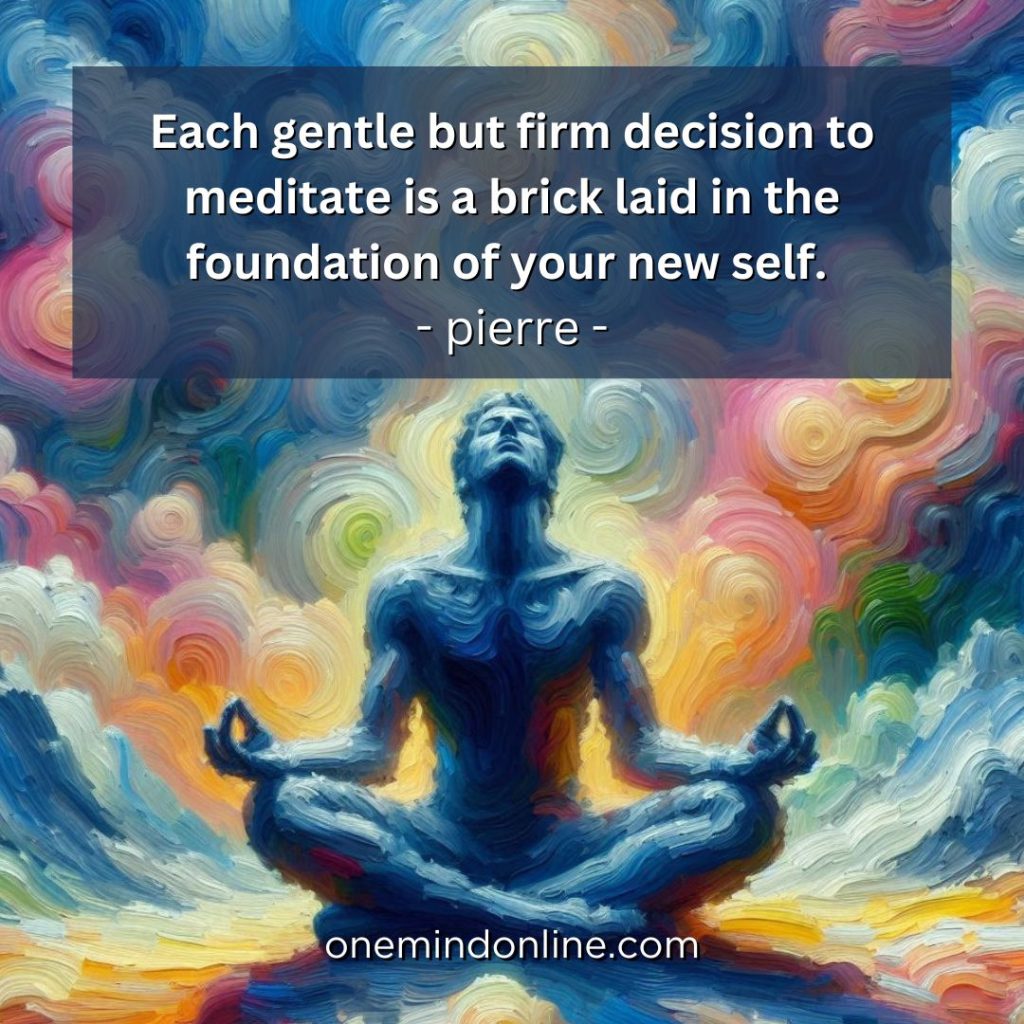
Each gentle but firm decision to meditate is a brick laid in the foundation of your new self. Every sitting you surrender to is an act of softening the control from your old programming, and constructing the new programme that you choose to live by. This is not an inner war, it is an act of love that sees you blooming into the strongest version of yourself that you’ve ever been.
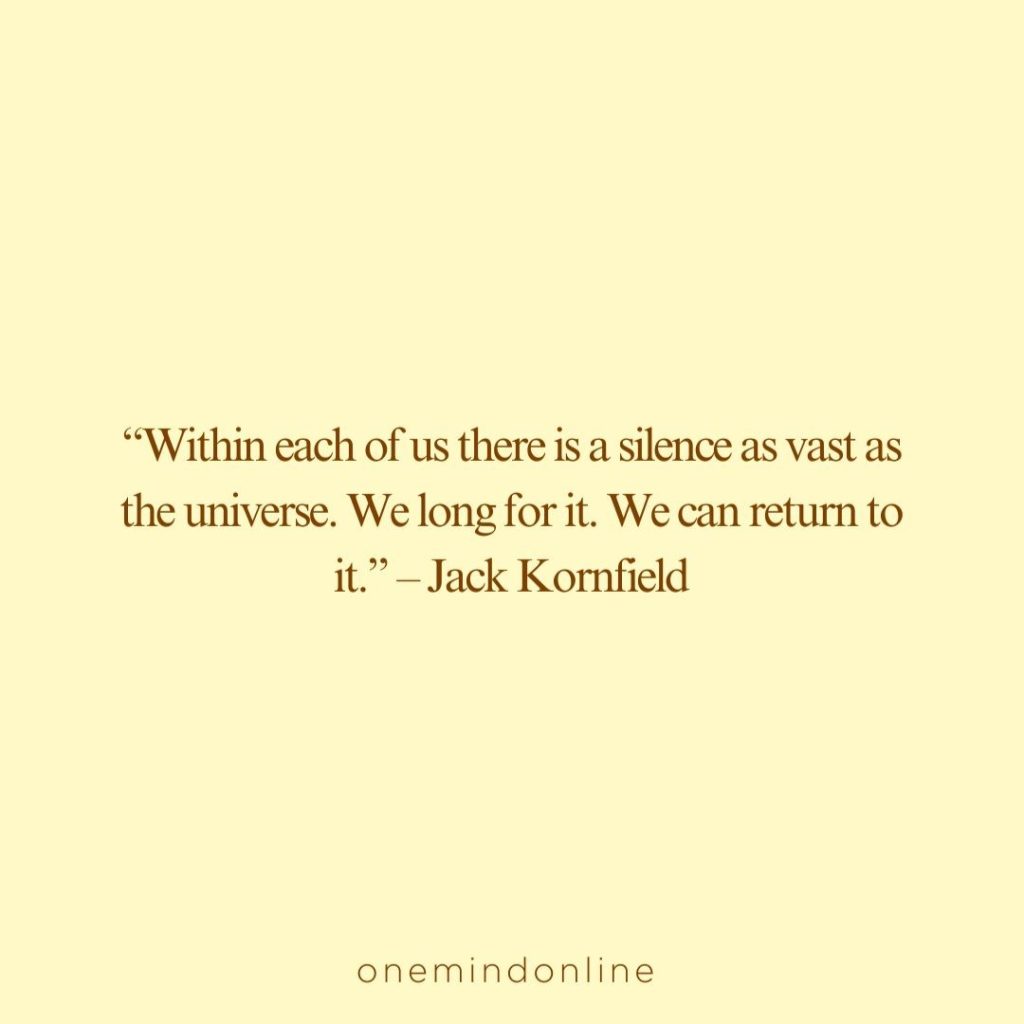
“Within each of us there is a silence as vast as the universe. We long for it. We can return to it.” – Jack Kornfield
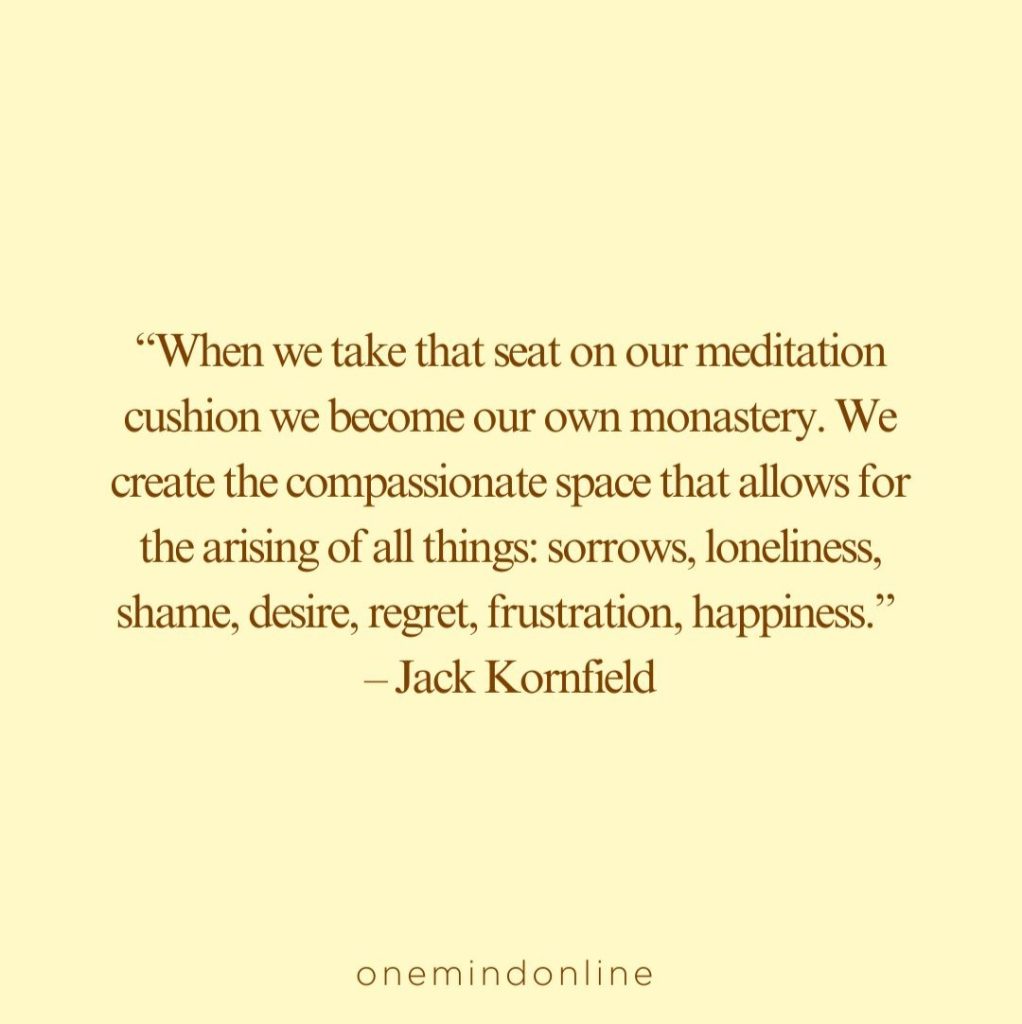
“When we take that seat on our meditation cushion we become our own monastery. We create the compassionate space that allows for the arising of all things: sorrows, loneliness, shame, desire, regret, frustration, happiness.” – Jack Kornfield
“Meditation takes discipline, just like learning how to play piano. If you want to learn how to play the piano, it takes more than a few minutes a day, once a while, here and there. If you really want to learn any important skill, whether it is playing piano or meditation, it grows with perseverance, patience, and systematic training.” – Jack Kornfield
This is the invitation meditation extends: to witness all parts of yourself with compassion. Not to fix, suppress, or try to make “perfect”, but to observe and understand. In this acceptance and understanding, transformation naturally unfolds.
Meditation isn’t about reaching some enlightened state where your mind never wanders or you transcend all human struggles. Some days may feel effortless, like floating on calm waters. Others will feel like wrestling with a restless mind that refuses to settle.
Both experiences are valuable. Both are part of the journey. Be gentle with yourself throughout this process. Remember that simply returning to your seat – again and again – is always an overcoming of old patterns, a powerful investment in your well-being and in your continual becoming.
Today’s journey is an invitation to a shared stillness. There won’t be extensive guidance from me today, but rather a collective gathering in silence. An opportunity to simply be, together, in the vast and comforting embrace of inner peace.
Guiding mantras for your meditation journey:
- “I choose stillness.” Repeat this mantra before each meditation session to reaffirm your commitment to inner peace.
- “I observe my thoughts with kindness.” This mantra helps cultivate self-compassion and detachment from the constant chatter in our minds.
- “With each breath, I step closer to my true self.” As you focus on your breath, visualize yourself becoming the empowered, authentic person you wish to be.
Have a peaceful Sunday everyone!
– pierre –
Today’s LIVE meditation is: Finding silence.
Today’s LIVE meditation
https://youtu.be/YDNc3AKxCxE 2026
https://youtu.be/Jc-JX6e32ZI 2025
https://youtu.be/3tl74DQ6B4s 2023
https://www.youtube.com/watch?v=Ftm7dK98IeA 2020
Practice the “Daily Dose”
Let’s put it into practice! Choose what works for you – daily, once a week or whenever inspiration strikes. Putting pen to paper wires the neural pathways that will create your new habits.
1 – Affirmation
Write down your favourite affirmation on a sticky note and place it somewhere that you’ll be able to see it the whole day.
- “I choose stillness.” Repeat this mantra before each meditation session to reaffirm your commitment to inner peace.
- “I observe my thoughts with kindness.” This mantra helps cultivate self-compassion and detachment from the constant chatter in our minds.
- “With each breath, I step closer to my true self.” As you focus on your breath, visualize yourself becoming the empowered, authentic person you wish to be.
2 – A moment of reflection
Use today’s question as a journal prompt. If you don’t have the time to sit down and write, just take a moment to reflect on your response.
Identifying Your Inner Resistance: What specific thoughts, feelings, or excuses arise when you consider sitting down to meditate? Write about the “voice of your old self” and what it typically says to discourage your practice. What might this resistance be trying to protect you from?
3 – Quotes to share
Send a quote to someone who needs it, or share them all on social media to spread the good vibes!

4 – Q&A for deeper learning
Read through the questions and answers and write down at least one “aha moment” that clicked for you.
Q1: What does “every meditation is an overcoming” really mean?
It means that each time you choose to meditate, you’re overcoming internal resistance—the voice that suggests you should be doing something else, the discomfort with stillness, or the doubts about whether meditation “works.” This act of choosing your practice despite these obstacles is itself transformative, regardless of what happens during the meditation itself. This kind of overcoming is an exercise in self-control and discipline that translates directly to other areas of your life. For example, when you’re facing a difficult conversation you’ve been avoiding, the same mental muscle you’ve built through meditation helps you choose courage over comfort. You recognize the resistance, acknowledge it, and move forward anyway—just as you do when you sit on your cushion despite not feeling like it. Similarly, if you’re working toward a fitness goal or trying to break an unhealthy habit, the discipline you’ve practiced in meditation becomes your ally. That moment when you want to skip the gym or reach for the snack you’re trying to avoid mirrors the moment before meditation when your mind offers a dozen reasons not to sit. By consistently overcoming resistance in meditation, you’re literally training your brain to choose your intentional goals over immediate comfort in all areas of life. The cushion becomes your training ground for every other worthwhile challenge you’ll face.
Q2: How is meditation different from just sitting quietly or relaxing?
While meditation can feel relaxing, its purpose goes deeper than rest. Meditation is an intentional practice of awareness and presence. It’s about creating a “compassionate space” where all aspects of your experience—thoughts, emotions, physical sensations—can arise and be observed without judgment. This systematic training builds mental discipline and self-understanding in ways that casual relaxation doesn’t.
Q3: What should I do when my mind feels particularly restless during meditation?
Restlessness is a normal part of practice, not a sign of failure. When this happens, practice observing your thoughts with kindness rather than trying to force them away. Use mantras like “I observe my thoughts with kindness” to cultivate self-compassion. Remember that even “difficult” meditation sessions are valuable—the act of returning to your practice despite the challenge is itself the victory.
Q4: How much time do I need to dedicate to meditation to see real benefits?
As Jack Kornfield notes, meditation “grows with perseverance, patience, and systematic training”—much like learning piano. Consistency matters more than duration. Starting with even 5-10 minutes daily and building gradually is more effective than sporadic longer sessions. The key is making it a regular practice rather than a once-in-a-while activity.
Q5: Is it normal to feel resistance before every meditation session?
Absolutely. This resistance is the “old you”—your conditioned patterns and habits—trying to maintain the status quo. Feeling this resistance doesn’t mean you’re doing something wrong; it’s actually an opportunity. Each time you sit despite the resistance, you’re actively choosing your new way of being and weakening the hold of old patterns.
Q6: How can meditation be “an act of love” if it sometimes feels like a struggle?
The love isn’t in how meditation feels moment-to-moment, but in the commitment you make to your own growth and well-being. By consistently creating space for stillness, you’re honoring your need for peace and your potential for transformation. You’re choosing to nurture the “strongest version of yourself,” which is a profound act of self-love, even when it’s challenging.
Q7: What if I don’t experience the “vast silence” that meditation promises?
First, know that it’s completely normal for this deep silence to take a long time to be felt—sometimes months or even years of consistent practice. The silence Kornfield describes isn’t something you need to achieve or force—it already exists within you, but accessing it is a gradual unfolding, not an instant revelation. Trying hard to “find” silence during meditation tends to be a very unsatisfactory pursuit. Rather, work towards finding acceptance for all of your human experiences, whether they feel “good” or “bad”. Trust that with patience and consistency, the peace you find in acceptance will naturally lead to deeper access of your inner stillness when the time is right. Remember: meditation is a practice, not a destination. The “overcoming” that happens each time you sit is valuable in itself, regardless of how silent or busy your mind feels during the session.