

“Your Daily Dose” is a quick two minute read packed with bite-sized wisdom from all the great teachers. But you could also choose to turn it into something more… a powerful daily practice for personal growth. Give it a try!
A message from today’s meditation:
There is a version of you that has never been broken. It wasn’t built by your achievements, and it can’t be dismantled by your failures. It didn’t arrive with your best mood and it won’t leave with your worst. It has been here the whole time – quiet, steady, watching – while everything else came and went. Meditation doesn’t create this part of you. It simply helps you find it again.
We often approach inner work with a kind of self-improvement agenda – a quiet belief that if we just think better thoughts, feel better feelings, or become a better person, we’ll finally be okay. But this approach misses something very important. It keeps us locked in a battle with ourselves, always chasing, always fixing, always falling short.
Real meditation asks something different of us. Not escape. Not improvement. Just honest, precise attention to what is actually here.
When you sit quietly and watch your inner world, patterns emerge. Thoughts rise. Emotions surge. Moods shift. The mind narrates, argues, worries, wanders. And then – if you keep watching – something becomes apparent: all of it passes. Every single thought and feeling, no matter how loud or how consuming, eventually dissolves.
As we become better at recognizing what is temporary, we also start improving our sense of what has permanence. We see that the constant change in thought and emotion plays against a background of stability, a part of our SELF that is eternally aware and present.
The more we meditate, the more we find ourselves looking through eyes that see past temporary fluctuations, connecting with the wisdom that we already are.
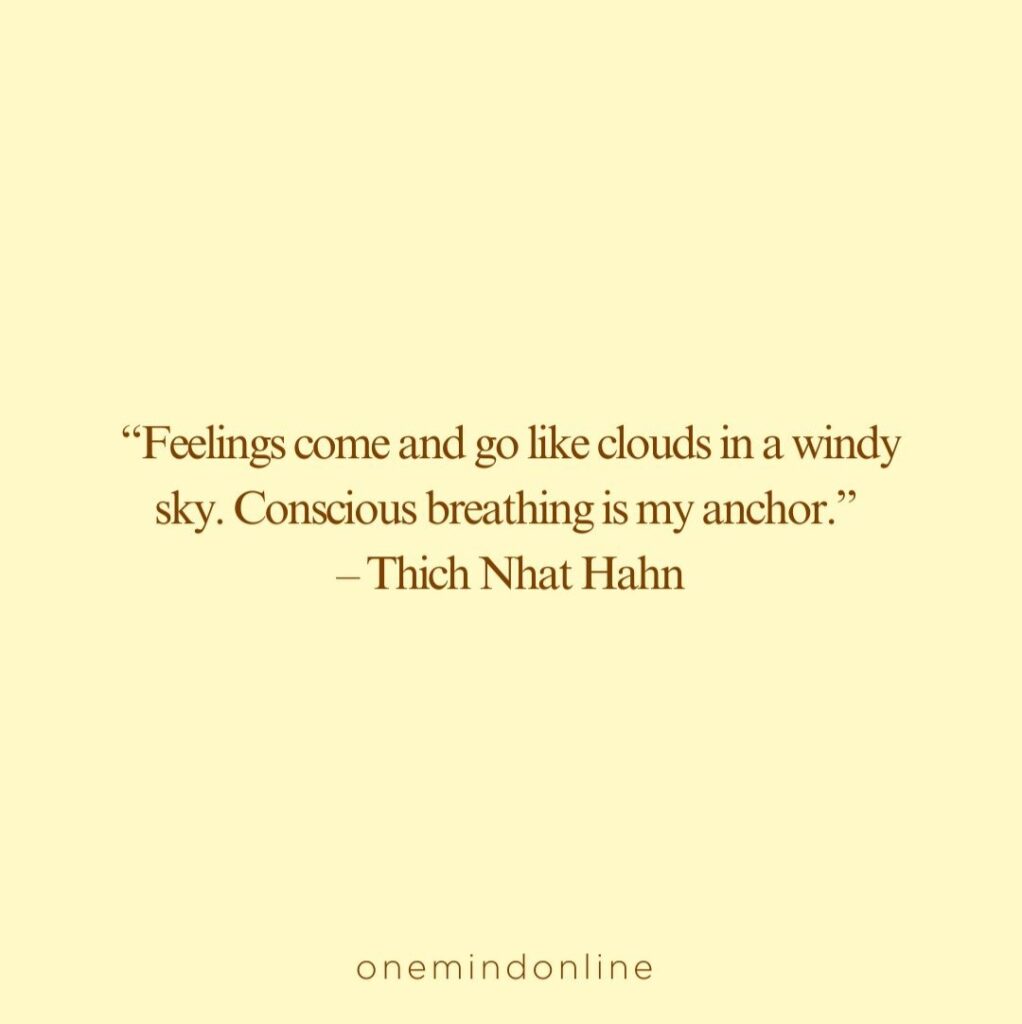
“Feelings come and go like clouds in a windy sky. Conscious breathing is my anchor.” – Thich Nhat Hahn
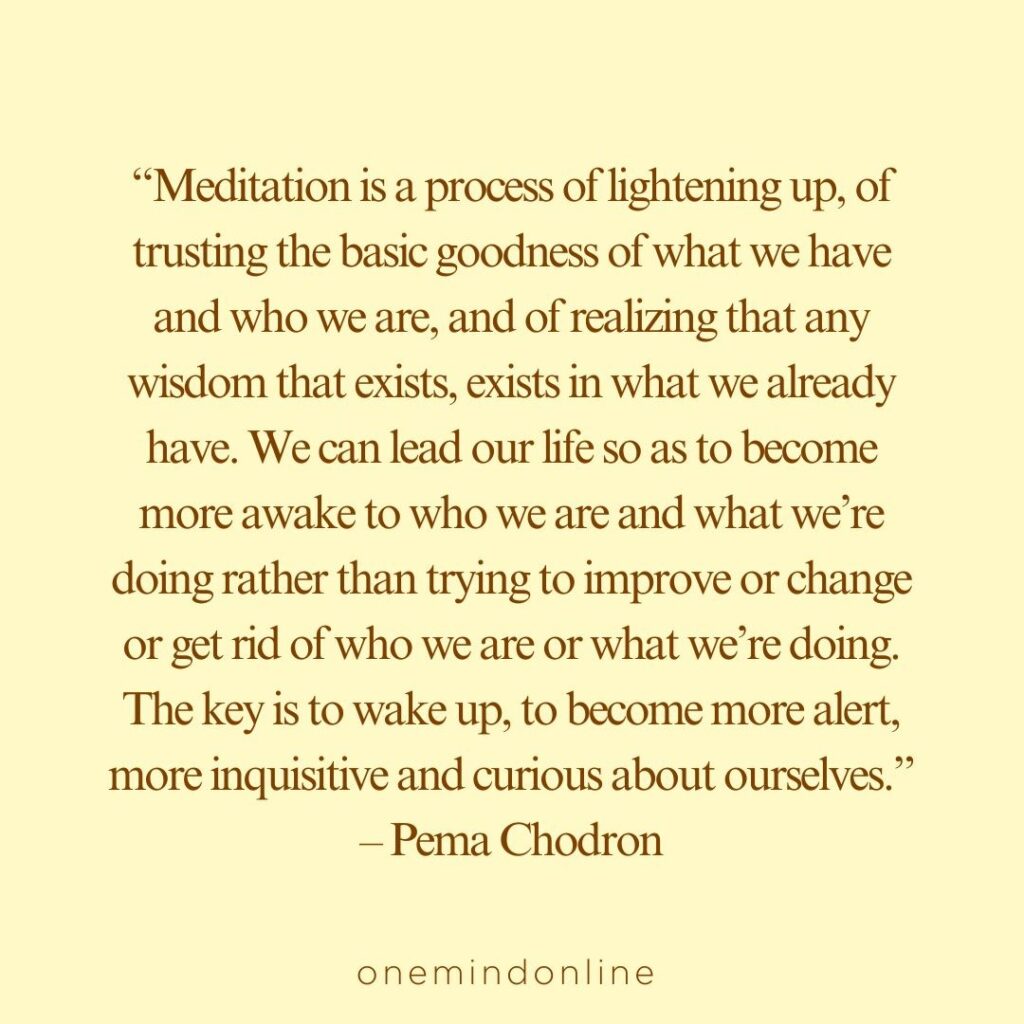
“Meditation is a process of lightening up, of trusting the basic goodness of what we have and who we are, and of realizing that any wisdom that exists, exists in what we already have. We can lead our life so as to become more awake to who we are and what we’re doing rather than trying to improve or change or get rid of who we are or what we’re doing. The key is to wake up, to become more alert, more inquisitive and curious about ourselves.” – Pema Chodron
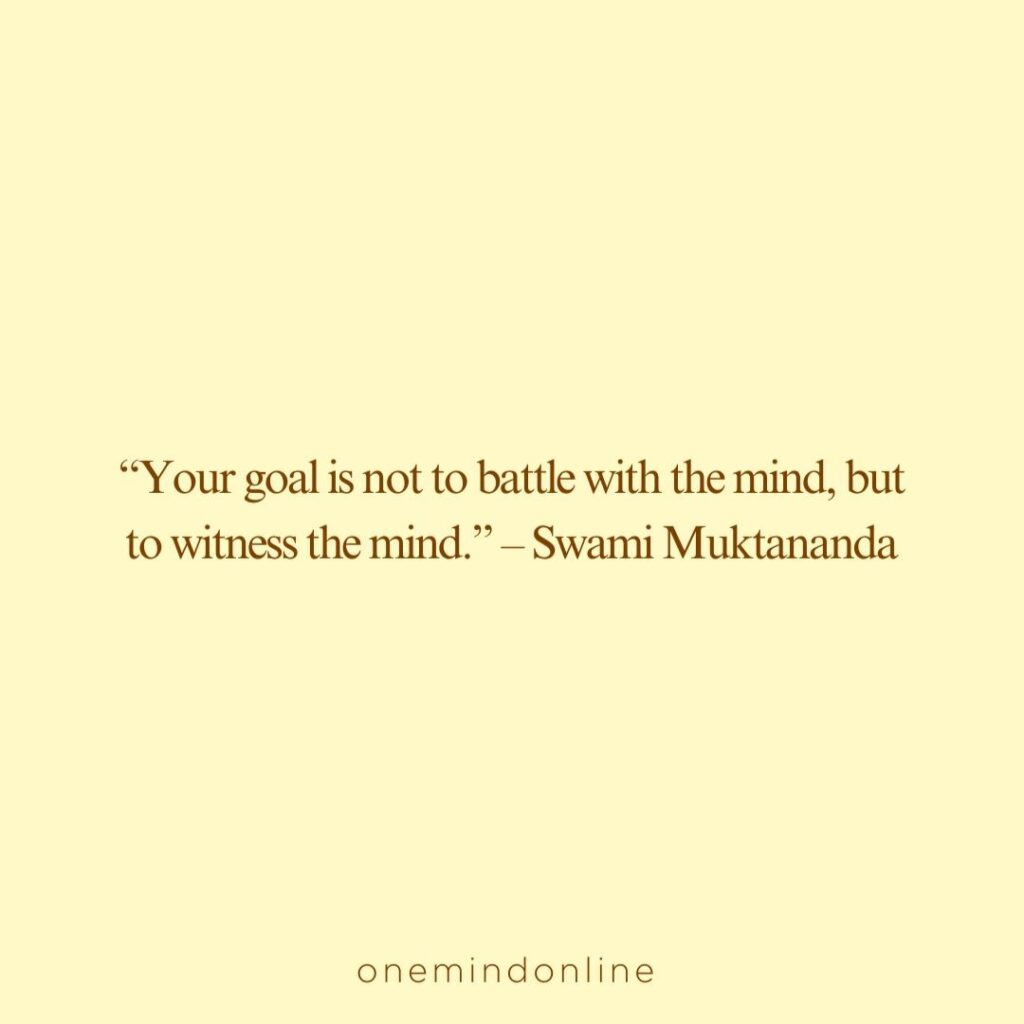
“Your goal is not to battle with the mind, but to witness the mind.” – Swami Muktananda
You don’t have to earn your way to this stillness. You don’t have to meditate for twenty years or reach some elevated state of enlightenment. You can begin right now, in the most ordinary way: by noticing your breath. By feeling your feet on the floor. By listening to the sounds around you without trying to label or change them.
These small acts of presence are the doorway. Each breath is a return, not to somewhere new, but to somewhere you’ve always been.
The invitation isn’t to become a different person. It’s to stop running from the person you already are, and to discover the part of that person that has been in wholeness all along.
Join us on a journey of rediscovering the permanence in you. Today’s meditation invites you to “Come to your senses.” By grounding ourselves in the present moment, through the simple act of observing our breath, bodily sensations, and sounds around us, we begin to touch that unchanging essence at the core of our being.
A few affirmations to elevate the permanence within you:
- “I am the mountain, not the storm.”
- “What is permanent within me, is already whole.”
- “I do not need to fix what I can simply witness.”
- “I return to my breath, and my breath returns me to myself.”
- “Stillness is not something I create – it is something I remember.”
Join us for today’s journey of touching the permanence that is you.
– pierre –
Today’s LIVE meditation is: Come to your senses.
https://youtu.be/yw052CAVA5s 2026
https://youtu.be/jlfpHzFhO_I 2025
https://youtu.be/kgTk1BGYb-4 2022
Practice the “Daily Dose”
Let’s put it into practice! Choose what works for you – daily, once a week or whenever inspiration strikes. Putting pen to paper wires the neural pathways that will create your new habits.
1 – Affirmation
Write down your favourite affirmation on a sticky note and place it somewhere that you’ll be able to see it the whole day.
- “I am the mountain, not the storm.”
- “What is permanent within me, is already whole.”
- “I do not need to fix what I can simply witness.”
- “I return to my breath, and my breath returns me to myself.”
- “Stillness is not something I create – it is something I remember.”
2 – A moment of reflection
Use today’s question as a journal prompt. If you don’t have the time to sit down and write, just take a moment to reflect on your response.
The Permanent vs. The Temporary: Create two columns on your page. In the left column, list the thoughts, emotions, circumstances, and aspects of your life that you’ve noticed change over time. In the right column, identify aspects of yourself that has remained constant throughout all these changes – perhaps your capacity for awareness, love, or growth. Reflect deeply on this permanent aspect of yourself. How might your life shift if you anchored your sense of self more in what’s permanent rather than what’s temporary?
3 – Quotes to share
Send a quote to someone who needs it, or share them all on social media to spread the good vibes!

4 – Q&A for deeper learning
Read through the questions and answers and write down at least one “aha moment” that clicked for you.
Q1: I’ve tried meditation before but my mind is too busy. How can I possibly “witness” my thoughts when they’re so chaotic?
The chaos you’re experiencing is actually perfect raw material for witnessing practice. You don’t need to stop or slow down your thoughts to be a witness. Instead, practice noticing that you’re aware of the chaos. The part of you that can say “my mind is busy” is already in witness mode. Start there, and trust that this awareness is always present, even in the midst of mental turbulence.
Q2: What’s the difference between this approach and traditional meditation techniques like focusing on breath or mantras?
Traditional techniques are wonderful tools that approach mindfulness in a different way. Focusing on breath or mantras redirects the mind away from chaotic thoughts by giving it something else to focus on. What this does is strengthen the ‘muscle’ of focus and attention which gives us greater control in choosing to direct our thoughts toward more productive topics. The approach described in this article emphasizes recognizing awareness itself as the essence of our human existence. When we are able to embody the awareness that can observe chaotic thoughts without becoming hijacked by chaos, then we are embedding peace and self-trust as the very foundation of our system.
Q3: How do I know if I’m connecting with this “permanent” aspect of myself or just having another temporary experience?
The permanent aspect of yourself is characterized by a sense of spaciousness, peace, and unconditional presence. It doesn’t come and go – it’s always there. Temporary experiences, even positive ones, have a quality of arising and passing away. If you’re questioning whether you’re connecting with permanence, notice the part of you that’s asking the question. That questioning awareness itself is what you’re looking for.
Q4: I understand this intellectually, but how do I actually apply it when I’m stressed or triggered in daily life?
When stress or triggers arise, use them as meditation bells – signals to remember your witnessing awareness. Take a breath and ask yourself: “What part of me is aware that I’m stressed right now?” Even in difficult moments, you can touch base with the observer self. This doesn’t mean the stress disappears, but you’re no longer completely identified with it. You now become grounded in the part of you that knows the stress will pass.
Q5: Is this just another form of spiritual bypassing or avoiding difficult emotions?
A: Absolutely not. True witnessing means facing everything that arises with full presence and acceptance. You’re not trying to transcend or escape difficult emotions—you’re learning to hold them in a larger context of awareness. This actually allows you to feel emotions more fully because you’re not afraid of being overwhelmed by them.
Q6: How long does it take to develop this witnessing awareness?
The awareness is already present – it’s not something you develop but something you recognize. Some people have glimpses immediately, while others take months or years to stabilize in this recognition. The key is consistent practice and patience with yourself. Remember, you’re not trying to achieve a special state but simply noticing what’s always been there.
Q7: Can this practice help with anxiety and depression, or do I need professional help?
This practice can be profoundly supportive for mental health challenges, but it’s not a replacement for professional treatment when needed. Many people find that developing witnessing awareness helps them relate to anxiety and depression differently – seeing these as temporary states rather than defining features of who they are. However, if you’re struggling significantly, please consider working with a qualified mental health professional alongside your meditation.
One thought on “Become aware of what has permanence.”
Comments are closed.