

“Your Daily Dose” is a quick two minute read packed with bite-sized wisdom from all the great teachers. But you could also choose to turn it into something more… a powerful daily practice for personal growth. Give it a try!
A message from today’s meditation:
There’s a particular kind of exhaustion that has nothing to do with how much you’ve done today. It’s the exhaustion of being mentally somewhere else, replaying a conversation that went wrong, rehearsing a future that hasn’t arrived, or mourning a version of right now that never was. If that sounds familiar, you’re not alone. Most of us spend enormous energy trying to inhabit moments that simply don’t exist.
We become, in a sense, ghosts haunting our own lives.The trap is subtle. It doesn’t announce itself. It disguises itself as productivity or wisdom. But there’s a very important difference between thoughtfully reflecting on either the past or the future – and being consumed by either. When we’re consumed, we check out of the only moment where life actually happens: this very moment.
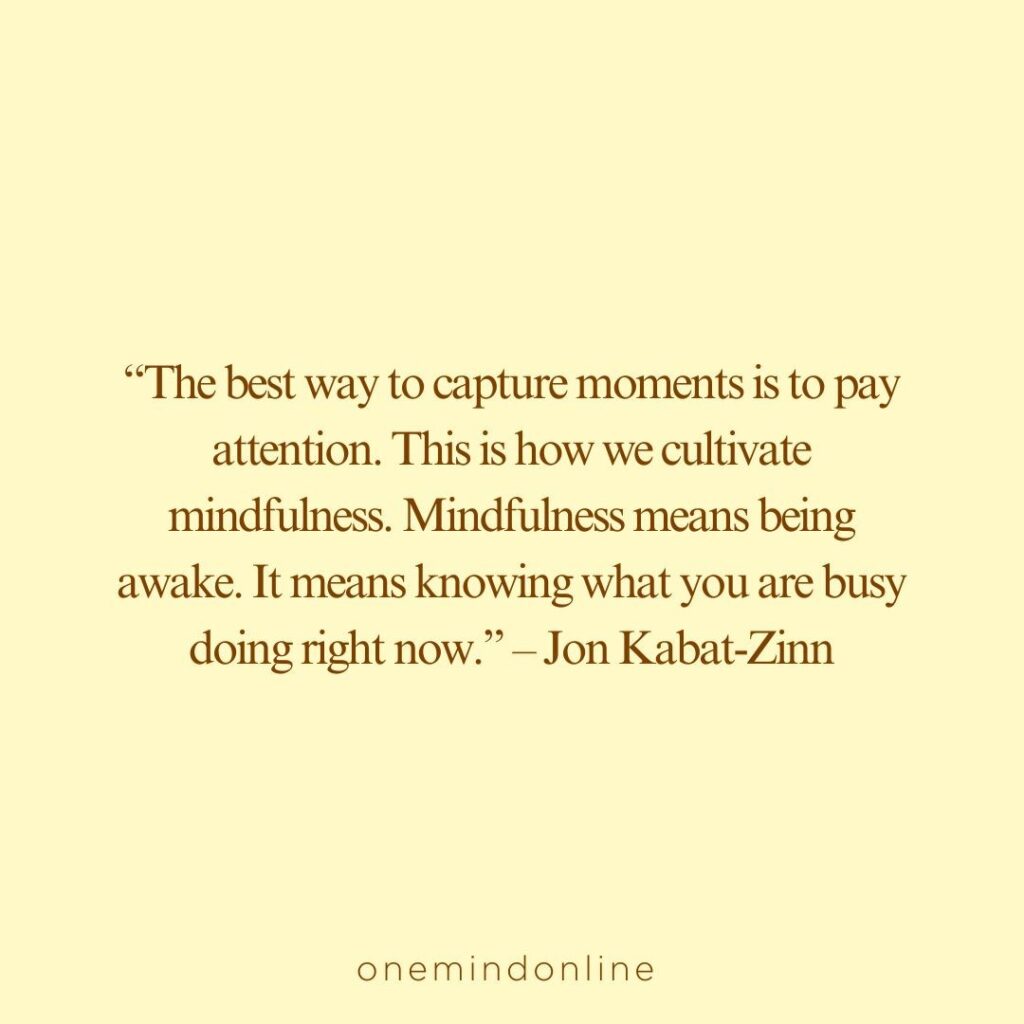
“The best way to capture moments is to pay attention. This is how we cultivate mindfulness. Mindfulness means being fully awake. It means knowing what you are busy doing right now.” – Jon Kabat-Zinn
Are you able to let go of what you thought this moment “should have been”, and accept what this moment calls for?
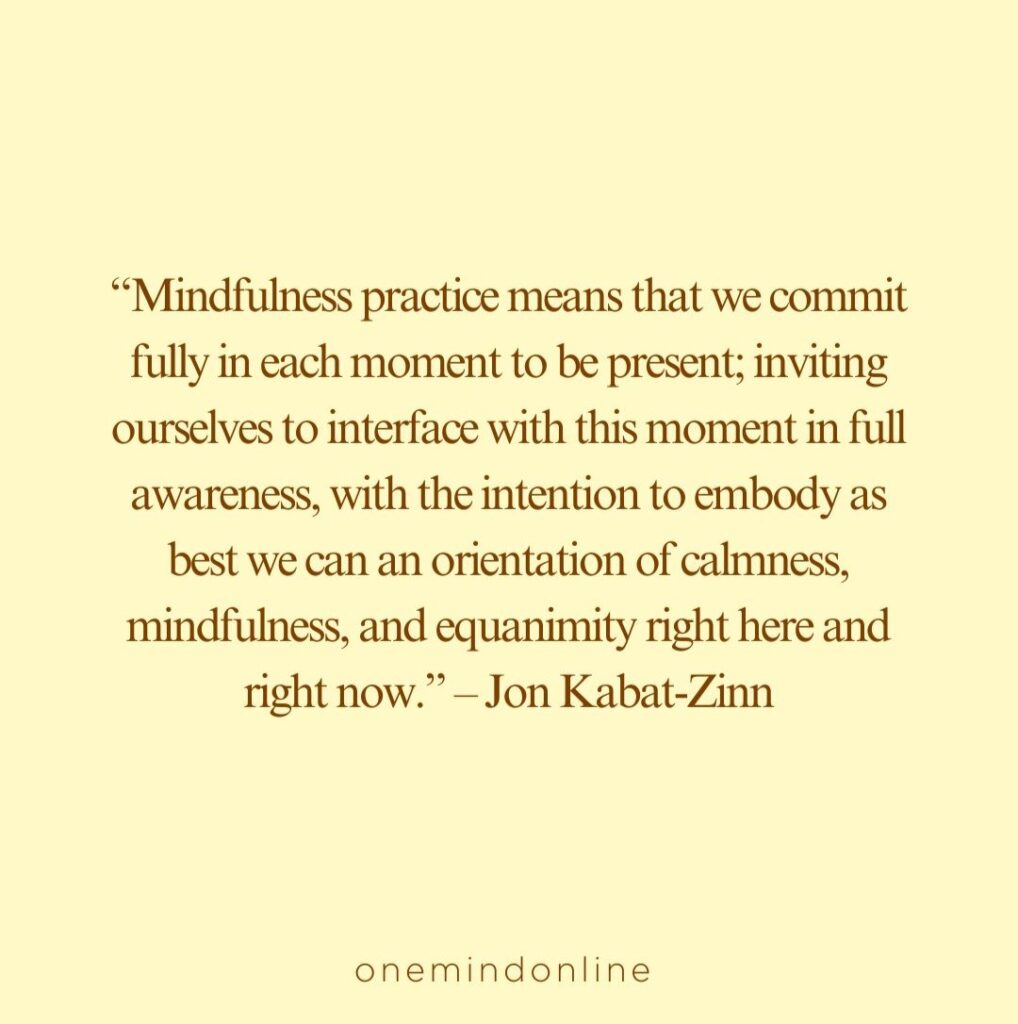
“Mindfulness practice means that we commit fully in each moment to be present; inviting ourselves to interface with this moment in full awareness, with the intention to embody as best we can an orientation of calmness, mindfulness, and equanimity right here and right now.” – Jon Kabat-Zinn
When I am holding on to the thought of what this moment “should have been”… then I am not in this moment. I am “trying” to be in some other moment that doesn’t exist.
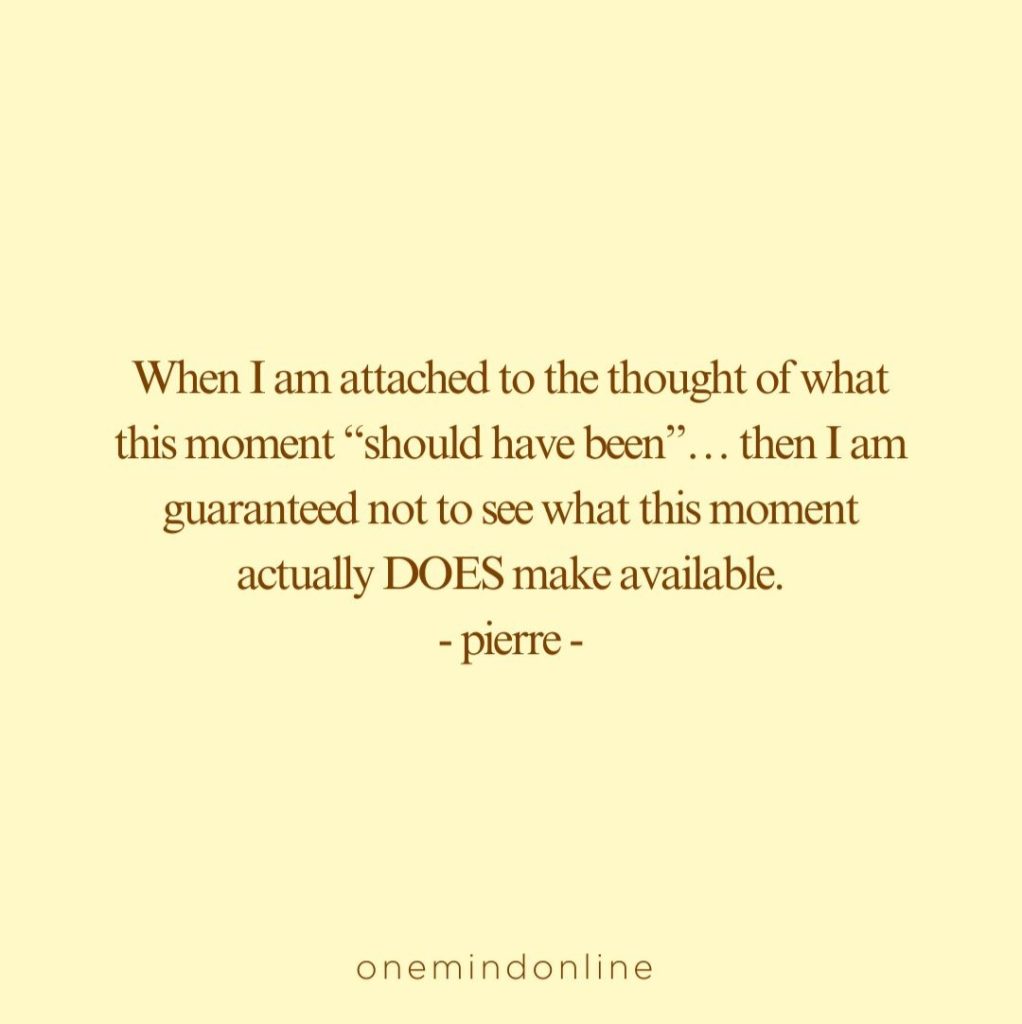
When I am attached to the thought of what this moment “should have been”… then I am guaranteed not to see what this moment actually DOES make available.
When I am standing in front of and banging on a locked door which I am convinced “should” have been open, then my attachment to that thought will prevent me from stepping back and taking a real look around to see that there are a 100 more doors for me to knock on.
What is the power of the present moment?
Living in presence does not mean that I only sit and meditate. But it does mean that the more often I meditate, the easier it becomes to see – with clarity – what this moment asks me to step up and do.
Here are some guiding mantras to help you embrace the power of the present moment:
- “Where my feet are at, this is where I am.” This simple phrase brings your attention back to the present reality.
- “What becomes available to me in this moment?” This question shifts your focus from lack to possibility.
- “I release regrets about the past and anxieties about the future.” Letting go allows you to be open to what unfolds.
You can pour your energy into a past or future that exists only in your imagination, or you can become better at applying all of your energy to what is in front of you right now, in this moment. Only one of these options is actually productive.
Have a beautiful day, fearless souls.
-pierre-
Today’s LIVE meditation is: The power of now.
Today’s LIVE meditation
https://youtu.be/RlGU5vzrV3k 2026
https://youtu.be/yVrdwQ56yt0 2025
https://youtu.be/fcdH_yjIKUs 2024
https://youtu.be/W0Y-I4KHDxs 2021
Practice the “Daily Dose”
Let’s put it into practice! Choose what works for you – daily, once a week or whenever inspiration strikes. Putting pen to paper wires the neural pathways that will create your new habits.
1 – Affirmation
Write down your favourite affirmation on a sticky note and place it somewhere that you’ll be able to see it the whole day.
- “Where my feet are at, this is where I am.” This simple phrase brings your attention back to the present reality.
- “What becomes available to me in this moment?” This question shifts your focus from lack to possibility.
- “I release regrets about the past and anxieties about the future.” Letting go allows you to be open to what unfolds.
2 – A moment of reflection
Use today’s question as a journal prompt. If you don’t have the time to sit down and write, just take a moment to reflect on your response.
Jon Kabat-Zinn emphasizes that “the best way to capture moments is to pay attention” and defines mindfulness as “being fully awake” and “knowing what you are busy doing right now.” Consider an ordinary activity you performed today or recently (e.g., making a meal, walking, having a conversation). How fully present were you during this activity? What details did you notice or miss? How might intentionally bringing more “full awareness” to such moments enrich your daily experience?
3 – Quotes to share
Send a quote to someone who needs it, or share them all on social media to spread the good vibes!

4 – Q&A for deeper learning
Read through the questions and answers and write down at least one “aha moment” that clicked for you.
Q1: What does it mean to “live in a moment that doesn’t exist”?
It means mentally inhabiting a version of now that isn’t real — either by fixating on how the present should have turned out differently, or by being so consumed by past regrets or future anxieties that you’re never actually here. The present moment as it truly is gets bypassed in favour of an imagined one.
Q2: Isn’t it healthy to think about the past and plan for the future?
Absolutely — reflection and planning are valuable. The key distinction is whether you’re visiting the past or future with intention, or being consumed by it unconsciously. Mindfulness doesn’t ask you to abandon memory or foresight; it asks you to remain rooted in the present even while engaging with them.
Q3: What is mindfulness, and why does it help with this?
Mindfulness, as described by Jon Kabat-Zinn, is the practice of being fully awake to what is happening right now — knowing what you’re doing as you do it, and meeting the moment with calmness and awareness. It helps because it trains your attention, making it easier to recognise when your mind has wandered and to gently return it to the present.
Q4: Does living in the present mean I have to meditate?
Not necessarily — but meditation is one of the most effective tools for developing present-moment awareness. The article makes the point that meditation doesn’t disconnect you from life; it actually sharpens your clarity about what life is asking of you right now. Even a few minutes of daily practice can strengthen your capacity for presence significantly.
Q5: How do I stop being attached to how I think things “should” be?
Awareness is the first step — simply noticing when your mind is insisting that reality be different. From there, practices like the mantras in this article can help: asking “what becomes available to me in this moment?” gently redirects your focus from resistance to possibility. It’s a shift that takes practice, but it becomes more natural over time.
Q6: What is the real cost of not being present?
The article offers a striking image: it’s like standing in front of a locked door, so fixated on it that you can’t see the hundred other doors around you. The cost of absence is missed opportunity — not seeing what is available because you’re too consumed by what isn’t. It also costs peace, energy, and the depth of connection available in everyday life.
Q7: How do I know if I’m making progress with presence?
Progress with presence often looks less dramatic than people expect. You may notice you recover from distraction more quickly. You might find yourself less reactive and more curious. Small things — a conversation, a meal, a walk — begin to feel richer. Presence isn’t a destination you arrive at permanently; it’s a practice you return to, again and again, each time with a little more ease.