
“Your Daily Dose” is a quick two minute read packed with bite-sized wisdom from all the great teachers. But you could also choose to turn it into something more… a powerful daily practice for personal growth. Give it a try!
A message from today’s meditation:
A regular practice of silence is like medicine, and the long term healing properties of meditation are becoming increasingly clear through modern science.
Recently, meditation researchers have investigated how meditation impacts what is called the brain’s default mode network (DMN), which includes the self-talk that constantly chatters in the background as you go about your day.
For most of us, the DMN tends to focus on the past or the future instead of the present moment. For example, we may be vaguely aware of thoughts looping through our consciousness, such as “Why did I say something so stupid? What if I’m not good enough? What if this worst case scenario happens?”
A recent functional magnetic resonance imaging (fMRI) study revealed shorter neural responses in regions of the DMN of meditators compared to non-meditators, suggesting that meditating on a regular basis enhances the ability to limit negative self-talk such as dwelling on past mistakes or imagining problems in the future, allowing instead for meditators to stay in the now.
In a nutshell what it means is this: people who meditate consistently are developing an increased ability to become aware of the unhelpful thoughts that are on autopilot, and their ability to take a step back from these unhelpful thoughts keeps improving.
You have within yourself everything you need, and meditation is just one of the tools that can help you unlock your full potential.
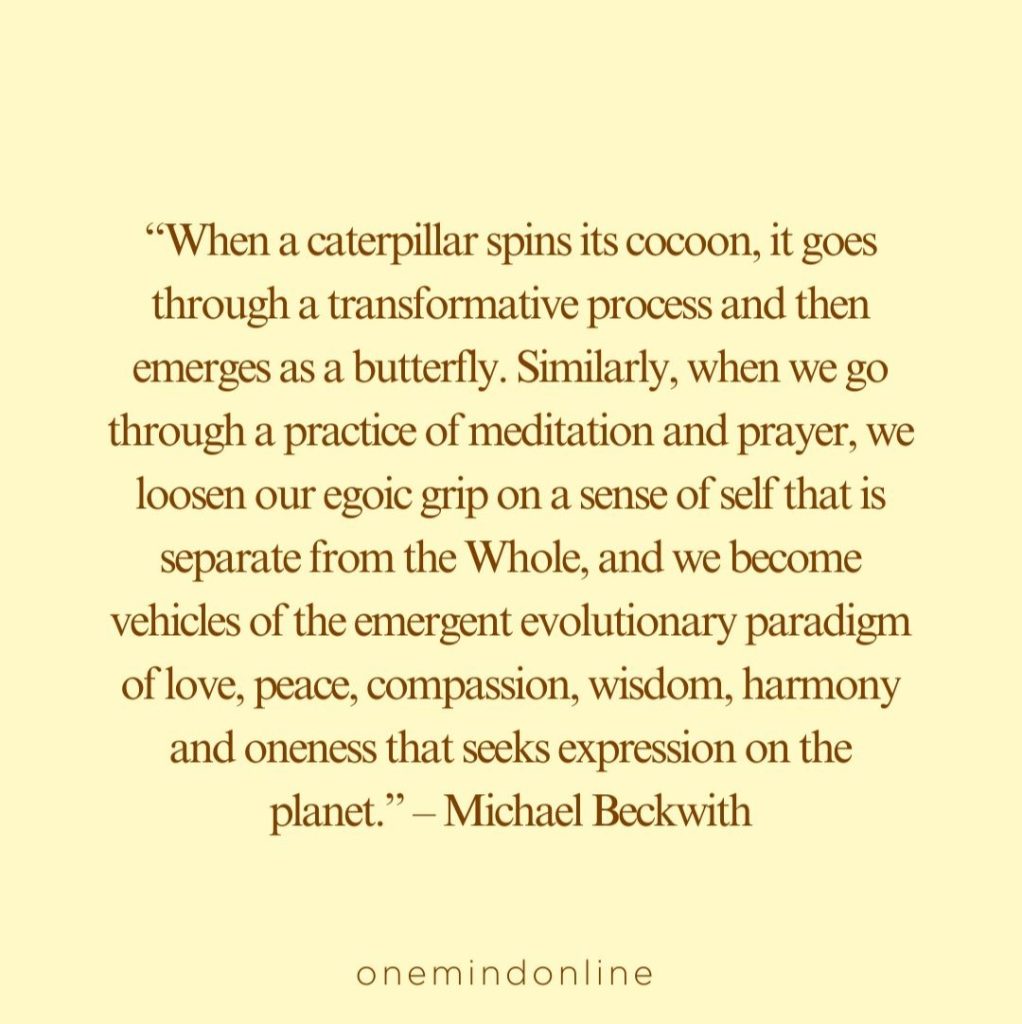
“When a caterpillar spins its cocoon, it goes through a transformative process and then emerges as a butterfly. Similarly, when we go through a practice of meditation and prayer, we loosen our egoic grip on a sense of self that is separate from the Whole, and we become vehicles of the emergent evolutionary paradigm of love, peace, compassion, wisdom, harmony and oneness that seeks expression on the planet.” – Michael Beckwith
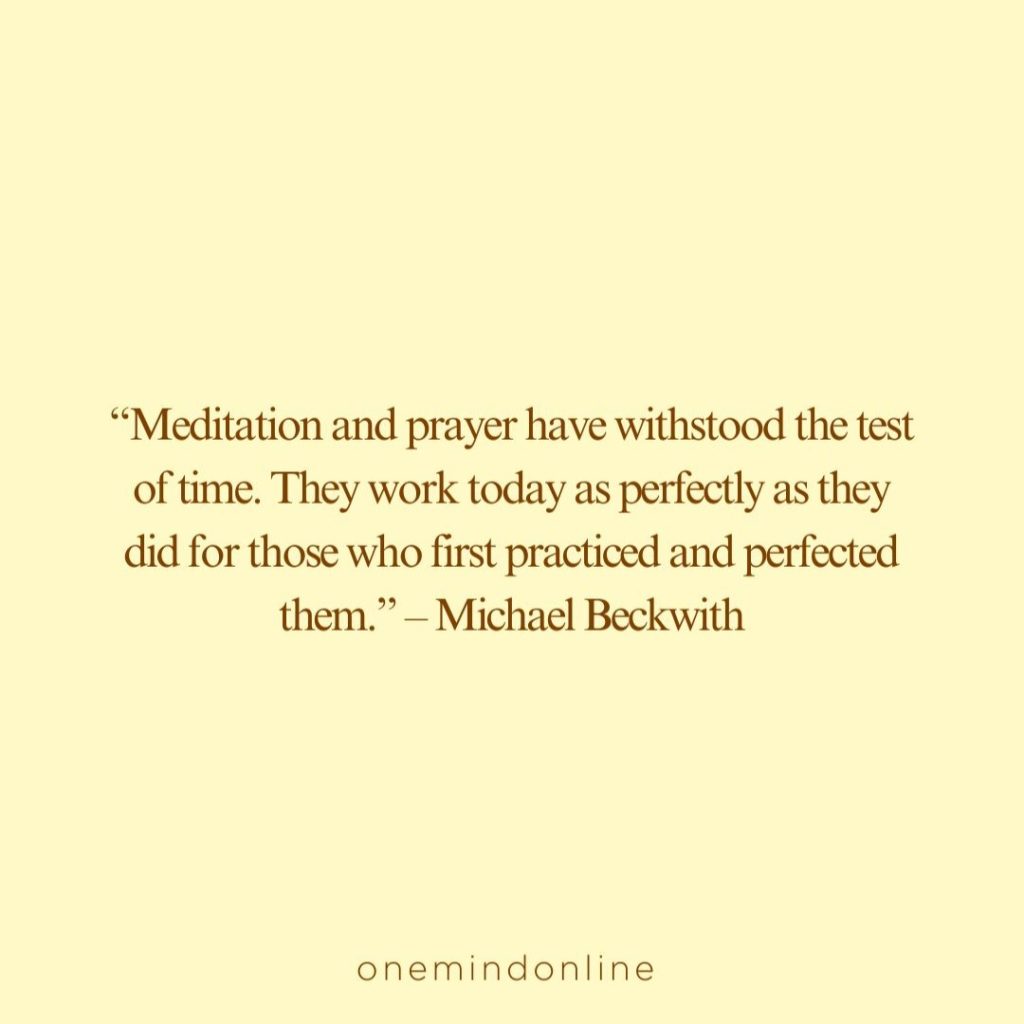
“Meditation and prayer have withstood the test of time. They work today as perfectly as they did for those who first practiced and perfected them.” – Michael Beckwith
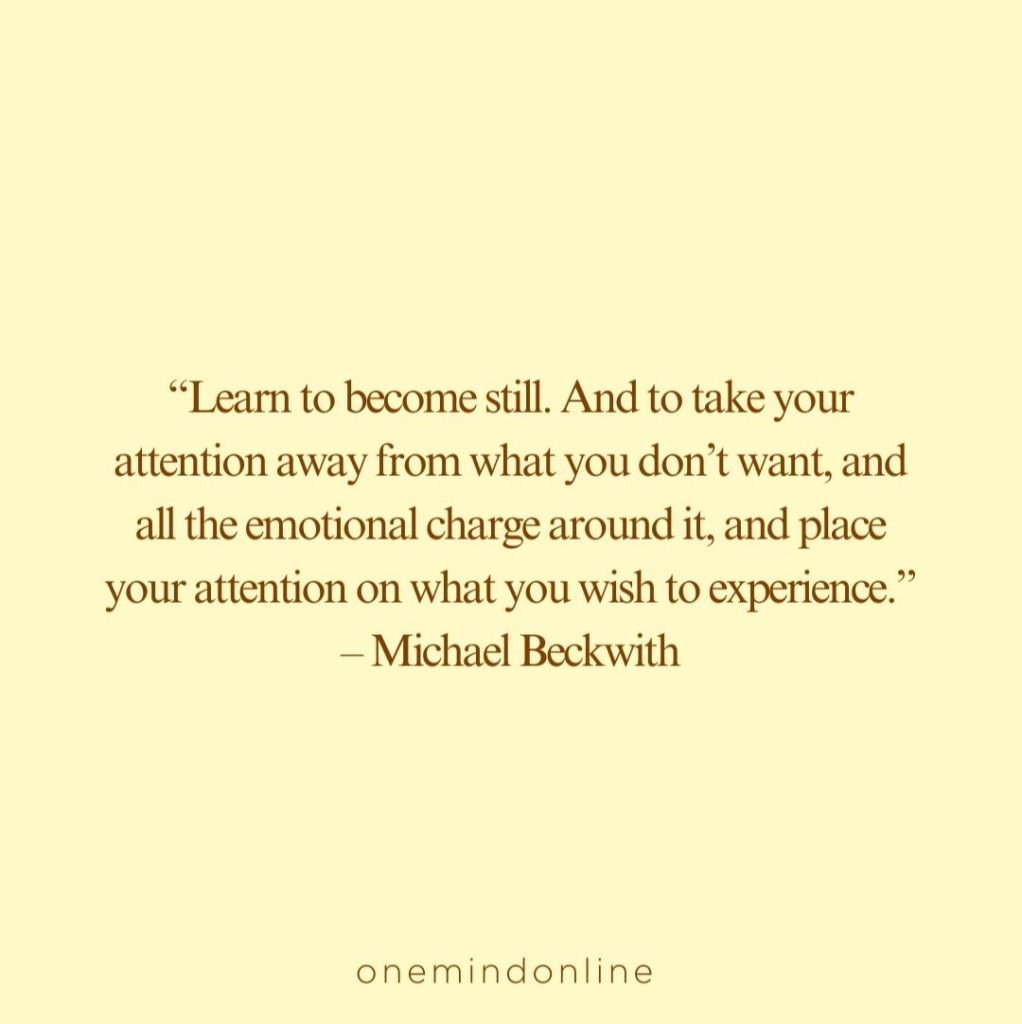
“Learn to become still. And to take your attention away from what you don’t want, and all the emotional charge around it, and place your attention on what you wish to experience.” – Michael Beckwith
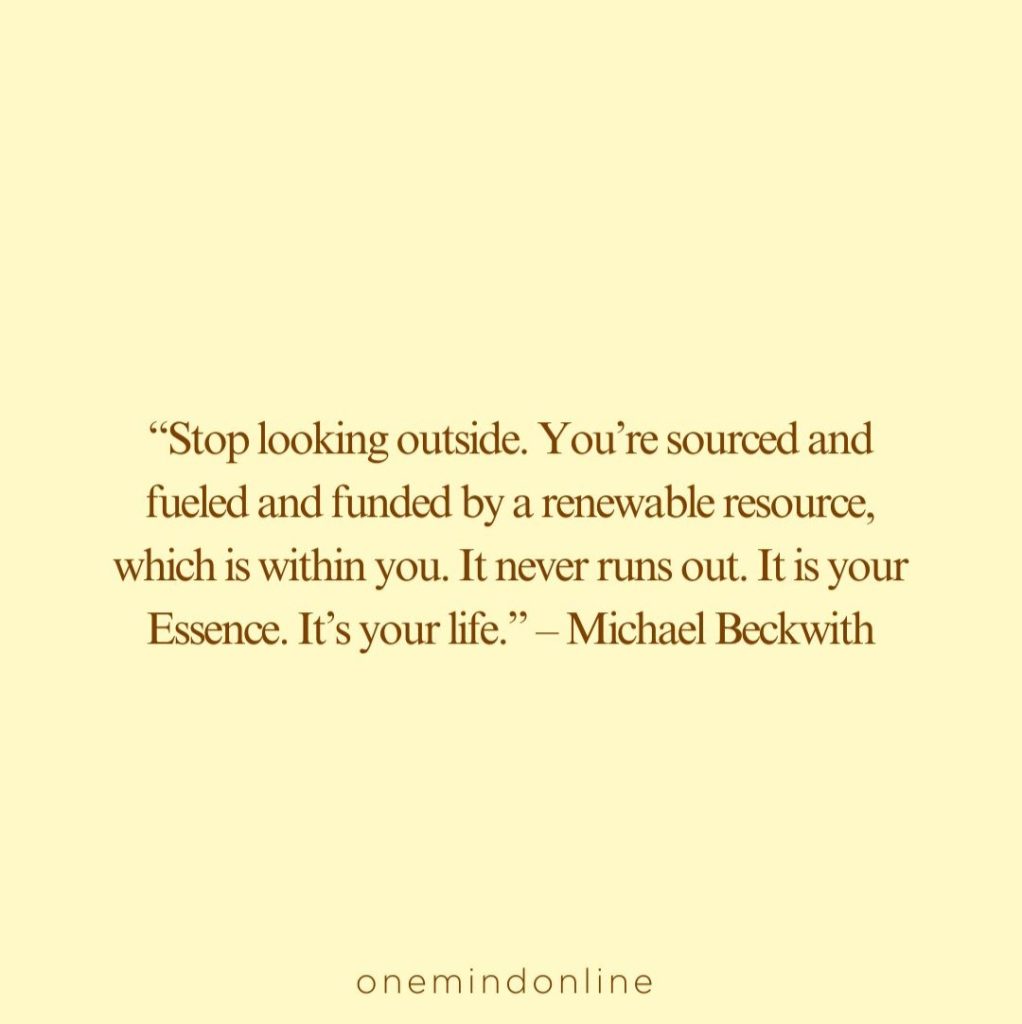
“Stop looking outside. You’re sourced and fueled and funded by a renewable resource, which is within you. It never runs out. It is your Essence. It’s your life.” – Michael Beckwith
Your subconscious is always going to be on autopilot and the stream of thoughts that your subconscious produces will always be outside of your control. What consistent meditation creates is an increased awareness of these “wild horses” that your mind creates as they come into being. And where perhaps in the past you’ve found yourself desperately clinging onto the backs of one wild horse after the other, regular meditation helps you see that you just don’t have to try and ride any of them, at all. You don’t have to do anything more than to stand behind the fence and watch, and the more you observe the clearer you can see, these thoughts are not who I am…
That is when you start to become familiar with a deeper part of you. Michael Beckwith describes it as, “… then we become vehicles of the emergent evolutionary paradigm of love, peace, compassion, wisdom, harmony and oneness that seeks expression on the planet.”
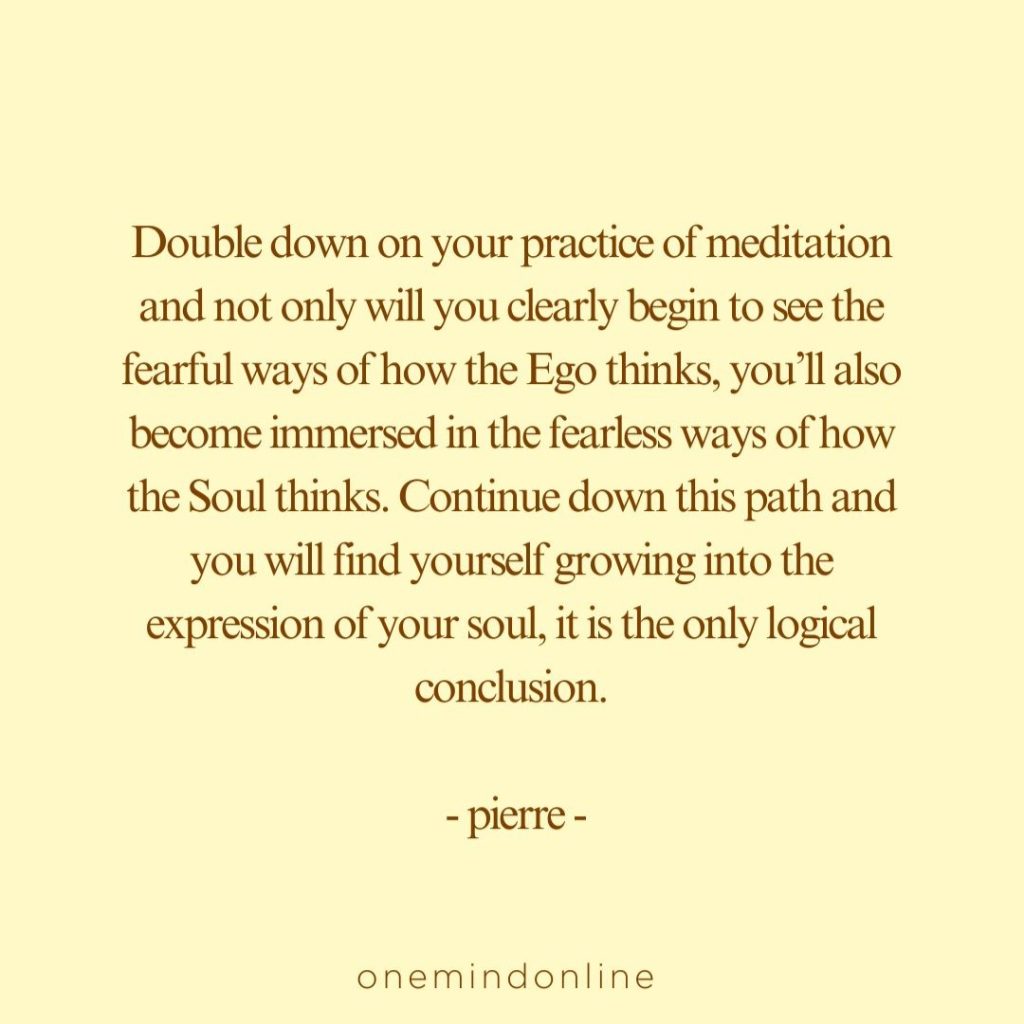
Double down on your practice of meditation and not only will you clearly begin to see the fearful ways of how the Ego thinks, you’ll also become immersed in the fearless ways of how the Soul thinks. Continue down this path and you will find yourself growing into the expression of your soul, it is the only logical conclusion.
A few affirmations to reflect upon:
- “I am not my thoughts; I am the observer of my thoughts.”
- “I choose to focus on the present moment, where peace resides.”
- “The deeper I go within, the more I connect with my true self.”
- “My mind is a tool, not my master.”
- “Through stillness, I unlock the wisdom of my soul.”
In your journey of self-discovery, meditation offers you the chance to break free from the endless loop of negative self-talk and connect with the deeper, wiser part of yourself. Take this opportunity to practice silence, observe your mind, and allow your soul to lead the way.
Have a beautiful Sunday peeps!
– pierre –
Today’s LIVE meditation is: Finding silence.
Today’s LIVE meditation
https://youtu.be/tWhlSqyxhks 2025
https://youtu.be/in78XjpPo8I 2024
https://youtu.be/T8mWw2f2qxc 2023
https://youtu.be/6u3Vlg4F1YQ 2022
Practice the “Daily Dose”
Let’s put it into practice! Choose what works for you – daily, once a week or whenever inspiration strikes. Putting pen to paper wires the neural pathways that will create your new habits.
1 – Affirmation
Write down your favourite affirmation on a sticky note and place it somewhere that you’ll be able to see it the whole day.
- “I am not my thoughts; I am the observer of my thoughts.”
- “I choose to focus on the present moment, where peace resides.”
- “The deeper I go within, the more I connect with my true self.”
- “My mind is a tool, not my master.”
- “Through stillness, I unlock the wisdom of my soul.”
2 – A moment of reflection
Use today’s question as a journal prompt. If you don’t have the time to sit down and write, just take a moment to reflect on your response.
The Wild Horses Exercise: Take a moment to understand thoughts as products that a brain produces on autopilot the same way that your heart beats autonomously, or how your sweat glands produce perspiration on autopilot without needing you to even try. Now write about a recent time when you felt carried away by negative self-talk or anxious thoughts. In your writing, imagine these thoughts as a herd of “wild horses” your mind has produced. You have a choice: will you cling to the back of one wild horse after another, or will you simply stand behind the fence and watch them run? Describe how different the experience feels when you are buying into and riding the negative thoughts versus when you are able to just stand back and observe their movement with an air of curiosity and intrigue.
3 – Quotes to share
Send a quote to someone who needs it, or share them all on social media to spread the good vibes!

4 – Q&A for deeper learning
Read through the questions and answers and write down at least one “aha moment” that clicked for you.
Q1: How long does it take to see changes in negative self-talk through meditation?
A: While individual experiences vary, the fMRI studies mentioned show measurable changes in brain activity among regular meditators. Some people notice increased awareness of their thought patterns within a few weeks, but developing the ability to consistently observe rather than engage with negative thoughts typically takes months or even years of regular practice.
Q2: What exactly is the brain’s default mode network (DMN)?
A: The DMN is a network of brain regions that’s active when you’re not focused on a specific task—essentially your brain’s “idle mode.” It’s responsible for that constant mental chatter, self-referential thinking, and the tendency to replay past events or imagine future scenarios. In many people, this network tends toward negative or anxious thinking patterns.
Q3: Does meditation eliminate negative thoughts entirely?
A: No, and that’s not the goal. As the article explains, your subconscious will always produce thoughts on autopilot. Meditation doesn’t stop the “wild horses” of the mind from appearing; instead, it teaches you that you don’t have to ride them. The key is developing the awareness to observe thoughts without being carried away by them.
Q4: What’s the difference between being aware of thoughts and being controlled by them?
A: When you’re controlled by thoughts, you unconsciously identify with them—you become the anxious thought or the self-critical voice. Awareness means recognizing thoughts as mental events that come and go, like clouds passing through the sky. You shift from “I am worried” to “I notice worry thoughts arising.”
Q5: How does meditation help distinguish between ego thinking and soul thinking?
A: Through regular practice, you begin to recognize patterns in your thinking. Ego thinking tends to be fear-based, focused on separation, comparison, and scarcity. Soul thinking emerges from a place of love, connection, and wisdom. Meditation creates enough mental space for you to recognize these different qualities of thought and choose which to engage with.
Q6: What if I can’t quiet my mind during meditation? Does that mean it’s not working?
A: A busy mind doesn’t indicate failed meditation. The practice isn’t about achieving a thought-free state but about developing a different relationship with your thoughts. Even noticing that your mind is busy is awareness in action. The benefits come from the practice of returning attention to your chosen focus point, not from maintaining perfect concentration.
Q7: How can I apply this understanding in daily life when I’m not meditating?
A: Start by setting regular check-ins with yourself throughout the day. When you notice negative self-talk arising, pause and ask: “Am I riding this wild horse, or can I step back and observe?” Use the affirmations provided as anchors to remind yourself of your true nature as the observer of thoughts, not the thoughts themselves. Remember that this is a gradual process of building awareness, not an immediate transformation.