
“Your Daily Dose” is a quick two minute read packed with bite-sized wisdom from all the great teachers. But you could also choose to turn it into something more… a powerful daily practice for personal growth. Give it a try!
A message from today’s meditation:
While we have a guided meditation every day of the week, on Sundays the meditation is just quiet. Just you sitting with your own silence, and knowing that all of us are sitting in our own silence along with you.
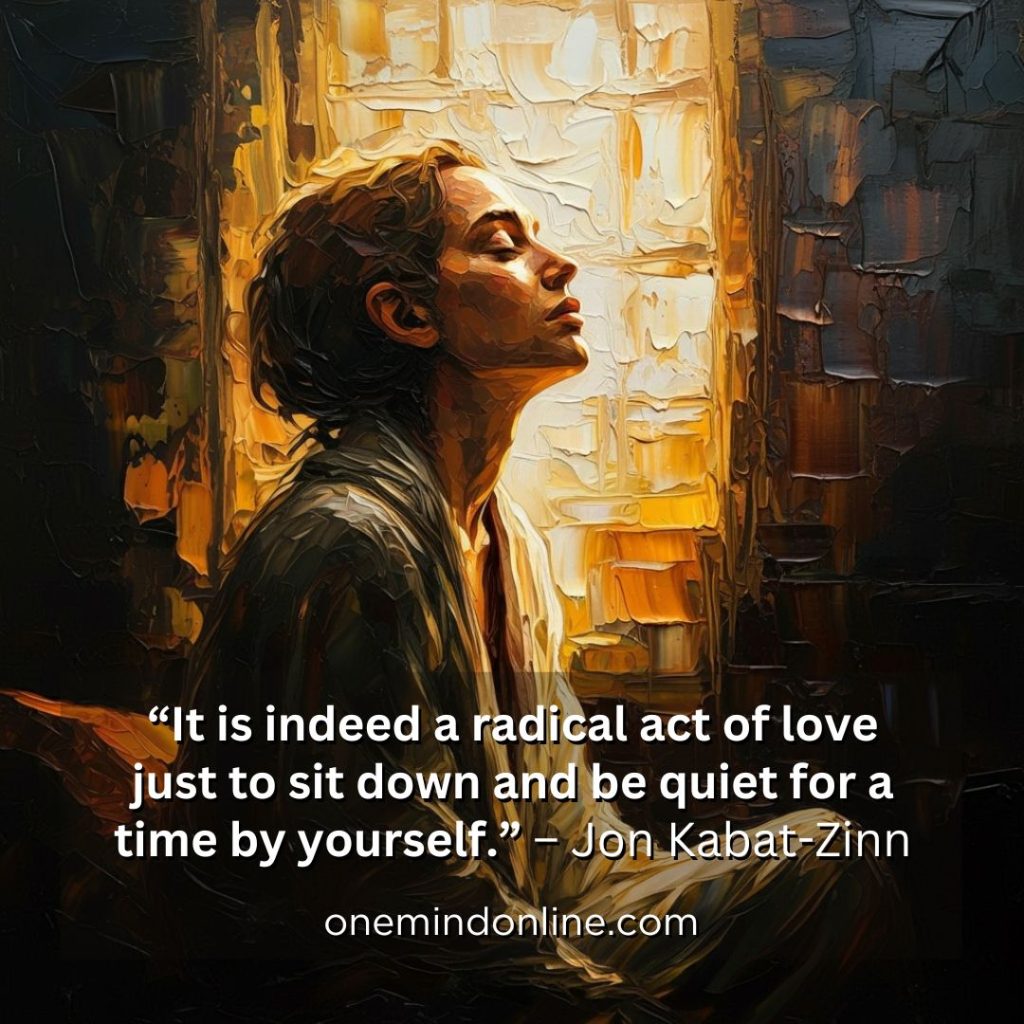
“It is indeed a radical act of love just to sit down and be quiet for a time by yourself.” – Jon Kabat-Zinn
“Another way to look at meditation is to view thinking itself as a waterfall, a cascading of thought. In cultivating mindfulness, we are going beyond or behind our thinking, much the way you might find a vantage point or depression in the rock behind a waterfall. We still see and hear the water, but we are out of the torrent.” – Jon Kabat-Zinn
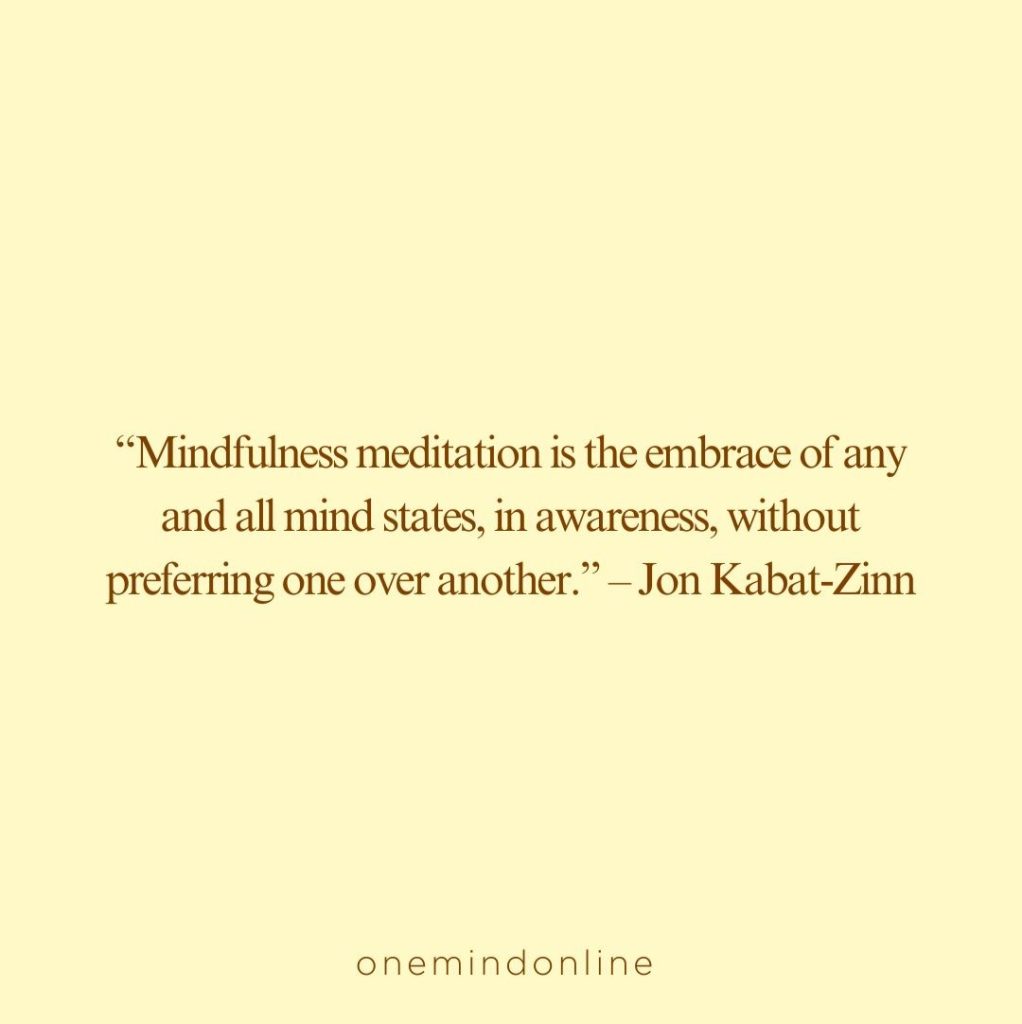
“Mindfulness meditation is the embrace of any and all mind states, in awareness, without preferring one over another.” – Jon Kabat-Zinn
“Meditation is simply about being yourself and knowing something about who that is.” – Jon Kabat-Zinn
These four quotes from John Kabat-Zinn are a simple summary of meditation:
- Sit and be quiet by yourself…
- Step outside of the torrent of thinking…
- Embrace all mind states without preferring one over the other…
- Being yourself and knowing something about WHO that is…
Do you realise WHO you are?
Who are you BEING when you are able to sit with your SELF? Who are you BEING when you step outside the torrent of thinking and just witness the thoughts? Who are you BEING when you are able to look at any of your mind states and not prefer one over the other?
You are the witness, the observer, the soul, the voice of wisdom – and the more often you can embody this space, the more you will be living, and acting from the wisdom that you are.
You are invited to join us for a silent meditation. In the quietude of your own being, you’ll discover the profound peace and clarity that awaits.
A few mantras for self-reflection:
- “I allow myself to sit in calm stillness, trusting that I am enough without needing constant action.”
- “I am the gentle witness of my mind. I observe my thoughts and feelings as they rise and fall, without attaching or judging.”
- “I accept this moment exactly as it is, the pleasant as well as the challenging, and remain grounded.”
- “I tune into inner wisdom. I trust the deeper, unchanging part of my being to guide me.”
- “I treat myself with kindness, compassion, and understanding. I am my own most supportive friend.”
By embodying this space of awareness, we tap into a wellspring of wisdom and intuition. We begin to make decisions from a place of clarity and peace, rather than reacting impulsively to external stimuli. We become more compassionate, more understanding, and more resilient.
– pierre –
Today’s LIVE meditation is: Finding silence.
Today’s LIVE meditation
https://youtu.be/sPMDe_BJhh4 2024
https://youtu.be/NUuVQlXrLMw 2023
Practice the “Daily Dose”
Let’s put it into practice! Choose what works for you – daily, once a week or whenever inspiration strikes. Putting pen to paper wires the neural pathways that will create your new habits.
1 – Affirmation
Write down your favourite affirmation on a sticky note and place it somewhere that you’ll be able to see it the whole day.
- “I allow myself to sit in calm stillness, trusting that I am enough without needing constant action.”
- “I am the gentle witness of my mind. I observe my thoughts and feelings as they rise and fall, without attaching or judging.”
- “I accept this moment exactly as it is, the pleasant as well as the challenging, and remain grounded.”
- “I tune into inner wisdom. I trust the deeper, unchanging part of my being to guide me.”
- “I treat myself with kindness, compassion, and understanding. I am my own most supportive friend.”
2 – A moment of reflection
Use today’s question as a journal prompt. If you don’t have the time to sit down and write, just take a moment to reflect on your response.
The Mind’s Current: Jon Kabat-Zinn describes thoughts as a waterfall and meditation as finding a space behind it. What is the nature and intensity of your typical mental current? Identify the three most frequently repeating thoughts or inner narratives that make up this flow. Describe the change in perspective when you are able to observe these narratives with a bit of distance. How would this shift impact your daily life?
3 – Quotes to share
Send a quote to someone who needs it, or share them all on social media to spread the good vibes!



4 – Q&A for deeper learning
Read through the questions and answers and write down at least one “aha moment” that clicked for you.
Q1: What exactly is silent meditation, and how is it different from guided meditation?
A: Silent meditation is the practice of sitting quietly without external instruction or guidance, allowing you to be present with whatever arises in your awareness. Unlike guided meditation, where a voice leads you through visualizations or instructions, silent meditation invites you to simply witness your experience without direction. Both practices are valuable—guided meditation can help you learn techniques and stay focused, while silent meditation deepens your ability to sit with yourself and access your inner wisdom independently.
Q2: I find it extremely difficult to quiet my mind. Does that mean meditation isn’t for me?
A: The goal of meditation isn’t to quiet or stop your thoughts—it’s to change your relationship with them. As Jon Kabat-Zinn describes, we’re not trying to stop the waterfall of thoughts but rather finding a vantage point behind it. Your mind will continue thinking; that’s what minds do. The practice is learning to observe those thoughts without getting caught in the current. Everyone experiences a busy mind, and that doesn’t disqualify you from meditation—it’s actually why you need it.
Q3: How long should I meditate, especially if I’m a beginner?
A: Start with whatever feels manageable, even if it’s just five minutes. Consistency matters more than duration. It’s better to sit for five minutes daily than to aim for thirty minutes and never actually do it. As you become more comfortable with the practice, you can naturally extend the time. The key is making it a sustainable habit rather than an overwhelming task you’ll eventually abandon.
Q4: What does it mean to be the “witness” or “observer” of my thoughts?
A: Being the witness means recognizing that you are not your thoughts—you are the awareness that notices them. Imagine standing on a riverbank watching leaves float by. You’re not the leaves (your thoughts); you’re the one watching them pass. This perspective creates space between you and your mental activity, allowing you to respond consciously rather than react automatically. It’s the part of you that can notice “I’m feeling anxious” rather than being completely consumed by anxiety.
Q5: How can I embrace “all mind states without preferring one over another” when some feelings are genuinely uncomfortable?
A: Embracing all mind states doesn’t mean you have to enjoy discomfort or stay in harmful situations. It means acknowledging what’s present without adding layers of judgment or resistance. When you fight against uncomfortable feelings, you often intensify them. When you can observe them with curiosity and acceptance—”This is what anxiety feels like in my body right now”—you reduce the suffering that comes from resisting the experience. This creates space for the feeling to move through naturally.
Q6: I feel like I’m “doing nothing” when I meditate. How is sitting quietly actually beneficial?
A: In a culture that glorifies constant productivity, sitting quietly can feel counterintuitive. However, this “doing nothing” is actually profoundly active. You’re training your attention, developing self-awareness, regulating your nervous system, and accessing deeper levels of insight and wisdom. Research shows meditation reduces stress, improves focus, enhances emotional regulation, and increases overall wellbeing. The benefits extend far beyond the meditation session itself, influencing how you show up in all areas of your life.
Q7: Can I really connect with my “inner wisdom” through meditation, or is that just a nice-sounding concept?
A: Inner wisdom isn’t mystical or separate from you—it’s the clarity and insight that emerge when you step back from reactive thinking and access a deeper level of awareness. We all have moments when we “just know” something or when an answer comes to us in stillness. Meditation creates the conditions for this wisdom to surface more regularly. By quieting the noise of constant mental chatter, you can hear the quieter, wiser voice that’s always been there. Many practitioners report that with consistent practice, they make better decisions, respond more skillfully to challenges, and feel more aligned with their authentic values.