

“Your Daily Dose” is a quick two minute read packed with bite-sized wisdom from all the great teachers. But you could also choose to turn it into something more… a powerful daily practice for personal growth. Give it a try!
A message from today’s meditation:
Jon Kabat-Zinn, a renowned mindfulness expert, offers a powerful invitation: develop a greater sense of self-awareness and emotional regulation, by paying attention to the present moment without judgement, without getting lost in the past or future. This simple act of mindfulness, can transform our lives.
“When awareness embraces the senses, it enlivens them.” – Jon Kabat-Zinn
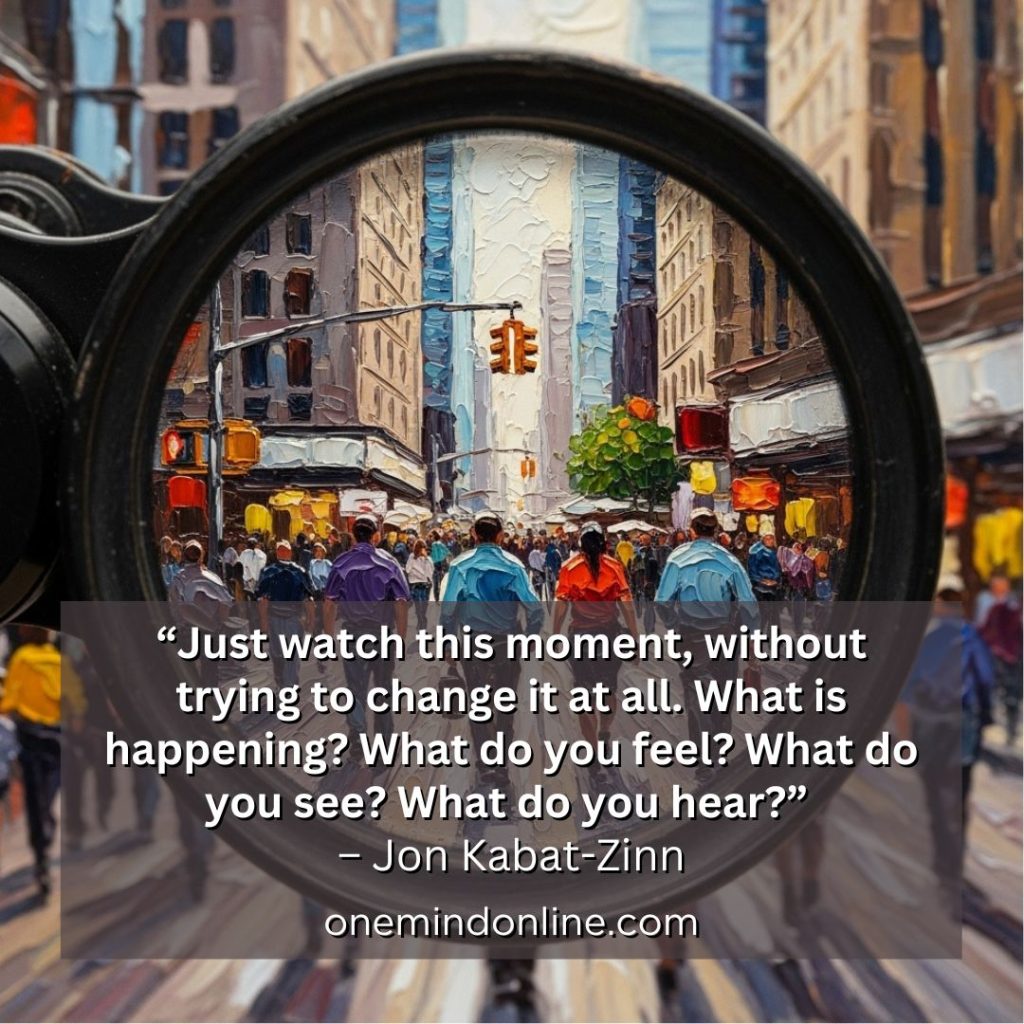
“Just watch this moment, without trying to change it at all. What is happening? What do you feel? What do you see? What do you hear?” – Jon Kabat-Zinn
“Mindfulness means paying attention in a particular way: on purpose, in the present moment, and non-judgmentally.” – Jon Kabat-Zinn
“The little things? The little moments? They aren’t little.” – Jon Kabat-Zinn
Today’s meditation really is a “little thing”. It’s just a simple exercise of paying attention to what your senses are experiencing. But this “little thing,” this dropping from your head into your body creates a shift in your nervous system, in your body, and in your brain waves.
By consciously directing our attention to our senses, we cultivate a deeper connection with ourselves and our surroundings. We begin to notice the subtle nuances of our experiences, from the gentle touch of the breeze to the intricate patterns of a leaf. This heightened awareness not only enhances our appreciation for life’s simple pleasures but also fosters a sense of calm and centeredness.
This “little thing” is quite a helpful reset. You can join us for today’s meditation but remember also, you don’t have to wait to join us for a big meditation. You can stop and close your eyes for a few minutes at any time, and bring yourself to your senses.
A few affirmations to help you check into the present moment:
- “I am fully present in this moment, and this moment is enough. “
- “My awareness enlivens my senses and connects me to life itself.”
- “The small moments of my life hold tremendous value and meaning.”
- “I release judgment and embrace what is, exactly as it is.”
- “Peace and clarity are always available to me through my breath and my senses.”
So, the next time you find yourself feeling overwhelmed or stressed, take a moment to come to your senses. Close your eyes, take a deep breath, and focus on what your body is experiencing. Notice the sensations in your body, the sounds around you, and the thoughts that arise in your mind. By practicing this simple technique, you can experience a renewed sense of peace, clarity, and joy.
Have a fun weekend peeps!
– pierre –
Today’s LIVE meditation is: Come to your senses.
Today’s LIVE meditation
https://youtu.be/5Vsq82Yi5Ys 2023
https://youtu.be/lYyTOMjD11M 2022
Practice the “Daily Dose”
Let’s put it into practice! Choose what works for you – daily, once a week or whenever inspiration strikes. Putting pen to paper wires the neural pathways that will create your new habits.
1 – Affirmation
Write down your favourite affirmation on a sticky note and place it somewhere that you’ll be able to see it the whole day.
- “I am fully present in this moment, and this moment is enough. “
- “My awareness enlivens my senses and connects me to life itself.”
- “The small moments of my life hold tremendous value and meaning.”
- “I release judgment and embrace what is, exactly as it is.”
- “Peace and clarity are always available to me through my breath and my senses.”
2 – A moment of reflection
Use today’s question as a journal prompt. If you don’t have the time to sit down and write, just take a moment to reflect on your response.
The Weight of Little Moments: Jon Kabat-Zinn says, “The little things? The little moments? They aren’t little.” Write about a seemingly small moment from your past that actually held great significance in your life. What made it meaningful? How might your life be different if you approached more moments with this level of attention?
3 – Quotes to share
Send a quote to someone who needs it, or share them all on social media to spread the good vibes!

4 – Q&A for deeper learning
Read through the questions and answers and write down at least one “aha moment” that clicked for you.
Q1: What exactly does it mean to “come to your senses”?
A: Coming to your senses means consciously shifting your attention from the mental chatter in your head to the direct sensory experience happening in your body right now. It involves noticing what you can see, hear, feel, touch, taste, and smell without judgment or analysis. This practice grounds you in the present moment and creates a bridge between your mind and body.
Q2: How can such a simple practice create real changes in my nervous system?
A: When you shift from thinking to sensing, you activate the parasympathetic nervous system—your body’s natural relaxation response. This “rest and digest” mode counters the stress-driven “fight or flight” response. Regular practice can actually change your brain waves, moving from the beta waves associated with active thinking to the calmer alpha waves associated with relaxed awareness, creating measurable physiological benefits.
Q3: I’m always busy—how can I realistically incorporate this into my day?
A: That’s the beauty of this practice: it doesn’t require extra time carved out of your schedule. You can come to your senses while waiting in line, sitting at a red light, before a meeting, or during your morning coffee. Even 30 seconds of sensory awareness can serve as a reset. The practice isn’t about duration; it’s about consistency and intentionality.
Q4: What does it mean to observe “without judgment”?
A: Observing without judgment means noticing what’s happening without labeling it as good or bad, right or wrong. Instead of thinking “I shouldn’t feel anxious” or “This is a waste of time,” you simply notice: “I feel tightness in my chest” or “My mind is busy right now.” It’s a shift from evaluating your experience to simply witnessing it with curiosity and acceptance.
Q5: Why do we overlook the “little moments” that Kabat-Zinn says aren’t actually little?
A: Our culture conditions us to believe that only big achievements, major events, or dramatic experiences matter. We’re constantly looking ahead to the next goal or dwelling on past regrets. But life is actually composed of thousands of small moments, and when we’re not present for them, we miss the actual substance of our lives. These moments, when noticed, become the building blocks of a meaningful, connected existence.
Q6: What should I do if I try to focus on my senses but my mind keeps wandering?
A: Mind-wandering is completely normal and expected—it’s not a failure. The practice isn’t about achieving perfect focus; it’s about noticing when your mind has wandered and gently bringing your attention back to your senses. Each time you notice and return, you’re actually strengthening your awareness muscle. Be patient and kind with yourself in this process.
Q7: How is mindfulness different from meditation, and do I need to meditate formally?
A: Meditation is often a formal practice with dedicated time and specific techniques, while mindfulness is a quality of awareness you can bring to any moment of your day. Formal meditation can deepen your mindfulness practice, but it’s not required. You can practice mindfulness while washing dishes, walking, eating, or having a conversation. The key is intentional, present-moment awareness without judgment, which can happen anywhere, anytime.