“Your Daily Dose” is a quick two minute read packed with bite-sized wisdom from all the great teachers. But you could also choose to turn it into something more… a powerful daily practice for personal growth. Give it a try!
A message from today’s meditation:
We live in a culture obsessed with action. Productivity hacks, hustle culture, and endless to-do lists promise us that we’ll find happiness if we just work harder and move faster. And yes, action matters of course – you don’t arrive at any destination without taking steps forward. But here’s the problem: it’s remarkably easy to spend all your energy running around like a headless chicken, taking steps that lead nowhere, making no real progress at all.
So how do we break this cycle? How do we take action wisely, spending our energy only on what truly moves us forward without wasting a single drop on frantic, ineffective movement? How do we gain the clarity to see what the next right step actually is?
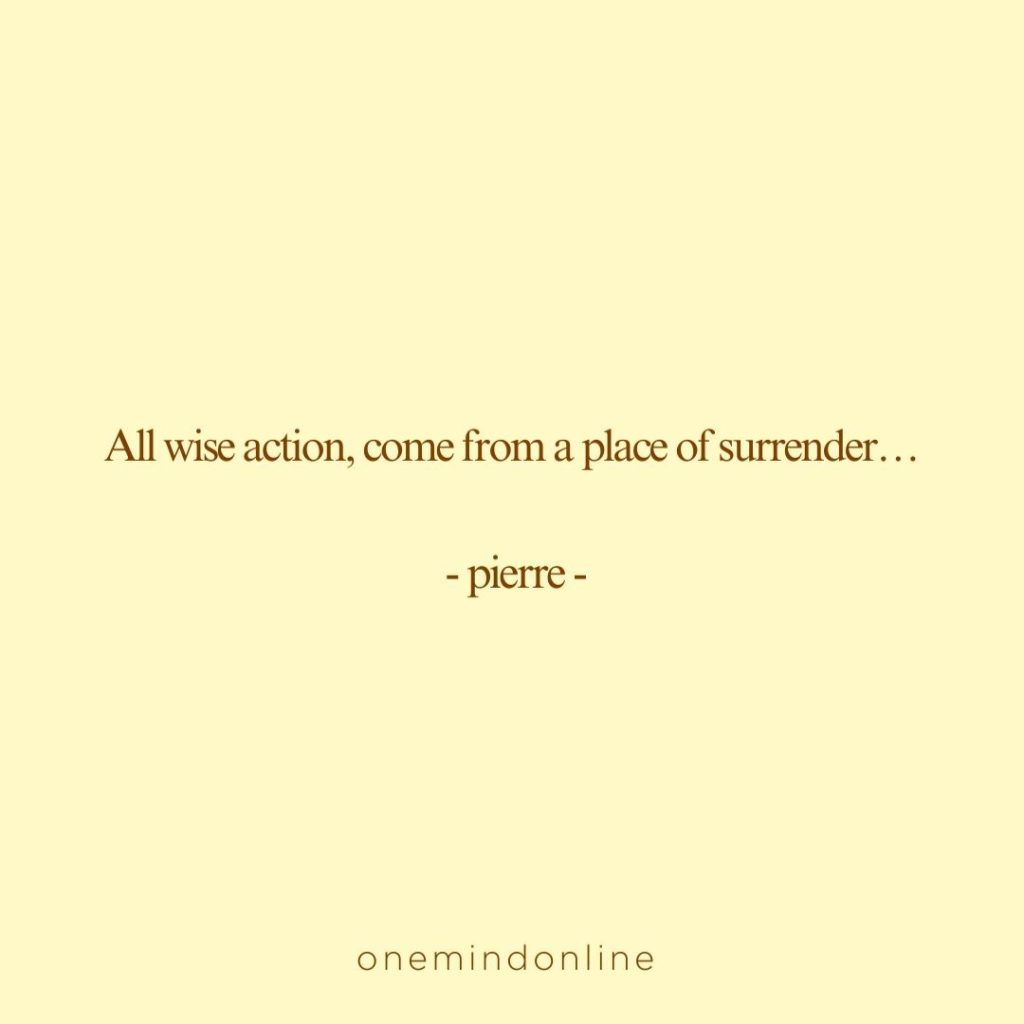
All wise action, come from a place of surrender…
Surrender is not about giving up or becoming passive. Rather, it’s about making the firm decision to stop flailing about in desperation. It’s choosing not to act from fear. Sometimes surrender means taking a step back, sitting down, or even lying down to breathe while you allow the mud to settle and the water to clear.
You will take action. But you won’t act from fear.
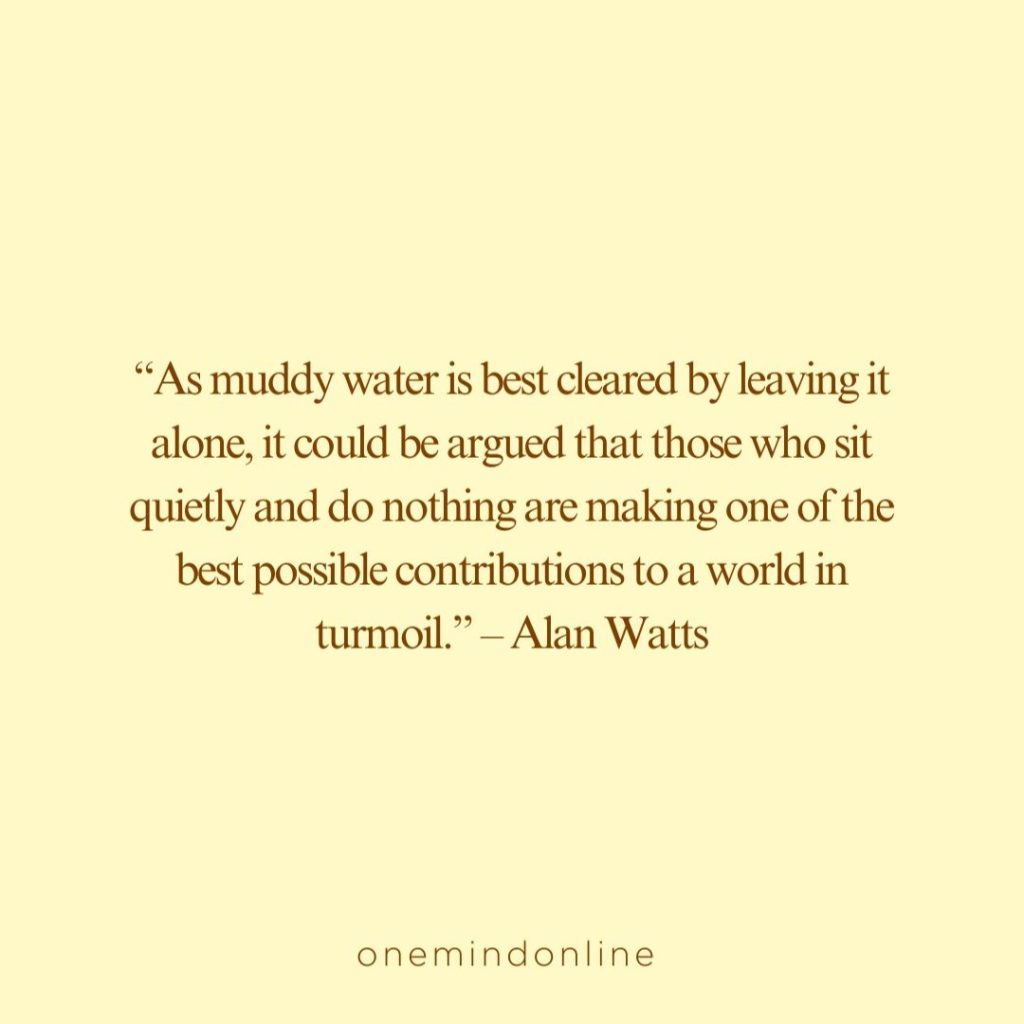
“As muddy water is best cleared by leaving it alone, it could be argued that those who sit quietly and do nothing are making one of the best possible contributions to a world in turmoil.” – Alan Watts
“Do you have the patience to wait for the water to settle?” – Alan Watts
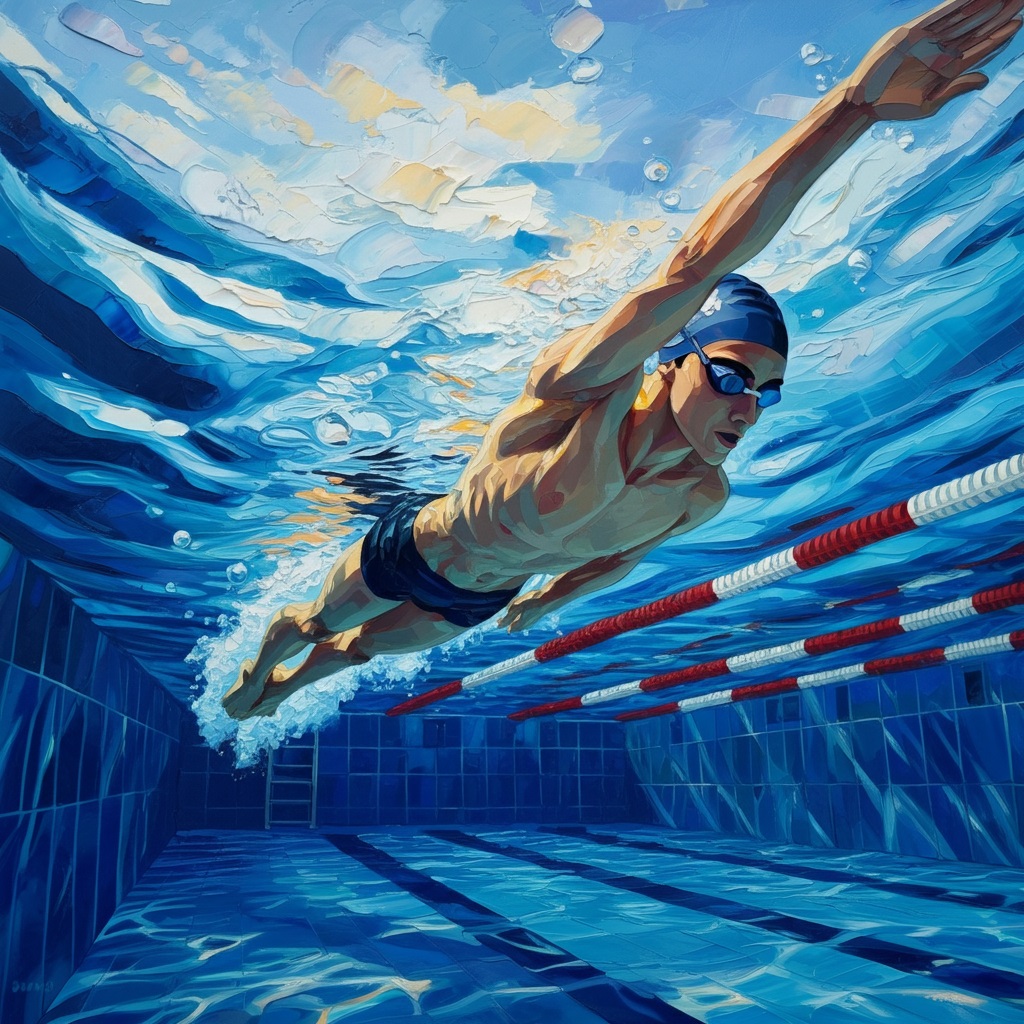
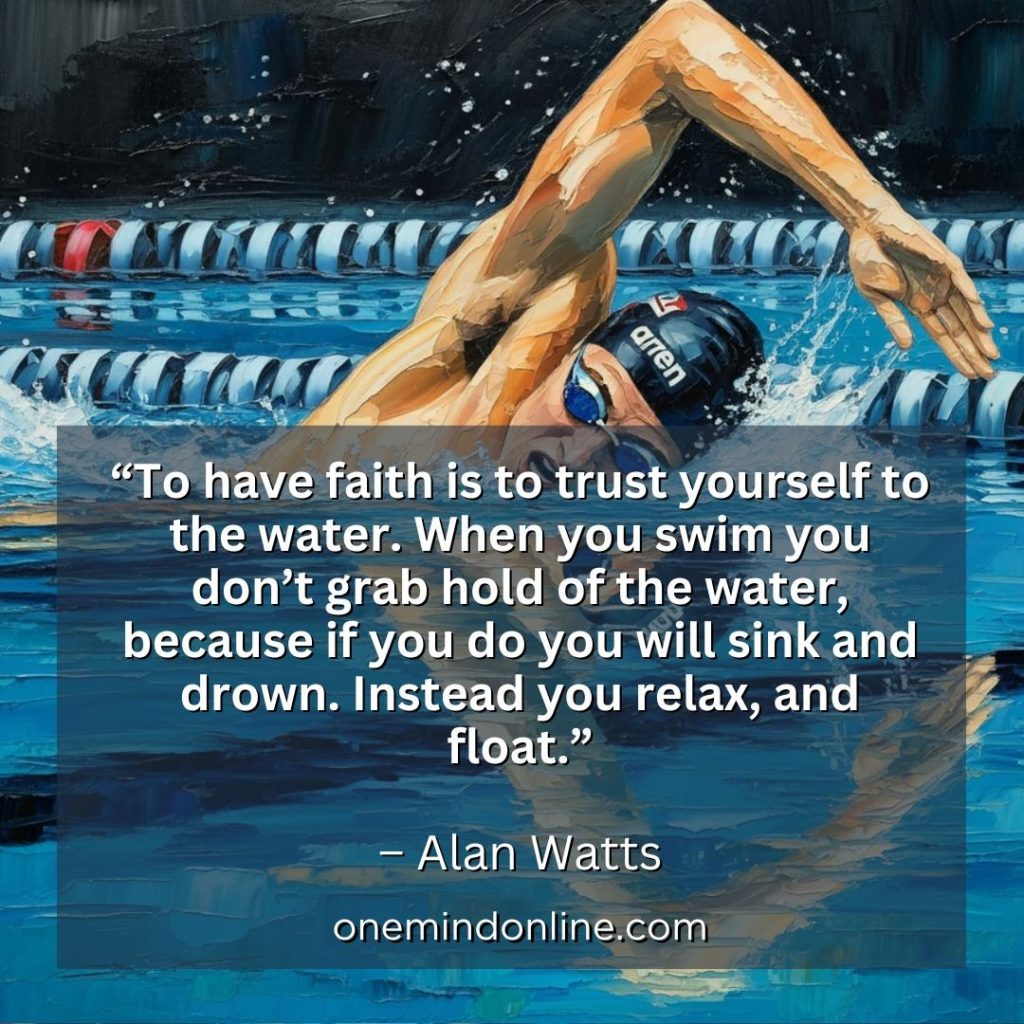
“To have faith is to trust yourself to the water. When you swim you don’t grab hold of the water, because if you do you will sink and drown. Instead you relax, and float.” – Alan Watts
Of course it’s true that you couldn’t swim in any direction of your choosing without actually taking action. The thing is though, that you wouldn’t even learn how to swim without first surrendering yourself to the water, allowing your body to be held by the water. I believe it is equally true that we could become better at surrendering ourselves to life, and then find our way with less effort because we’ve developed a sense of how life moves.
When we embrace surrender, we’re not abandoning our agency or our dreams. We’re simply releasing our white-knuckled grip on control long enough to see clearly, to feel what’s actually happening, and to move with wisdom rather than panic.
A few affirmations to help you find surrender:
- “I trust the flow of life.”
- “I am willing to let go of control.”
- “I am open to the unknown.”
- “I am at peace with uncertainty.”
- “I am confident in my ability to navigate challenges.”
By embracing the art of surrender, we invite peace, clarity, and a deeper connection to ourselves and the world around us. And by letting go of our need to control, we gift ourselves with the openness to recognize opportunity.
Join us in today’s journey for a practical understanding of surrender.
– pierre –
Today’s LIVE meditation is: Surrender.
Today’s LIVE meditation
https://youtu.be/dO9WggPaSK0 2025
https://youtu.be/TnZgRNa84oY 2024
https://youtu.be/SwKWkwn5Sp8 2023
https://youtu.be/64axvKn3QZ8 2022
Practice the “Daily Dose”
Let’s put it into practice! Choose what works for you – daily, once a week or whenever inspiration strikes. Putting pen to paper wires the neural pathways that will create your new habits.
1 – Affirmation
Write down your favourite affirmation on a sticky note and place it somewhere that you’ll be able to see it the whole day.
- “I trust the flow of life.”
- “I am willing to let go of control.”
- “I am open to the unknown.”
- “I am at peace with uncertainty.”
- “I am confident in my ability to navigate challenges.”
2 – A moment of reflection
Use today’s question as a journal prompt. If you don’t have the time to sit down and write, just take a moment to reflect on your response.
Your Relationship with Control: Identify one area of your life where your attempts to control are actually creating the opposite of what you want. How is your tight grip making you sink rather than helping you swim? What would happen if you relaxed your grip and allowed yourself to float instead?
Examples: Trying to control exactly how a conversation with your partner/friend should go; obsessively checking and rechecking your child’s homework; refusing to delegate tasks because “no one else will do it right”; controlling your image on social media by obsessing over likes and comments; trying to control your teenager’s every decision, pushing them further away.
3 – Quotes to share
Send a quote to someone who needs it, or share them all on social media to spread the good vibes!



4 – Q&A for deeper learning
Read through the questions and answers and write down at least one “aha moment” that clicked for you.
Q1: Isn’t surrender just another word for being passive or lazy?
A: Not at all. Surrender is an active choice to step back from fear-based, frantic action so you can see clearly and act wisely. It’s about being strategic with your energy rather than spinning your wheels. Think of it as the difference between a headless chicken running in circles and a skilled navigator who pauses to check their compass before moving forward.
Q2: If I surrender and stop trying to control things, won’t I lose all my progress?
A: Surrender doesn’t mean abandoning your goals or stopping all action. It means releasing your desperate grip on how and when things must happen. Paradoxically, this often leads to more effective progress because you’re no longer wasting energy on frantic, unproductive movement. You’re swimming with the current rather than exhausting yourself fighting against it.
Q3: What does “trusting the flow of life” actually mean in practical terms?
A: Trusting the flow means recognizing that you can’t control everything and accepting that uncertainty is part of the journey. Practically, it might mean applying for a job you want but not obsessing over the outcome, or working toward a goal while remaining flexible about the path to get there. It’s doing your part and then making peace with whatever unfolds.
Q4: How long should I “wait for the water to settle” before taking action?
A: There’s no fixed timeline—it depends on the situation and what you need. Sometimes clarity comes in minutes of quiet breathing; other times it takes days or weeks. The key is noticing when you shift from cloudy confusion to clearer seeing. You’ll feel it: a sense of knowing what to do next, or at least feeling more grounded about not knowing. Also, don’t expect clarity to come in the form of seeing the whole journey laid out in front of you. Any journey is likely to consist of small steps, so we need only find our footing for the next step, and trust that as we step on the way, the way appears.
Q5: Can I practice surrender in small ways if I’m not ready for big life changes?
A: Absolutely. Start small. Practice surrender when you’re stuck in traffic—let go of the urge to control the situation and breathe instead. Try it when waiting in line or when a plan changes unexpectedly. These small moments build your “surrender muscle” so you’re better prepared when bigger challenges arise.
Q6: What if surrendering makes me feel vulnerable or out of control?
A: That’s completely normal and actually a sign that you’re doing it right. Surrender does involve vulnerability—that’s part of trusting yourself to the water. But remember: feeling out of control and being out of control are different things. You’re actually gaining a different kind of control—the ability to accept discomfort, and staying centered regardless of external circumstances. Over time, this vulnerability transforms into genuine confidence and peace.