

“Your Daily Dose” is a quick two minute read packed with bite-sized wisdom from all the great teachers. But you could also choose to turn it into something more… a powerful daily practice for personal growth. Give it a try!
A message from today’s meditation:
We’re not just entering a new week, we are on the cusp of a fresh new year – a blank canvas, a cosmic reset button. But before we charge headfirst into the familiar ritual of resolutions and ambitious plans, let’s take a deep breath and consider something more fundamental than our outer goals: the state of our inner world, the very foundation that any of our external goals are built on, because a masterpiece cannot be painted with a broken brush.
“Learn to be calm and you will always be happy.” – Paramahansa Yogananda
“Calmness of mind is one of the beautiful jewels of wisdom.” – James Allen
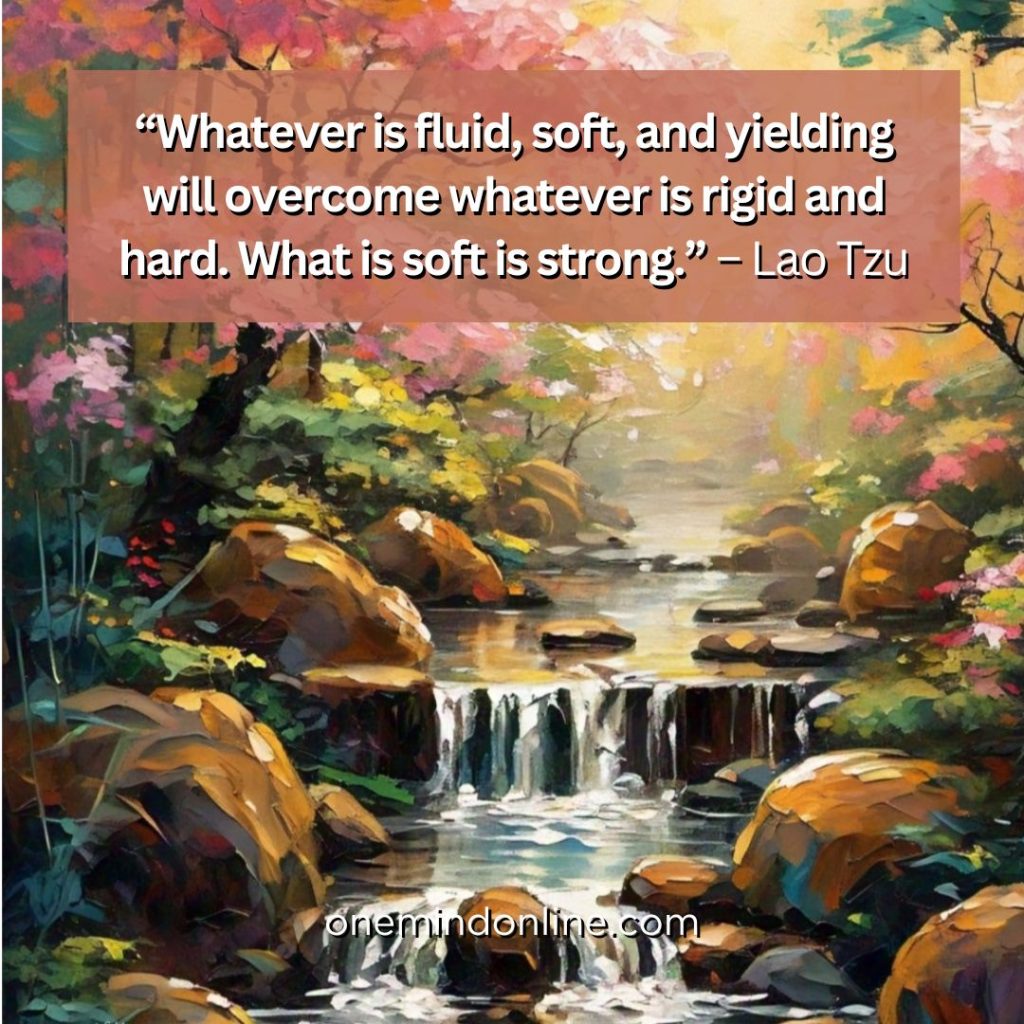
“Whatever is fluid, soft, and yielding will overcome whatever is rigid and hard. What is soft is strong.” – Lao Tzu
These aren’t empty words meant to sound profound. They’re practical truths about how we can navigate our lives with more ease and effectiveness. A calm mind isn’t a passive state of doing nothing – it’s an active force of clarity and strength. It’s the still center where your authentic self can breathe, free from the suffocating grip of self-doubt and fear.
But how do we actually cultivate this inner calm? Meditation helps, certainly, but the real transformation happens in how we relate to ourselves, especially during our most difficult moments. We’re human. We stumble. We make mistakes. We fall short of our own expectations. And it’s precisely in these messy, uncomfortable moments that our minds often become battlegrounds of harsh self-judgment.
What if we tried something radically different this year? What if, instead of beating ourselves up, we offered ourselves the same compassion we’d extend to a struggling friend? No harsh judgments, no character assassination, just honest, gentle reflection on what happened and what we can learn.
When you develop the ability to look at your failings with kindness, you’ve taken a monumental step toward genuine peace of mind. The greatest turbulence we experience internally often comes from the crushing disappointment we feel when we believe we’ve failed.
The truth is, self-criticism rarely leads to improvement. It just makes us feel like crap, fueling fear and negativity. But kindness? It’s the secret sauce, the missing ingredient that transforms mistakes into stepping stones. It gives you the space to learn, to adjust, to rise again, stronger and wiser.
So, this year, make a pact with yourself: treat your failures like fertilizer, not weeds. Let kindness be your compass, your unwavering north star.
The beautiful paradox is this: when you look at yourself without judgment, you actually gain the clarity and courage to see yourself honestly. Real honesty is not brutal or cruel. In fact, the most truthful self-assessment happens in an atmosphere of kindness, where you feel safe enough to acknowledge both your strengths and areas for growth.
Here are your guiding mantras for this epic quest:
- “My stumbles are lessons, not evidence of failure.”
- “I choose kindness toward myself, especially in my hardest moments.”
- “I am fluid like water – soft enough to bend, strong enough to overcome any obstacle.”
- “I am not my mistakes; I am the wisdom I gain from them.”
During this next year, let’s ditch the pressure cooker and embrace the flow. Let your inner calm be your superpower, your secret weapon against the storms of life. Remember, you are not your mistakes, you are a masterpiece in progress.
Go forth, conquer, and most importantly, be kind to yourself along the way.
With love and boundless optimism.
– pierre –
Today’s LIVE meditation is: Jumpstart the week.
Today’s LIVE meditation
https://youtu.be/9tt74B7WMfM 2022
Practice the “Daily Dose”
Let’s put it into practice! Choose what works for you – daily, once a week or whenever inspiration strikes. Putting pen to paper wires the neural pathways that will create your new habits.
1 – Affirmation
Write down your favourite affirmation on a sticky note and place it somewhere that you’ll be able to see it the whole day.
- “My stumbles are lessons, not evidence of failure.”
- “I choose kindness toward myself, especially in my hardest moments.”
- “I am fluid like water – soft enough to bend, strong enough to overcome any obstacle.”
- “I am not my mistakes; I am the wisdom I gain from them.”
2 – A moment of reflection
Use today’s question as a journal prompt. If you don’t have the time to sit down and write, just take a moment to reflect on your response.
Fertilizer, Not Weeds: Consider your past “failures” as fertilizer for your growth rather than weeds to be ashamed of. Choose one significant mistake from your past and explore: What did this experience actually teach you? How has it shaped who you are today? What strengths or insights have grown from this difficult moment? How would your life be different if you genuinely saw all your stumbles as essential nutrients for your becoming?
3 – Quotes to share
Send a quote to someone who needs it, or share them all on social media to spread the good vibes!

4 – Q&A for deeper learning
Read through the questions and answers and write down at least one “aha moment” that clicked for you.
Q1. Doesn’t being kind to myself when I fail just let me off the hook? Won’t it make me complacent?
This is one of the most common misconceptions about self-compassion. Research actually shows the opposite is true. When you’re kind to yourself after making a mistake, you create a psychologically safe space that allows for honest self-reflection. Self-criticism triggers our threat response, making us defensive and less likely to genuinely learn. Self-kindness, by contrast, gives you the emotional stability to look clearly at what happened, take responsibility, and make real changes. It’s not about excusing behavior—it’s about creating the conditions where growth becomes possible.
Q2. How is calmness of mind actually a source of strength rather than passivity?
A calm mind isn’t passive or checked out—it’s powerfully present. When your mind is calm, you can see situations clearly without the distortion of anxiety or reactivity. You make better decisions, respond more skillfully to challenges, and access your creativity and wisdom. Think of it like the eye of a hurricane: everything around it may be chaotic, but the center remains still and clear. That stillness is where your true power resides because you’re not wasting energy on internal turmoil.
Q3. What’s the practical difference between being honest with myself and being harsh with myself?
Honesty is observation without emotional violence. You can look at a mistake and think, “I didn’t prepare adequately for that presentation, and it showed. Next time I need to allocate more practice time.” That’s honest. Harsh self-judgment sounds like, “I’m such an idiot. I always mess everything up. I’m a failure.” Notice how the harsh version makes sweeping character judgments, uses absolutes like “always,” and attacks your worth as a person. Honesty assesses behavior; harshness attacks identity. You can be completely truthful with yourself while still maintaining kindness and respect.
Q4. How do I actually practice self-kindness in the moment when I’m disappointed in myself?
Start by pausing and taking a few deep breaths to create space between the triggering event and your reaction. Then try talking to yourself as you would to someone you care about. You might literally ask yourself, “What would I say to a friend in this situation?” You can also place a hand on your heart or give yourself a gentle hug—physical gestures of self-comfort activate the same neural pathways as receiving compassion from others. Finally, remind yourself that mistakes and imperfection are part of the shared human experience. You’re not alone in struggling; you’re simply being human.
Q5. What does it mean that “whatever is soft and yielding will overcome what is rigid and hard”?
This ancient wisdom points to the power of flexibility and adaptability. Water is soft, yet it carves through stone over time. A tree that bends in the wind survives the storm, while the rigid one breaks. When you approach yourself and your challenges with gentleness rather than force, you become more resilient. You can adjust, learn, and flow around obstacles rather than breaking against them. Rigidity—whether in self-judgment or problem-solving—limits your options. Softness expands them.
Q6. Why is self-disappointment described as “the biggest disturbance” in our minds?
When we deeply disappoint ourselves, we trigger a cascade of negative emotions: shame, fear of inadequacy, anxiety about the future, and sometimes even self-loathing. This internal disturbance is often more painful than external setbacks because it attacks our sense of self-worth. It creates a feedback loop where fear of disappointing ourselves again makes us either overly cautious or paralyzed. By contrast, external challenges, while difficult, don’t usually carry this same weight of self-judgment. The disturbance comes not from the mistake itself, but from the meaning we assign to it about our worth and identity.
Q7. How can I tell if I’m making progress in cultivating a calmer, kinder mind?
Look for subtle shifts: Are you catching yourself in moments of harsh self-talk more quickly? Can you pause before reacting to setbacks? Do you find yourself extending compassion to yourself at least some of the time, even if it doesn’t feel natural yet? Progress isn’t about achieving perfect calm or never being self-critical—it’s about the growing space between stimulus and response, and the increasing frequency of choosing kindness over cruelty. You might also notice you’re more patient with others, sleep better, or feel less anxious overall. These are all signs that your inner landscape is becoming more peaceful.