
“Your Daily Dose” is a quick two minute read packed with bite-sized wisdom from all the great teachers. But you could also choose to turn it into something more… a powerful daily practice for personal growth. Give it a try!
A message from today’s meditation:
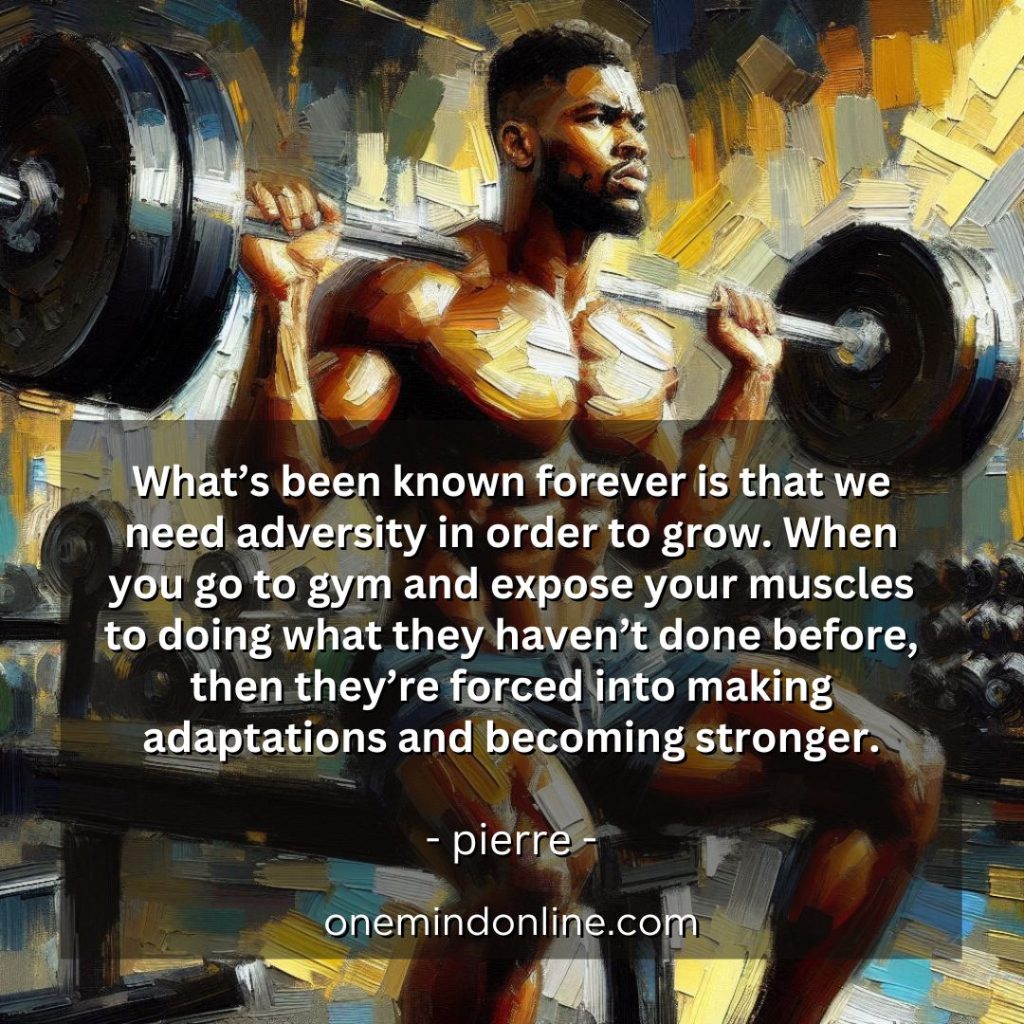
What’s been known forever is that we need adversity in order to grow. When you go to gym and expose your muscles to doing what they haven’t done before, then they’re forced into making adaptations and becoming stronger.
All of our growth is like this.
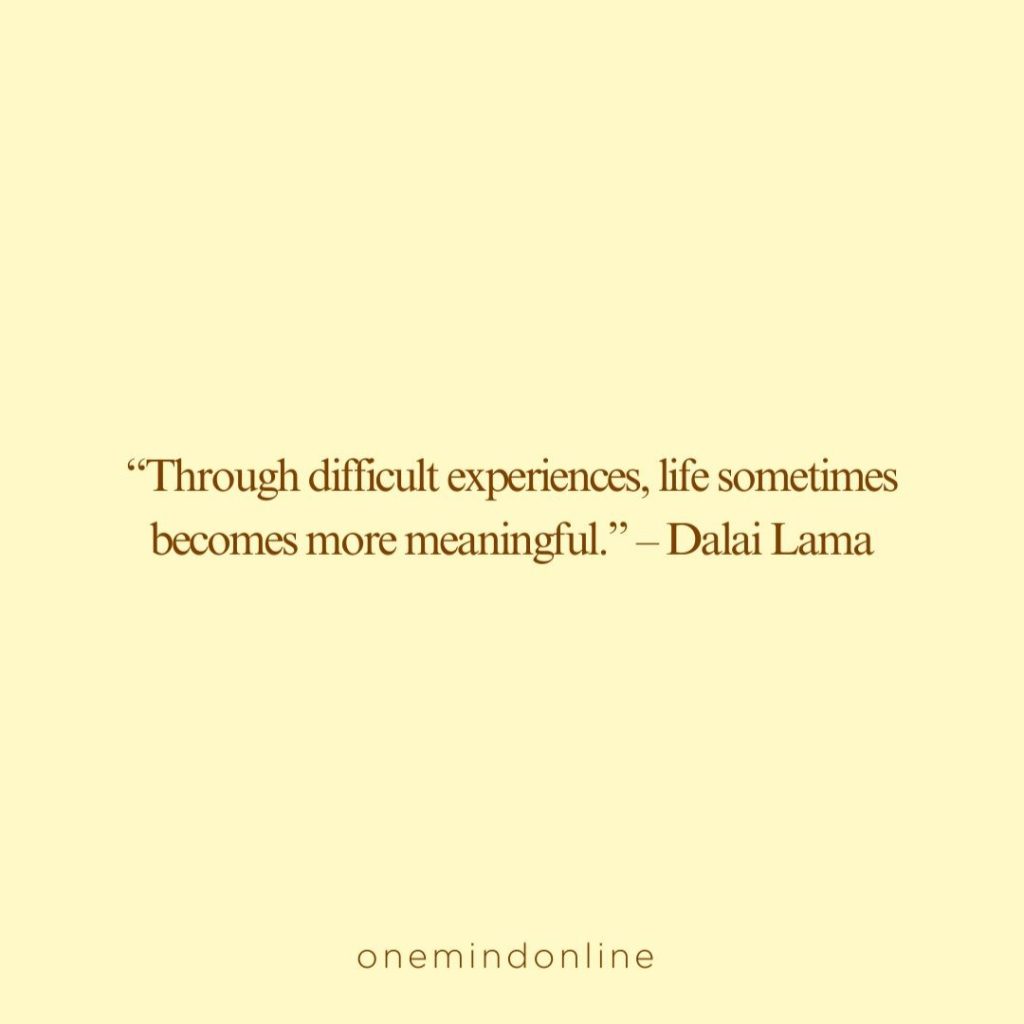
“Through difficult experiences, life sometimes becomes more meaningful.” – Dalai Lama
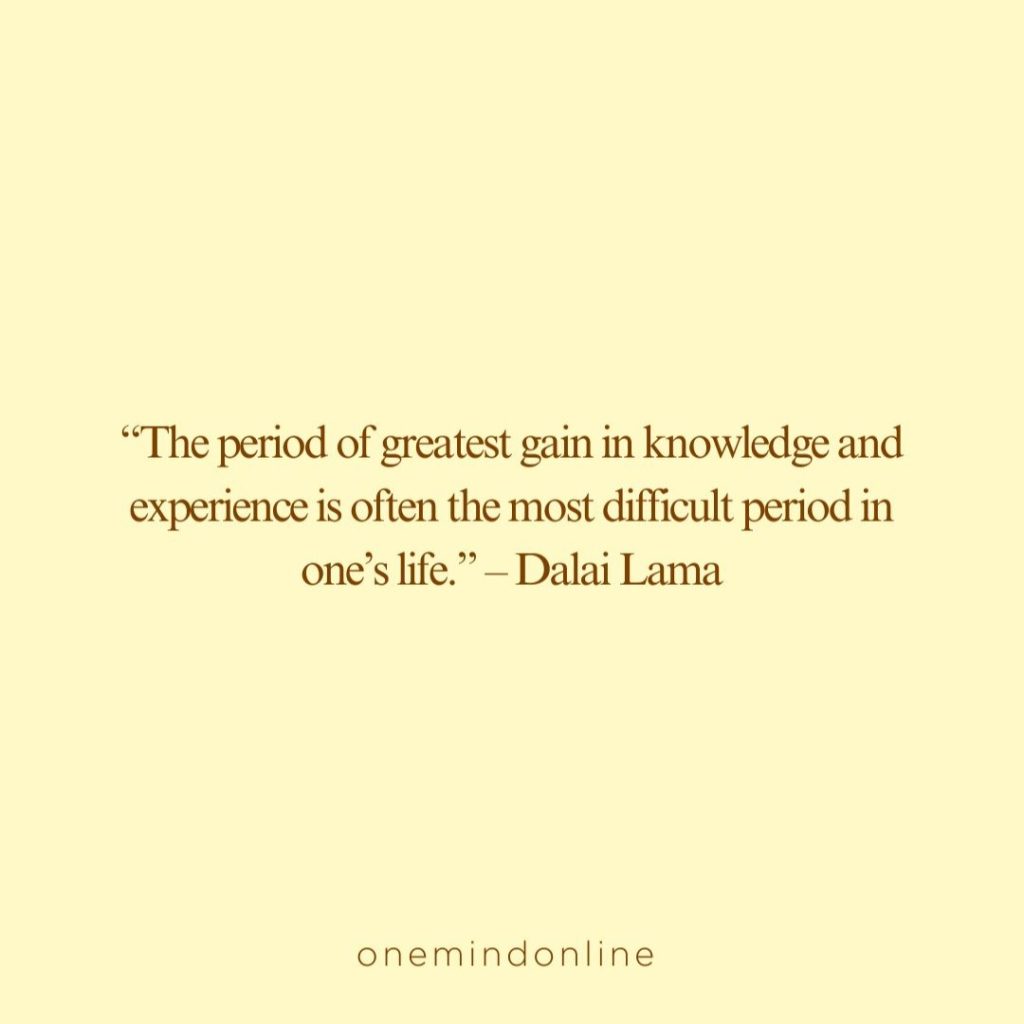
“The period of greatest gain in knowledge and experience is often the most difficult period in one’s life.” – Dalai Lama
It is however also possible to feel no growth at all from difficult experiences, just pain with seemingly no sense to it, and for this, the most helpful skill I have found is the ability to be “the observer” of myself.
This could also be called “the witness” or in Buddhist tradition, “naked awareness”.
Can I step outside of myself and see myself? Can I pay attention to what I’m thinking and feeling? Can I watch what it is that I am busy doing?
Naked awareness necessitates that I be able to witness without judgement and without criticism, can I look at myself just like looking at data, creating a space for understanding and clarity to grow.
Most of us have experienced a situation or a time in our lives where it feels like “I am drowning”. It feels like I’m getting hit by wave after wave with no chance of coming up for air before the next wave pushes me down again.
While being the observer – it’s as if I’ve been lifted just a little bit higher and I have a clearer view of myself, “I can see that at this moment I FEEL as if I’m drowning, fighting wave after wave.” Seeing from this higher perspective doesn’t change the situation and it doesn’t change how I feel, but it certainly changes what I believe about what I am feeling.
I can see more clearly that how I feel in the moment is temporary, and that I have the power to choose how I respond to what I feel.
Becoming better at being the observer gives me the space to recognize that there are in fact multiple ways in which I can choose to respond, to be a better support for myself and also being better equipped to ask more clearly for the assistance I might need.
“Although you may not always be able to avoid difficult situations, you can modify the extent to which you suffer by how you choose to respond to the situation.” – Dalai Lama
“Try to improve. Don’t expect too much, but don’t feel discouraged either; keep up your enthusiasm; you will make progress.” – Dalai Lama
When we look back this journey really IS beautiful even the parts where we’ve struggled, but it’s important to remember that progress comes in baby steps. Don’t expect too much from yourself, and be sure to really love yourself HARD through the difficult parts.
A few affirmations to add to your toolbox in times of adversity:
- “I trust that my challenges are shaping me into someone stronger and wiser.”
- “I can observe my thoughts and feelings with compassion, without judgment.”
- “My difficult experiences hold meaning, even when I cannot yet see it.”
- “I choose to respond to adversity with awareness rather than react from fear.”
- “I celebrate my small steps forward, knowing that growth unfolds gradually.”
- “I am worthy of self-compassion, especially when life feels overwhelming.”
While it may not always be pleasant, adversity always offers us a unique opportunity to learn and grow. By embracing challenges and cultivating a mindful approach, we can transform suffering into strength.
– pierre –
Today’s LIVE meditation is: The observer.
Today’s LIVE meditation
https://youtu.be/ZiWiFFrFqa0 2025
https://youtu.be/fbBq1QHTM2w 2024
https://youtu.be/qQc4l6MbtFA 2022
Practice the “Daily Dose”
Let’s put it into practice! Choose what works for you – daily, once a week or whenever inspiration strikes. Putting pen to paper wires the neural pathways that will create your new habits.
1 – Affirmation
Write down your favourite affirmation on a sticky note and place it somewhere that you’ll be able to see it the whole day.
- “I trust that my challenges are shaping me into someone stronger and wiser.”
- “I can observe my thoughts and feelings with compassion, without judgment.”
- “My difficult experiences hold meaning, even when I cannot yet see it.”
- “I choose to respond to adversity with awareness rather than react from fear.”
- “I celebrate my small steps forward, knowing that growth unfolds gradually.”
- “I am worthy of self-compassion, especially when life feels overwhelming.”
2 – A moment of reflection
Use today’s question as a journal prompt. If you don’t have the time to sit down and write, just take a moment to reflect on your response.
Growth Through Adversity: Reflect on a difficult period in your past that felt purely painful at the time. Looking back with the perspective you have now, what did that experience teach you? How did it contribute to who you are today? What strengths or insights emerged that might not have developed otherwise?
3 – Quotes to share
Send a quote to someone who needs it, or share them all on social media to spread the good vibes!
4 – Q&A for deeper learning
Read through the questions and answers and write down at least one “aha moment” that clicked for you.
Q1: What does it mean to be “the observer” of my own experience?
A: Being the observer means stepping back from your immediate thoughts and emotions to witness them with awareness, without judgment or criticism. It’s like watching yourself from a slightly elevated perspective—noticing what you’re thinking, feeling, and doing as if you’re looking at data rather than being completely absorbed in the experience. This creates space for understanding and clarity to emerge, even in difficult moments.
Q2: How can adversity lead to growth if it just feels like constant pain?
A: The difference between transformative adversity and meaningless suffering often lies in our ability to witness our experience mindfully. When we can observe our struggles without judgment, we create space to see that our feelings are temporary and that we have choice in how we respond. Growth doesn’t come from the pain itself, but from how we relate to it and what we learn about ourselves through the process.
Q3: What if I can’t find any meaning in my difficult experiences?
A: Meaning doesn’t always reveal itself immediately, and that’s okay. The Dalai Lama teaches that difficult experiences can make life more meaningful, but this often becomes clear only with time and perspective. Focus on cultivating “naked awareness”—simply witnessing your experience without forcing it to make sense. Understanding and meaning often emerge gradually as you practice self-compassion and continue moving forward in baby steps.
Q4: How do I practice “naked awareness” or witnessing without judgment?
A: Start by noticing when you’re caught in difficult emotions and silently narrating what you observe: “I notice I’m feeling anxious right now” or “I can see that I’m thinking I’m not good enough.” The key is to describe rather than evaluate—avoid adding “and that’s bad” or “I shouldn’t feel this way.” Practice observing your thoughts and feelings as temporary phenomena passing through you, like clouds moving across the sky.
Q5: Why does the observer perspective help if it doesn’t change the situation or my feelings?
A: While the observer perspective doesn’t eliminate difficulties or instantly change emotions, it fundamentally shifts what you believe about what you’re experiencing. When you can see that “I FEEL like I’m drowning” rather than “I AM drowning,” you recognize the temporary nature of feelings and reclaim your power to choose your response. This creates breathing room for better decisions, clearer communication of your needs, and greater self-support.
Q6: How can I avoid expecting too much from myself while still making progress?
A: Remember that progress comes in baby steps, and the period of greatest growth is often the most difficult. Set realistic expectations by breaking larger goals into small, achievable actions. Celebrate tiny victories along the way, and practice self-compassion when progress feels slow. As the Dalai Lama advises, keep up your enthusiasm without demanding perfection—steady, patient effort over time creates lasting transformation.
Q7: What should I do when I feel completely overwhelmed and can’t access the observer perspective?
A: First, recognize that struggling to maintain perspective during overwhelming times is completely normal and human. This is precisely when you need to love yourself “hard” through the difficulty. Reach out for support from others—you don’t have to navigate challenges alone. Sometimes just acknowledging “I’m feeling overwhelmed and can’t see clearly right now” is itself a form of witnessing. Be gentle with yourself, and remember that the ability to observe develops gradually with practice.Retry